
日本军国主义复辟

Search documents
日本右翼核野心对世界和平造成严重威胁
Xin Lang Cai Jing· 2026-01-08 23:08
Core Viewpoint - The report titled "Japan's Right-Wing Nuclear Ambitions: A Serious Threat to World Peace" highlights the growing nuclear ambitions of Japan's right-wing forces and the dangers of a resurgence of Japanese militarism, urging the international community to remain vigilant and work together to maintain post-war international order and nuclear non-proliferation systems [1]. Group 1 - The report was jointly released by the China Arms Control and Disarmament Association and the China Nuclear Strategic Planning Research Institute, emphasizing the need for Japan to adhere to its international obligations as a non-nuclear weapon state under the Treaty on the Non-Proliferation of Nuclear Weapons [1]. - Japanese Prime Minister Fumio Kishida has hinted at modifying the "Three Non-Nuclear Principles," with some officials suggesting that Japan should possess nuclear weapons, which poses a challenge to international order and reflects a desire for re-militarization [1]. - The report systematically reviews Japan's attempts to modify the "Three Non-Nuclear Principles," analyzing its advanced nuclear industrial capabilities and the accumulation of sensitive nuclear materials far exceeding civilian energy needs [1]. Group 2 - The report contains approximately 13,000 words and presents "ten recommendations," including urging the Japanese Prime Minister to clarify erroneous statements and calling for adherence to the "Three Non-Nuclear Principles" [2]. - It emphasizes the need for Japan to fulfill its international nuclear non-proliferation obligations and address the severe imbalance in plutonium supply and demand [2]. - The report calls for increased oversight from the International Atomic Energy Agency regarding Japan's nuclear activities and encourages related countries to strengthen constraints on Japan, ensuring that nuclear cooperation is solely for peaceful purposes [2].
中国智库:日本右翼核野心对世界和平造成严重威胁
Xin Hua She· 2026-01-08 05:05
Core Viewpoint - The report titled "Japan's Right-Wing Nuclear Ambitions: A Serious Threat to World Peace" highlights the growing nuclear ambitions of Japan's right-wing forces and the dangers of a resurgence of militarism in Japan, urging the international community to remain vigilant and work together to maintain the post-war international order and nuclear non-proliferation system [1]. Group 1 - The report was jointly released by the China Arms Control and Disarmament Association and the China Nuclear Strategic Planning Research Institute [1]. - It emphasizes the need for heightened awareness regarding the expansion of Japan's right-wing forces and their nuclear ambitions [1]. - The report calls for collective efforts to safeguard the international nuclear non-proliferation framework [1].
警惕日本自卫队的靖国旧梦
Xin Lang Cai Jing· 2025-12-24 09:36
Core Viewpoint - The article highlights the concerning trend of Japan's Self-Defense Forces (SDF) increasingly aligning with the Yasukuni Shrine, which symbolizes Japan's militaristic past, raising fears of a revival of militarism in Japan [1] Group 1: Activities and Traditions - Students from the National Defense Medical College participated in a collective visit to Yasukuni Shrine, which is a long-standing tradition requiring students to undertake a "night march" to the shrine during their four years of study [1] - The SDF personnel have been seen collectively visiting Yasukuni Shrine on significant dates, such as August 15, the anniversary of Japan's defeat in World War II, indicating a normalization of this practice [1] Group 2: Institutional Issues - Despite internal regulations prohibiting collective visits to shrines by SDF members, these rules are being ignored, as evidenced by the actions of high-ranking officials who have participated in such visits [1] - The educational materials used at the National Defense Medical College reflect a revisionist view of history, promoting the "Yasukuni view" and distorting Japan's military actions as self-defense against Western powers [1] Group 3: Personnel and Leadership - The appointment of a former SDF officer as the head of Yasukuni Shrine marks a significant intertwining of military and religious leadership, raising concerns about the influence of militaristic ideologies within the SDF [1] - The presence of former high-ranking SDF officials in advisory roles at Yasukuni Shrine further illustrates the deepening connections between the military and the shrine [1] Group 4: Broader Implications - The article discusses the accelerated militarization of Japan and the rhetoric surrounding national security, which is fostering an environment where militaristic sentiments are gaining traction [1] - Statements from SDF officials regarding the shrine as a "spiritual home" and the preparation for "sacrificing" in battle reflect a troubling shift towards a mindset that could lead to militaristic actions [1]
对日本右翼势力的挑衅言行,任何姑息纵容只会把亚洲人民再次置于危险境地
Ren Min Ri Bao· 2025-12-09 22:32
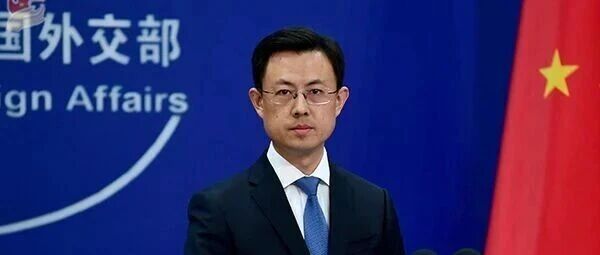
Core Viewpoint - The Chinese Foreign Ministry spokesperson emphasized that any leniency towards Japan's right-wing provocations could revive militarism, endangering Asian people and that countries have a responsibility to unite against any attempts to restore militarism and fascism [1][2]. Group 1: Historical Context - The spokesperson highlighted Japan's military aggression during World War II, citing the Nanjing Massacre with over 300,000 victims, the Manila Massacre resulting in approximately 100,000 Filipino civilian deaths, and the Singapore Massacre causing tens of thousands of local deaths [2]. - It was noted that Japan committed over 100 large-scale massacres in regions such as Malaysia, Indonesia, Myanmar, and Thailand, and that the death rate of Allied prisoners of war captured by Japan was as high as 27% [2]. - The forced labor of thousands of Southeast Asian workers and Allied POWs during the construction of the Thailand-Burma Railway was mentioned, with over 400,000 Chinese laborers suffering casualties due to harsh conditions and excessive labor [2]. Group 2: Current Implications - The spokesperson asserted that Japan's wartime crimes cannot be erased and that attempts to revise its aggressive history are unacceptable [2]. - There is a call for collective action among nations to uphold the results of World War II, defend the post-war international order, and ensure global peace and stability [2].
外交部:各国有责任也有义务携手阻击任何复辟军国主义的图谋
第一财经· 2025-12-09 08:16
Core Viewpoint - The article discusses the recent criticisms from neighboring countries regarding Japan's Prime Minister's remarks on Taiwan, emphasizing the historical atrocities committed by Japan during World War II and the ongoing denial and distortion of these events by certain political factions in Japan [3][4]. Summary by Sections - Japan's militaristic past is highlighted, with references to the atrocities committed against China and other Asian nations, including the Nanjing Massacre where over 300,000 civilians were killed, and the Manila Massacre resulting in approximately 100,000 Filipino civilian deaths [3][4]. - The article mentions over 100 documented mass killings by Japanese forces in Malaysia, Indonesia, Myanmar, and Thailand, and notes a 27% death rate among Allied POWs captured by the Japanese, with around 15,000 American and Filipino POWs dying in the Bataan Death March [4]. - The forced labor and abuse of over 4 million Chinese laborers under Japanese control is also discussed, along with the horrific treatment of women from various countries who were forced into sexual slavery [4]. - The spokesperson emphasizes that Japan's war crimes cannot be erased and that any tolerance of right-wing provocations could lead to a resurgence of militarism, urging countries to unite against any attempts to revive militaristic ideologies and to uphold the outcomes of World War II [4].

台湾社会各界:高市早苗言论对台有害 台湾问题不容外部势力干涉
Xin Hua She· 2025-11-17 01:42
Core Viewpoint - The provocative remarks made by Japanese Prime Minister Sanna Takashi regarding Taiwan have sparked significant discontent and criticism within Taiwanese society, with various figures emphasizing the need to protect Taiwan's interests and maintain peace in the Taiwan Strait [1][2][3] Group 1: Reactions from Taiwanese Political Figures - Former Kuomintang Chairman Ma Ying-jeou criticized Takashi's comments as reminiscent of Japan's militaristic past, suggesting that such statements threaten the peace and stability desired by the Taiwanese people [1] - Former Kuomintang Chairman Hung Hsiu-chu condemned Takashi's linking of Taiwan Strait tensions to Japan's "survival crisis," arguing that it exposes Japan's lingering militaristic tendencies and constitutes a dangerous provocation [2] - Taiwanese commentator Lai Yueqian stated that Takashi's remarks violate the One China principle and indicate a willingness to view mainland China as a military adversary, highlighting the militaristic undertones of her statements [2] Group 2: Media and Public Sentiment - The editorial from Taiwan's China Times cautioned against the Democratic Progressive Party's reliance on Takashi's rhetoric, warning that it could lead Taiwan into perilous situations [3] - Media personality Lin Gongzheng expressed concern that Takashi's hypothetical scenarios regarding mainland China's actions are designed to incite fear and hostility among Taiwanese people, reflecting a typical Japanese political stance that seeks to exacerbate tensions [3]
全球瞭望丨南非媒体:日本军国主义复辟威胁战后国际秩序
Xin Hua She· 2025-11-02 10:42
Core Viewpoint - Japan is reshaping the regional security landscape through increased defense spending and relaxed arms export restrictions, challenging the post-World War II international order [1] Group 1: Japan's Defense Policy Changes - Japan is significantly increasing its defense budget and relaxing arms export restrictions, actions that could impact global security dynamics [1] - Experts indicate that Japan's security posture is undergoing the most drastic change since 1945 [1] Group 2: Historical Context and Implications - Japan's actions are reminiscent of its militaristic past during World War II, where it committed atrocities in China and Southeast Asia [1] - The notion of Japan's "pacifism" is described as a facade, as the country has historically engaged in indirect military involvement through financial support and logistical assistance in conflicts [1] Group 3: International Response - The article emphasizes the need for the international community to recognize that military expansion in place of peace commitments threatens the foundation of the post-war international order [1]
南非媒体:日本军国主义复辟威胁战后国际秩序
Xin Hua She· 2025-11-02 10:17
Core Viewpoint - Japan is reshaping the regional security landscape through increased defense spending and relaxed arms export restrictions, posing a challenge to the post-World War II international order [1] Group 1: Japan's Defense Policy Changes - Japan is significantly increasing its defense budget and relaxing arms export restrictions, actions that could impact global security dynamics [1] - Experts indicate that Japan's security posture is undergoing the most drastic change since 1945 [1] Group 2: Historical Context and Implications - Japan's actions are viewed as a form of "remilitarization," raising concerns due to its historical aggressions during World War II, including atrocities in China and Southeast Asia [1] - The article argues that Japan's post-war "pacifism" is a facade, as it has engaged in indirect military involvement through financial support and logistical roles in conflicts like the Gulf War and Vietnam War [1] Group 3: Regional and Global Reactions - The article suggests that Japan's military expansion challenges the historical memories of China and Southeast Asian nations, indicating a departure from its post-war commitments to peace [1] - It emphasizes the need for the international community to recognize that military expansion undermines the foundations of the post-war international order [1]