
靖国史观

Search documents
高市“营造环境”论 居心险恶
Xin Lang Cai Jing· 2026-02-11 22:53
Group 1 - The core viewpoint of the articles highlights the dangerous intentions behind Japanese Prime Minister Kishi Sanae's remarks about creating an environment for visiting the Yasukuni Shrine, which symbolizes Japan's militaristic past and its historical injustices [1][2] - The Yasukuni Shrine is not merely a religious site but a symbol of Japanese militarism, housing the spirits of 14 Class-A war criminals responsible for severe atrocities during Japan's invasions, including the Nanjing Massacre and the exploitation of "comfort women" [1][2] - The issue surrounding the Yasukuni Shrine is a significant political matter that reflects Japan's ability to confront its invasion history, respect the sentiments of affected Asian nations, and adhere to basic international relations principles [1][2] Group 2 - Japanese right-wing forces have long attempted to distort historical narratives, promoting a "Yasukuni view of history" that denies invasion history and glorifies colonial rule, framing Japan's invasions as "self-defense" and "liberation wars" [2] - The obsession of Japanese right-wing politicians with the Yasukuni Shrine correlates with their provocative actions in military security, including the passage of new security laws and significant increases in defense budgets, indicating a desire to escape post-war constraints [2] - The historical account related to the Yasukuni Shrine leaves no room for negotiation, and any insistence by Japanese right-wing forces to challenge this issue will only worsen relations with neighboring countries and isolate Japan in the international community [2]
视频丨从拥核言论到巨额军费 日本右翼“冒天下之大不韪”或酿重大灾难
Yang Shi Xin Wen Ke Hu Duan· 2025-12-26 02:28
Core Viewpoint - Recent statements from high-ranking officials in Japan advocating for nuclear armament have sparked strong domestic backlash and international concern, revealing a dangerous trend towards historical revisionism and military expansion within the Japanese government [1][3][18] Group 1: Nuclear Armament Discussions - Japanese Prime Minister Fumio Kishida's aide, Seiji Oe, responsible for nuclear disarmament, made pro-nuclear comments, raising questions about his competence [6] - The Chinese government has condemned Japan's nuclear rhetoric as a serious provocation against post-war international order and nuclear non-proliferation [3][18] - Domestic criticism of nuclear armament is growing, with various groups, including nuclear bomb survivors, protesting against the notion of Japan possessing nuclear weapons [4][8] Group 2: Military Expansion and Budget - Japan's upcoming budget for fiscal year 2026 is projected to reach a record 122 trillion yen, with defense spending exceeding 9 trillion yen for the 14th consecutive year [13] - The budget includes plans to enhance Japan's capability to supply weapons to other countries, with a specific allocation of 18.1 billion yen for this purpose [13] - Prime Minister Kishida has emphasized the need for Japan to improve its "sustained combat capabilities" in light of global conflicts, indicating a clear intent to accelerate military development [15] Group 3: Historical Revisionism - The influence of historical revisionism is evident in Japan's education system, with military training materials incorporating the "Yasukuni view" of history [17] - Experts warn that Japan's nuclear ambitions could embolden right-wing factions, potentially leading to aggressive foreign policies and regional instability [19]

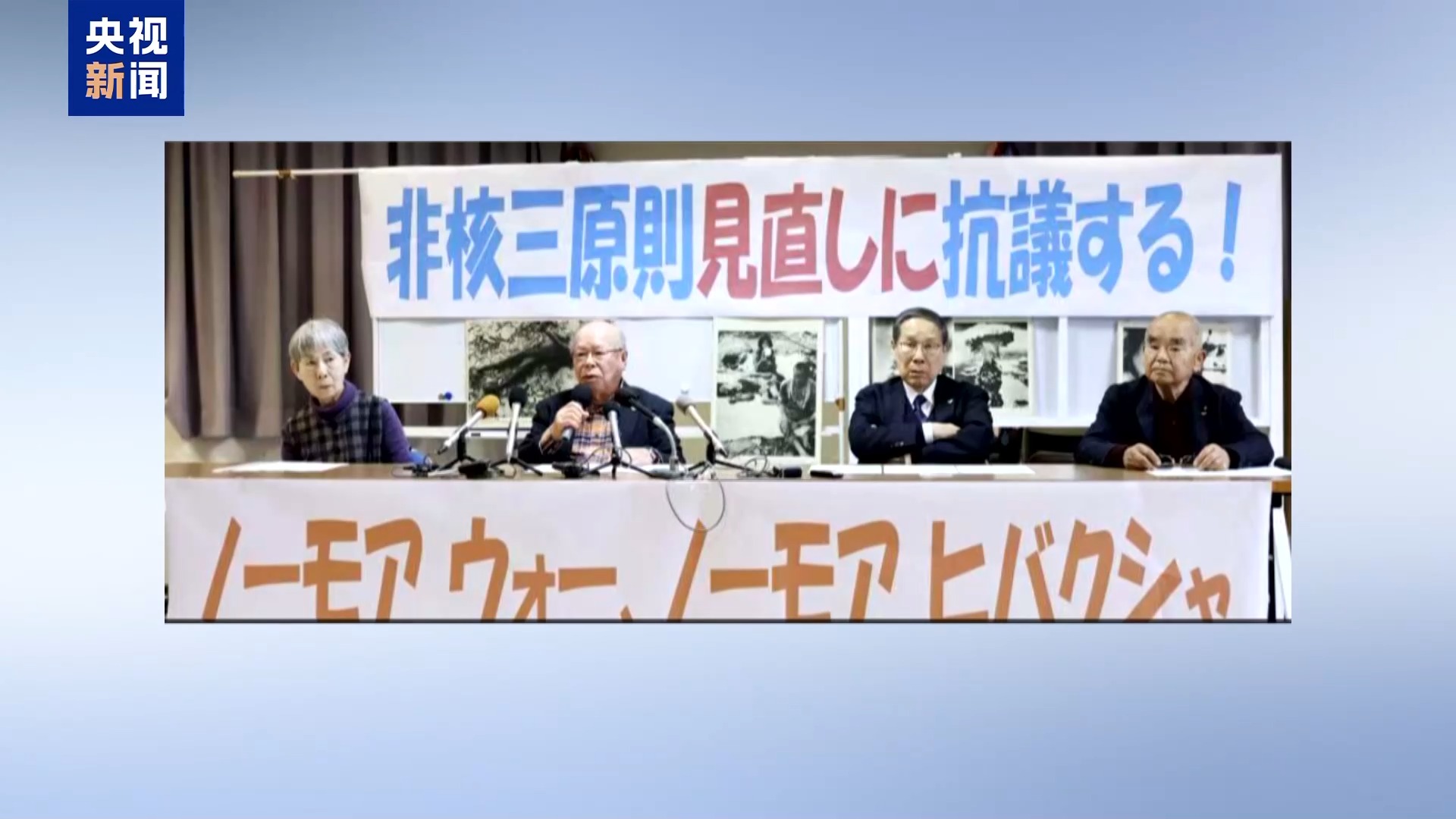
从拥核言论到巨额军费 日本右翼“冒天下之大不韪”或酿重大灾难
Yang Shi Xin Wen Ke Hu Duan· 2025-12-26 02:09
Core Viewpoint - Recent statements by high-ranking officials in Japan advocating for nuclear armament have sparked strong domestic backlash and international concern, revealing a dangerous trend towards historical revisionism and military expansion within the Japanese government [1][2][14] Group 1: Nuclear Armament Discussions - Japanese Prime Minister Suga Yoshihide's aide, who is responsible for nuclear disarmament, made controversial remarks suggesting Japan should consider nuclear capabilities, indicating a significant shift in Japan's defense policy [2][5] - The Chinese government has condemned these pro-nuclear statements, labeling them as a serious provocation against international norms and a threat to regional stability [1][14] Group 2: Domestic Reactions - Various groups within Japan, including nuclear bomb survivors, have expressed strong opposition to the pro-nuclear rhetoric, emphasizing that it undermines the suffering experienced over the past 80 years [5][7] - Public protests have emerged, with citizens rallying against the government's militaristic policies and calling for the resignation of Prime Minister Suga [7][9] Group 3: Military Budget and Expansion - Japan's upcoming budget proposal for the fiscal year 2026 is expected to reach a record high of 122 trillion yen, with defense spending surpassing 9 trillion yen for the 14th consecutive year [9][11] - The budget includes provisions for increasing arms exports and enhancing Japan's security capabilities, reflecting a clear intent to expand military operations [9][11] Group 4: Historical Revisionism - The influence of historical revisionism is evident in Japan's military education, where textbooks are incorporating "Yasukuni views," promoting a militaristic narrative among future military leaders [13][14] - Experts warn that Japan's nuclear ambitions could embolden right-wing factions, potentially leading to aggressive foreign policies and regional conflicts [14]
警惕日本自卫队的“靖国旧梦”
Xin Lang Cai Jing· 2025-12-24 18:49
Core Viewpoint - The resurgence of militaristic sentiments in Japan is evident through the activities of the Japan Defense University students and the increasing influence of the Yasukuni Shrine on the Self-Defense Forces [1][2][3][4] Group 1: Activities and Traditions - Japan Defense University students are required to participate in a "night march" to the Yasukuni Shrine at least once during their four years of study, indicating a long-standing tradition [1] - On August 15, Japan's defeat day, members of the Self-Defense Forces (SDF) in uniform are frequently seen collectively visiting the Yasukuni Shrine, showcasing the infiltration of historical revisionism into the SDF [1] Group 2: Policy and Regulations - The Japanese Ministry of Defense has internal regulations prohibiting collective visits to shrines by SDF personnel, yet these rules are increasingly ignored, as evidenced by a high-ranking official leading a group to the Yasukuni Shrine [2] - The Ministry's investigation into such incidents often downplays them as "private visits," undermining the seriousness of the violations [2] Group 3: Educational Content and Historical Narratives - The Defense University’s required course materials reflect the "Yasukuni view of history," distorting Japan's military actions as self-defense against Western imperialism [3] - Criticism has emerged regarding the university's choice of guest speakers, who promote a narrative that glorifies Japan's wartime actions [3] Group 4: Personnel and Leadership - The appointment of a former high-ranking SDF officer as the head of the Yasukuni Shrine marks a significant intertwining of military and religious leadership, raising concerns about the militarization of the shrine [3] - The advisory board of the Yasukuni Shrine includes several former SDF leaders, further solidifying the connection between the military and the shrine [3] Group 5: Broader Implications - The increasing militarization of Japan, coupled with political rhetoric advocating for military intervention, raises alarms about the potential revival of aggressive military policies reminiscent of Japan's past [4] - Statements from SDF officials regarding the Yasukuni Shrine as a "spiritual home" and the notion of preparing for "death in battle" reflect a troubling shift towards militaristic ideology [4]
专栏|警惕!日本自卫队的“靖国旧梦”
Xin Lang Cai Jing· 2025-12-24 12:42
Core Viewpoint - The article highlights the concerning resurgence of militaristic sentiments in Japan, particularly through the activities of the Self-Defense Forces (SDF) and their connections to the Yasukuni Shrine, which symbolizes Japan's militaristic past [1][2][3][4]. Group 1: Activities and Traditions - A video showing students from the National Defense Medical College participating in a collective visit to Yasukuni Shrine has gone viral, indicating a troubling revival of militaristic traditions [1]. - The National Defense Medical College has a long-standing tradition where students must participate in a "night march" to Yasukuni Shrine at least once during their four years of study [1]. - On significant dates like August 15, the anniversary of Japan's defeat in World War II, SDF personnel in uniform are frequently seen visiting Yasukuni Shrine [1]. Group 2: Policy and Regulations - The Japanese Ministry of Defense has internal regulations prohibiting collective visits to shrines by SDF members, but these rules are increasingly ignored [2]. - In January 2024, a senior SDF officer led a group of personnel to Yasukuni Shrine, which was later classified as a "private visit" despite the public nature of the event [2]. - The Yasukuni Shrine's "Yushukan" museum is being promoted as a historical education base for the SDF, further blurring the lines between military training and historical revisionism [2]. Group 3: Educational Content and Historical Narratives - The curriculum at the National Defense Medical College includes materials that reflect the "Yasukuni view of history," distorting Japan's military actions as defensive against Western imperialism [3]. - A former professor criticized the college for inviting speakers who support the justification of Japan's wartime actions, indicating a troubling influence of revisionist history on future military leaders [3]. - In April 2024, an SDF unit publicly referred to World War II as the "Greater East Asia War," showcasing the impact of the "Yasukuni view" on official communications [3]. Group 4: Personnel and Leadership - The appointment of a former SDF officer as the head priest of Yasukuni Shrine marks a significant intertwining of military and religious leadership, with implications for the SDF's ideological direction [3]. - The advisory board of Yasukuni Shrine includes several former high-ranking SDF officials, indicating a deepening relationship between the shrine and the military [3]. Group 5: Broader Implications - Japan's increasing militarization and the rhetoric surrounding national security raise concerns about the potential revival of militaristic ideologies within the SDF [4]. - Statements from SDF officials expressing a readiness to die in battle and the characterization of Yasukuni Shrine as a "spiritual home" reflect a dangerous normalization of militaristic sentiments [4]. - The historical role of Yasukuni Shrine in mobilizing the Japanese populace for war underscores the potential risks of a militarized SDF in the current geopolitical climate [4].
警惕日本自卫队的靖国旧梦
Xin Lang Cai Jing· 2025-12-24 09:36
Core Viewpoint - The article highlights the concerning trend of Japan's Self-Defense Forces (SDF) increasingly aligning with the Yasukuni Shrine, which symbolizes Japan's militaristic past, raising fears of a revival of militarism in Japan [1] Group 1: Activities and Traditions - Students from the National Defense Medical College participated in a collective visit to Yasukuni Shrine, which is a long-standing tradition requiring students to undertake a "night march" to the shrine during their four years of study [1] - The SDF personnel have been seen collectively visiting Yasukuni Shrine on significant dates, such as August 15, the anniversary of Japan's defeat in World War II, indicating a normalization of this practice [1] Group 2: Institutional Issues - Despite internal regulations prohibiting collective visits to shrines by SDF members, these rules are being ignored, as evidenced by the actions of high-ranking officials who have participated in such visits [1] - The educational materials used at the National Defense Medical College reflect a revisionist view of history, promoting the "Yasukuni view" and distorting Japan's military actions as self-defense against Western powers [1] Group 3: Personnel and Leadership - The appointment of a former SDF officer as the head of Yasukuni Shrine marks a significant intertwining of military and religious leadership, raising concerns about the influence of militaristic ideologies within the SDF [1] - The presence of former high-ranking SDF officials in advisory roles at Yasukuni Shrine further illustrates the deepening connections between the military and the shrine [1] Group 4: Broader Implications - The article discusses the accelerated militarization of Japan and the rhetoric surrounding national security, which is fostering an environment where militaristic sentiments are gaining traction [1] - Statements from SDF officials regarding the shrine as a "spiritual home" and the preparation for "sacrificing" in battle reflect a troubling shift towards a mindset that could lead to militaristic actions [1]
专栏丨警惕!日本自卫队的“靖国旧梦”
Xin Hua She· 2025-12-24 09:04
Core Viewpoint - The resurgence of militaristic sentiments in Japan is evident through the activities of the Self-Defense Forces (SDF) and their connection to the Yasukuni Shrine, raising concerns about a potential revival of militarism in the country [1][3][4] Group 1: Activities and Traditions - A video showing students from the National Defense Medical University participating in a collective visit to Yasukuni Shrine has gone viral, highlighting a long-standing tradition where students must participate in a "night march" to the shrine during their four years of study [1] - The SDF has been seen participating in collective visits to Yasukuni Shrine, particularly on significant dates like August 15, the anniversary of Japan's defeat in World War II, indicating a deep-rooted connection to the shrine [1][2] Group 2: Policy and Regulations - Despite internal regulations prohibiting collective visits to shrines by SDF personnel, these rules have become ineffective, as evidenced by a high-ranking official leading a group to Yasukuni Shrine and being labeled as a "private visit" [2] - The Yasukuni Shrine has been controversially designated as a "historical education base" for the SDF, further blurring the lines between military training and nationalistic indoctrination [2] Group 3: Educational Content and Ideology - The curriculum at the National Defense Medical University includes materials that reflect the "Yasukuni view of history," distorting Japan's military actions as defensive against Western imperialism [3] - The influence of the "Yasukuni view" is evident in official communications from the SDF, which have used terms like "Greater East Asia War" in their announcements, showcasing a shift in historical narrative [3] Group 4: Personnel and Leadership - The appointment of a former high-ranking SDF officer as the head priest of Yasukuni Shrine marks a significant intertwining of military and religious leadership, raising alarms about the militarization of national identity [3] - The advisory board of Yasukuni Shrine includes several former high-ranking SDF officials, indicating a strong personnel connection between the military and the shrine [3] Group 5: Broader Implications - The increasing militarization of Japan, coupled with political rhetoric advocating for military intervention in regional conflicts, suggests a potential shift towards a more aggressive military posture [3][4] - Statements from SDF officials expressing a readiness to "die in battle" and the characterization of Yasukuni Shrine as a "spiritual home" for SDF personnel reflect a troubling normalization of militaristic ideology [4]
警惕!日本自卫队的“靖国旧梦”
Xin Hua She· 2025-12-24 08:31
Core Viewpoint - The article highlights the concerning resurgence of militaristic sentiments in Japan, particularly through the activities of the Self-Defense Forces (SDF) and their connections to the Yasukuni Shrine, which symbolizes Japan's militaristic past [2][4][5]. Group 1: Activities and Traditions - A video showing students from the National Defense Medical College participating in a collective visit to Yasukuni Shrine has gone viral, indicating a troubling trend of militarism [2]. - The National Defense Medical College has a long-standing tradition requiring students to participate in a "night march" to Yasukuni Shrine at least once during their four years of study [2]. - On August 15, Japan's defeat day, members of the SDF in uniform are frequently seen visiting Yasukuni Shrine, reflecting the infiltration of historical revisionism into the SDF [2][4]. Group 2: Internal Regulations and Violations - The Ministry of Defense has internal regulations prohibiting collective visits to shrines by SDF personnel, but these rules are increasingly ignored [3]. - In January 2024, a senior SDF officer led a group to Yasukuni Shrine, which was later downplayed as a "private visit" despite the public nature of the event [3]. - The SDF has been criticized for using Yasukuni Shrine as a "historical education base," further blurring the lines between military training and nationalistic indoctrination [3]. Group 3: Educational Content and Historical Narratives - The curriculum at the National Defense Medical College includes textbooks that reflect the Yasukuni perspective, distorting historical events to portray Japan's military actions as defensive [4]. - A former professor criticized the college for inviting speakers who support the justification of Japan's wartime actions, indicating a troubling trend in military education [4]. - In April 2024, an SDF unit publicly referred to World War II as the "Greater East Asia War," showcasing the influence of Yasukuni ideology [4]. Group 4: Personnel and Leadership Connections - The appointment of a former SDF officer as the head priest of Yasukuni Shrine marks a significant intertwining of military and religious leadership [4]. - The advisory board of Yasukuni Shrine includes several former high-ranking SDF officials, indicating a deepening relationship between the SDF and the shrine [4]. Group 5: Broader Implications and Concerns - Japan's military expansion and the rhetoric surrounding national security have raised alarms about a potential return to militarism, with officials openly discussing military interventions [4][5]. - The glorification of Yasukuni Shrine and its association with military sacrifice poses risks of fostering a mindset conducive to war preparations [5].