
易主

Search documents
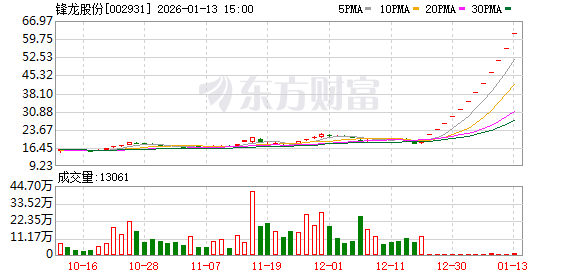
连续上涨213.97% 002931将停牌核查
Shang Hai Zheng Quan Bao· 2026-01-13 13:56
Group 1 - The core point of the news is that Fenglong Co., Ltd. (002931) announced a stock price increase of 213.97% from December 25, 2025, to January 13, 2026, which has significantly deviated from the company's fundamentals [2] - To protect investor interests, the company will suspend trading for a maximum of three trading days to investigate the stock price fluctuations [2] - The company has issued a risk warning regarding the trading risks in the secondary market [2] Group 2 - The recent stock performance of Fenglong Co., Ltd. is primarily driven by the news of a potential acquisition by UBTECH, which plans to acquire 93.96 million shares, representing 43% of Fenglong's total shares, to gain control of the company [5] - Fenglong Co., Ltd. stated that there are no immediate plans from UBTECH to change the main business operations or make significant adjustments to the company within the next 12 months [5] - The company emphasized that after the transaction, its main business will remain unchanged, and while UBTECH aims to optimize management and resource allocation, there are uncertainties regarding future business cooperation and transformation [5]



资本热话 | 2元以下低价股仅剩33只,如何挖掘优质标的?
Sou Hu Cai Jing· 2025-08-21 08:27
Group 1 - The core viewpoint of the article highlights the significant reduction in the number of low-priced stocks in the A-share market, particularly in the real estate, construction, and chemical industries, amidst a rising market trend [2][9][15] - As of August 20, the number of stocks priced below 3 yuan and 5 yuan has decreased by 62 and 210 respectively since the beginning of the year, indicating a decline of over 20% [3] - The low-priced stocks are primarily concentrated in the main board, with over 90% of stocks priced below 3 yuan coming from this segment [2][9] Group 2 - Some low-priced stocks have experienced significant price increases, with *ST Yushun's stock price rising nearly 700% year-to-date, attributed to mergers and acquisitions [2][5] - The low-priced stock index has shown a cumulative increase of 16.49% since the beginning of the year, with a recent monthly increase of 6.2% [3] - Stocks like *ST Suwu have faced severe declines, with a drop of over 90% year-to-date, primarily due to regulatory issues and administrative penalties [11] Group 3 - The article notes that low-priced stocks are often characterized by their low valuations and can attract speculative investments during bullish market phases [12][13] - The current market sentiment towards low-priced stocks is described as relatively calm, with investors advised to focus on the fundamental aspects of companies rather than solely on price [14] - The concentration of low-priced stocks in specific industries, such as real estate and construction, reflects the ongoing market adjustments and pressures faced by these sectors [12][14]



2元以下个股仅剩33只 部分低价股年内翻番
Sou Hu Cai Jing· 2025-08-20 16:38
Core Viewpoint - The A-share market has seen a significant reduction in the number of low-priced stocks, with many companies previously classified as low-priced experiencing substantial price increases due to mergers and acquisitions or changes in ownership [1][2][3]. Group 1: Market Trends - As of August 20, the number of stocks priced below 3 yuan and 5 yuan has decreased by over 20% since the beginning of the year, with 153 stocks below 3 yuan and 544 stocks below 5 yuan [2][3]. - The low-priced stock index has shown a cumulative increase of 16.49% year-to-date, with a 6.2% increase in August alone [2]. - The recent market rally has allowed several stocks to rise significantly, with *ST Yushun's price increasing from 3.56 yuan at the beginning of the year to 28.33 yuan, marking a 695% increase [1][3]. Group 2: Industry Analysis - Low-priced stocks are predominantly found in the real estate, construction, and chemical industries, with over 90% of stocks priced below 3 yuan coming from the main board [7][8]. - The real estate sector has several stocks priced below 2 yuan, including *ST Jinke and Rongsheng Development [9]. Group 3: Company-Specific Developments - *ST Yushun announced plans to acquire 100% of three companies, which led to a significant price surge, with the stock experiencing 14 consecutive trading days of gains [4]. - Filinger's stock price increased after the announcement of a change in control, with the stock rising from a low of 4.9 yuan to a high of 23.35 yuan following the news [5][6]. Group 4: Investor Sentiment - Despite the potential for low-priced stocks to attract investment due to their low valuations, current market sentiment towards these stocks is relatively calm, with a focus on fundamental analysis rather than speculative trading [11].