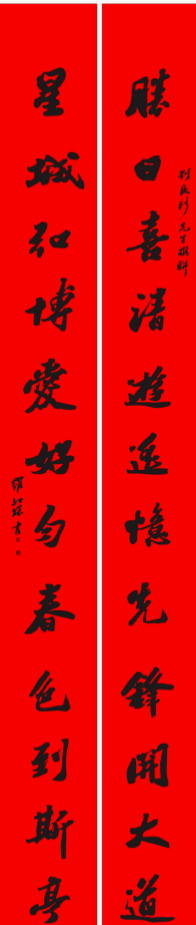
春联文化

Search documents
东西问丨从春联看美韵
Xin Lang Cai Jing· 2026-02-16 06:47
Core Viewpoint - The article explores the cultural significance and aesthetic beauty of Spring Festival couplets (春联), highlighting their historical evolution and deep-rooted connection to Chinese civilization [3][5][10]. Group 1: Historical Context - Spring Festival couplets have transitioned from royal customs to common household decorations, with a history spanning over a thousand years since their inception during the Five Dynasties [3]. - The couplets reflect the aesthetic crystallization of Chinese civilization, showcasing the harmony of form and meaning inherent in Chinese characters [5]. Group 2: Aesthetic Beauty - The beauty of couplets lies in their concise expression, where characters convey both sound and meaning, creating a rhythmic and harmonious reading experience [5]. - The structure of couplets embodies philosophical concepts such as balance and harmony, reflecting ancient Chinese dialectics and aesthetic traditions [6]. Group 3: Cultural Significance - Couplets are deeply embedded in folk customs, symbolizing the collective participation of families in annual rituals, thus bridging the gap between high culture and everyday life [8]. - The vibrant red color of couplets is rooted in ancient beliefs about life and vitality, serving as a means to ward off evil and invite good fortune during the New Year [8]. Group 4: Modern Relevance - The popularity of couplets is increasing, with their creation becoming more accessible through AI, yet it is essential to maintain an appreciation for their intrinsic beauty [10]. - Spring Festival couplets serve as a cultural window for the Chinese nation, inviting people to engage with and appreciate the beauty and meaning they convey [10].

浅谈《对联话》里的几副春联
Xin Lang Cai Jing· 2026-02-12 20:33
Core Viewpoint - The article explores the cultural significance and historical evolution of Spring Festival couplets (春联) in Chinese society, highlighting their role as a living expression of tradition and contemporary sentiment. Group 1: Historical Context - Spring Festival couplets have evolved from ancient traditions, with roots tracing back to texts like "Shan Hai Jing" and the first recorded couplets from the Five Dynasties period [1] - The practice gained prominence during the Ming Dynasty under Zhu Yuanzhang, transforming into a ritual with both cultural and ceremonial significance [1] - The development of couplet literature flourished during the Qing Dynasty, reflecting the integration of these literary forms into daily life across Chinese communities [1] Group 2: Notable Couplets - A couplet by Cao Bingxing reflects the vastness of Xinjiang's landscape and the sentiment of feeling at home in a foreign land, showcasing the emotional depth of couplets [2] - Another couplet by Cao Bingxing expresses the struggles of scholars in high positions, capturing the tension between ambition and contentment [3] - A couplet by Fang Dishan uses clever wordplay to convey the idea that amidst life's complexities, only wine can provide solace, illustrating the blend of traditional and contemporary themes [4] - The couplet by Huang Fuyongwu incorporates modern scientific knowledge, symbolizing the transition from traditional expressions to new ideas, while maintaining a connection to cultural roots [5][6] - Zhang Xinliang's couplet emphasizes the collaborative spirit in business, reflecting the practical concerns of everyday life [7] - Xiong Xiaobai's couplet contrasts the chaotic past with hopeful future aspirations, resonating with common human experiences during the New Year [8] Group 3: Cultural Significance - The article emphasizes that Spring Festival couplets are not merely decorative but serve as a medium for expressing hopes, reflections, and cultural identity [1][8] - They encapsulate a range of emotions from celebration to introspection, illustrating the dynamic relationship between tradition and modernity [8] - The enduring nature of couplets signifies a continuous dialogue between past and present, highlighting the universal human desire for renewal and hope during the New Year [8]
中国文化里的春联
Xin Lang Cai Jing· 2026-02-12 20:33
Core Viewpoint - The tradition of replacing old peach charms with new spring couplets during the Spring Festival reflects the evolution and richness of Chinese cultural practices over thousands of years, symbolizing renewal and the transmission of blessings [2][3]. Group 1: Cultural Significance - The practice of changing peach charms to spring couplets signifies the importance of welcoming the new year and embodies the cultural essence of renewal and good fortune [2]. - The transition from peach charms to spring couplets has expanded the means of expressing blessings, allowing for more personalized and diverse messages that resonate with the public's needs [2][3]. Group 2: Artistic Integration - Spring couplets merge the art of calligraphy with festive traditions, enhancing the cultural depth of the Spring Festival and elevating the artistic standards of couplets [4]. - The demand for spring couplets reflects a collective return to traditional values, showcasing the charm of Chinese culture and the significance of calligraphy in expressing festive sentiments [4][5]. Group 3: Historical Context - The development of spring couplets is intertwined with the evolution of Chinese poetry, showcasing a pursuit of aesthetic beauty and structural perfection that has been ingrained in the culture [6]. - Historical records indicate that the first official spring couplet was written during the Five Dynasties, marking a significant milestone in the tradition [6]. Group 4: Modern Relevance - The accessibility of spring couplets has increased due to advancements in printing technology, allowing literary works to reach a broader audience and resonate with the general public [7]. - Classic spring couplets have transcended time, continuing to evoke warmth and connection across generations, demonstrating their enduring relevance in contemporary society [7].
长沙地标上的春联妙在何处?楹联专家带你欣赏
Xin Lang Cai Jing· 2026-02-12 15:27
Core Viewpoint - The "Landmark Spring Couplets" competition in Changsha showcases the cultural significance and artistic expression of the city through selected couplets displayed at iconic locations, enhancing the festive atmosphere during the Spring Festival [1]. Group 1: Competition Overview - The "Landmark Spring Couplets" competition is organized by the Changsha Municipal Bureau of Culture, Tourism and Broadcasting, and Changsha Evening News, highlighting the city's cultural heritage [1]. - The competition has invited experts to interpret the winning couplets, enriching the public's understanding of their significance [1]. Group 2: Individual Couplets Analysis - **Zhongshan Pavilion Couplets**: The couplet reflects the historical depth and cultural vitality of Zhongshan Pavilion, emphasizing the city's pride and innovative spirit through its language and imagery [3]. - **Changsha Evening News Couplets**: This couplet encapsulates the transformation of traditional media into a full-media platform, showcasing the newspaper's commitment to serving the public and adapting to modern times [6]. - **Tianxin Pavilion Couplets**: The couplet employs artistic techniques to express the historical significance and dynamic spirit of Tianxin Pavilion, linking the past with the present [10][11]. - **Chaozong Street Couplets**: The couplet symbolizes the historical and cultural evolution of Chaozong Street, reflecting the spirit of progress and the importance of historical memory [19][20]. - **Liuyang Gate Couplets**: This couplet illustrates the transformation of Liuyang Gate from a military fortification to a modern urban landmark, symbolizing the vibrant development of Changsha [30].