智慧绿色交通

Search documents
广西交通五年大变样
Guang Xi Ri Bao· 2026-01-23 02:46
Core Insights - The "14th Five-Year Plan" period marks the fastest development phase in Guangxi's transportation history, achieving significant results and benefiting the public widely [4] Infrastructure Development - Approximately 3,850 kilometers of new expressways have been added, bringing the total to 10,650 kilometers [5] - About 700 kilometers of new high-speed rail have been constructed, with a total nearing 2,500 kilometers [6] - 366 kilometers of new third-level and above inland waterways have been added, totaling 1,579 kilometers [6] Connectivity Enhancements - The region has achieved comprehensive connectivity with high-speed rail, expressways, and postal services reaching every city, county, and village [6][7] - The development axis of the Western Land-Sea New Corridor is being accelerated, enhancing connections between the eastern, central, and western regions [8] Major Projects - Key projects such as the Pinglu Canal and the Huangtong to Baise railway have commenced construction [9] - The Pearl River-Xijiang development axis is being optimized to enhance connectivity with Guangdong, Hong Kong, Macau, and ASEAN [10] Port and Air Transport Growth - Beibu Gulf Port has officially entered the ranks of ports handling over 10 million TEUs [11] - Port cargo and container throughput has consistently ranked in the top 10 nationally for five consecutive years, with increases of 64% and 99% respectively compared to the end of the "13th Five-Year Plan" [12] Transportation Network Expansion - The highway framework is nearly complete, with a solid high-speed rail network established and accelerated inland waterway connectivity [12] - The civil aviation network has expanded to connect nationwide, ASEAN, and globally, with passenger and cargo throughput increasing by 36% and 56% respectively compared to the end of the "13th Five-Year Plan" [12] Rural Infrastructure Improvements - Over 41,000 kilometers of rural roads have been newly constructed or renovated, totaling 158,000 kilometers, with more than 15,000 natural villages now connected by hardened roads [18] - Safety projects for rural roads cover 20,000 kilometers, and 857 dangerous bridges have been renovated [19] Smart and Green Initiatives - The first smart expressway, the first unmanned subway, and the first automated container terminal have been put into operation [24] - The region has achieved full coverage of charging facilities in expressway service areas and has a higher proportion of new energy buses and taxis compared to the national average [28] Future Goals - By 2030, the goal is to establish a modern comprehensive transportation system that is safe, convenient, efficient, green, and economical, with significant progress in transportation infrastructure modernization [31] - Key initiatives for 2026 include completing the Pinglu Canal, enhancing connectivity with ASEAN, and improving the transportation logistics efficiency [32][33]


香港将公布《运输策略蓝图》 以智慧绿色交通提升竞争力
Zhong Guo Xin Wen Wang· 2025-12-21 23:19
Group 1 - The Hong Kong government is set to announce the "Transport Strategy Blueprint" aimed at enhancing urban competitiveness through smart and green transportation [1] - The vision includes a focus on people-centric approaches, strengthening internal and external connectivity, promoting efficient travel, and embracing green living [1] - Hong Kong's public transport system ranks first globally according to a 2025 survey by Time Out magazine, and second in the Urban Mobility Readiness Index 2024, with its green transport system ranked first in Asia [1] Group 2 - The government plans to accelerate the implementation of various railway, major road, and smart green collective transport projects as outlined in the previously announced "Hong Kong Major Transport Infrastructure Development Blueprint" [1] - During the 14th Five-Year Plan period, Hong Kong aims to actively integrate and serve the national development strategy, particularly through deeper transportation infrastructure connections with cities in the Guangdong-Hong Kong-Macao Greater Bay Area [2]
南通“十四五”交通建设圆满收官 “八龙过江”格局加速成型
Yang Zi Wan Bao Wang· 2025-12-04 15:24
Core Insights - Nantong City has achieved significant milestones in transportation construction during the "14th Five-Year Plan," with a total investment of 120 billion yuan, marking a historical high and solidifying its status as a national comprehensive transportation hub [1] Group 1: Transportation Infrastructure Development - The construction of cross-river passages has made historic breakthroughs, with the "Eight Dragons Crossing the River" pattern accelerating formation. Key projects such as the Sutong Bridge, Chongqi Bridge, and the Shanghai-Suzhou-Nantong Yangtze River Rail and Road Bridge are now operational [1] - The highway network has been enhanced, forming a "three-ring seven-radiation" structure, with over 90% of the physical work on the Nantong section of the North Jiangsu High-speed Railway completed [1] - The waterway infrastructure has seen improvements, with a planned upgrade of 207 kilometers of waterways, and Nantong Port is expected to handle a cargo throughput of 340 million tons in 2024, with a container throughput of 2.719 million TEUs, representing a year-on-year increase of 33.1% [1] Group 2: Logistics and Transportation Efficiency - The capabilities of logistics hubs have significantly improved, with the opening of the Lvsijikou Port Area and the official approval of Nantong as a national logistics hub [1] - Breakthroughs in multimodal transport have been achieved, including the launch of the first ocean shipping route and the regular operation of the "China-Kyrgyzstan-Uzbekistan" international rail freight service [1] Group 3: Smart and Green Transportation Initiatives - Nantong has established the province's first fully automated container terminal and a digital transportation industrial park that houses 53 enterprises in the supply chain [1] - The city has successfully created a national model for urban green freight distribution, leading to the formation of the "Nantong Model" [1] Group 4: Public Transportation and Accessibility - The "Four Good Rural Roads" initiative has been recognized as a national demonstration project, with 446 dangerous bridges renovated, achieving a 5A rating for urban-rural transportation integration across all counties [2] - Railway passenger volume has exceeded 13 million annually, and airport passenger throughput has reached a new high of 4.1 million, with urban rail transit carrying approximately 100 million passengers [2] Group 5: Future Outlook - Looking ahead to the "15th Five-Year Plan," Nantong aims to complete multiple cross-river passages and high-speed rail projects, targeting a container throughput of over 3.5 million TEUs at its ports [2] - By 2030, the city plans to achieve modern transportation system standards ahead of the province, establishing a robust modern comprehensive transportation system [2]
聊城聚焦“智慧绿色交通”建设 绘就便捷低碳出行新画卷
Qi Lu Wan Bao· 2025-12-04 12:29
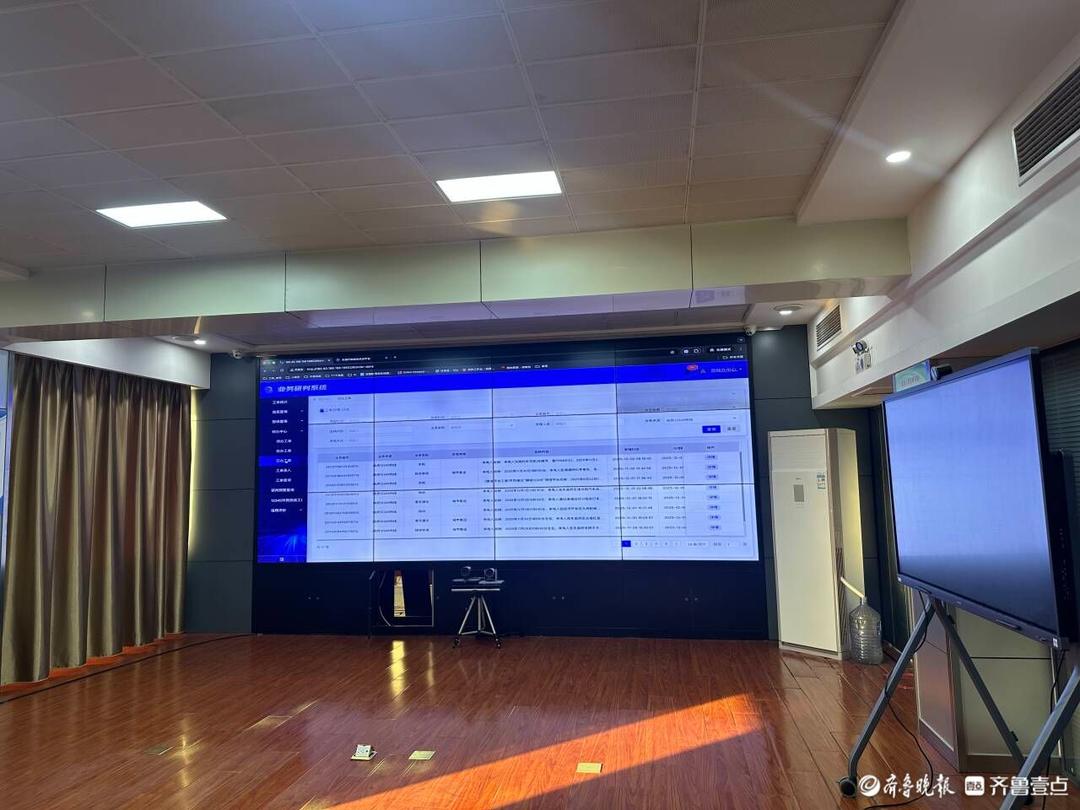
Core Viewpoint - The event organized by the Liaocheng Transportation Bureau aims to showcase the city's progress in the construction of "smart green transportation" and to gather public opinions for further development [1][3]. Group 1: Event Overview - The Liaocheng Transportation Bureau held an open day event on December 2, inviting local political representatives, citizens, and media to observe the smart traffic monitoring and emergency command center [1]. - The event included a tour of the center, where attendees learned about its functions in integrating traffic data, monitoring operations, and coordinating emergency responses [3]. Group 2: Achievements in Smart Green Transportation - Wang Haitao, a member of the Transportation Bureau, reported on the city's initiatives and achievements in "smart green transportation," focusing on the core goals of making travel more convenient, low-carbon, and comfortable [5]. - The city has implemented a three-year action plan for green transportation, enhancing the infrastructure, services, and equipment related to green travel [5]. Group 3: Public Feedback and Future Directions - Attendees provided positive feedback on the progress made in smart green transportation and suggested improvements in public transport networks, data openness, green transportation promotion, rural logistics, and the integration of transportation with cultural tourism [5]. - The open day served as a platform for communication between the transportation department and the public, enhancing transparency and credibility in the department's work [5].