智能储能

Search documents
一文讲透储能运营:到底什么样的储能,才配叫“智能”?
3 6 Ke· 2026-01-20 10:20
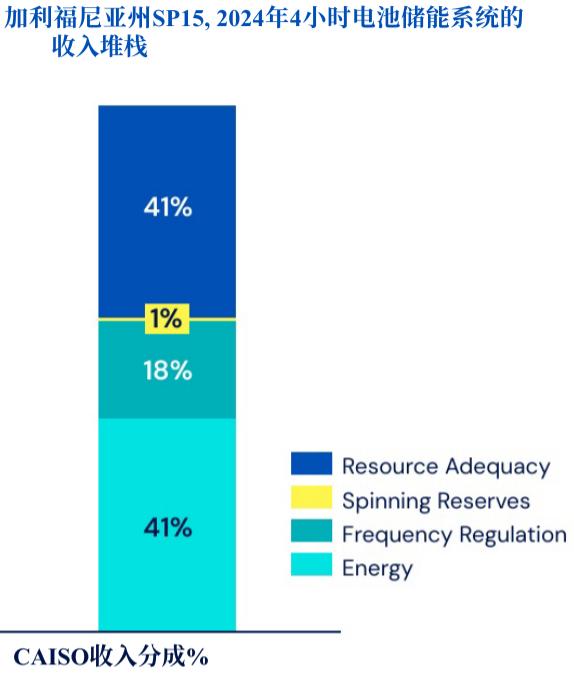
Core Insights - The article emphasizes the importance of defining "smart" energy storage, focusing on its ability to transform unpredictable cash flows into predictable, verifiable, and financeable returns over a 20-year operational cycle [2][6][24] - Fluence's report, "Why Smart Storage is Smart Business," provides a comprehensive analysis of how energy storage can evolve from a mere device to a valuable financial asset, highlighting the significance of Internal Rate of Return (IRR) as a key performance indicator [3][13][24] Group 1: Understanding Smart Storage - The discussion around "smarter storage" often lacks clarity, with various interpretations ranging from advanced energy management systems to more profitable operations [5] - Fluence's report clarifies that the essence of smart storage lies in its ability to deliver consistent, auditable, and financeable long-term cash flows, rather than just operational efficiency [8][24] - The report categorizes revenue streams into three types: energy arbitrage, ancillary services, and capacity/reliability mechanisms, illustrating that returns are more complex than simple price differentials [9][12] Group 2: Revenue and IRR Sensitivity - The report stresses that capturing current revenue is only part of the equation; the real success hinges on the project's ability to reliably deliver value over decades, making IRR the ultimate metric [13][15] - Small deviations in availability, dispatchable energy, or state of charge (SOC) can significantly impact cash flows over the asset's lifespan, emphasizing the need for precise operational management [15][18] Group 3: Operational Challenges and Solutions - The report identifies three main "invisible killers" of IRR: inaccurate degradation forecasts, SOC uncertainties leading to conservative operational strategies, and minor operational losses that accumulate over time [16][18] - A comprehensive approach to "smart" storage involves a closed-loop system of sensing, predicting, and ensuring performance, with advanced asset performance management platforms like Nispera providing predictive maintenance capabilities [19][20] Group 4: Market Dynamics in Different Regions - In mature markets like the US, Germany, and the UK, the focus has shifted from simple price differentials to sophisticated operational strategies that maximize returns [25][28] - The US market exemplifies this shift, where the ability to navigate complex regulatory environments and optimize operational strategies becomes crucial for profitability [30][31] - The UK market's rapid service evolution necessitates a focus on combination optimization to adapt to changing market conditions [32][34] - Germany's regulatory clarity and high demand for grid integration highlight the importance of delivering projects that meet compliance and operational standards [37][39] Group 5: Implications for the Chinese Market - The article suggests that the Chinese market faces unique challenges due to evolving regulations and market dynamics, necessitating a more financial and engineering-focused approach to investment returns [48][50] - It advocates for a structured revenue model that categorizes income into certainty, semi-certainty, and uncertainty, allowing for more rational investment decisions [50][51] - The need for operational teams to connect dispatch actions with settlement outcomes is emphasized as a critical factor for maximizing storage utilization [53][54] Group 6: Future Outlook - The article concludes that the future of energy storage lies in its recognition as a financial asset, shifting the focus from technical specifications to cash flow certainty [56][58] - As the market matures, the ability to manage risks and optimize operational strategies will determine competitive advantage, with a clear emphasis on establishing a framework for predictable cash flows [60][61]

瞄准AI数据中心供电市场 阳光电源开启新征途
Xin Lang Cai Jing· 2025-10-10 02:59
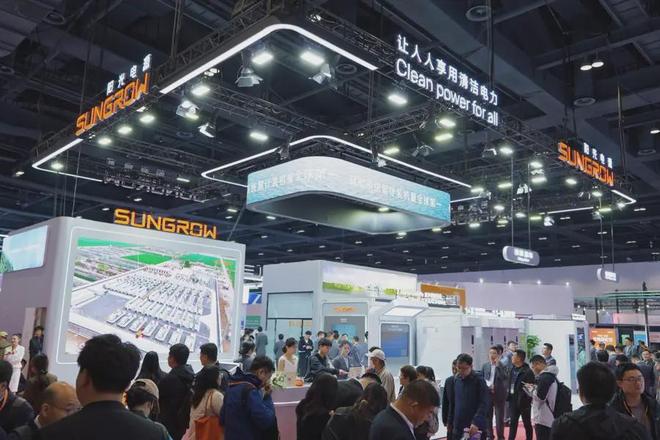
Core Viewpoint - The rise of AI is driving a revolution in the energy sector, with Sungrow Power Supply Co., Ltd. seeking to expand its market presence through a secondary listing in Hong Kong, focusing on energy storage as a core component of its AI power supply strategy [3][7]. Group 1: Company Overview - Sungrow Power Supply, established in 1997, is renowned globally for its photovoltaic inverters, holding a market share of approximately 25.2% in 2024, and has been a leader for ten consecutive years, with products sold in over 170 countries [3][4]. - The company's revenue has grown from 40.11 billion yuan in 2022 to an estimated 77.7 billion yuan in 2024, reflecting a compound annual growth rate (CAGR) of 37% [4]. Group 2: Business Transition - The company is transitioning from a focus on power supply to power management, with its energy storage business revenue reaching 41% in the first half of 2025, surpassing the inverter business for the first time [5][6]. - Sungrow's energy storage systems have a global market share of 11.9%, positioning the company as a leader in this segment [5]. Group 3: Technological Advancements - In 2023, the company launched the PowerTitan 2.0 liquid-cooled energy storage system, featuring high power density and modular structure, and introduced new photovoltaic and storage solutions at the 2025 RE+ conference in the U.S. [6]. - The PowerTitan 3.0 storage system, designed for AI data centers and large grid scenarios, boasts an energy efficiency of over 93% and supports rapid response and black start capabilities [6]. Group 4: Market Potential and Valuation - The global demand for AI computing is projected to require an additional 55 GW of power capacity by 2030, representing a significant growth opportunity for the energy sector [5][6]. - Sungrow's stock has appreciated approximately 120% this year, reflecting market optimism regarding its business transformation and AI power supply narrative, with a current market capitalization of 335 billion yuan [6][7].