智能密度

Search documents
马斯克频繁为中国AI站台,真相被忽略了
虎嗅APP· 2026-03-05 00:19
Core Viewpoint - The article discusses Elon Musk's recent praise for Chinese AI models, particularly in the context of his business interests and competitive strategies in the AI sector. It highlights the implications of Musk's comments for both Tesla's operations in China and the broader AI landscape. Group 1: Musk's Interest in Small Models - Musk's excitement about small AI models, such as Qwen3.5, stems from their efficiency and ability to operate locally, which is crucial for applications like Tesla's Optimus robot and FSD (Full Self-Driving) technology [10][12][14]. - The Qwen3.5 models, with parameters ranging from 0.8B to 9B, can perform complex tasks while being lightweight enough for mobile and embedded devices, making them suitable for real-time applications [12][15]. Group 2: Business Implications for Tesla - Tesla's sales in China account for over one-third of its global sales, and the Shanghai factory is its largest production base. The company plans to invest over $20 billion in AI capabilities and autonomous vehicle production by 2026 [20]. - Tesla is reportedly using Chinese AI models for its in-car voice assistant, indicating a strategic shift to leverage local technology due to challenges faced by its own AI model, Grok [21][22]. Group 3: Competitive Dynamics - Musk's criticisms of competitors like Anthropic are intertwined with his business interests, as he aims to position his company, xAI, favorably in the market while undermining rivals [28][34]. - The article suggests that Musk's public support for Chinese AI serves a dual purpose: to enhance his own business prospects and to critique the limitations of American AI infrastructure [39][41]. Group 4: Broader Narrative and Strategy - Musk's comments about China's AI capabilities reflect a strategic narrative aimed at highlighting the need for reform in the U.S. energy and AI sectors, emphasizing the importance of power supply for AI development [38][40]. - By framing Chinese AI as a model of accessibility and efficiency, Musk seeks to position himself against perceived monopolistic practices in the AI industry, aligning with his long-standing anti-establishment persona [41][42].



国内大模型全面被“万亿参数”卷进去了?
3 6 Ke· 2025-09-29 04:46
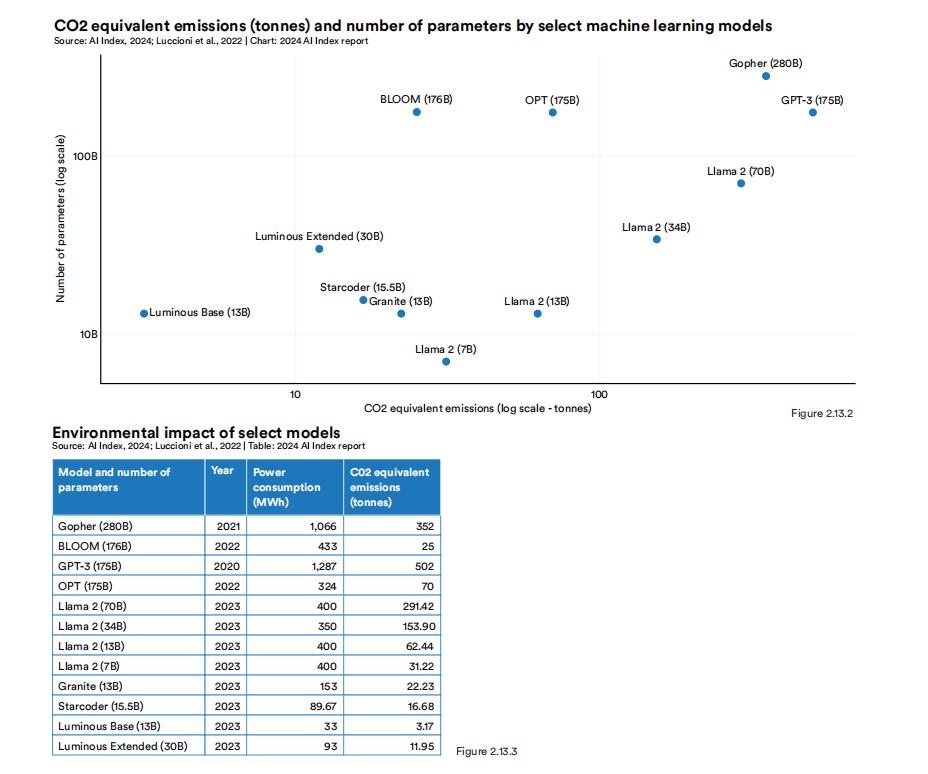
Core Insights - Alibaba announced its Qwen3-Max model has surpassed "one trillion parameters," marking a significant milestone in the domestic AI landscape [1][2] - The announcement is seen as both a product upgrade and a declaration of status, positioning Alibaba among global leaders in AI technology [2] - The model achieved impressive results in various international benchmarks, indicating its competitive edge [2] Group 1: Model Performance and Features - Qwen3-Max achieved an accuracy of 86.4% in the AIME25 math reasoning test, ranking among the top three globally [2] - In the SWE-Bench Verified programming benchmark, it scored 69.6%, second only to GPT-4.1 [2] - The model is segmented into different versions: Thinking for complex reasoning, Instruct for instruction following, and Omni for real-time voice interaction and multimodal capabilities [2] Group 2: Market Dynamics and Pressures - Domestic companies are compelled to pursue trillion-parameter models due to market pressures and investor expectations [4][5] - Over 50 domestic AI companies are projected to raise over 30 billion yuan in funding by 2024, with a focus on matching international giants in technical metrics [4] - The perception that larger models equate to greater reliability drives enterprise purchasing decisions, further pushing companies towards larger parameter counts [4] Group 3: Cost and Efficiency Challenges - Training a trillion-parameter model can consume between 20 to 50 million kilowatt-hours of electricity, with costs exceeding hundreds of millions yuan when considering the entire process [6][10] - The marginal performance improvements of larger models often do not justify the exponentially increasing costs, leading to diminishing returns [10] - The operational costs for deploying trillion-parameter models can be significantly higher, impacting the feasibility for smaller enterprises [10] Group 4: Strategic Intent and Future Directions - Alibaba's ambition extends beyond parameter count; it aims to position Qwen3-Max as the "operating system" for its cloud ecosystem [11][13] - The strategy involves binding enterprises and developers to Alibaba Cloud through APIs and toolchains, increasing switching costs for users [13] - The future of AI competition may hinge on "intelligent density," focusing on effective intelligence output per unit of computational resource rather than sheer parameter size [14][15]

DeepSeek与Anthropic的生存策略 | Jinqiu Select
锦秋集· 2025-07-04 15:35
Core Insights - The article highlights the critical challenge faced by AI companies: the scarcity of computational resources, which is a fundamental constraint in the industry [1][5]. Pricing Dynamics - AI service pricing is fundamentally a trade-off among three performance metrics: latency, throughput, and context window [2][3]. - By adjusting these three parameters, service providers can achieve any price level, making simple price comparisons less meaningful [4][24]. DeepSeek's Strategy - DeepSeek adopted an extreme configuration with high latency, low throughput, and a minimal context window to offer low prices and maximize R&D resources [4][28]. - Despite DeepSeek's low pricing strategy, its official platform has seen a decline in user engagement, while third-party hosted models have surged in usage by nearly 20 times [16][20]. Competitive Landscape - Anthropic, another leading AI company, faces similar resource constraints, leading to a 30% decrease in API output speed due to increased demand [34][36]. - Both DeepSeek and Anthropic illustrate the complex trade-offs between computational resources, user experience, and technological advancement in the AI sector [5][53]. Market Trends - The rise of inference cloud services and the popularity of AI applications are reshaping the competitive landscape, emphasizing the need for a balance between technological breakthroughs and commercial success [5][45]. - The article suggests that the ongoing price war is merely a surface-level issue, with the real competition lying in how companies manage limited resources to achieve technological advancements [53].