飞行相机

Search documents
共同富裕先行先试,“浙”里缘何创新活力澎湃?
Xin Lang Cai Jing· 2026-02-19 14:50
Core Insights - Zhejiang province is focusing on high-quality development and aims to reduce urban-rural, regional, and income disparities as part of its strategy for the "15th Five-Year Plan" [6][26] - The digital economy in Zhejiang has seen significant growth, with the province's economic output surpassing 9 trillion yuan, averaging a growth rate of 5.9% annually over the past five years [5][6] - The province is also emphasizing ecological civilization and sustainable development, with initiatives to enhance environmental quality and promote green energy [19][26] Economic Development - Zhejiang's economy has crossed major milestones, achieving over 9 trillion yuan in total economic output, contributing nearly 7% to the national economy while occupying only 1% of the country's land [5][6] - The province's digital economy is evolving from "innovation exploration" to "development leadership," with significant investments in technology and innovation [6][12] - In 2022, Zhejiang's total technology innovation investment reached 723.2 billion yuan, with over 6,000 new high-tech enterprises established [7][10] Digital Economy - The "Wenshan Digital Life Block" in Hangzhou has become a hub for digital products, attracting over 600 million visitors in 2025 and showcasing the integration of digital economy and cultural tourism [7][10] - AI products, such as AI glasses, have gained popularity, with sales exceeding 30,000 yuan in January 2026 [6][10] - The province aims to build a complete AI industry ecosystem by focusing on collaboration across various sectors [10][12] Ecological Civilization - Zhejiang has transformed its ecological advantages into economic value, becoming the first ecological province in China [19][26] - The West Creek National Wetland Park has seen significant biodiversity improvements, with bird species increasing from 79 to 237 over the past five years [14][19] - The province has implemented innovative ecological product value realization mechanisms, including carbon trading initiatives [18][19] Common Prosperity - The "Common Prosperity Workshop" initiative has been established to enhance rural employment and income, with over 12,700 workshops created, benefiting 551,000 people [22][23] - Zhejiang's per capita disposable income has surpassed 70,000 yuan, with urban and rural incomes exceeding 80,000 yuan and 45,000 yuan, respectively [26][29] - The province is committed to achieving significant progress in common prosperity by 2030, aiming for per capita GDP and income levels comparable to developed economies [26][27]

行稳致远开新局|共同富裕先行先试,“浙”里缘何创新活力澎湃?
Yang Guang Wang· 2026-02-19 13:46
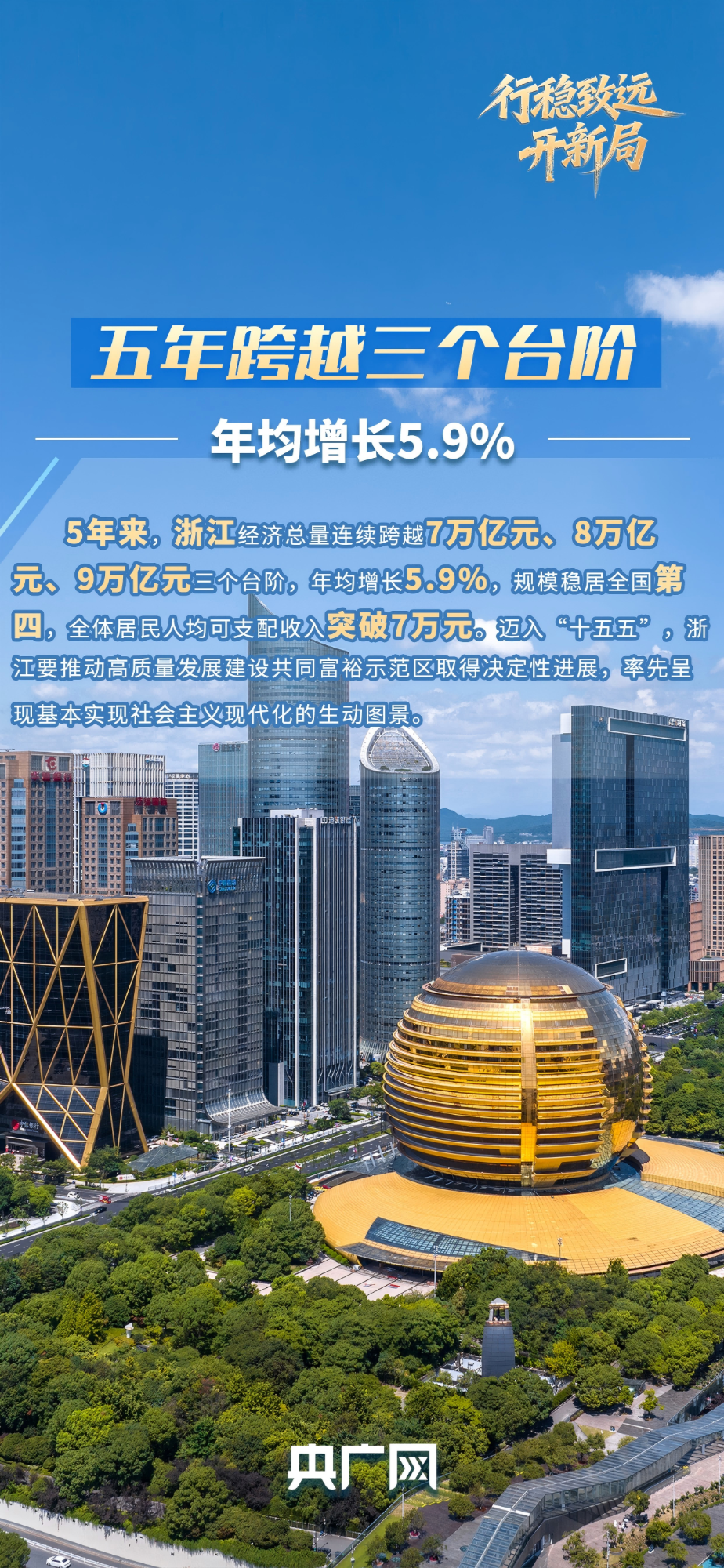
Core Viewpoint - The article emphasizes Zhejiang's significant economic growth and technological advancements over the past five years, highlighting its commitment to high-quality development and the integration of digital economy and ecological sustainability as it enters the "15th Five-Year Plan" period [4][11][28]. Economic Growth - Zhejiang's economic total has crossed significant milestones of 7 trillion, 8 trillion, and 9 trillion yuan, with an average annual growth rate of 5.9%, maintaining its position as the fourth largest economy in China [4]. - The province contributes nearly 7% of the national economic total while occupying only 1% of the country's land area, showcasing its high-quality development [4]. Digital Economy - The digital economy in Zhejiang has transitioned from "innovation exploration" to "development leadership," with products like AI glasses and companion robots becoming popular consumer items [5][10]. - In the past year, Zhejiang invested 723.2 billion yuan in technological innovation, adding over 6,000 high-tech enterprises and 17,600 technology-based SMEs, with the AI core industry revenue reaching 680 billion yuan, growing over 20% [6][11]. Artificial Intelligence Development - The focus on artificial intelligence is evident in the establishment of innovation spaces that support collaboration across various sectors, enhancing the AI industry ecosystem [7][10]. - The region aims to become a leading hub for AI innovation, with plans to enhance computing power and algorithm supply capabilities [10][11]. Ecological Development - Zhejiang has made strides in ecological civilization, transforming areas like the Xixi National Wetland Park into a model of biodiversity, with significant increases in species diversity [12][14]. - The province has implemented innovative ecological product value realization mechanisms, leading to the establishment of 14 "Green Mountains and Clear Waters" practice innovation bases, the highest in the country [18]. Common Prosperity Initiatives - The "Common Prosperity Workshop" initiative integrates resources from various sectors to create platforms for production, employment support, and skill enhancement, significantly increasing income for local farmers [21][27]. - Over the past five years, the per capita disposable income in Zhejiang has surpassed 70,000 yuan, with urban and rural incomes exceeding 80,000 yuan and 45,000 yuan respectively, ranking first among provinces [27]. Future Goals - By 2030, Zhejiang aims to achieve a high-quality development model that closely aligns with developed economies, focusing on economic growth and employment strategies as core drivers [27][28].
智能设备春节热卖 你的年货清单含“科”量有多高?
Xin Hua Wang· 2026-02-13 01:53
Group 1 - The core viewpoint of the article highlights the rising popularity of technology products in the Chinese New Year shopping market, with consumers increasingly favoring smart and innovative items [1][9] - Smart home appliances and interactive technology products are becoming significant highlights in the New Year market, reflecting a shift in consumer demand towards "intelligent" options [1][3] - The integration of technology into daily life is stimulating new consumption dynamics, driven by mature technology, policy guidance, and upgraded consumer expectations [9][10] Group 2 - Sales of smart terminals and AI wearable products have seen significant growth, with specific examples such as the sale of over 30 drones in a single day at a Shenzhen store [5][6] - The introduction of national subsidies for AI products, including smart glasses, has further boosted sales, with over 15 million units sold across various categories in January, generating nearly 59 billion yuan in revenue [8][9] - The launch of the 2026 National Online New Year Goods Festival has sparked a consumption boom, with online retail sales reaching 989.73 billion yuan by February 8 [9][10]
科创新品成为“新特产” 中国智造激发消费市场强劲动能
Yang Shi Wang· 2026-01-26 00:07
Core Viewpoint - The article highlights the emergence of innovative tech products in Hangzhou, China, which are becoming new local specialties and driving strong consumer market dynamics through local manufacturing and technological advancements [2][8]. Group 1: Technological Innovations - Hangzhou is actively promoting new tech products, foreign trade goods, and national style products, leading to the creation of new consumer markets [2]. - The "Six Little Dragons" of Hangzhou, including humanoid robots and AI models, represent significant technological advancements in the region [2]. - The Wen San Future Technology Experience Center features eight interactive zones showcasing various tech innovations, becoming a landmark for new consumer experiences [2]. Group 2: Consumer Products - The "Wen San Tech Specialty" store offers a range of products from AI plush toys to high-end AI robots, showcasing the diversity of local innovations [3]. - An AI plush toy serves as an interactive companion, reflecting Hangzhou's innovative spirit [3]. - A lightweight drone, described as a "flying camera," utilizes advanced AI algorithms and has quickly gained popularity in outdoor activities [4][5]. Group 3: Market Trends - AI glasses produced in Hangzhou have become the most popular item among over 100 tech specialties, selling nearly 20,000 units in the first three weeks of January 2026 [6]. - The glasses integrate multiple mainstream AI models, offering features like payment, navigation, and translation, appealing to a wide demographic [7]. - The introduction of a 15% national subsidy for these tech products under the "old for new" program has further stimulated consumer interest [7]. Group 4: Cultural Shift - The transformation of Hangzhou's specialties from traditional items like Longjing tea to tech innovations signifies a broader trend in consumer supply and demand [8].
AI毛绒玩具、飞行相机……科创新品成为“新特产” 中国智造激发消费市场强劲动能
Yang Shi Wang· 2026-01-21 04:52
Core Viewpoint - The article highlights the transformation of Hangzhou's consumption landscape, emphasizing the emergence of new tech products and local innovations that stimulate consumer demand and redefine local specialties [1][5]. Group 1: New Consumption Trends - Hangzhou is actively promoting new consumption categories represented by tech products, foreign trade goods, and national style products, referred to as the "new three products" [1]. - The transformation of Wen San Road from a "digital street" to a digital lifestyle district showcases the evolution of consumer experiences in the area [1][5]. Group 2: Technological Innovations - The "Six Little Dragons" of Hangzhou, including humanoid robots and AI models, are central to the city's tech innovation narrative, with the Wen San Future Technology Experience Center serving as a key attraction [3]. - The center features eight interactive zones, including robot exhibits and AI experiences, making it a landmark for tech enthusiasts [3]. Group 3: Local Specialties and Products - Local tech products, developed and manufactured in Hangzhou, are now considered unique "Hangzhou specialties" that can be purchased as gifts [5]. - A dedicated store for "Wen San Tech Specialties" offers a range of products from AI plush toys to high-end AI robots, showcasing the diversity of local innovations [8]. Group 4: Popular Products and Consumer Engagement - The AI glasses produced in Hangzhou have gained significant popularity, selling nearly 20,000 units in the first three weeks of January 2026, appealing to a wide demographic [12]. - These glasses integrate multiple mainstream AI models, providing functionalities like payment, navigation, and translation, thus enhancing daily convenience for users [14]. Group 5: Government Support and Consumer Incentives - The tech products have been included in Hangzhou's "old-for-new" product catalog, allowing consumers to benefit from a 15% national subsidy, further incentivizing purchases [16]. - The shift from traditional local specialties to tech innovations reflects a broader trend in consumer supply and demand dynamics in Hangzhou [16].
长江新画卷丨十年跃升!数智算力为长江经济带产业升级注入发展新动能
Yang Shi Wang· 2026-01-10 09:06
Group 1 - The core viewpoint highlights the significant economic growth in the Yangtze River Economic Belt, with the region's GDP share increasing from 42.2% to 47.3% over the past decade, showcasing traditional industry upgrades and the emergence of new business formats [1] - In Zhejiang, the digital economy is rapidly integrating new technologies into daily life, exemplified by innovations such as a flying camera that autonomously captures moments, reflecting the deep integration of visual intelligence algorithms [4][6] - The development of AI-driven tools in Guizhou, such as the "Miao Embroidery AI Creative Model," has drastically reduced design cycles from one to two weeks to approximately three days, while cutting design costs by two-thirds and increasing overall production efficiency by over 80% [12][14] Group 2 - Guizhou's data center infrastructure, comprising 50 centers, is capable of performing 127 billion billion floating-point operations per second, providing robust computational support for various industries across 26 provinces [16] - The "East Data West Computing" initiative is fostering digital economic development in western regions, making them integral to the data supply chain for eastern coastal areas, thus creating a tightly coupled spatial layout with enhanced security and resilience [18] - Zhejiang is leading the construction of the Digital Yangtze River Delta and the G60 Science and Technology Innovation Corridor, injecting strong "digital intelligence" momentum into the high-quality development of the Yangtze River Economic Belt [10]

深圳跨境电商“大卖”一万亿!
Shen Zhen Shang Bao· 2026-01-01 21:50
Core Insights - Shenzhen's cross-border e-commerce is positioned as a significant player in China's foreign trade transformation, with a projected GMV of 1 trillion RMB by 2025, up from 900 billion RMB in 2024 [2] - The city hosts 120,000 sellers and 100,000 service providers, representing a substantial portion of the national market, and is recognized as a "super hub" for cross-border e-commerce [3] - The shift from "product export" to "brand export" and now to "ecosystem export" illustrates Shenzhen's evolution in global trade [8] Group 1: Industry Growth and Performance - Shenzhen's cross-border e-commerce has established a "sunshine" regulatory service model, leading to a continuous top ranking in import and export scale for four consecutive years [3] - Notable companies like Anker Innovations and Ugreen Technology have reported significant revenue growth, with Anker achieving a revenue of 21.02 billion RMB in the first three quarters of 2025, a 27.79% increase year-on-year [3][4] - Ugreen Technology also demonstrated strong performance with a revenue of 6.364 billion RMB, reflecting a 47.80% year-on-year growth [5] Group 2: Emerging Brands and Market Dynamics - A new wave of "dark horse" sellers has emerged, with companies achieving annual sales of over 1 billion RMB in niche markets, contributing to the diversity of Shenzhen's cross-border e-commerce landscape [5] - The collaboration between cross-border e-commerce and traditional manufacturing is driving digital transformation and brand development, exemplified by companies like Saiwei Times, which has launched over 70 self-owned brands [6] Group 3: Policy Support and Future Directions - The Shenzhen government has implemented policies to support independent brand development, offering financial incentives for companies to establish their own platforms [9] - The transition to "ecosystem export" is characterized by companies integrating supply chains and retail, enhancing their global competitiveness [9] - Experts predict that Shenzhen's cross-border e-commerce will evolve from merely selling products to offering standards, models, and comprehensive outputs of technology and management [9]



超百位行业“新生力”共探AI时代出海新路径
Sou Hu Cai Jing· 2025-12-27 00:05
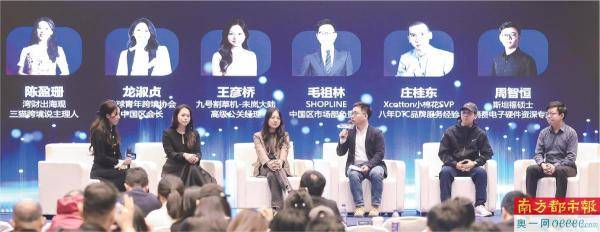
Core Insights - The forum focused on how AI can empower the cross-border e-commerce growth chain, providing practical strategies and forward-looking insights for high-quality development in the industry [2][11] Group 1: Event Overview - The "Intelligent Manufacturing Outbound: New Cross-Border Directions" forum was held on December 25, featuring discussions among industry leaders on topics such as intelligent supply chain reconstruction, brand globalization, and compliance system establishment [2] - The event gathered over a hundred industry players, including cross-border e-commerce platforms, major sellers, leading outbound brands, SaaS service providers, and cross-border law firms [2] Group 2: Industry Perspectives - Chen Wending, General Manager of Southern Metropolis Daily, emphasized that cross-border e-commerce is now a competition of comprehensive strengths in brand, technology, and supply chain, serving as a key driver for China's economy to reach the high end of the global value chain [3] - Long Shuzhen, head of the Global Youth Cross-Border Association, stated that cross-border e-commerce is a vital channel for global entrepreneurs to integrate into the world economy and climb the value chain [3][4] Group 3: Case Studies and Innovations - Baoxiao, General Manager of overseas business at Hailan Home, shared the brand's journey from a domestic clothing brand to a global one, highlighting the importance of aligning Chinese aesthetics with local consumer needs [5][6] - Ouyang Zhijun from Langhua Group noted that the shift from "product export" to "industrial chain export" has revealed core pain points in logistics, capital flow, and information flow, particularly for Chinese companies facing overseas financing challenges [6][14] - Heybike's COO Li Yifan discussed the company's transition from OEM to an independent brand, successfully entering the North American market and achieving significant user acquisition through strategic marketing [7][16] - HOVERAir's Wang Xinxuan highlighted the innovation in developing a flying camera that complies with strict regulations in Japan, showcasing how market limitations can be turned into opportunities [8][17] Group 4: AI and Content Marketing - A TikTok operator from Huakai Yibai emphasized the platform's unique ability to simultaneously achieve brand marketing and sales conversion, creating a closed loop from brand exposure to GMV [9][17] - Wang Mengshan, founder of Zhifang Consulting, stressed that content marketing is the most crucial lever for brand growth, and the future competitive advantage will lie in effective content creation [9][10] Group 5: Ecosystem Development - The launch of the "Cross-Border Outbound Alliance" aims to create a long-term empowering ecosystem for the industry, transforming the resources from the forum into sustainable support for cross-border e-commerce [18] - The alliance includes various partners providing services in areas such as customized website building, overseas marketing, and cross-border insurance, aiming to break down industry resource barriers [18][19]
“深圳跨境大卖”立体传播启航
Shen Zhen Shang Bao· 2025-12-14 22:52
Core Insights - Shenzhen's cross-border e-commerce has seen a remarkable revenue increase of 33 times over the past decade, with annual revenue exceeding 20 billion yuan, showcasing a strong entrepreneurial spirit among the "post-90s" generation [1] - The "Shenzhen Cross-Border Big Sale" initiative aims to comprehensively showcase Shenzhen's innovative practices in cross-border e-commerce through in-depth analyses of listed companies and feature stories on unique sellers [2] - Shenzhen has been recognized as the "capital of cross-border e-commerce" in China, leading the nation in cross-border e-commerce import and export volume for three consecutive years, projected to reach 372 billion yuan in 2024, accounting for nearly 40% of the national total [1] Group 1 - The "Shenzhen Cross-Border Big Sale" initiative will include a series of news reports that deeply analyze the brand journeys of listed companies, highlighting the global success of Shenzhen brands [2] - Shenzhen currently hosts 17 listed cross-border e-commerce companies, including notable names such as Anker Innovations and Ugreen Technology, which serve as benchmarks for other brands looking to expand internationally [2] - Unique sellers, referred to as "dark horse" sellers, are also key subjects of reporting, with examples including a flying camera company generating 1 billion yuan in annual sales and a lawnmower robot that tops Amazon sales charts [2] Group 2 - The initiative will produce supplementary materials such as case studies, quarterly rankings, and brand competitiveness white papers, alongside brand activity systems like offline salons and factory tours to enhance industry collaboration [3] - The campaign will leverage multi-channel dissemination through digital platforms and social media to amplify its reach, utilizing the authoritative media platform of Shenzhen Business News and the digital capabilities of the Read Creation client [3] - The comprehensive approach aims to present a complete picture of Shenzhen's cross-border e-commerce landscape and provide high-quality information services and resource connection platforms for industry development [3]
“AI硬件领域,永远有新机会”
3 6 Ke· 2025-11-07 10:48
Core Insights - Morgan Stanley predicts that 2026 will be a pivotal year for explosive growth in AI technology hardware [1] - The AI hardware sector is witnessing a surge of entrepreneurs, with notable figures like Wang Mengqiu, Niu Yafeng, and Hu Chengyang leading innovative projects [1][3] - The discussion among these entrepreneurs highlights the continuous opportunities in the AI hardware field, emphasizing that monopolies are hard to maintain as products become more specialized and segmented [3][42] Group 1: Entrepreneurial Experiences - Niu Yafeng has been in the smart instrument sector since 2016, initially facing numerous rejections from investors and sustaining the business with a few million RMB for six years [4][5] - Wang Mengqiu has been developing a flying camera for over nine years, experiencing significant challenges, including a seven-year financing gap [10][11] - Hu Chengyang, despite being a newer entrepreneur, has a background in high-speed photography and aims to create tools for creators, launching a product in the European and American markets [11][14] Group 2: Transition from B2B to B2C - Entrepreneurs discussed the challenges of shifting from B2B to B2C, emphasizing the need to balance technical expertise with consumer perspectives [6][15] - Hu Chengyang noted that understanding user needs and experiences is crucial for product development, which requires a shift from a purely technical mindset to a consumer-focused approach [15][16] - Wang Mengqiu highlighted the importance of creating products that provide emotional value to consumers, as they often seek products that enhance their experiences rather than just technical specifications [21][22] Group 3: AI Integration in Products - The integration of AI into hardware products is seen as a multi-step process, starting with digitization and moving towards personalized user experiences [26][27] - Niu Yafeng's company is exploring how AI can enhance user experience by analyzing performance data and providing tailored feedback [26] - Hu Chengyang's high-speed camera leverages AI to manage large data volumes, making advanced photography accessible to consumers [31][32] Group 4: Crowdfunding and Market Entry - Hu Chengyang's company successfully raised $3.5 million in 30 days through crowdfunding, emphasizing the importance of product design and aesthetic appeal in attracting backers [32][34] - The entrepreneurs discussed the significance of building brand trust and engaging with creators to enhance product visibility and credibility [34][35] - They also noted that successful crowdfunding requires a deep understanding of the target audience and effective marketing strategies tailored to their preferences [36][37] Group 5: Future Opportunities in AI Hardware - The AI hardware market is expected to continue evolving, with new opportunities emerging as products become more specialized [42] - The demand for innovative imaging solutions, such as flying cameras and high-speed photography, is driven by consumers' insatiable desire for unique visual experiences [41][42] - The industry is characterized by rapid technological advancements and a competitive landscape where no single player can dominate [42]