智能普惠

Search documents
融和科技 RonAgent:助力中小企业零门槛拥有L4级“外脑”
Zhong Guo Jing Ji Wang· 2025-12-29 06:50
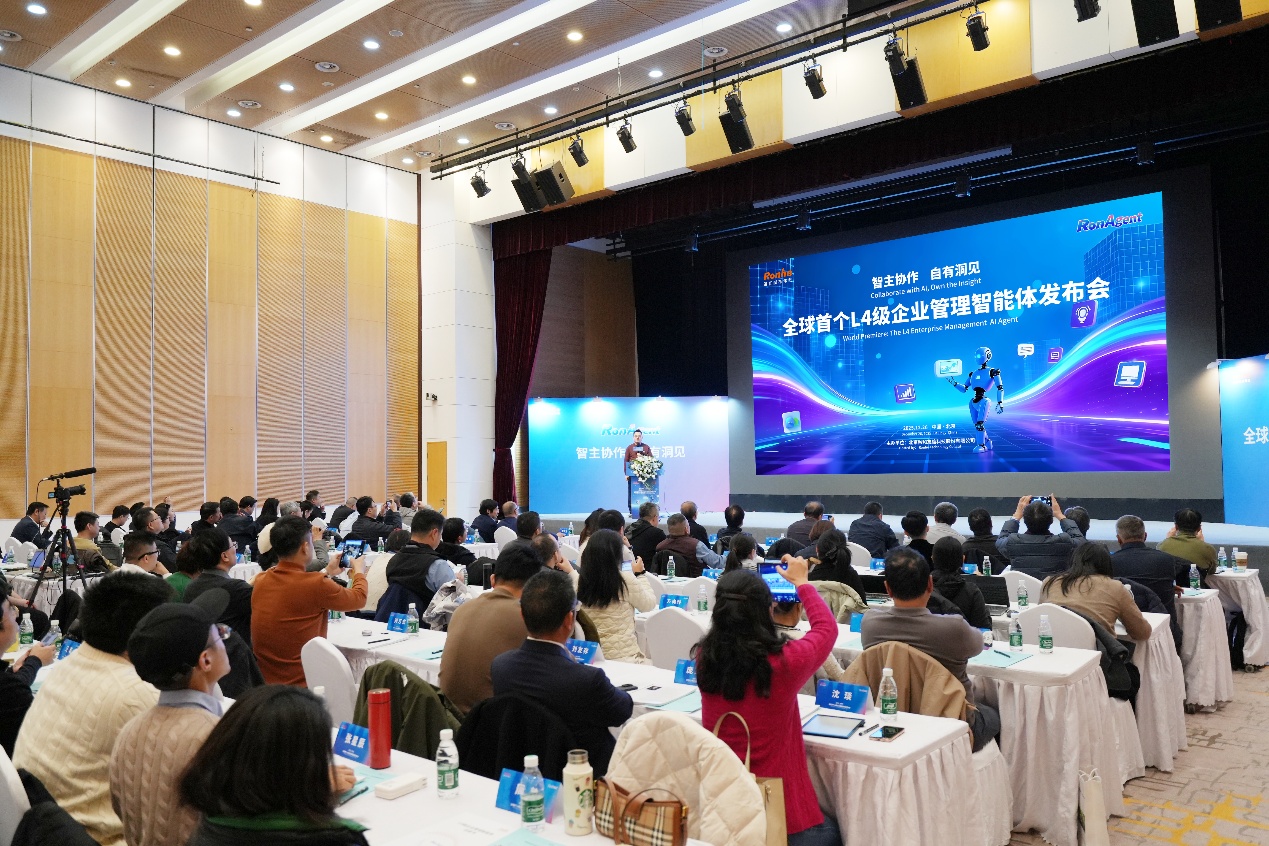
Core Insights - RonAgent, an L4-level enterprise management intelligent agent, was officially launched by Ronghe Technology to help small and medium-sized enterprises (SMEs) upgrade from traditional management systems to intelligent-driven operations, significantly enhancing operational efficiency and decision-making [1][2] - The release of the "L4-level Enterprise Management Intelligent Agent White Paper" provides a comprehensive framework for the new paradigm, detailing the technical architecture, capability standards, and implementation pathways for SMEs to transition from digitization to intelligence [1][2] Group 1 - Ronghe Technology aims to empower SMEs with business analysis, risk management, and strategic decision-making capabilities that were previously exclusive to large enterprises, allowing them to enjoy equal access to intelligent management resources [1][2] - The shift towards intelligent management is accelerated by the AI wave, with experts noting that future competition will hinge on the ability to deeply integrate AI into organizational operations [1][2] - SMEs in China face challenges such as weak technical foundations, a shortage of professional talent, and high IT costs, which hinder their ability to fully benefit from technological advancements [1] Group 2 - RonAgent is designed to act as a "virtual expert team" for SMEs, making intelligent management as accessible as utilities like water and electricity [2] - The L4-level system enables multi-agent autonomous collaboration, changing the traditional ERP model by making intelligent agents the core drivers of business processes [2] - RonAgent's "five-dimensional capabilities" include deep contextual awareness, strategic planning, multi-agent collaboration, flexible tool utilization, and continuous learning, allowing SMEs to automate repetitive tasks and focus on market development and product innovation [2] Group 3 - Ronghe Technology has introduced an innovative business model combining AaaS (Agent as a Service) and RaaS (Results as a Service) to facilitate widespread adoption [4] - The AaaS model allows enterprises to deploy intelligent agents without hardware investments or dedicated IT teams, enabling zero-code configuration and rapid deployment [4] - The RaaS model allows enterprises to pay based on the actual work completed by the intelligent agents, significantly lowering the barriers to entry and trial costs for SMEs [4]

价值回归浪潮下,奔驰S级轿车以“质智双行”捍卫顶豪标杆
经济观察报· 2025-12-23 11:22
Core Viewpoint - The Mercedes-Benz S-Class sedan exemplifies reliability and elegance, standing out in a market that is shifting from a focus on parameters to an emphasis on user experience [1][20]. Group 1: Market Dynamics - The Chinese luxury car market is undergoing a significant value reconstruction, with a domestic luxury model achieving 18,000 orders in 175 days, signaling the rise of Chinese brands [2]. - The market is moving away from "intelligent concept competition" and "parameter stacking" towards a focus on essential needs, emphasizing mechanical quality, safety redundancy, and luxury essence [2][3]. - Predictions indicate that in three to five years, international brands will regain leadership as the differentiation advantages of new forces diminish due to the standardization of intelligent configurations [2]. Group 2: Product Strategy - The Mercedes-Benz S-Class is redefining the core essence of luxury by breaking the misconceptions that "electrification equals intelligence" and "luxury equals configuration stacking" [3][20]. - The brand's "dual fuel" strategy emphasizes that intelligence and quality are the core standards for luxury vehicles, with the S-Class showcasing this through product upgrades [8][9]. - The S-Class features a new urban and highway navigation assistance system developed in collaboration with Momenta, enhancing user experience in complex driving conditions [9]. Group 3: Technological Advancements - Mercedes-Benz has established a forward-looking and coherent approach to smart technology, investing in local autonomous driving firms and achieving significant milestones in intelligent driving systems [6][8]. - The S-Class's smart upgrades focus on user-centric, scenario-based applications, with features like a multi-screen interactive system that enhances both safety and immersion [9][10]. - The brand's commitment to quality is evident in its rigorous testing standards, ensuring that every component meets high-performance criteria [15][16]. Group 4: Competitive Advantage - The S-Class has maintained its position as the top-selling luxury car for five consecutive years, with a delivery gap of 12,000 units over the second-place competitor in 2024, reflecting consumer recognition of its long-term value [16]. - The brand's focus on quality and user experience has become a significant competitive advantage, distinguishing it from other luxury models that may serve as social symbols but lack the same depth of brand value [16]. Group 5: Future Outlook - Mercedes-Benz plans to launch multiple China-exclusive models by 2027, integrating a new software architecture to enhance the efficiency of intelligent system iterations [17]. - The company aims to continue localizing its autonomous driving technology and innovating smart cabin scenarios to align global technology with Chinese market demands [17].

左手AI基建,右手终端入口:AI超级周期重估联想
IPO早知道· 2025-11-29 02:18
Core Viewpoint - The integration of hardware, software, and data is driving the emergence of a new generation of technology companies, with firms that successfully merge personal and enterprise solutions becoming core assets in the AI wave [6][8]. Financial Performance - Lenovo Group reported a 15% year-on-year revenue growth in Q2 of FY2026, reaching 146.4 billion RMB, significantly exceeding market expectations. Adjusted net profit grew by 25% to 3.66 billion RMB, outpacing revenue growth [6][7]. - The IDG smart device business group achieved revenue of 108.1 billion RMB, a 12% increase, while the ISG infrastructure solutions group saw revenue rise by 24% to approximately 29.3 billion RMB, driven by strong AI infrastructure demand [7][15]. AI Infrastructure Investment - Global investment in AI infrastructure is unprecedented, with estimates ranging from 400 to 600 billion USD in 2023, surpassing previous industrial revolutions [9]. - The AI narrative has significantly impacted capital markets, with AI data center ecosystem-related stocks accounting for 75% of S&P 500 returns since the launch of ChatGPT in November 2022 [10]. Market Position and Strategy - Lenovo is one of the few Chinese tech companies fully covering personal and enterprise terminals, software, and hardware within the AI ecosystem [8]. - The company is leveraging AI infrastructure investments to enhance its "one body, multiple ends" strategy, creating highly intelligent and personalized enterprise and personal solutions [8][19]. AI Product Development - Lenovo's AI PC market share reached 31.1%, maintaining its position as the global leader, with AI PC revenue contributing significantly to overall growth [18][19]. - The Tianxi AI system, now at version 3.5, is set to release version 4.0, enhancing user experience through a personal AI twin concept [20][24]. Competitive Advantage - Lenovo's B2B business model provides a strong risk mitigation strategy, particularly in the face of supply chain fluctuations affecting competitors like Dell and HP [29]. - The company's unique position in both B2B and B2C markets allows it to benefit from the ongoing AI wave, with a dual focus on enterprise infrastructure and consumer AI products [26][35].