智能网联产业

Search documents
无人车上月配送129万单 创造价值1110万
Nan Fang Du Shi Bao· 2025-12-22 23:14
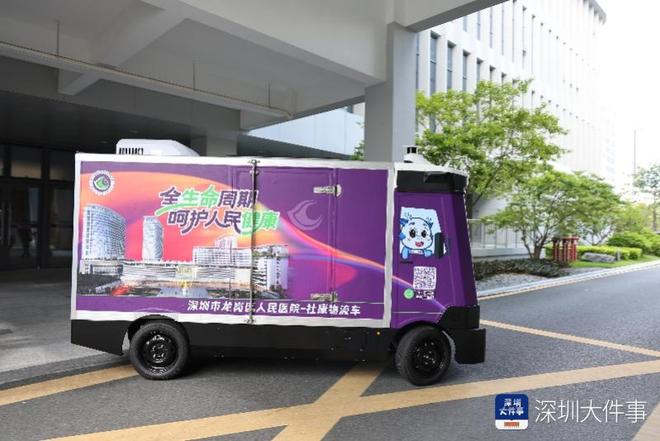
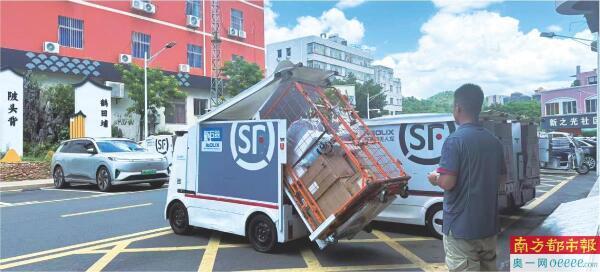
Core Insights - The article highlights the successful implementation and scaling of autonomous logistics vehicles in Shenzhen, which are transforming various sectors including healthcare, community services, and industrial operations [2][3][4]. Group 1: Autonomous Logistics Vehicles in Healthcare - The Longgang District People's Hospital has launched a project utilizing autonomous logistics vehicles to enhance the efficiency of medical supply transportation between the main hospital and community health service centers [3]. - The vehicles are equipped with L4 autonomous driving systems and specialized compartments for transporting medical supplies, ensuring safety and quality during transit [3][4]. - By the end of this year, five routes are expected to be operational, connecting 20 community health centers, thereby optimizing the logistics of grassroots medical services [4]. Group 2: Operational Scale and Efficiency - SF Express operates 135 autonomous vehicles across 180 routes in Shenzhen, significantly reducing transportation costs and labor intensity for delivery personnel [5][6]. - During peak periods, these vehicles can handle up to 90,000 packages in a single day, with November's delivery volume surpassing 710,000 orders, demonstrating substantial commercial value [6][9]. - The operational scale of autonomous vehicles in Shenzhen has reached 916 units, with total running mileage exceeding 550,000 kilometers, marking a 50% increase in November alone [9]. Group 3: Integration with Broader Logistics Systems - SF Express has partnered with Shenzhen Metro Group to create a seamless logistics network integrating aerial drones, ground stations, and underground autonomous vehicles, enhancing efficiency in logistics operations [7]. - The establishment of a smart logistics management system allows for real-time monitoring and management of vehicle operations, significantly improving safety and reliability [4][8]. - By 2026, Shenzhen aims to deploy at least 2,000 functional autonomous vehicles, further developing a collaborative ecosystem involving drones and autonomous logistics vehicles [9].


规模领跑全国!深圳无人车重构智慧物流与民生服务生态
Nan Fang Du Shi Bao· 2025-12-21 06:32
Core Insights - The article highlights the successful integration of unmanned logistics vehicles in Shenzhen, transforming various sectors such as healthcare, community services, and industrial operations into a smart transportation network that enhances urban development and service efficiency [1][2][4]. Group 1: Industry Applications - Unmanned logistics vehicles are now deeply embedded in Shenzhen's urban operations, addressing transportation challenges across different sectors, including healthcare and event logistics [2][4]. - A collaboration between Longgang District People's Hospital and Huacheng Transportation has initiated a "smart logistics + medical logistics" project, marking a new phase in the intelligent and networked delivery of medical supplies [2][4]. Group 2: Operational Efficiency - The traditional model of "people waiting for supplies" is being transformed into "supplies waiting for people," aiming to create an efficient and reliable transportation network for medical logistics [4]. - The project aims to establish a dedicated smart transportation line connecting the main hospital and community health service centers, addressing core logistical pain points in grassroots healthcare [4][6]. Group 3: Technological Advancements - Each unmanned logistics vehicle is equipped with an L4 autonomous driving system, multi-sensor obstacle avoidance, and real-time high-precision positioning, allowing for optimal route planning and adaptability to complex road conditions [6]. - A smart logistics management system monitors vehicle locations, operational status, and environmental conditions, enhancing the safety and reliability of medical supply transport [6]. Group 4: Market Expansion - Shenzhen has deployed a total of 1,218 functional unmanned vehicles, with 825 being logistics vehicles, leading the nation among first-tier cities [7]. - The vehicles serve various functions, including transporting packages in residential areas and delivering sensitive materials in biopharmaceutical parks, contributing to a comprehensive smart logistics network across the city [7]. Group 5: Business Model Innovation - The core competitiveness of Shenzhen's unmanned vehicle industry has shifted from technology demonstration to precise cost management and economic benefit analysis of specific scenarios [9]. - SF Express has established a significant operational scale with 307 approved unmanned vehicle routes in Shenzhen, achieving regular operations and reducing transportation costs effectively [9][11]. Group 6: Performance Metrics - During peak periods, SF Express's 135 unmanned vehicles can handle up to 90,000 packages daily, with a notable increase in delivery orders during promotional events, reaching 712,000 in November [11]. - The launch of the first national rail logistics station by SF Express aims to create a seamless logistics network integrating drones, ground stations, and underground vehicles, significantly improving delivery efficiency [13][15]. Group 7: Regulatory Framework - Shenzhen's success in scaling unmanned vehicles is supported by an innovative governance framework that balances market vitality with safety [17]. - A digital management platform for functional unmanned vehicles has streamlined the approval process and enhanced safety monitoring through real-time traffic data [17]. Group 8: Future Outlook - The unmanned vehicle industry in Shenzhen is projected to expand to at least 2,000 units by 2026, with a focus on developing a collaborative ecosystem involving drones and unmanned logistics vehicles [18].