
科技赋能医疗

Search documents
机器人手术离不开统一价格“标尺”
Zhong Guo Jing Ji Wang· 2026-01-22 02:13
Core Viewpoint - The introduction of a standardized pricing framework for surgical robots by the National Medical Insurance Administration aims to enhance transparency in medical costs and facilitate the adoption of advanced medical technologies [1][2]. Group 1: Surgical Robot Pricing - The new pricing guidelines provide a unified standard for charging surgical robots, addressing the previously unclear and burdensome cost structure for patients [1]. - Charges for surgical robots will now depend on the complexity of the procedure and the level of assistance provided, ensuring that only high-quality, effective technologies receive appropriate compensation [2]. Group 2: Remote Surgery and Accessibility - The guidelines introduce a pricing project for remote surgical assistance, allowing experts in major cities to operate robots for patients in remote areas, thus improving access to quality healthcare [2]. - This initiative aims to reduce the travel burden on patients and ensure that advanced medical technologies benefit a wider population [2]. Group 3: Innovation and Industry Impact - The healthcare sector is experiencing significant innovation across various domains, including medical devices, drug development, and payment methods, presenting both challenges and opportunities for industry players [2]. - Emphasizing the integration of technology in healthcare is crucial for reducing costs and enhancing social welfare, positioning companies to capitalize on emerging trends [2][3].

规模领跑全国!深圳无人车重构智慧物流与民生服务生态
Nan Fang Du Shi Bao· 2025-12-21 06:32
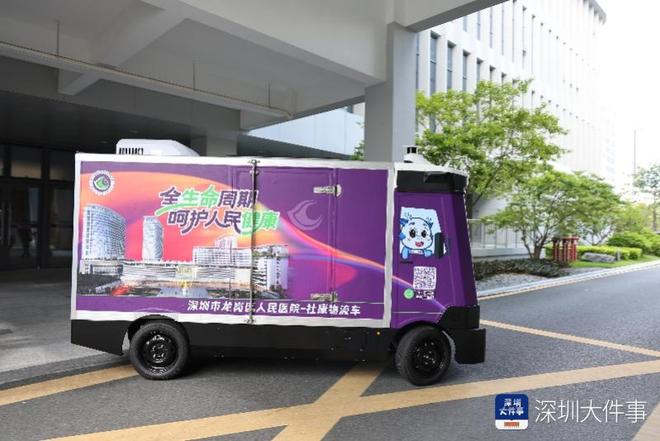
Core Insights - The article highlights the successful integration of unmanned logistics vehicles in Shenzhen, transforming various sectors such as healthcare, community services, and industrial operations into a smart transportation network that enhances urban development and service efficiency [1][2][4]. Group 1: Industry Applications - Unmanned logistics vehicles are now deeply embedded in Shenzhen's urban operations, addressing transportation challenges across different sectors, including healthcare and event logistics [2][4]. - A collaboration between Longgang District People's Hospital and Huacheng Transportation has initiated a "smart logistics + medical logistics" project, marking a new phase in the intelligent and networked delivery of medical supplies [2][4]. Group 2: Operational Efficiency - The traditional model of "people waiting for supplies" is being transformed into "supplies waiting for people," aiming to create an efficient and reliable transportation network for medical logistics [4]. - The project aims to establish a dedicated smart transportation line connecting the main hospital and community health service centers, addressing core logistical pain points in grassroots healthcare [4][6]. Group 3: Technological Advancements - Each unmanned logistics vehicle is equipped with an L4 autonomous driving system, multi-sensor obstacle avoidance, and real-time high-precision positioning, allowing for optimal route planning and adaptability to complex road conditions [6]. - A smart logistics management system monitors vehicle locations, operational status, and environmental conditions, enhancing the safety and reliability of medical supply transport [6]. Group 4: Market Expansion - Shenzhen has deployed a total of 1,218 functional unmanned vehicles, with 825 being logistics vehicles, leading the nation among first-tier cities [7]. - The vehicles serve various functions, including transporting packages in residential areas and delivering sensitive materials in biopharmaceutical parks, contributing to a comprehensive smart logistics network across the city [7]. Group 5: Business Model Innovation - The core competitiveness of Shenzhen's unmanned vehicle industry has shifted from technology demonstration to precise cost management and economic benefit analysis of specific scenarios [9]. - SF Express has established a significant operational scale with 307 approved unmanned vehicle routes in Shenzhen, achieving regular operations and reducing transportation costs effectively [9][11]. Group 6: Performance Metrics - During peak periods, SF Express's 135 unmanned vehicles can handle up to 90,000 packages daily, with a notable increase in delivery orders during promotional events, reaching 712,000 in November [11]. - The launch of the first national rail logistics station by SF Express aims to create a seamless logistics network integrating drones, ground stations, and underground vehicles, significantly improving delivery efficiency [13][15]. Group 7: Regulatory Framework - Shenzhen's success in scaling unmanned vehicles is supported by an innovative governance framework that balances market vitality with safety [17]. - A digital management platform for functional unmanned vehicles has streamlined the approval process and enhanced safety monitoring through real-time traffic data [17]. Group 8: Future Outlook - The unmanned vehicle industry in Shenzhen is projected to expand to at least 2,000 units by 2026, with a focus on developing a collaborative ecosystem involving drones and unmanned logistics vehicles [18].


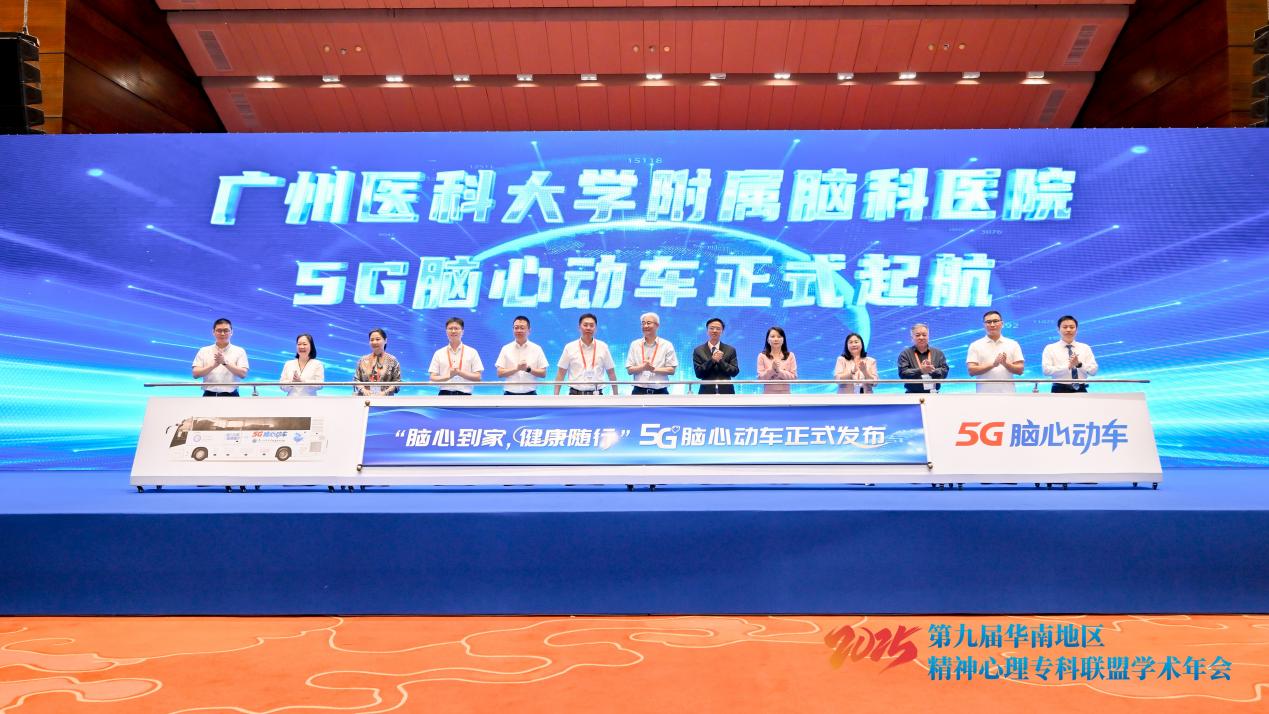
通达电气助力5G脑心动车发布 开启精神心理移动医疗新模式
Zhong Guo Jin Rong Xin Xi Wang· 2025-09-01 13:09
Core Insights - The "5G Brain-Heart Vehicle" was officially launched, representing a significant breakthrough in mobile and intelligent mental health services, particularly for early screening and intervention of Alzheimer's disease [1][6][7] Group 1: Research and Development - The development of the 5G Brain-Heart Vehicle is the result of ten years of foundational research and clinical application, initiated in 2016 by Professor Ning Yuping from Guangzhou Medical University and Professor Wu Kai from South China University of Technology [2] - The project team has achieved breakthroughs in multiple key technologies, creating a multi-dimensional screening and assessment system, a plasma biomarker detection system for Alzheimer's disease, and a brain-computer interface system for early screening and intervention [2] Group 2: Collaborative Innovation - The 5G Brain-Heart Vehicle is a product of deep collaboration across medical, technological, and manufacturing sectors, with contributions from various institutions and companies [2][3] - Guangzhou Medical University has provided clinical standards and application scenarios, while South China University of Technology has integrated advanced technologies such as flexible wearable brain-computer interfaces and AI algorithms [2] Group 3: Application and Impact - The vehicle is designed for broad applicability, capable of conducting early screening for Alzheimer's in communities and nursing homes, providing rapid psychological assistance during emergencies, and offering mental health services in schools and workplaces [6] - It is expected to enhance early diagnosis rates for mental health issues and improve public psychological crisis intervention capabilities, promoting a more equitable distribution of medical resources [6]

平安好医生上半年实现营收25亿元 归母净利润同比增长136.8%
Zhong Zheng Wang· 2025-08-20 01:49
Core Insights - Ping An Good Doctor reported a total revenue of 2.5 billion yuan for the first half of 2025, representing a year-on-year growth of 19.5% [1] - The company achieved a net profit attributable to shareholders of 134 million yuan, marking a significant year-on-year increase of 136.8% [1] - The number of paying users reached approximately 24 million, reflecting a growth of 35.1% compared to the previous year [1] Revenue Breakdown - Revenue from the comprehensive financial client (F-end) and enterprise (B-end) health business grew by 30.2% year-on-year [1] - F-end paying users numbered around 20 million, with a year-on-year growth of 34.6% [1] - B-end paying users exceeded 3.6 million, showing a year-on-year increase of 39.2% [1] Technology Empowerment - The company achieved an AI-assisted consultation accuracy rate of approximately 98% [1] - The accuracy rate for complex disease MDT treatment plans was nearly 80% [1] - AI-assisted doctors handled up to 4 million consultations daily [1] Service Network Expansion - Ping An Good Doctor expanded its service network to cover "four channels": online, in-store, at home, and at enterprises [1] - By the end of the first half, the company established 37 departments with around 50,000 internal and external doctors [1] - The company signed contracts with over 3,200 expert doctors and collaborated with more than 4,000 hospitals, nearly 106,000 health service providers, and 240,000 pharmacies [1]