智驾功能边界

Search documents
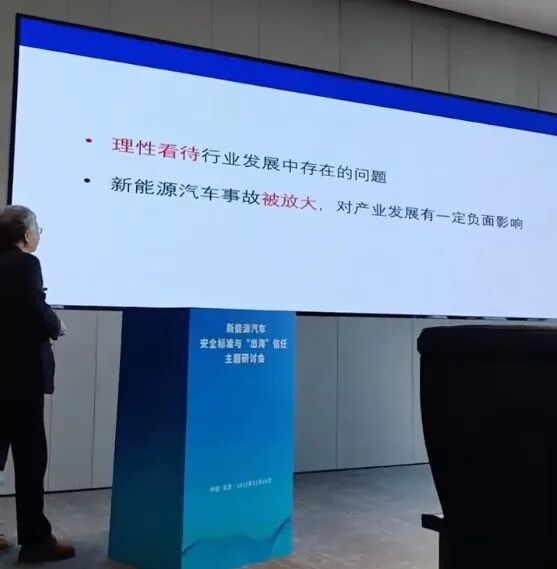
别再冤枉新能源车不安全了,160km/h碰撞坦克也扛不住
3 6 Ke· 2025-12-30 23:57
Core Viewpoint - The perception that electric vehicles (EVs) are less safe than traditional internal combustion engine vehicles is challenged by recent expert opinions and data, indicating that EVs may actually have superior safety features in many scenarios [1][2][5]. Group 1: Safety Comparisons - Experts assert that in crash tests, EVs outperform traditional vehicles, with a significant portion of safety concerns stemming from heightened scrutiny of EV incidents compared to conventional vehicles [2][5]. - Data from the China Insurance Research Institute shows that in 2024 evaluations, only one gasoline vehicle received an excellent safety rating for passenger safety, highlighting the competitive safety performance of EVs [5][6]. - The fire incident rate for EVs has decreased from 0.185% in 2021 to 0.096% in 2023, while gasoline vehicles have a fire rate of approximately 0.15%, suggesting that EVs are statistically safer in this regard [7][9]. Group 2: Misconceptions about Advanced Driving Assistance Systems (ADAS) - The belief that advanced driving assistance systems (ADAS) can fully ensure safety is misleading; drivers remain primarily responsible, especially with Level 2 systems [10][11]. - Many accidents attributed to ADAS failures are actually due to driver errors, such as distraction or improper use of the system [11][14]. - Current ADAS technology covers less than 30% of potential accident scenarios, necessitating driver engagement and awareness [15]. Group 3: Design Features and Industry Standards - The use of hidden door handles in over 10 million vehicles is a common industry design, not a specific brand flaw, and is intended to meet safety requirements [16][20]. - New safety standards are being developed to ensure that hidden door handles can be mechanically opened in emergencies, addressing concerns raised by past incidents [20][22]. - The rapid development of the EV industry presents new safety challenges, but these should not be viewed as inherent flaws; rather, they are part of the maturation process of the technology [23][25]. Group 4: Collaborative Solutions for Safety - The industry must work together—manufacturers should provide accurate information about technology capabilities, regulators need to update safety standards, and consumers should approach safety with a rational mindset [25][26]. - The global market's trust in Chinese EVs is crucial for their international success, and negative perceptions from isolated incidents could hinder this progress [25][26].