新能源车安全

Search documents
别再冤枉新能源车不安全了,160km/h碰撞坦克也扛不住
3 6 Ke· 2025-12-30 23:57
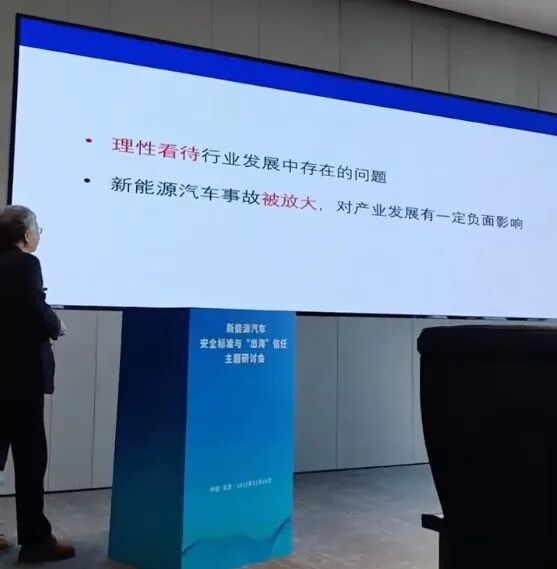
Core Viewpoint - The perception that electric vehicles (EVs) are less safe than traditional internal combustion engine vehicles is challenged by recent expert opinions and data, indicating that EVs may actually have superior safety features in many scenarios [1][2][5]. Group 1: Safety Comparisons - Experts assert that in crash tests, EVs outperform traditional vehicles, with a significant portion of safety concerns stemming from heightened scrutiny of EV incidents compared to conventional vehicles [2][5]. - Data from the China Insurance Research Institute shows that in 2024 evaluations, only one gasoline vehicle received an excellent safety rating for passenger safety, highlighting the competitive safety performance of EVs [5][6]. - The fire incident rate for EVs has decreased from 0.185% in 2021 to 0.096% in 2023, while gasoline vehicles have a fire rate of approximately 0.15%, suggesting that EVs are statistically safer in this regard [7][9]. Group 2: Misconceptions about Advanced Driving Assistance Systems (ADAS) - The belief that advanced driving assistance systems (ADAS) can fully ensure safety is misleading; drivers remain primarily responsible, especially with Level 2 systems [10][11]. - Many accidents attributed to ADAS failures are actually due to driver errors, such as distraction or improper use of the system [11][14]. - Current ADAS technology covers less than 30% of potential accident scenarios, necessitating driver engagement and awareness [15]. Group 3: Design Features and Industry Standards - The use of hidden door handles in over 10 million vehicles is a common industry design, not a specific brand flaw, and is intended to meet safety requirements [16][20]. - New safety standards are being developed to ensure that hidden door handles can be mechanically opened in emergencies, addressing concerns raised by past incidents [20][22]. - The rapid development of the EV industry presents new safety challenges, but these should not be viewed as inherent flaws; rather, they are part of the maturation process of the technology [23][25]. Group 4: Collaborative Solutions for Safety - The industry must work together—manufacturers should provide accurate information about technology capabilities, regulators need to update safety standards, and consumers should approach safety with a rational mindset [25][26]. - The global market's trust in Chinese EVs is crucial for their international success, and negative perceptions from isolated incidents could hinder this progress [25][26].

一小区物业发通知,新能源车禁入进地下车库!业主:十几万元买的车位,月管理费120元,竟不能停车;街道办:正在协商
Mei Ri Jing Ji Xin Wen· 2025-12-28 11:26
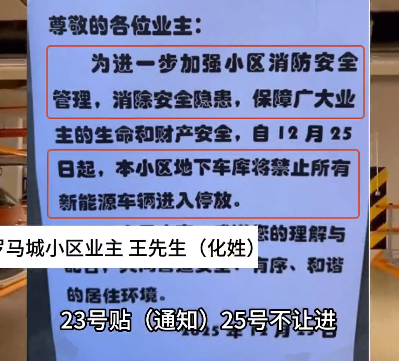
Core Viewpoint - The recent prohibition of electric vehicles (EVs) from entering underground parking in a residential community in Shanxi has sparked significant backlash from homeowners, raising concerns about safety and property rights [1][2]. Group 1: Incident Overview - Homeowners in the Dongfang Roma City community reported that the property management issued a notice on December 23, banning EVs from the underground garage effective December 25, citing concerns over potential fire hazards from EV batteries [1]. - Residents expressed frustration as they were given only two days to adjust, leading to difficulties in finding alternative parking [1]. Group 2: Broader Context - This incident is not isolated; similar bans on EVs in underground parking have occurred in other cities, including a building in Ningbo and a smart parking facility in Beijing [2]. - The rapid increase in EV ownership has created a pressing need for adequate parking solutions, while safety incidents involving EVs have heightened public concern [3]. Group 3: Fire Safety Statistics - Data from 2021 to 2023 indicates that the fire incidence rate for EVs has decreased from 0.185% to 0.096%, suggesting that EVs are statistically less likely to catch fire compared to traditional fuel vehicles, which have a fire rate of approximately 0.15% [3][5]. Group 4: Regulatory Developments - To address the issue of EV parking bans, cities like Shenzhen are implementing regulations, with a new standard for fire safety management in underground parking for EVs set to take effect on November 1, 2024 [5][7]. - The new regulations will specify safe charging locations and establish clear responsibilities for fire safety management in underground parking facilities [8].
都市车界|新势力造车不能以车主生命为代价试错
Qi Lu Wan Bao· 2025-10-15 08:01
Core Viewpoint - The recent accident involving Xiaomi's car in Chengdu highlights not only the safety issues within Xiaomi's vehicles but also reflects broader safety concerns prevalent in the entire new energy vehicle industry [1][10]. Group 1: Safety Concerns - The hidden door handle design of Xiaomi's car hindered rescue efforts during the accident, raising significant safety concerns about such designs that prioritize aesthetics over functionality [2][10]. - The electronic door handles have a success rate of only 67% in side collisions, compared to 98% for traditional mechanical handles, indicating a critical safety gap [2]. - New regulations have been introduced to ensure that car doors can be opened in emergencies, emphasizing that design innovations must not compromise basic safety functions [2][10]. Group 2: Performance vs. Safety - The rapid acceleration capabilities of models like the Xiaomi SU7 pose increased demands on drivers' skills and awareness, potentially turning public roads into race tracks [3][10]. - The demographic of Xiaomi's users shows that 68% are under 35 years old, with a significant portion being inexperienced drivers, raising concerns about their ability to handle high-performance vehicles [3]. - The disparity between the performance of electric vehicles and the safety standards that accompany them could lead to dangerous situations if safety does not keep pace with performance advancements [3][10]. Group 3: Driver Education and Awareness - Many drivers lack adequate understanding of new technologies in electric vehicles, such as energy recovery and single-pedal driving, which can lead to accidents if not properly managed [5][7]. - The misuse of intelligent driving systems, where drivers over-rely on technology, has resulted in serious accidents, highlighting a gap in driver education and awareness [6][8]. - The marketing strategies of some car manufacturers often downplay the need for driver training and safety education, leading to a mismatch between driver capabilities and vehicle technology [7][10]. Group 4: Regulatory Response - The Ministry of Industry and Information Technology is seeking to enhance safety requirements for intelligent and connected vehicle production, focusing on improving the capabilities related to network and data security [8][9]. - New regulations aim to address the risks associated with new technologies while optimizing the requirements for different product development characteristics [9]. Group 5: Industry Responsibility - The accident serves as a reminder that new energy vehicle manufacturers must prioritize safety over rapid technological advancements and market competition [10][11]. - Safety should be integrated throughout the entire lifecycle of vehicle production, from design to after-sales service, ensuring that consumer education and feedback mechanisms are robust [10].

安全是最大的豪华,但你追求的豪华能阻挡多少撞击
3 6 Ke· 2025-08-13 09:21
Core Insights - The article highlights the increasing safety concerns surrounding electric vehicles (EVs) as their sales reach record highs, with 5.468 million units sold in the first half of the year [3] - It emphasizes the importance of prioritizing safety features over luxury and aesthetics when selecting a vehicle [2] Group 1: Safety Concerns - Numerous incidents involving EVs, such as sudden steering lock and battery fires, raise questions about their safety [1][6] - Complaints regarding false range claims have surged, with 948 reported cases of EVs showing actual ranges below 70% of advertised figures [9] - The article discusses various safety failures, including steering malfunctions and axle breakages, which have been reported by multiple EV owners [8][6] Group 2: Manufacturing Practices - The competitive nature of the EV market has led some manufacturers to cut costs by using cheaper materials and simpler technologies, compromising vehicle safety [13] - The article points out that some manufacturers have reduced the strength of critical components, such as using lower-grade steel in vehicle structures [14][18] - It also mentions that battery safety is often overlooked, with some manufacturers opting for lower-quality batteries to reduce costs, increasing the risk of fires [18] Group 3: Consumer Awareness - Many consumers prioritize flashy features and performance metrics over essential safety aspects, leading to a lack of informed decision-making [19][23] - The article suggests that consumers should focus on understanding vehicle structure, safety features, and battery technology when purchasing EVs [25] - It emphasizes the need for consumers to consult professional evaluations and real user feedback to make safer choices [25][26] Group 4: Recommendations for Consumers - Consumers are advised to investigate the vehicle's body structure, airbag configuration, and active safety systems before making a purchase [25] - The article encourages potential buyers to consider brands with a strong track record in battery safety and low incident rates [25] - It concludes that both consumers and manufacturers must prioritize safety to ensure the well-being of EV users [26]
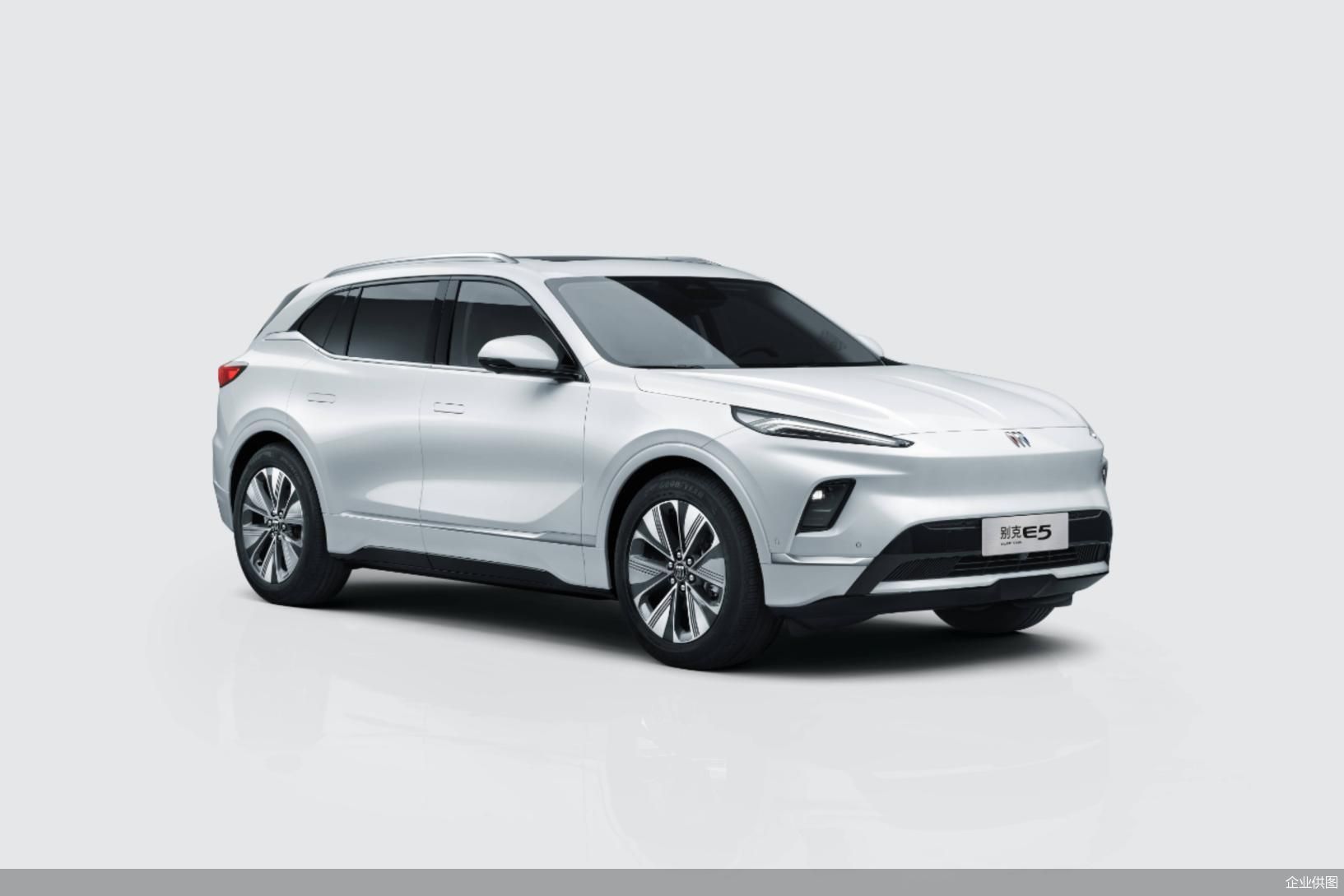
别克的新能源反击,从新别克纯电E5开始
Bei Jing Shang Bao· 2025-06-22 03:29
Core Insights - The competition in China's electric vehicle (EV) market is intensifying, with domestic brands achieving a penetration rate of 68.7% in May, while mainstream joint venture brands only reached 4.3% [1] - Buick has launched the new electric E5 model, priced between 149,900 and 169,900 yuan, aiming to establish itself as a benchmark for joint venture brands in the EV sector [1][16] Group 1: Market Dynamics - Domestic brands are aggressively capturing market share, prompting joint venture brands to respond strategically [1] - Japanese brands are targeting the 150,000 yuan EV market segment, indicating a shift in competitive strategies among established players [1] Group 2: Safety Standards and Innovations - The new national standard for electric vehicle battery safety (GB38031—2025) will be implemented on July 1, 2023, raising the bar for safety requirements in the industry [2] - Buick's E5 model has already met the upcoming stringent battery safety standards, showcasing the brand's commitment to safety [4][6] Group 3: Product Features and Consumer Focus - The new Buick E5 features 47 improvements based on consumer feedback, emphasizing user experience and safety [11][16] - The vehicle is designed to cater to family needs, with dimensions of 4892mm x 1905mm x 1683mm and a wheelbase of 2954mm, positioning it competitively in the mid-large SUV segment [11] Group 4: Technological Advancements - The E5 incorporates advanced battery technology developed in collaboration with CATL, featuring high safety and longevity standards [6][9] - The vehicle's interior includes high-quality materials and sound insulation technology, achieving a noise level of 22 decibels, enhancing the overall driving experience [13][14] Group 5: Warranty and Consumer Assurance - Buick offers a lifetime warranty on the battery system for the first non-commercial owner, along with a commitment to compensate for any fire-related incidents within the first year [10][16]