最大诚信原则

Search documents
重疾险“投保易、理赔难”? 哪些情形应赔付或者不赔付,法院给出“答案”
Mei Ri Jing Ji Xin Wen· 2026-01-13 01:07
Core Viewpoint - The article highlights the challenges faced by insurance consumers in claiming critical illness insurance, particularly the common reasons for claim denials by insurance companies, which often revolve around the insured's failure to disclose health information accurately [1][15]. Group 1: Claim Denial Reasons - The majority of claim denials are based on similar reasons, primarily focusing on health inquiry processes, claims procedures, and the validity of exclusion clauses [15]. - The most common defense used by insurance companies is the assertion that the policyholder failed to fulfill their duty to disclose information truthfully [15]. Group 2: Court Rulings on Disclosure Obligations - Courts have ruled that vague or general inquiry clauses do not constitute a clear request for information, and failure to respond to such inquiries does not equate to a breach of the duty to disclose [4][18]. - In a specific case, the court found that the insurance company's general inquiry about "other bodily sensations or activity disorders" lacked clarity, leading to a ruling in favor of the policyholder [19]. Group 3: Specific Case Examples - In a case involving a policyholder who did not disclose a suspected condition of trigeminal neuralgia, the court ruled that the insurance company could not deny the claim based on vague inquiries [19]. - Another case demonstrated that even if a policyholder failed to disclose a history of hepatitis B, the insurance company was still required to pay out the claim as there was no causal link between the undisclosed condition and the claim [22][23]. - A third case clarified that the "two-year incontestability clause" applies from the date of the insurance incident, not the policy's inception, reinforcing the principle of utmost good faith in insurance contracts [25][27].


泰康人寿青岛分公司金融风险提示:了解如实告知的重要性
Qi Lu Wan Bao· 2025-09-18 06:33
Core Viewpoint - The importance of "full disclosure" in insurance contracts is emphasized, as it is crucial for the validity of policies and the smooth processing of claims [1][2]. Group 1: Importance of Full Disclosure - "Full disclosure" is a fundamental legal obligation for policyholders, directly affecting the validity of the insurance policy and future claims [1]. - Insurance operates on the principle of utmost good faith, where insurers rely on the information provided by policyholders to assess risk and determine premiums [2]. - Failure to disclose relevant health information can lead to the cancellation of the contract and denial of claims, as stipulated by the Insurance Law of the People's Republic of China [2]. Group 2: Common Misconceptions - Misconception 1: "If the health check is normal, there is no need to disclose." This is incorrect, as health inquiries cover more than just the results of a health check [3]. - Misconception 2: "The agent said there is no need to disclose." Oral promises from agents are legally invalid; the policyholder is ultimately responsible [3]. - Misconception 3: "If two years pass, claims will definitely be paid." This is a misunderstanding of the "two-year incontestability clause," which requires good faith in the application process [3].
投保时支付成功,理赔遭拒需“退保”? “佛医保”回应!
Nan Fang Du Shi Bao· 2025-07-09 12:36
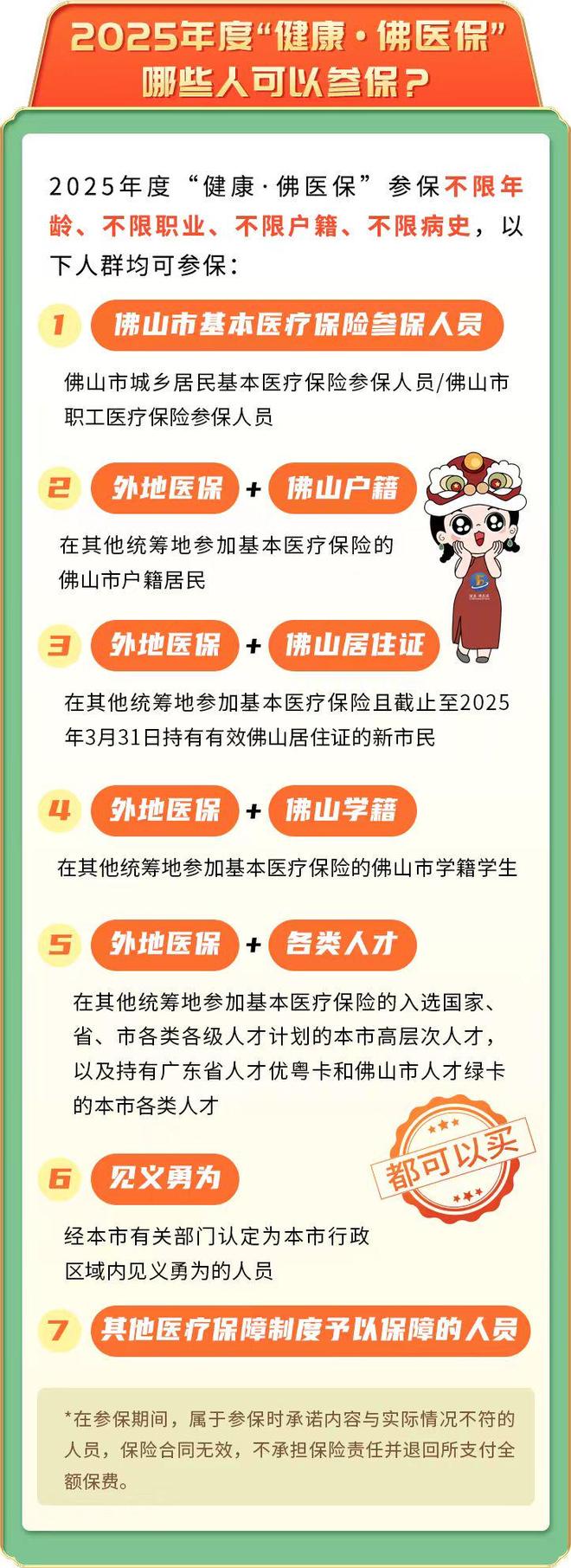
Group 1 - The core issue revolves around the rejection of a claim for the "Health·Foshan Insurance" policy purchased by a resident who did not meet the eligibility criteria, despite successfully obtaining a policy [1][2] - The insurance policy was marketed as having flexible eligibility requirements, stating that individuals only needed to meet one of seven conditions to enroll, with no restrictions on age, occupation, medical history, or residency [3][9] - The policy's promotional materials indicated that individuals could enroll without submitting any proof of eligibility, relying instead on a self-declaration process [9][12] Group 2 - The insurance company confirmed that the underwriting process did not require the submission of supporting documents, which raises questions about the adequacy of the verification process [12][14] - Legal experts noted that while the insurance company provided information about eligibility conditions, the lack of a thorough verification process at the time of enrollment could lead to disputes regarding the validity of the policy [13][14] - The "Health·Foshan Insurance" is a government-guided commercial health insurance product, with a significant number of policies issued and claims processed in recent years, indicating its popularity and the potential for similar issues to arise [12][14]