有机种植

Search documents
(新春走基层)山西灵丘:有机白菜抢“鲜”上市 特色种植带富乡亲
Zhong Guo Xin Wen Wang· 2026-02-26 11:26
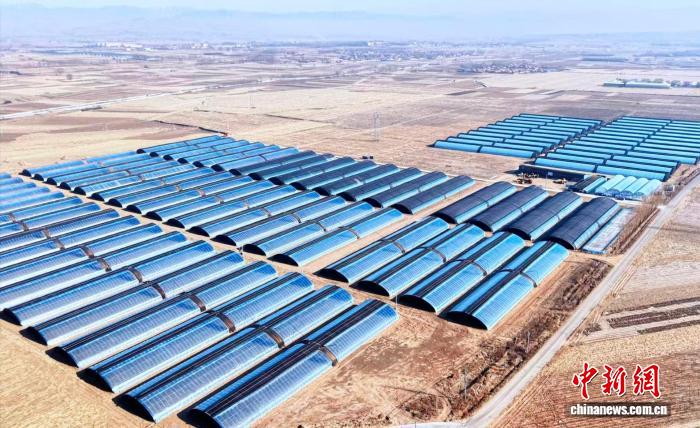
Core Viewpoint - Shanxi Lingqiu County has launched the organic "Jinjin Huangxin Cabbage," which is being harvested and shipped to the Shanghai market, showcasing the benefits of specialty planting for local farmers [1]. Group 1: Agricultural Innovation - The "Jinjin Huangxin Cabbage" is characterized by its dark green outer leaves and tender yellow core, offering a crisp and sweet taste, along with higher nutritional content such as carotene and vitamin C compared to traditional cabbage [3][5]. - The cultivation is based on an order agriculture model, adhering to strict organic farming standards, with an impressive yield of approximately 10,000 pounds per acre [3][5]. Group 2: Economic Impact - The base employs innovative off-season planting and staggered marketing strategies, optimizing land use and providing stable employment opportunities for local villagers [5]. - The Rujiang Special Vegetable Planting Base is a key agricultural project in Lingqiu County, covering an area of 980 acres, with plans for 168 greenhouses, of which 80 are already operational [5].

青藏高原第一块茶田:雪山脚下,茶园飘香
Xin Lang Cai Jing· 2025-12-23 13:54
Core Insights - The article highlights the significance of the Yigong tea plantation, which is the first large-scale tea field in Tibet, known for its unique ecological and cultural heritage [1][2]. Group 1: Historical and Cultural Significance - Yigong tea plantation, established in 1960, is located in Linzhi City, Tibet, and represents the first successful large-scale tea cultivation in the region, overcoming challenges related to high altitude and soil conditions [5]. - The plantation has deep cultural roots, serving as a bridge between Han and Tibetan cultures through the historical Tea Horse Road, emphasizing the importance of tea in Tibetan life [2][5]. Group 2: Ecological and Agricultural Aspects - The average altitude of the Yigong tea plantation is approximately 2300 meters, benefiting from a unique climate that includes abundant rainfall and a significant temperature difference between day and night, which enhances the accumulation of beneficial compounds in tea leaves [2]. - The plantation adheres to organic farming practices, avoiding chemical agents to ensure the production of high-quality and healthier tea [2]. Group 3: Market Development and Innovation - The Yigong tea plantation is exploring diversified sales channels, including optimizing packaging to attract younger consumers, similar to convenient products like drip coffee [6]. - The plantation is leveraging support from Guangdong's aid to connect with the Guangdong-Hong Kong-Macao Greater Bay Area market and is utilizing e-commerce platforms to expand its reach [6]. Group 4: Tourism and Community Engagement - The plantation is planning to integrate tourism with tea production, aiming to develop a model that combines red tourism and tea culture, which will enhance visitor experiences and create job opportunities for local residents [8]. - There is a growing interest among young people in returning to the Yigong tea plantation to contribute to brand design and e-commerce operations, indicating a shift towards modernizing the tea industry while preserving cultural heritage [8].
太仓青禾谷共享农场,实现在“城里”的农耕乐趣
Yang Zi Wan Bao Wang· 2025-11-13 07:20
Group 1 - The Qinghe Valley Shared Farm in Taicang Science and Education New City has officially opened, created through a collaboration between Xingfeng Community Star Labor Cooperative and Qinghe Valley Agricultural Co., Ltd. This project utilizes an innovative model of "infrastructure equity + land sharing" to activate idle resources, quickly becoming a popular destination since its opening in June 2025 [1][3] - The project is located in the Tai'an Third Group, with a planned agricultural area of 36.92 acres and supporting construction land of 0.35 acres. It will be developed in two phases, creating 402 standardized shared vegetable gardens, with 214 in the first phase and 188 in the second phase [3] - The cooperative has invested in infrastructure improvements, including road and waterway renovations, establishing a solid foundation for project operations, exemplifying the transformation of resources into assets and investments into equity [3] Group 2 - The park focuses on "organic planting + diverse experiences," featuring green planting, fruit picking, and pet interaction, ensuring food safety while integrating with compulsory education labor courses. It offers two cultivation models: "self-cultivation" and "full托," with standardized plots of 20-40 square meters and a one-year cycle [6] - Approximately 100 vegetable plots have been successfully leased, receiving a positive market response. The self-cultivation model provides tools and technical guidance, while the full托 model is managed by a professional team, allowing citizens to pick vegetables at their convenience [6] - To ensure quality, the park strictly adheres to organic planting standards, uses organic fertilizers, and regularly publishes soil testing reports. It also offers activities like "vegetable classrooms" and "farming practice classes" to enhance parent-child interactions and promote exploration of nature [8] Group 3 - This project enriches urban leisure scenes and provides stable income for village collectives through land rent and management fees, creating job opportunities in fertilization and weeding. The shared farm, with around 100 "urban landlords," serves as a vibrant connection between urban and rural areas and offers a replicable model for rural revitalization, promoting a healthy and low-carbon lifestyle [11]

侨心筑“高地” 佳酿传世界
Zhong Guo Xin Wen Wang· 2025-08-28 05:27
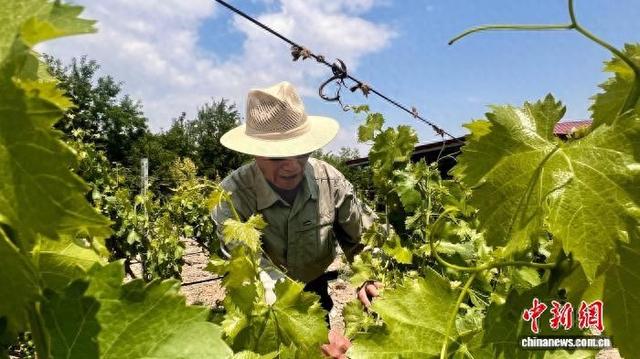
Core Viewpoint - The article highlights the emergence of Ningxia's Silver High Land Winery as a significant player in the global wine industry, driven by the passion and efforts of overseas Chinese entrepreneurs like Gao Lin, who aim to promote Chinese wine on the international stage [1][8]. Group 1: Company Development - Gao Lin, the founder of Silver High Land Winery, expresses a strong desire to elevate Chinese wine to a global level, emphasizing the winery's unique position in the Helan Mountain region, which has transformed from barren land to a thriving vineyard area [1][4]. - The winery produced its first batch of wine in 2007, with Gao Lin and his daughter Gao Yuan applying their overseas knowledge to guide local farmers in organic farming and natural winemaking techniques [4][5]. - The winery has expanded significantly, with a thousand-acre estate established in 2014, and has become the first in Ningxia to receive EU biodynamic certification, reflecting a commitment to sustainable practices [4][6]. Group 2: International Recognition - Silver High Land Winery has gained international acclaim, with its wines winning numerous awards and being exported to 18 countries, including the UK, the US, and Canada, showcasing the unique terroir of Ningxia [5][6][8]. - Gao Yuan, trained in Bordeaux, has successfully integrated French winemaking techniques with local conditions, contributing to the winery's reputation for quality [5][6]. - The winery's success story is seen as a representation of the contributions of overseas Chinese entrepreneurs to the development of their homeland, bringing advanced techniques and capital back to China [8].