
丝织品

Search documents
筑塘伏海建伟业 陌上花开显柔情
Qi Lu Wan Bao· 2026-02-06 16:26
Core Viewpoint The historical drama "Taiping Year" vividly illustrates the significant decision of the Wu-Yue Kingdom to "submit to Song" and maintain peace during the tumultuous period between the fall of the Tang Dynasty and the rise of the Song Dynasty, highlighting the historical significance of peaceful unification. Group 1: Historical Context - The Wu-Yue Kingdom was the longest-lasting regime during the chaotic Five Dynasties and Ten Kingdoms period, existing from 907 to 978 AD, under the rule of five kings across three generations [3]. - The kingdom's stability allowed for the flourishing of culture and economy, as reflected in the saying "Above there is heaven, below there are Su and Hang" [3]. Group 2: Contributions of Qian Liu - Qian Liu, the founder of the Wu-Yue Kingdom, implemented the national policy of "serving China well" and "protecting the territory and the people," achieving significant accomplishments, particularly in water conservancy [5]. - He mobilized 200,000 laborers to construct hundreds of miles of sea dikes to combat frequent flooding, which transformed previously flood-prone areas into fertile land [5][6]. - Qian Liu established the "Du Shui Ying Tian Si" to oversee river management and irrigation, leading to consistent agricultural harvests and a significant reduction in rice prices [6]. Group 3: Economic Development - The Wu-Yue Kingdom's silk and textile industries thrived, with a notable increase in sericulture and silk production, evidenced by the large number of weavers in official workshops [8][9]. - The kingdom was known for its high-quality ceramics, particularly the "secret color porcelain" from the Yue kiln, which gained fame during the late Tang and Five Dynasties periods [9]. - Trade flourished, with the Wu-Yue Kingdom engaging in commerce with various regions, including the Central Plains and overseas countries like Japan and Korea, facilitating cultural exchanges and economic prosperity [10][11].

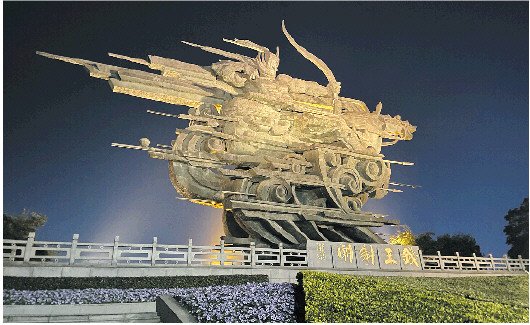
千帆往来有章法
Xin Lang Cai Jing· 2026-01-15 23:33
Core Insights - The article discusses the historical development of maritime trade in ancient China, particularly during the Tang Dynasty, highlighting its significance in cultural exchange and economic growth [1][2]. Group 1: Historical Context - China is one of the earliest countries to engage in foreign trade, with maritime trade routes like the Maritime Silk Road emerging as early as the Qin and Han dynasties [1]. - The Maritime Silk Road facilitated trade and cultural exchanges between China and foreign nations, evolving from the Han Dynasty through the Tang, Song, and Ming dynasties [1][3]. Group 2: Trade Management System - The Tang Dynasty established a relatively complete management system for maritime trade, including laws and regulations that defined tax standards and trade order [2][4]. - The government implemented a licensing system for private maritime trade, requiring merchants to obtain permits for cross-border activities [7]. Group 3: Trade Dynamics - During the Tang Dynasty, the volume of daily necessities and production goods in maritime trade significantly increased compared to previous dynasties, indicating a shift from luxury goods to bulk trade [4]. - The Tang government focused on maintaining trade order and avoiding excessive taxation to encourage foreign trade, as evidenced by the stable tax rates established during this period [8][10]. Group 4: Regulatory Framework - The government defined prohibited items for maritime trade, including strategic materials like weapons and certain luxury goods, to ensure national security [9]. - The establishment of the "Shibo" (maritime trade official) role marked a shift towards centralized management of maritime trade, enhancing oversight and regulatory compliance [10][11]. Group 5: Cultural Significance - The open and inclusive spirit of ancient maritime trade reflects the broader cultural ethos of Chinese civilization, emphasizing the importance of exchange and mutual learning with other cultures [11].
2026-2032年中国蚕养殖行业全景调查与行业前景预测报告
Sou Hu Cai Jing· 2025-12-26 06:12
Group 1 - The report titled "2026-2032 China Sericulture Industry Panorama Survey and Industry Prospect Forecast" provides a comprehensive overview of the sericulture industry in China, including market development environment, operational status, competitive landscape, key enterprise analysis, and future trends and investment forecasts [2] - The report is structured into thirteen chapters, covering definitions, historical development, application fields, and industry chain analysis of sericulture [2] - Data sources for the report include national statistics, customs data, survey data, and information from various market monitoring databases [2] Group 2 - Chapter 2 discusses the current development status of the sericulture industry in 2025, highlighting the export of sericulture technology, farmers' preference for mulberry cultivation, and the role of leading enterprises in improving farmers' incomes [3] - The report identifies significant developments in sericulture technology, including the use of meteorological technology for large-scale cultivation and innovative feeding methods [3] - Chapter 4 analyzes the supply and demand situation in the sericulture market, detailing market scale, profitability, and demand characteristics from 2021 to 2025, as well as predictions for 2026 to 2032 [3][4] Group 3 - The report includes a detailed analysis of key enterprises in the sericulture industry, such as Jiangsu Fu'an Silk Co., Ltd. and Sichuan Neijiang Songlin Silk Co., Ltd., focusing on their economic indicators, profitability, and operational capabilities [5][6] - Chapter 10 forecasts the development trends and investment prospects for the sericulture industry from 2026 to 2032, addressing existing challenges and future growth directions [7] - The marketing strategies for the sericulture industry are examined, including product introduction, product line decisions, and channel marketing strategies [8]
