机构洗盘

Search documents
IPO热潮背后:90%散户不知道的机构玩法
Sou Hu Cai Jing· 2025-10-31 22:57
Core Insights - The article discusses the recent IPO frenzy in the STAR Market, highlighting the underlying institutional strategies that drive stock performance [1][2]. Group 1: IPO Market Developments - Recent progress in the STAR Market includes successful registrations for companies like Muxi Integrated Circuit and Ningbo Jianxin Superconducting, with others like Taijin New Energy and Haoying Technology under review [2][3]. - These companies are positioned in high-tech sectors such as GPU chips, superconducting magnets, and drone power systems, indicating their potential for growth [3]. Group 2: Institutional Strategies - The article emphasizes the importance of understanding institutional trading behaviors, particularly the concept of "washing" stocks to eliminate weak hands and secure stronger positions [4]. - "Washing" involves institutions deliberately depressing stock prices to create a perception of a downturn, which can mislead retail investors into selling their shares [4]. Group 3: Characteristics of Institutional Trading - The article outlines three typical characteristics of institutional washing, including the use of data analytics to track trading behaviors and identify patterns that signal institutional activity [5][9]. - The analysis of "institutional inventory" and "short covering" data can reveal when institutions are accumulating shares, often leading to subsequent price increases [9][13]. Group 4: Phases of Stock Performance Post-IPO - Newly listed companies typically experience three phases: a high volatility period, a consolidation phase where institutions accumulate shares, and a main upward trend once the accumulation is complete [14]. - Understanding these phases can help investors better navigate the market and avoid impulsive decisions based on short-term fluctuations [14]. Group 5: Recommendations for Investors - Investors are advised to remain patient and not be swayed by short-term market volatility, as the true value of quality companies takes time to manifest [15]. - Learning to recognize institutional trading patterns through quantitative tools can provide insights beyond traditional chart analysis [15]. - Maintaining a flexible investment strategy is crucial, allowing for adjustments based on market conditions rather than rigid adherence to a single approach [15].


融资净买入31亿!机构却在偷偷做这件事
Sou Hu Cai Jing· 2025-09-18 08:43
Group 1 - The market appears vibrant with 22 out of 31 industries experiencing growth, highlighted by significant capital inflow into companies like CATL and SMIC [1] - Despite the surface-level excitement, underlying market dynamics suggest a more complex reality, where institutional trading behaviors significantly influence stock prices [3][4] - The concept of "washing the plate" is introduced, where institutional investors intentionally depress stock prices to create a false sense of market correction, leading retail investors to sell prematurely [3] Group 2 - Performance metrics such as earnings growth are not the sole determinants of stock success; rather, active participation from institutional funds is crucial [4] - The analysis of stock charts indicates that stocks with active institutional involvement tend to perform better, contrasting with those where institutional interest is waning [10] - The recommendation is made to focus on quantitative data to understand the true flow of capital and institutional intentions, rather than following popular stocks blindly [10]

新消费涨势汹汹,下一代的茅台出现
Sou Hu Cai Jing· 2025-06-05 16:55
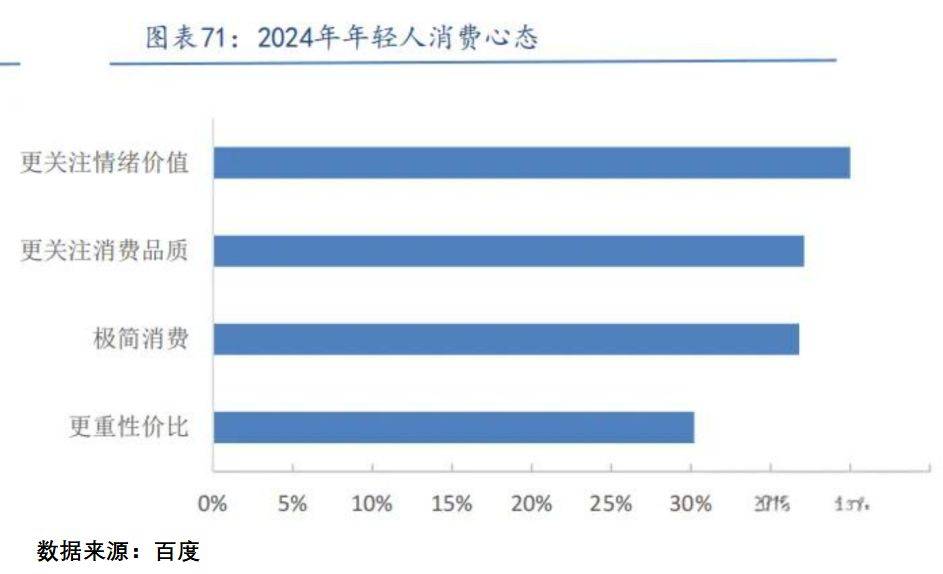
Group 1 - The rise of new consumption stocks in the A-share market is driven by the need for domestic demand due to complex global economic conditions, leading to significant price increases in these stocks [1] - Over 50% of young consumers prefer to spend on personal satisfaction rather than traditional luxury goods, indicating a shift in consumer behavior [1] Group 2 - Retail investors often struggle to time their trades correctly, leading to losses, as they may misinterpret market signals and follow trends without understanding the underlying data [3] - The disparity between retail and institutional investors' perspectives can result in retail investors buying at peaks and selling at lows, often leading to significant losses [3] Group 3 - Understanding institutional trading behavior through data analysis is crucial for retail investors to avoid being misled by market movements [5] - High institutional activity, indicated by dense orange bars in data visualizations, suggests strong institutional interest, while a lack of such activity may indicate that institutions have exited their positions [7][9] Group 4 - Recognizing market manipulation tactics, such as "washing" where institutions sell off shares to scare retail investors into selling, is essential for making informed investment decisions [10][12] - Key indicators for identifying these tactics include the persistence of institutional activity and signs of short covering [13] Group 5 - The primary risk for retail investors lies in information asymmetry, making it vital to gather accurate market information to make informed decisions [14] - Data is a more reliable indicator than price charts or market sentiment, as it reflects true market behavior and trends [16]