
果链企业转型

Search documents
苹果新高背后:揭秘万亿产业链上的投资密码
格隆汇APP· 2025-11-03 11:41
Core Viewpoint - The article emphasizes the deep integration of Chinese companies within the Apple supply chain, highlighting their critical role in the production of the iPhone 17 and the broader implications for the global technology manufacturing landscape [2][3][21]. Group 1: Apple's Dependency on China - Apple has attempted to reduce its reliance on China by shifting parts of its supply chain to Southeast Asia, but this strategy has faced significant challenges [6]. - Over 90% of Apple products are assembled in China, with more than 50 Chinese companies listed among Apple's top 200 core suppliers, indicating a growing presence in both quantity and quality [7]. - The "Zhengzhou speed" exemplifies the efficiency of the supply chain in China, where a vast ecosystem of supporting companies enables rapid production scaling and distribution [8]. Group 2: Rise of Chinese Companies in the Supply Chain - Chinese companies have evolved from mere assembly workers to key partners in the Apple supply chain, leveraging technological innovation and cost control to build competitive advantages [10]. - Lens Technology, a key supplier of glass components for iPhones, exemplifies this transformation, having developed advanced manufacturing techniques to meet Apple's stringent requirements [11]. - Luxshare Precision has transitioned from producing low-value components to becoming a core assembler for major Apple products, showcasing strategic growth through acquisitions and R&D investments [12][13]. Group 3: Investment Opportunities in the Apple Supply Chain - Chinese suppliers are increasing their market share in various components, such as camera modules and structural parts, indicating ongoing opportunities for growth [17]. - Upcoming product cycles, including AR/VR devices and potential Apple cars, present new avenues for suppliers to engage with Apple and drive revenue growth [18]. - Leading companies in the supply chain are diversifying their business models to reduce dependency on Apple, exploring new markets like electric vehicles and renewable energy [19].



苹果眼里没有“最大甲方”
Hu Xiu· 2025-05-06 05:58
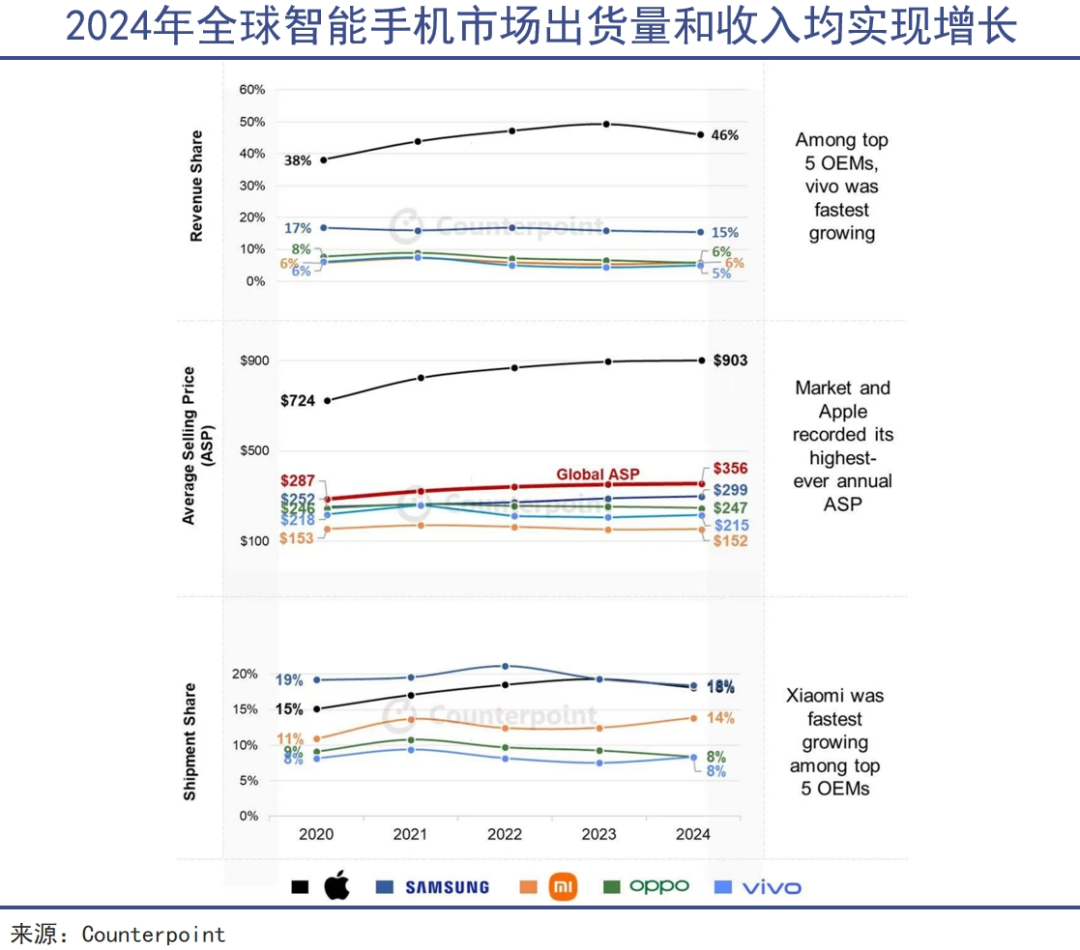
Core Viewpoint - Apple is increasingly distancing itself from China, focusing on maximizing profits while reducing reliance on Chinese suppliers and manufacturing, amidst a backdrop of escalating trade tensions between the US and China [1][68]. Group 1: Apple's Market Position - Apple generated $64.6 billion in revenue from the Chinese market last year, making it one of the largest foreign companies operating in China [3][4]. - Despite its significant revenue from China, Apple's share of components sourced from Chinese suppliers has dwindled to just 2% [7][20]. - In the first quarter of this year, Apple saw its market share in China shrink, with Huawei surpassing it to become the market leader [9][46]. Group 2: Supply Chain Dynamics - Apple employs a "wolf-raising" strategy, squeezing profits from existing suppliers while nurturing secondary suppliers to prevent any single supplier from becoming too powerful [6][23]. - The company has shifted low-value manufacturing to developing countries, maintaining high profit margins by controlling design and marketing [12][18]. - In 2024, Apple captured 18% of global smartphone shipments, commanding nearly half of the market size and 80% of industry profits [13][18]. Group 3: Production Shifts - Apple plans to increase its manufacturing presence in India, aiming for 25% of its production to occur there by 2025 [26][32]. - The number of Apple factories in Vietnam has risen from 15 in 2018 to 35 currently, indicating a significant shift in production strategy [29]. - The share of iPhone production in India has increased from 1% to 14% over four years, while China's share has decreased from 98% to 85% [38]. Group 4: Financial Performance and Challenges - Apple's net profit margin reached 24% in the 2024 fiscal year, while the average net profit margin for 22 listed Chinese suppliers is only 4% [18]. - The decline in Apple's reliance on Chinese manufacturing has led to significant economic impacts in regions like Zhengzhou, where mobile phone exports dropped by 49.1% in the first half of 2024 [40][41]. - Companies like Luxshare Precision and OFILM have begun diversifying their business models to reduce dependence on Apple, with Luxshare expanding into automotive components [50][52]. Group 5: Competitive Landscape - Huawei has rebounded strongly, capturing 19.4% of the Chinese market in the first quarter, while Apple's market share has declined by 7.7% [46]. - The shift in consumer preferences towards domestic brands like Xiaomi and Huawei is contributing to a decline in Apple's market dominance in China [61][62]. - Apple faces increasing competition not only from domestic brands but also from its own supply chain partners, who are diversifying their client bases [50][58].
从果链到车链,领益智造超3亿元跨界收购江苏科达
Guo Ji Jin Rong Bao· 2025-04-23 12:39
Core Viewpoint - Liyi Intelligent Manufacturing plans to acquire 66.46% of Jiangsu Kedastern Automotive Technology Co., Ltd. for 332 million yuan, marking its entry into the automotive trim industry [1] Group 1: Acquisition Details - The acquisition involves issuing convertible bonds and cash to eight parties, with a total transaction price of 332 million yuan [1] - Liyi Intelligent Manufacturing also plans to raise up to 207 million yuan through a share issuance to no more than 35 specific investors [1] - The acquisition is subject to regulatory approval [1] Group 2: Jiangsu Kedastern's Performance - Jiangsu Kedastern reported revenues of 815 million yuan and 899 million yuan for 2023 and 2024, respectively, with corresponding net profits of 25.32 million yuan and 40.98 million yuan [2] - The 100% equity of Jiangsu Kedastern is valued at 505 million yuan, with a net asset value of 247 million yuan as of December 31, 2024, indicating an asset appraisal increase of 258 million yuan, or 104.06% [2] - Performance commitments have been made for net profits of no less than 47 million yuan, 56 million yuan, and 65 million yuan for the years 2025, 2026, and 2027, respectively [2] Group 3: Strategic Implications - The acquisition will enable Liyi Intelligent Manufacturing to transition from a Tier 2 to a Tier 1 supplier, enhancing customer loyalty and business stability [3] - The company aims to expand its product offerings in the automotive sector, including interior and exterior trim components, thereby increasing product value and profit margins [3] - Liyi Intelligent Manufacturing has been diversifying its business to reduce reliance on a single customer, with a focus on the smart automotive sector [4] Group 4: Financial Overview - In 2024, Liyi Intelligent Manufacturing achieved revenues of 44.211 billion yuan, a year-on-year increase of 29.56%, while net profit decreased by 14.5% to 1.753 billion yuan [4] - The AI terminal business accounted for 92% of the revenue, while the automotive and low-altitude economy sectors generated 2.117 billion yuan, representing only 4.79% of total revenue [4]
