武器出口限制

Search documents
日本民众:把用于战争的武器出口 “不对、也绝对不可以”
Xin Hua She· 2025-12-27 00:02
Group 1 - The Japanese ruling coalition, consisting of the Liberal Democratic Party and the Japan Innovation Party, plans to lift restrictions on five types of weapon exports, leading to significant public protests against this decision [2][3] - Protesters argue that the removal of these restrictions could result in Japanese-manufactured weapons being used to harm people in other countries, emphasizing the moral responsibility of politicians to maintain peace rather than promote war [2] - The current "Three Principles on Defense Equipment Transfer" limits Japan's defense exports to non-combat purposes, but a recent agreement within the ruling coalition aims to amend these guidelines and submit a proposal to the cabinet by February next year [3]
日本民众就执政联盟放宽武器出口限制的动向举行抗议集会
Xin Hua She· 2025-12-25 15:25
Group 1 - The Japanese ruling coalition, consisting of the Liberal Democratic Party and the Japan Innovation Party, plans to lift restrictions on five types of weapon exports, leading to significant concerns among the public [1][2] - A protest was held in front of the Liberal Democratic Party headquarters in Tokyo, where demonstrators expressed their opposition to the proposed changes, holding signs with messages such as "Do not sell 'Made in Japan' weapons" and "No to war" [1] - Protesters argue that the removal of the five-type restriction could result in Japanese weapons being used to harm people in other countries, emphasizing the moral responsibility of politicians to maintain peace rather than promote war [1][2] Group 2 - Currently, Japan's "Three Principles on Defense Equipment Transfer" restricts weapon exports primarily to logistics-related types, such as rescue and transport [2] - On December 15, the ruling coalition reached an agreement to modify the guidelines of the "Three Principles," aiming to eliminate the five-type export limitation, with plans to submit a motion to the Cabinet in February [2] - This proposed change has sparked strong concerns and criticism within Japan, indicating a significant shift in the country's defense export policy [2]
日本急于对外推销“最上”级护卫舰
Xin Lang Cai Jing· 2025-12-25 06:06
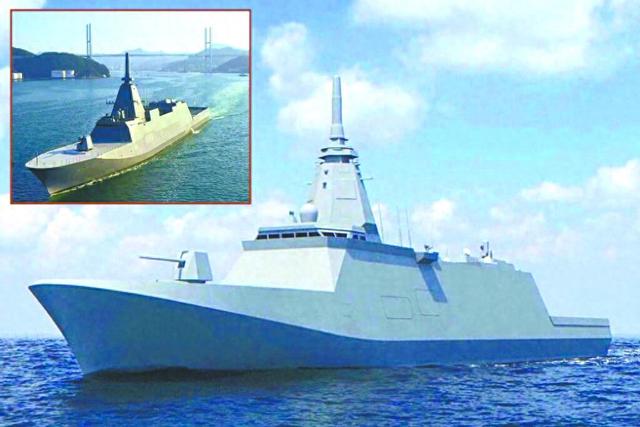
Core Viewpoint - Japan's latest "Maya" class frigate is being promoted internationally as a significant step in Japan's defense export strategy, marking a shift in its military export policies and raising geopolitical concerns [2][4][7] Group 1: Frigate Specifications and Capabilities - The "Maya" class frigate has a standard displacement of 3,900 tons and a full load displacement of 5,500 tons, with a length of 133 meters and a width of 16.3 meters, capable of reaching a maximum speed of approximately 30 knots [3] - It features advanced automation, reducing crew size to about 90 personnel, and is equipped with a Mk45 naval gun, a 16-cell Mk41 vertical launch system, and a close-in weapon system [3] - The frigate is Japan's first to integrate mine-sweeping capabilities and is designed to perform various roles, including anti-submarine, air defense, and anti-ship operations [3] Group 2: Export Ambitions and Political Implications - The Japanese government aims to export the "Maya" class frigate as part of its broader strategy to relax military export restrictions, with Australia planning to purchase 11 units for approximately 67 billion yen [5] - This marks Japan's first export of a major combat weapon, reflecting a significant policy shift in its defense export strategy [5] - The potential sale to Australia is seen as politically motivated, with concerns about funding availability due to the AUKUS submarine project impacting the Australian Navy's budget [6] Group 3: Future Developments and Challenges - Japan plans to build 12 improved versions of the "Maya" class frigate, enhancing its displacement and capabilities, with the first expected to enter service by 2028 [5] - The export process may face challenges due to Japan's lack of experience in exporting complex military equipment and the need for close collaboration with Australian partners [6] - The geopolitical implications of Japan's military expansion and export strategy are under scrutiny, particularly in light of its historical context and regional security concerns [7]

警惕!日本急于对外推销“最上”级护卫舰
Xin Lang Cai Jing· 2025-12-24 22:54
Core Viewpoint - Japan's latest "Mogami" class frigate is being positioned as a key product for international defense exports, marking a significant shift in Japan's military export policy and raising geopolitical concerns [1][4]. Group 1: Frigate Specifications and Capabilities - The "Mogami" class frigate has a standard displacement of 3,900 tons and a full load displacement of 5,500 tons, with a length of 133 meters and a width of 16.3 meters, achieving a maximum speed of approximately 30 knots [3]. - It features advanced capabilities including anti-submarine, air defense, and anti-ship operations, and is the first Japanese frigate equipped with mine-sweeping capabilities [3]. - The frigate is designed with a low radar cross-section and incorporates a fully integrated OPY-2 multifunctional active phased array radar, enhancing its stealth and reducing electromagnetic interference [3]. Group 2: Export Ambitions and Market Strategy - Japan's Ministry of Defense has initiated plans for 12 improved versions of the "Mogami" class frigate, which will increase displacement and enhance air defense and radar detection capabilities, with an expected service entry for the first batch in 2028 [4]. - The Australian government has announced a $10 billion AUD (approximately $6.7 billion USD) procurement of 11 improved "Mogami" class frigates, marking Japan's first export of a major combat weapon [4]. - Japan is also in discussions with India regarding the transfer of technology related to the integrated mast on the "Mogami" class frigate, which would represent a significant step in defense equipment exports [5]. Group 3: Challenges and Geopolitical Implications - Despite the ambitions, the export of the "Mogami" class frigate may face challenges due to high costs, with a unit price of approximately $600 million, which is significantly higher than competing options like Germany's MEKO A-200 frigate [6]. - Japan's lack of experience in exporting complex military equipment poses risks, especially as Australia seeks to be involved in the design and construction process, which could lead to project delays and cost overruns [7]. - The push for arms exports is seen as a means for Japan to circumvent its historical restrictions on military exports, raising concerns among neighboring countries regarding Japan's military intentions and historical context [7].
新闻观察:放宽武器出口限制 日本走在错误道路上
Yang Shi Wang· 2025-12-06 07:47
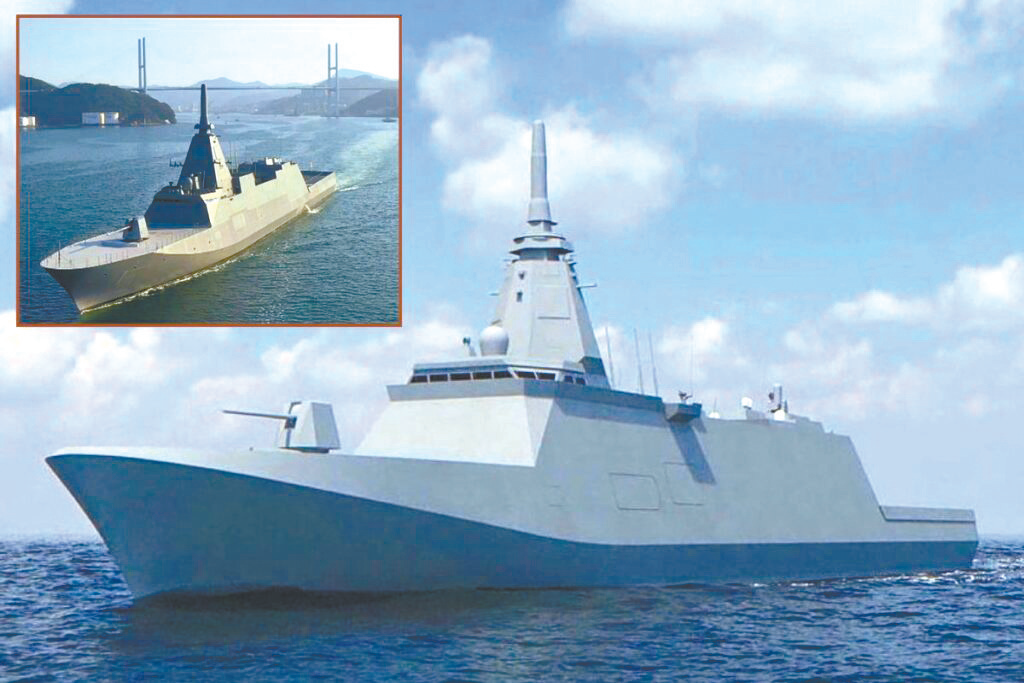
Group 1 - The core viewpoint of the articles highlights Japan's shift towards expanding its defense capabilities and weapon exports, raising concerns about regional military balance and adherence to its pacifist constitution [1][3][5] - Australia and New Zealand's defense ministers are set to meet with Japan's defense minister to discuss strengthening bilateral defense cooperation and potential Japanese warship exports [1] - Japan's Prime Minister Kishi Nobuo has initiated efforts to further relax restrictions on defense equipment exports, moving away from the post-World War II principles that limited arms exports [3][7] Group 2 - Analysts suggest that the Japanese government's relaxation of weapon export policies aims to re-establish Japan as a military power and support the transformation of the Self-Defense Forces into a national defense force [5] - The recent changes in Japan's security policy include significant increases in defense budgets and a push for offensive weapon development, indicating a departure from Japan's traditional pacifist stance [7] - There are growing concerns within Japan regarding the implications of these policy changes on international relations and geopolitical stability [5][7]
日本首次出口杀伤性武器,中方表态!
券商中国· 2025-11-21 09:24
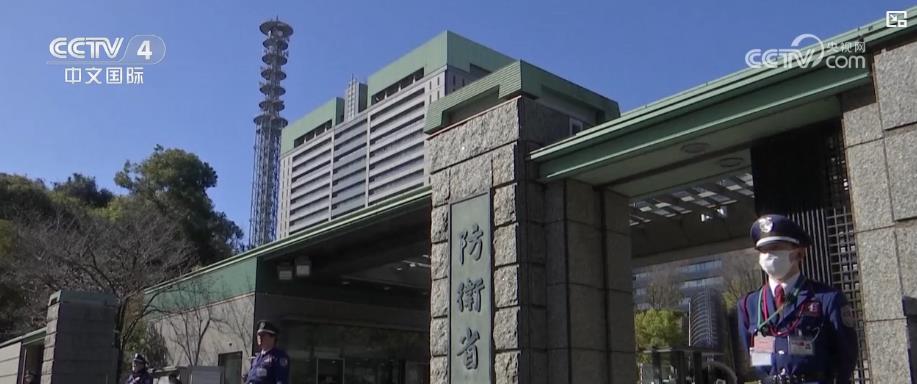
Group 1 - The article discusses Japan's recent military actions, including the completion of the sale of "Patriot" missiles to the United States, marking its first export of lethal weapons since relaxing its arms export restrictions [1] - Japan's defense budget has seen a continuous increase for thirteen consecutive years, and the government is considering revising three security agreements, which may include changes to its "Three Non-Nuclear Principles" and an increase in defense spending [1] - The spokesperson expresses concern that Japan's military expansion and potential nuclear sharing arrangements contradict its stated goal of a nuclear-free world, suggesting a shift towards militarism [1] Group 2 - The article highlights Japan's historical obligations as a defeated nation post-World War II, which included complete disarmament and restrictions on military capabilities [1] - The spokesperson questions Japan's intentions behind its military buildup and potential abandonment of peace commitments, warning that such actions would not be accepted by the Chinese people or the international community [1]
德国政府解除对以色列武器出口限制
Yang Shi Xin Wen· 2025-11-17 13:45
Core Viewpoint - The German government will officially lift the restrictions on arms exports to Israel starting from November 24, considering the stabilization of the situation between Israel and Hamas since the ceasefire agreement took effect on October 10 [1][2]. Group 1: Government Decision - The decision to lift the arms export restrictions is based on the assessment that the situation has gradually stabilized since the ceasefire agreement [1]. - The German federal government will resume case-by-case reviews of arms exports and will make judgments based on the developments in the situation [1]. Group 2: Previous Actions - Prior to this decision, German Chancellor Merz ordered a suspension of all arms exports to Israel that could be used in the Gaza Strip in response to the Israeli military actions in the region [1].