
最上”级护卫舰

Search documents
新导弹亮相日本野心勃勃
Xin Lang Cai Jing· 2026-02-08 17:26
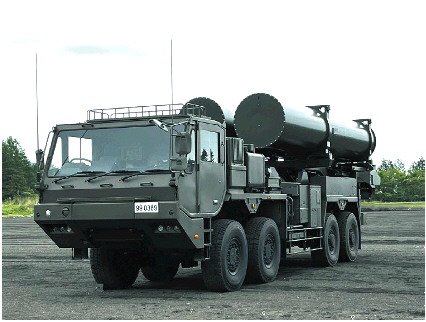
Core Viewpoint - Japan is accelerating its military capabilities by developing a new type of anti-ship cruise missile that can perform "barrel roll maneuvers" to evade defense systems, reflecting a significant shift in its military strategy from defense to offense [3][4]. Military Developments - The new missile, referred to as the "island defense high-speed gliding missile," is expected to begin production in 2027, with a budget allocation of 387 billion yen for its mass production and 732 billion yen for hypersonic missile research in the fiscal year 2026 [5]. - The missile is designed to exceed the range of the existing Type 12 anti-ship cruise missile, which has a maximum range of 1,000 kilometers, indicating that the new missile's range will likely surpass this figure [4][5]. - Japan's defense budget for the fiscal year 2026 has reached a record high of 9.04 trillion yen, with approximately 973.3 billion yen earmarked for enhancing its strike capabilities against enemy bases [9][11]. Technological Features - The missile features advanced stealth capabilities, a unique S-shaped air intake design, and a multi-faceted body to enhance its evasion tactics against interception systems [5]. - It is capable of being deployed from various platforms, including destroyers, land-based mobile launchers, and fighter jets, showcasing its versatility [4][5]. Broader Military Strategy - Japan is also investing in directed energy weapons, with 18.3 billion yen allocated for the development of shipborne laser weapon systems in the fiscal year 2025 [6]. - The country is pursuing the development of high-power microwave systems in collaboration with the U.S. Department of Defense, indicating a focus on advanced military technologies [8]. - Japan's military strategy includes the deployment of new destroyers, submarines, and the integration of Tomahawk missiles into its naval forces, marking a departure from its traditional defense posture [9][10].

日本急于对外推销“最上”级护卫舰,又有新图谋?
Xin Lang Cai Jing· 2026-01-02 10:13
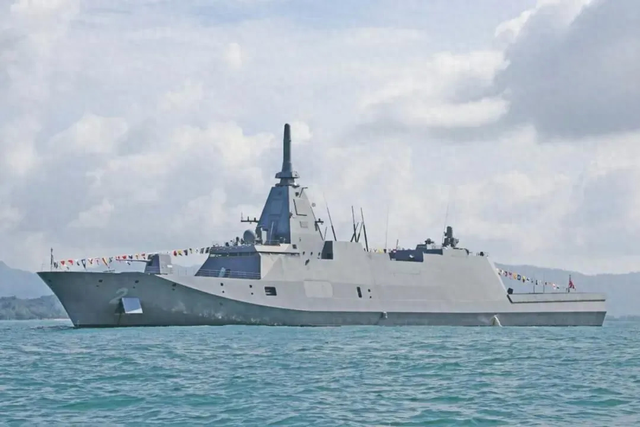
Core Viewpoint - Japan is actively promoting its latest "Mogami" class frigate to international markets, marking a significant step in its efforts to relax weapon export restrictions and enhance its military capabilities [1][5]. Group 1: Characteristics of the "Mogami" Class Frigate - The "Mogami" class frigate has a full-load displacement of 5,500 tons, categorizing it as a medium frigate, and features a combined diesel-electric propulsion system [3]. - It is equipped with a 127mm naval gun, Type 17 anti-ship missiles, and the OPY-2 radar for detecting aerial and surface targets, along with mine countermeasure sonar and unmanned vehicles [3]. - The frigate's design allows for stealth capabilities and significant upgrade potential, positioning Japan's Maritime Self-Defense Force among the world's elite naval forces [3]. Group 2: Weapon Export Strategy - Japan aims to break through its "Three Principles on Arms Exports" to facilitate weapon exports, transitioning from "defense equipment" to "offensive weapon" sales [5]. - The Australian government plans to invest 100 billion AUD (approximately 67 billion USD) to procure 11 improved "Mogami" class frigates, indicating strong international interest [5]. - This strategy is expected to boost Japan's defense industry and create a new economic growth point while sharing the costs of equipment development and manufacturing [5]. Group 3: Military Transformation - Japan's defense budget for fiscal year 2025 will see a significant increase, aiming to achieve a defense spending level of 2% of GDP ahead of schedule [8]. - The country is moving beyond its "self-defense" principle, with its Maritime Self-Defense Force evolving towards a more offensive and blue-water navy [8]. - Japan is planning to expand its naval capabilities by constructing large destroyers equipped with Aegis systems, which will enhance its air defense and strike capabilities [9].
日本急于对外推销“最上”级护卫舰
Xin Lang Cai Jing· 2025-12-25 06:06
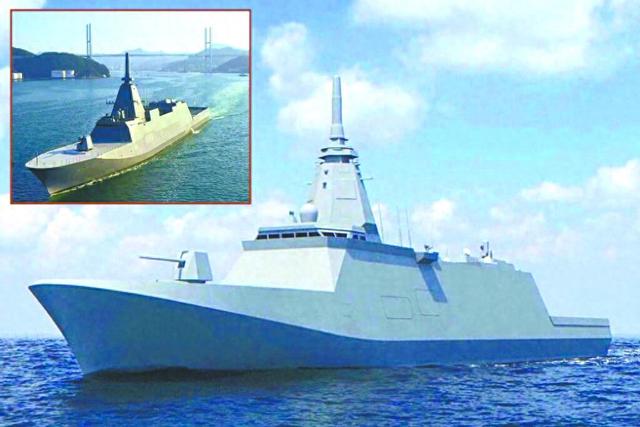
Core Viewpoint - Japan's latest "Maya" class frigate is being promoted internationally as a significant step in Japan's defense export strategy, marking a shift in its military export policies and raising geopolitical concerns [2][4][7] Group 1: Frigate Specifications and Capabilities - The "Maya" class frigate has a standard displacement of 3,900 tons and a full load displacement of 5,500 tons, with a length of 133 meters and a width of 16.3 meters, capable of reaching a maximum speed of approximately 30 knots [3] - It features advanced automation, reducing crew size to about 90 personnel, and is equipped with a Mk45 naval gun, a 16-cell Mk41 vertical launch system, and a close-in weapon system [3] - The frigate is Japan's first to integrate mine-sweeping capabilities and is designed to perform various roles, including anti-submarine, air defense, and anti-ship operations [3] Group 2: Export Ambitions and Political Implications - The Japanese government aims to export the "Maya" class frigate as part of its broader strategy to relax military export restrictions, with Australia planning to purchase 11 units for approximately 67 billion yen [5] - This marks Japan's first export of a major combat weapon, reflecting a significant policy shift in its defense export strategy [5] - The potential sale to Australia is seen as politically motivated, with concerns about funding availability due to the AUKUS submarine project impacting the Australian Navy's budget [6] Group 3: Future Developments and Challenges - Japan plans to build 12 improved versions of the "Maya" class frigate, enhancing its displacement and capabilities, with the first expected to enter service by 2028 [5] - The export process may face challenges due to Japan's lack of experience in exporting complex military equipment and the need for close collaboration with Australian partners [6] - The geopolitical implications of Japan's military expansion and export strategy are under scrutiny, particularly in light of its historical context and regional security concerns [7]
警惕!日本急于对外推销“最上”级护卫舰
Xin Lang Cai Jing· 2025-12-24 22:54
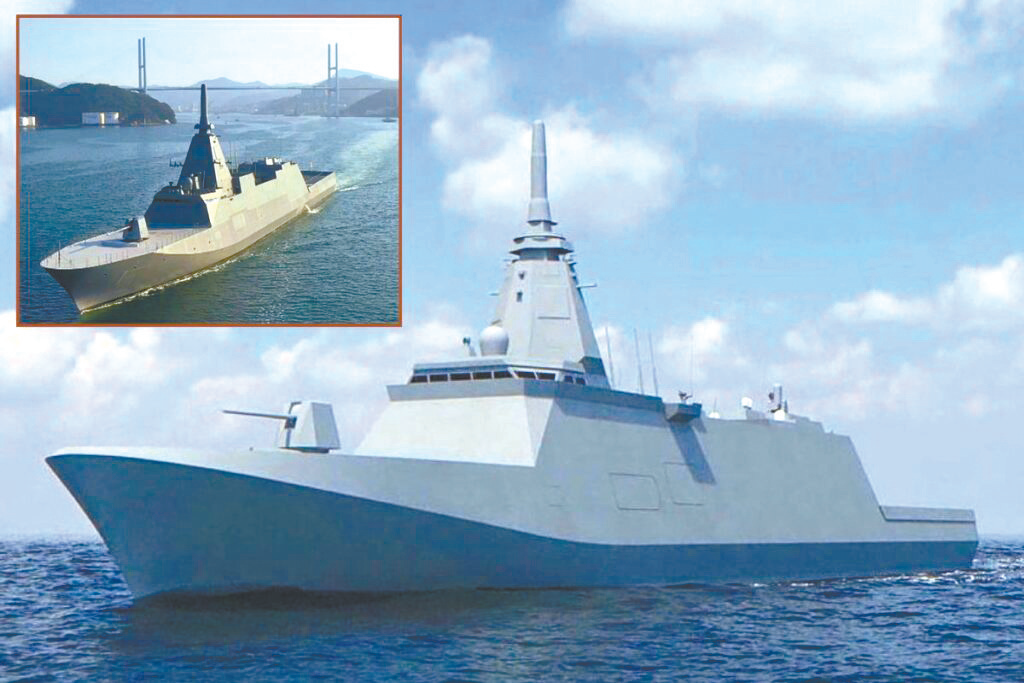
Core Viewpoint - Japan's latest "Mogami" class frigate is being positioned as a key product for international defense exports, marking a significant shift in Japan's military export policy and raising geopolitical concerns [1][4]. Group 1: Frigate Specifications and Capabilities - The "Mogami" class frigate has a standard displacement of 3,900 tons and a full load displacement of 5,500 tons, with a length of 133 meters and a width of 16.3 meters, achieving a maximum speed of approximately 30 knots [3]. - It features advanced capabilities including anti-submarine, air defense, and anti-ship operations, and is the first Japanese frigate equipped with mine-sweeping capabilities [3]. - The frigate is designed with a low radar cross-section and incorporates a fully integrated OPY-2 multifunctional active phased array radar, enhancing its stealth and reducing electromagnetic interference [3]. Group 2: Export Ambitions and Market Strategy - Japan's Ministry of Defense has initiated plans for 12 improved versions of the "Mogami" class frigate, which will increase displacement and enhance air defense and radar detection capabilities, with an expected service entry for the first batch in 2028 [4]. - The Australian government has announced a $10 billion AUD (approximately $6.7 billion USD) procurement of 11 improved "Mogami" class frigates, marking Japan's first export of a major combat weapon [4]. - Japan is also in discussions with India regarding the transfer of technology related to the integrated mast on the "Mogami" class frigate, which would represent a significant step in defense equipment exports [5]. Group 3: Challenges and Geopolitical Implications - Despite the ambitions, the export of the "Mogami" class frigate may face challenges due to high costs, with a unit price of approximately $600 million, which is significantly higher than competing options like Germany's MEKO A-200 frigate [6]. - Japan's lack of experience in exporting complex military equipment poses risks, especially as Australia seeks to be involved in the design and construction process, which could lead to project delays and cost overruns [7]. - The push for arms exports is seen as a means for Japan to circumvent its historical restrictions on military exports, raising concerns among neighboring countries regarding Japan's military intentions and historical context [7].
公然鼓吹“拥核” 日本到底想干什么?
Yang Shi Xin Wen· 2025-12-23 17:35
Core Viewpoint - Japan's recent political discourse surrounding nuclear weapons, particularly comments from high-ranking officials advocating for nuclear armament, raises significant concerns about the country's security policy and its historical stance on nuclear weapons [1][18]. Group 1: Nuclear Weapon Advocacy - A senior official from Japan's Prime Minister's office stated on December 18 that "Japan should possess nuclear weapons," which has sparked widespread criticism [1]. - The ruling party, led by Prime Minister Kishi, is reportedly exploring modifications to Japan's "Three Non-Nuclear Principles," particularly the principle against the introduction of nuclear weapons [3][19]. - The Hiroshima Prefectural Assembly unanimously passed a resolution urging the government to adhere to the "Three Non-Nuclear Principles," expressing concerns that any modification could lead to a repeat of the tragedies experienced in Hiroshima and Nagasaki [3]. Group 2: Security Threat Narratives - Japan's Defense Minister has been actively participating in military events and has emphasized the urgent need to strengthen defense capabilities in the southwestern region of Japan, aligning with the narrative of heightened security threats [4][21]. - The recent military activities and rhetoric from Japanese officials are seen as part of a broader strategy to justify the push for nuclear armament and the relaxation of weapon export restrictions [1][9]. Group 3: Weapon Export Policy Changes - Japan has been progressively relaxing its weapon export restrictions, with recent agreements reached to modify the "Defense Equipment Transfer Principles" and eliminate certain export limitations [11][17]. - The current government is expected to submit proposals to the cabinet in February to further ease restrictions on weapon exports, indicating a significant shift in Japan's defense policy [11][17]. - The historical context of Japan's weapon export restrictions dates back to its post-World War II pacifist constitution, but recent political shifts suggest a move towards military normalization [15][17]. Group 4: Underlying Motivations for Nuclear Advocacy - The increasing military disparity between Japan and China has led to strategic anxieties, prompting some Japanese officials to advocate for nuclear capabilities as a means to counterbalance this perceived threat [21]. - The decline of U.S. hegemony has led some Japanese politicians to believe that the U.S. may not provide adequate protection in future conflicts, thus necessitating Japan's own military deterrent [21]. - The push for nuclear armament is also viewed as a political maneuver by right-wing factions within Japan to divert attention from other issues and to further their agenda of military revitalization [21].
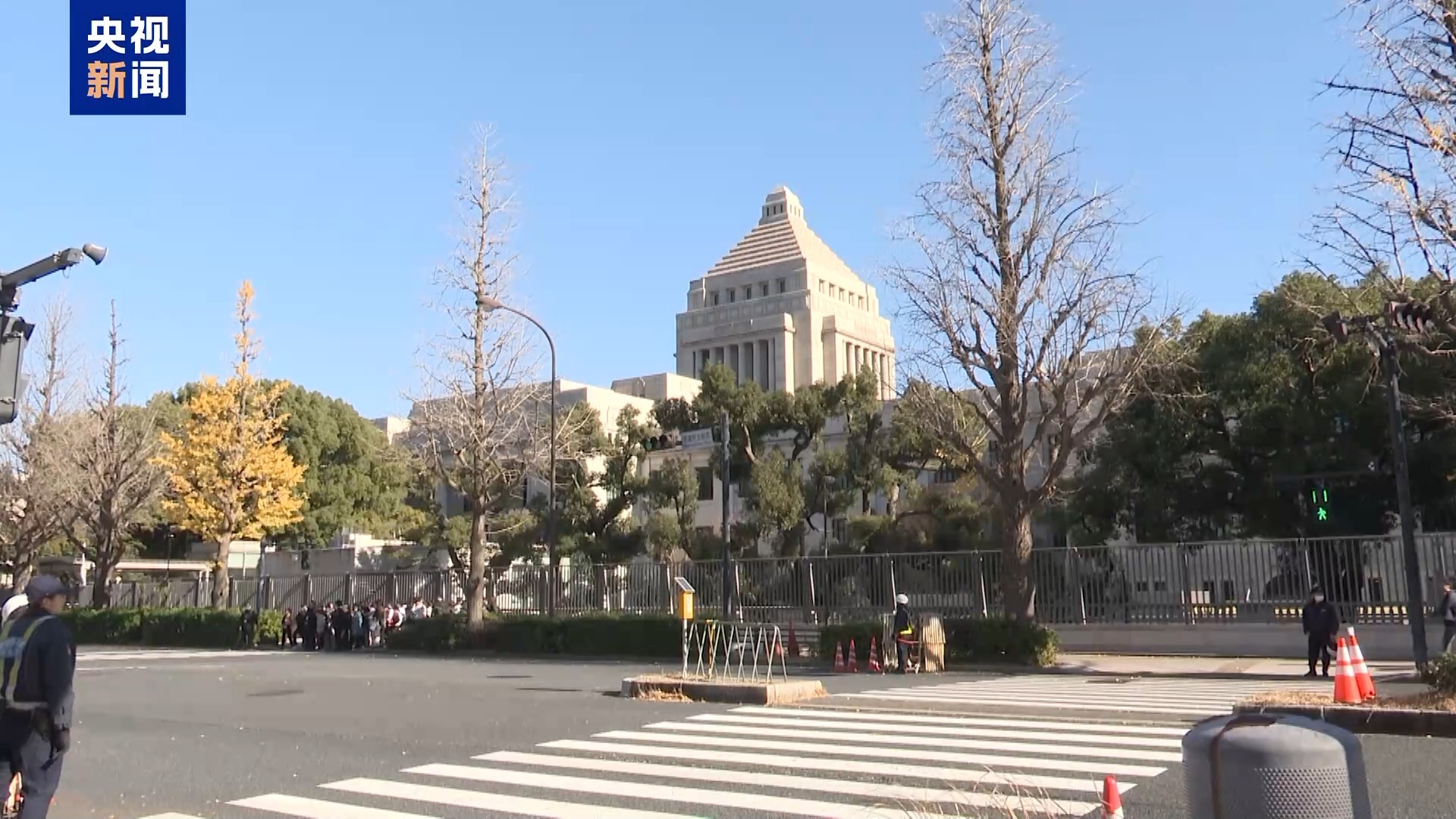
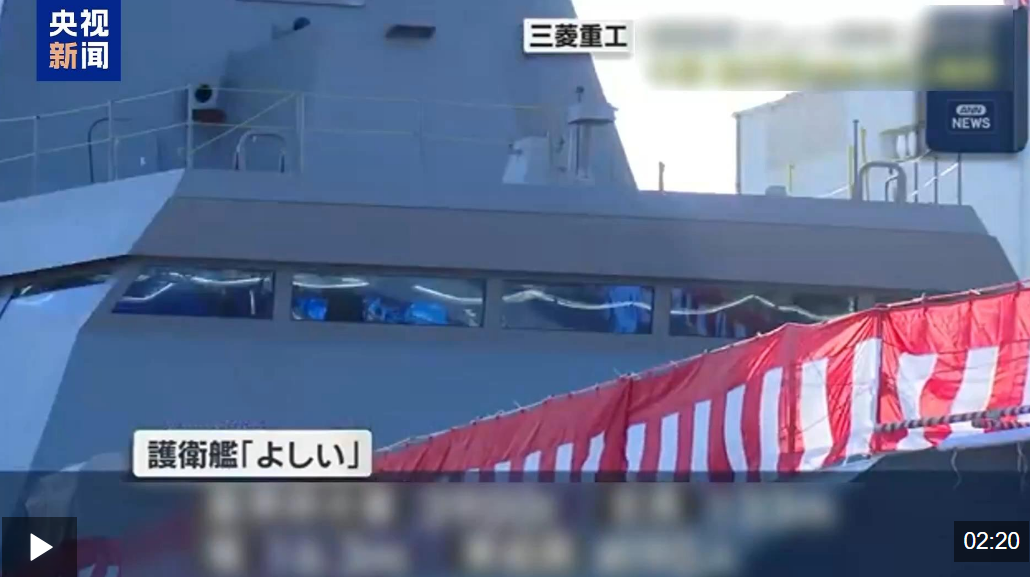
日防相拟全球推销护卫舰 日议员称日本正堕落为“死亡商人”
Yang Shi Xin Wen Ke Hu Duan· 2025-12-23 02:08
Group 1 - The Japanese Defense Minister, Koizumi Shinjiro, attended the naming and launching ceremony of the latest "Mogami" class frigate at Mitsubishi Heavy Industries shipyard in Nagasaki [1] - The new frigate has a standard displacement of 3,900 tons, a length of 133 meters, and can accommodate approximately 90 crew members. It is equipped with a vertical launch system, capable of air defense, anti-ship, and anti-submarine operations. All 12 "Mogami" class frigates planned by the Japanese Ministry of Defense since 2018 have now been launched [3] - Australia has finalized the procurement of upgraded "Mogami" class frigates, designating them as the new generation of frigates for the Australian Navy [3] Group 2 - Japan has been increasingly relaxing its arms export restrictions, with recent actions becoming more frequent. On the 15th of this month, the ruling coalition reached an agreement to modify the guidelines for the "Three Principles on Transfer of Defense Equipment" and to lift restrictions on five types of arms exports, with plans to submit a related motion to the Cabinet in February next year [5] - This move has sparked strong opposition within Japan, with several opposition party leaders publicly condemning the ruling party's decision to relax arms export restrictions [5] - The former Japanese Foreign Minister, Okada Katsuya, expressed concerns that lifting restrictions on five types of arms exports would allow the export of lethal weapons, increasing the risk of a military-industrial complex as Japan's defense budget continues to rise [6] - The Japanese Communist Party's policy committee chairman criticized the government's decision to relax arms exports, stating it signifies Japan's decline into a "death merchant" status and emphasized the need for Japan to remain a peaceful nation [8] - Various peace organizations in Japan submitted petitions against the lifting of lethal arms export restrictions, gathering signatures from tens of thousands of citizens [8] - Japan plans to advance its relationship with Australia by exporting frigates, which are considered maritime lethal weapons, and may even abolish the "five-category restriction" to allow for comprehensive and unrestricted arms exports [10]
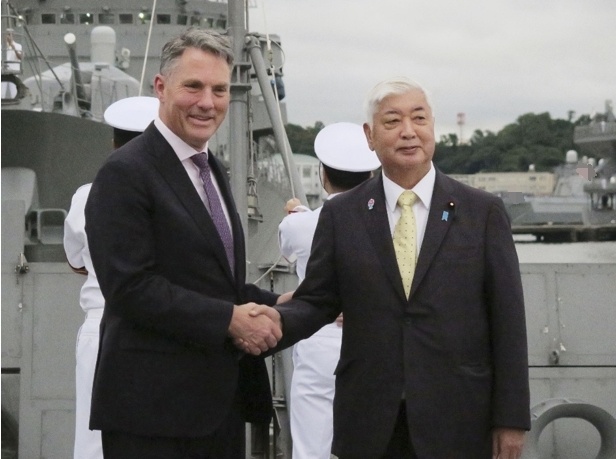
警惕!高调互动造势,日防相陪同澳防长考察日本“最上”级护卫舰
Huan Qiu Wang· 2025-09-06 09:41
Core Viewpoint - Japan and Australia are enhancing their defense cooperation, particularly through the procurement of Japan's "Maya" class destroyers, which reflects a strategic alignment with the U.S. Indo-Pacific strategy and raises regional tensions [1][4]. Group 1: Defense Cooperation - Japanese Defense Minister Nakatani accompanied Australian Deputy Prime Minister and Defense Minister Marles to inspect the "Maya" class destroyer at the Yokosuka base, indicating a deepening defense relationship [1][3]. - The Australian Navy plans to procure 11 new destroyers by February 2024, with an estimated investment of 111 billion AUD (approximately 70 billion USD), aiming for a collaborative development approach [3]. - The recent "2+2" talks between Japan and Australia marked a significant elevation in defense cooperation, with both parties expressing intentions to enhance defense industrial collaboration [4]. Group 2: Strategic Implications - The collaboration between Japan and Australia is seen as part of a broader strategy to counter China's influence in the region, aligning with the U.S. Indo-Pacific strategy [4]. - Japan is advancing its military capabilities, including hypersonic missiles and aircraft carrier modifications, while Australia is developing nuclear submarines under the AUKUS pact [4]. - Experts suggest that this partnership not only escalates tensions in the Asia-Pacific region but also reveals the willingness of both nations to act as proxies for U.S. interests in the ongoing U.S.-China strategic competition [4].
日本开启大型武器装备出口传递危险信号
Qi Lu Wan Bao· 2025-08-11 00:44
Core Points - Australia has selected the upgraded Japanese "Mogami" class frigate for its new generation naval fleet, planning to invest 10 billion AUD (approximately 46.78 billion RMB) to build 11 ships, marking Japan's first significant arms export since World War II [1][2] - The "Mogami" class frigate has a standard displacement of 6,200 tons, a range of 10,000 nautical miles, and is equipped with a vertical launch system for air defense and anti-ship missiles, as well as anti-submarine capabilities [2][3] - Japan's government has been progressively relaxing its arms export restrictions since 2014, allowing for the export of lethal weapons and aiming to establish itself as a "normal military power" [3][4] Summary by Sections Australia’s Naval Procurement - Australia has been exploring options for its new frigate procurement for over a year, with Japan, Spain, South Korea, and Germany as candidates [1] - The first three frigates will be built in Japan, with the first expected to be delivered in 2029 and operational by 2030, while the remaining eight will be constructed in Australia [2] Japan’s Arms Export Strategy - Japan's arms export policy has shifted significantly, allowing for the export of lethal weapons to third countries, which is a departure from its previous restrictions [3] - The Japanese government has made multiple amendments to its arms export principles, indicating a strategic shift towards enhancing its military capabilities and international defense cooperation [3][4] Historical Context and Implications - The push for military expansion and arms exports has raised concerns among neighboring countries and the international community regarding Japan's commitment to peace and its historical military actions [4] - The rise of right-wing political sentiments in Japan reflects a dangerous trend in historical recognition and military policy, potentially impacting regional security dynamics [4]
国内舆论不满“奥库斯”协议,澳大利亚转而购买日本军舰
Huan Qiu Shi Bao· 2025-08-05 22:38
Group 1: Australia-Japan Defense Cooperation - Australia has decided to procure upgraded Japanese "Maya" class frigates, marking the largest defense industrial agreement between Australia and Japan [1] - The Australian government plans to spend 10 billion AUD over the next 10 years to acquire 11 frigates, aiming to enhance the operational capabilities of the Australian Navy [1] - This procurement is part of a broader military restructuring to strengthen naval power and counter China's influence [1] Group 2: AUKUS Agreement and Public Sentiment - The Australian government faces significant public pressure regarding the AUKUS nuclear submarine procurement agreement, which involves spending over 368 billion AUD for 8 submarines by 2055 [2] - There are internal calls within the Australian Labor Party to reconsider or withdraw from the AUKUS agreement due to concerns over high costs and long-term uncertainties [2] - A recent poll indicates skepticism among Australians about the timely delivery of nuclear submarines, with only 6% believing it is "very likely" that the U.S. will deliver the submarines on schedule [3]
澳大利亚打算购买日本“最上”级护卫舰
Xin Hua She· 2025-08-05 10:29
Core Points - The Australian Department of Defence has selected the upgraded Japanese "Maya" class frigate as the preferred option for its future naval fleet [1] - The decision aims to accelerate the development of a larger and more powerful surface combat fleet for the Australian Navy [1] - Mitsubishi Heavy Industries is responsible for the development of the selected frigate, which is expected to meet Australia's defense capability and strategic requirements quickly [1] Procurement Process - The Australian Department of Defence will work with Mitsubishi Heavy Industries to advance the procurement process, aiming to sign a contract by 2026 [1] - The first batch will consist of three frigates built in Japan, with the first expected to be delivered in 2029 and operational by 2030 [1] - The remaining eight frigates will be constructed in Australia [1] Specifications - The "Maya" class frigates will replace the current "Anzac" class frigates in the Australian Navy [1] - Each frigate will have a crew of approximately 90 personnel, a displacement of 6,200 tons, and a range of up to 10,000 nautical miles [1] - The frigates will be equipped with a 32-cell vertical launch system, anti-air and anti-ship missiles, and anti-submarine warfare capabilities [1]