每员工营收

Search documents
超117万人被裁!
商业洞察· 2025-12-18 09:23
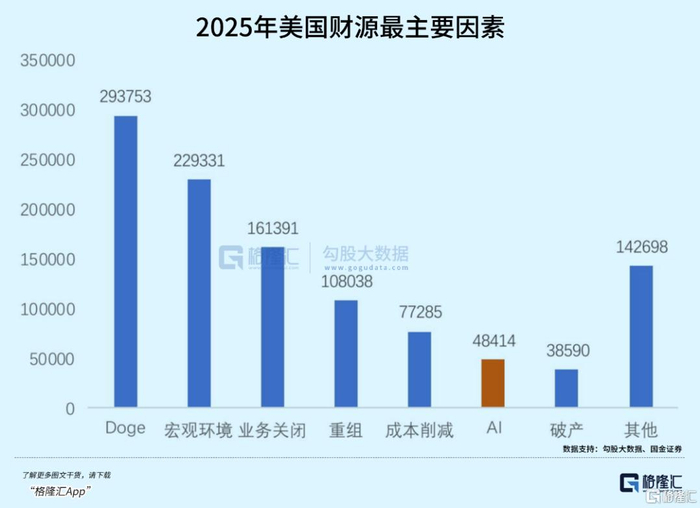
Core Viewpoint - The article discusses the alarming rise in layoffs in the U.S. job market, with over 1.17 million employees laid off by November 2025, a 54% increase from the previous year, drawing parallels to the 2008-2009 financial crisis [4][5]. Group 1: Causes of Layoffs - The primary cause of layoffs is attributed to the efficiency revolution led by the DOGE department, resulting in 293,753 federal employees and contractors losing their jobs, with an additional 20,976 in the private and non-profit sectors, an eightfold increase compared to 2024 [15]. - The macroeconomic environment, characterized by high costs and tariffs, is also a significant factor, as many companies face debt repayment pressures from loans taken during the low-interest period of 2020-2021 [18][19]. - Companies, particularly those owned by private equity, are cutting jobs at a rate 1.5 times higher than publicly traded firms due to high leverage costs and cash flow constraints [21][22]. Group 2: Impact on Various Industries - The retail sector is the hardest hit, with a significant drop in consumer confidence and companies like Target and Starbucks announcing substantial layoffs due to decreased sales [27][28]. - The service industry has seen a 64% increase in layoffs, with UPS cutting 14,000 management positions to improve efficiency [30][31]. - The food industry has also been affected, with 34,165 job losses throughout the year, particularly in beef processing due to rising costs [32][33]. Group 3: Technology and Management Changes - The technology sector has contributed significantly to layoffs, with 35% of the total layoffs coming from this industry, primarily affecting middle management roles [46][47]. - A new corporate mantra has emerged: "Every employee generates revenue," leading to layoffs becoming a normalized management tool rather than a crisis response [51]. - Companies like Amazon and IBM have reported increased profits while simultaneously announcing significant layoffs, indicating a trend where cost-cutting measures are prioritized over workforce stability [53][54]. Group 4: Future Implications - The trend of layoffs is expected to continue, with predictions that the technology sector will see a peak in cost-cutting benefits by 2026, potentially reducing operational costs significantly [58]. - However, the loss of middle management, which often holds critical technical knowledge, could extend product development cycles and hinder innovation [62][71]. - The article warns that excessive cost-cutting may erode the foundation of innovation within the technology sector, leading to long-term negative consequences [72].







超117万人被裁!
Ge Long Hui A P P· 2025-12-14 08:33
Group 1 - The core issue is the significant increase in layoffs across various sectors, with a total of 1,170,821 employees laid off in the U.S. as of November, marking a 54% increase from the previous year, approaching the levels seen during the 2008-2009 financial crisis [1] - The primary reason for the layoffs is attributed to the impact of the DOGE department led by Elon Musk, which has resulted in 293,753 federal employees and contractors losing their jobs, alongside 20,976 in private and non-profit sectors, an eightfold increase compared to 2024 [4] - The macroeconomic environment, characterized by high costs and tariffs, is also a significant factor contributing to the layoffs [6] Group 2 - The low-interest rate environment has led to a debt hangover, with many companies facing the need to refinance at higher rates, resulting in doubled interest expenses and halved net profits for struggling "zombie companies" [7][8] - The retail sector is the hardest hit, with a notable decline in consumer confidence, as evidenced by the Michigan Consumer Sentiment Index dropping to 51, a more than 20% decrease from the previous year [15] - The service industry has also seen significant layoffs, with 69,089 jobs cut throughout the year, a 64% increase, affecting a wide range of roles from restaurant staff to logistics coordinators [17] Group 3 - The technology sector has been particularly affected, contributing 35% of the layoffs, with a historical high of 28% of layoffs being middle management positions, as AI tools reduce the need for these roles [29][30] - Companies are increasingly using layoffs as a management tool to meet Wall Street's new performance metrics, leading to a culture where reducing headcount is seen as a standard practice rather than a response to crises [31] - The trend of layoffs in the tech industry is expected to continue, with predictions of a peak in cost-cutting benefits in 2026, as operational costs are projected to decrease significantly [37] Group 4 - The layoffs are not only affecting lower-level positions but are also targeting high-salary roles, particularly in finance and technology, indicating a shift in the labor market dynamics [27][28] - The reduction in middle management is leading to immediate operational efficiencies, with companies reporting significant cost savings and improved performance metrics following layoffs [35] - However, the long-term implications of these layoffs may hinder innovation, as a significant portion of laid-off employees hold critical technical expertise, potentially extending product development cycles [41][51]