AI替代人力

Search documents
网传“网易将用 AI 全面清退外包,或影响上千人”,网易紧急辟谣
程序员的那些事· 2026-03-18 11:12
Core Viewpoint - The news regarding NetEase's plan to use AI for the complete elimination of outsourcing has sparked significant discussion, with rumors suggesting a potential layoff of 30-40% of outsourced staff by April and up to 80% by May, replaced by self-developed AI for various roles [1][2]. Group 1 - The rumors indicated that the layoffs could affect over a thousand employees based on the estimated number of outsourced staff in NetEase's gaming division [2]. - NetEase officially denied the rumors, clarifying that the personnel changes are part of normal business adjustments and will not impact the overall operations of the company [3]. - The rapid spread of these rumors is attributed to the sensitivity surrounding outsourcing optimization in the internet industry and heightened anxiety over AI replacing human labor [4]. Group 2 - Industry insiders noted that adjustments to outsourcing have been a common practice among large companies, focusing on reducing basic outsourcing while retaining core functions, with AI serving more as a tool for efficiency rather than a direct replacement for human workers [4].



2026年2月美国就业数据点评:就业降温,地缘升温
Tebon Securities· 2026-03-08 14:08
Employment Data Insights - In February 2026, the U.S. non-farm employment decreased by 92,000, significantly below market expectations[2] - The unemployment rate slightly rose to 4.4%, while the labor participation rate remained stable at 62%[2] - Hourly wage growth maintained a month-on-month increase of 0.4%, with a year-on-year growth rate rising to 3.8%[2] Sector Performance - The healthcare sector saw a job loss of 28,000, primarily due to strike activities, while federal government employment decreased by 10,000, marking a total reduction of 330,000 jobs since October 2024[2] - The long-term unemployment figure (27 weeks or more) stood at 1.9 million, significantly higher than the 1.5 million reported in the same month last year, representing 25.3% of total unemployment[2] Market Implications - The weak labor market data raises concerns about a potential shift towards stagflation, with market expectations adjusting accordingly[2] - The ongoing geopolitical tensions in the Middle East are contributing to rising oil prices, which may further elevate inflation expectations[2] - The Federal Reserve's decision-making is complicated by the dual pressures of a cooling job market and escalating energy prices, with interest rate cut expectations now pushed to September 2026[2] Asset Class Projections - In the context of delayed interest rate cuts, U.S. Treasury yields are likely to rise, and the U.S. dollar index may also strengthen[2] - Risk assets, particularly the Nasdaq, are showing signs of weakness, with a potential end to the upward trend if key support levels are breached[2] - Short-term oil price increases are expected to persist, while gold may find support amid stagflation concerns, necessitating caution in the copper market[2] Risk Factors - Potential escalation in U.S.-China tensions could lead to significant impacts on trade and financial markets[14] - Further geopolitical crises, particularly in the Middle East, may heighten global risk aversion and market volatility[14] - A downturn in the U.S. economy could exert additional pressure on the global economic environment[14]
亚马逊裁完1.6万又屠中国区!员工曝:咖啡杯的余温都还没散
Xin Lang Cai Jing· 2026-01-29 04:28
Group 1 - Amazon is set to lay off 16,000 employees in its second wave of layoffs, following a previous reduction of 14,000 employees in October 2025, indicating a shift in its workforce strategy [1][3] - The layoffs are affecting high-salary positions, particularly in HR and AWS administrative roles, as the company transitions to using AI for recruitment and performance tracking [5][6] - CEO Andy Jassy has indicated that the company is moving towards a model where AI applications will reduce the need for human employees, with a significant investment in AI expected to surpass $150 billion by 2025 [5][6] Group 2 - The trend of layoffs is not isolated to Amazon; the entire tech industry is undergoing a transformation, with 154,000 jobs cut in the U.S. tech sector in 2025, of which 50,000 were directly replaced by AI [8][9] - Other major companies like IBM, Microsoft, and Meta have also implemented significant layoffs, with AI technologies replacing various job functions [9] - In China, major internet companies are also reducing their workforce significantly, reallocating funds towards AI development while facing declining revenues in their core businesses [9] Group 3 - The types of jobs most at risk from AI include process-oriented roles (HR, administration), repetitive technical positions (junior programmers, data entry), and intermediary service roles (recruitment and real estate agents) [10] - New opportunities are emerging for hybrid talent that combines AI skills with industry knowledge, as well as roles focused on managing AI systems [10][12] - The future workplace will prioritize the ability to effectively utilize AI rather than simply avoiding replacement by it, indicating a fundamental shift in the skills required for employment [13][16]

美国“斩杀线”引热议!年薪 45 万美元程序员半年变流浪汉
程序员的那些事· 2026-01-06 03:33
Core Viewpoint - The article highlights the precarious nature of high-income jobs in the tech industry, illustrating how a sudden loss of income can lead to a rapid descent into financial ruin and homelessness, as exemplified by the story of a programmer who went from earning $450,000 to becoming a homeless individual in just six months [3][10]. Group 1: The "Killing Line" Concept - The term "Killing Line" originally from gaming refers to a critical threshold that, once crossed, leads to irreversible consequences in life, reflecting the fragility of individual and collective survival in society [2]. Group 2: The Programmer's Financial Struggles - The programmer, Jack, had a high salary of $450,000, equivalent to over 3 million RMB, but faced monthly fixed expenses totaling $16,500, including a $12,000 mortgage, $3,000 car loan, and $1,500 in insurance, leaving him with little to no savings [3][4]. - Jack's financial situation exemplifies the "high salary, low savings" phenomenon prevalent among the American middle class, where individuals are often trapped in a cycle of high expenses and lack of financial buffers [4]. Group 3: Job Loss and Its Consequences - Jack's life took a downturn due to an unexpected layoff, a common occurrence in the U.S. employment system, which allows employers to terminate employees without cause or severance [5]. - The tech industry is experiencing a wave of job losses due to AI advancements, making it increasingly difficult for displaced workers like Jack to find new employment [7]. Group 4: Medical Debt and Bankruptcy - Following his job loss, Jack faced a medical emergency that resulted in a $60,000 bill, of which only $12,000 was covered by insurance, leading to insurmountable debt and the loss of his home [8]. - Medical debt is a significant contributor to personal bankruptcies in the U.S., with approximately 25-35% of bankruptcies directly linked to medical expenses, even among insured individuals [10]. Group 5: The Cycle of Despair - Jack's situation illustrates a vicious cycle of homelessness and credit destruction, where lack of a permanent address hinders job applications, further exacerbating his financial instability [9]. - The systemic issues in the U.S. economy, including weak employment protections and a credit system that penalizes individuals for financial misfortunes, contribute to the rapid decline of individuals like Jack from stability to homelessness [10].

超117万人被裁!
商业洞察· 2025-12-18 09:23
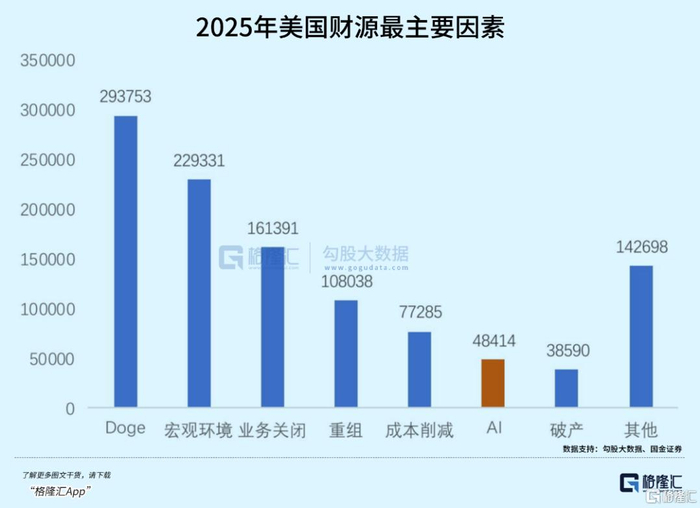
Core Viewpoint - The article discusses the alarming rise in layoffs in the U.S. job market, with over 1.17 million employees laid off by November 2025, a 54% increase from the previous year, drawing parallels to the 2008-2009 financial crisis [4][5]. Group 1: Causes of Layoffs - The primary cause of layoffs is attributed to the efficiency revolution led by the DOGE department, resulting in 293,753 federal employees and contractors losing their jobs, with an additional 20,976 in the private and non-profit sectors, an eightfold increase compared to 2024 [15]. - The macroeconomic environment, characterized by high costs and tariffs, is also a significant factor, as many companies face debt repayment pressures from loans taken during the low-interest period of 2020-2021 [18][19]. - Companies, particularly those owned by private equity, are cutting jobs at a rate 1.5 times higher than publicly traded firms due to high leverage costs and cash flow constraints [21][22]. Group 2: Impact on Various Industries - The retail sector is the hardest hit, with a significant drop in consumer confidence and companies like Target and Starbucks announcing substantial layoffs due to decreased sales [27][28]. - The service industry has seen a 64% increase in layoffs, with UPS cutting 14,000 management positions to improve efficiency [30][31]. - The food industry has also been affected, with 34,165 job losses throughout the year, particularly in beef processing due to rising costs [32][33]. Group 3: Technology and Management Changes - The technology sector has contributed significantly to layoffs, with 35% of the total layoffs coming from this industry, primarily affecting middle management roles [46][47]. - A new corporate mantra has emerged: "Every employee generates revenue," leading to layoffs becoming a normalized management tool rather than a crisis response [51]. - Companies like Amazon and IBM have reported increased profits while simultaneously announcing significant layoffs, indicating a trend where cost-cutting measures are prioritized over workforce stability [53][54]. Group 4: Future Implications - The trend of layoffs is expected to continue, with predictions that the technology sector will see a peak in cost-cutting benefits by 2026, potentially reducing operational costs significantly [58]. - However, the loss of middle management, which often holds critical technical knowledge, could extend product development cycles and hinder innovation [62][71]. - The article warns that excessive cost-cutting may erode the foundation of innovation within the technology sector, leading to long-term negative consequences [72].






美国超117万人被裁,原因何在?
虎嗅APP· 2025-12-16 13:38
Core Viewpoint - The article discusses the alarming rise in layoffs in the U.S., with over 1.17 million employees laid off as of November, marking a 54% increase from the previous year, reminiscent of the 2008-2009 financial crisis [5][6]. Group 1: Causes of Layoffs - The primary cause of layoffs is attributed to the efficiency revolution led by the DOGE department, resulting in 293,753 federal employees and contractors losing their jobs, with an additional 20,976 in the private and non-profit sectors, an eightfold increase compared to 2024 [15]. - The macroeconomic environment, characterized by high costs and tariffs, is also a significant factor, as many companies face debt repayment pressures from loans taken during the low-interest period of 2020-2021 [18][19]. - Retail, service, and food industries are the hardest hit, with retail experiencing a 20% drop in consumer confidence and significant job cuts from companies like Target and Starbucks due to rising prices and reduced consumer spending [27][30][32]. Group 2: Impact on Different Sectors - The retail sector has seen massive layoffs, with companies like Target cutting 1,800 jobs and Starbucks 900 due to decreased consumer spending [30]. - The service industry has also been affected, with 69,089 layoffs, a 64% increase, as companies like UPS cut 14,000 management positions to improve efficiency [30]. - The food industry faced 34,165 layoffs, with rising costs leading to job cuts in beef processing companies [32]. Group 3: Technology and Management Changes - The technology sector has contributed significantly to layoffs, with 35% of the total layoffs coming from this industry, particularly affecting middle management roles [47][48]. - Companies are increasingly using layoffs as a management tool to improve profitability, with a new focus on revenue per employee as a key performance indicator [50]. - The trend of cutting middle management has led to immediate operational cost savings, with companies like Amazon and Verizon reporting significant efficiency improvements after layoffs [57]. Group 4: Future Outlook - The technology sector is expected to continue this trend, with predictions of a peak in cost-cutting benefits by 2026, potentially reducing operational costs and increasing profit margins [60]. - However, the loss of middle management, which often holds critical technical knowledge, may extend product development cycles and hinder innovation [65][74]. - The article warns that excessive cost-cutting could erode the foundation of innovation in the tech industry, leading to a talent shortage and reduced research and development investment [75][73].

超117万人被裁!
Ge Long Hui A P P· 2025-12-14 08:33
Group 1 - The core issue is the significant increase in layoffs across various sectors, with a total of 1,170,821 employees laid off in the U.S. as of November, marking a 54% increase from the previous year, approaching the levels seen during the 2008-2009 financial crisis [1] - The primary reason for the layoffs is attributed to the impact of the DOGE department led by Elon Musk, which has resulted in 293,753 federal employees and contractors losing their jobs, alongside 20,976 in private and non-profit sectors, an eightfold increase compared to 2024 [4] - The macroeconomic environment, characterized by high costs and tariffs, is also a significant factor contributing to the layoffs [6] Group 2 - The low-interest rate environment has led to a debt hangover, with many companies facing the need to refinance at higher rates, resulting in doubled interest expenses and halved net profits for struggling "zombie companies" [7][8] - The retail sector is the hardest hit, with a notable decline in consumer confidence, as evidenced by the Michigan Consumer Sentiment Index dropping to 51, a more than 20% decrease from the previous year [15] - The service industry has also seen significant layoffs, with 69,089 jobs cut throughout the year, a 64% increase, affecting a wide range of roles from restaurant staff to logistics coordinators [17] Group 3 - The technology sector has been particularly affected, contributing 35% of the layoffs, with a historical high of 28% of layoffs being middle management positions, as AI tools reduce the need for these roles [29][30] - Companies are increasingly using layoffs as a management tool to meet Wall Street's new performance metrics, leading to a culture where reducing headcount is seen as a standard practice rather than a response to crises [31] - The trend of layoffs in the tech industry is expected to continue, with predictions of a peak in cost-cutting benefits in 2026, as operational costs are projected to decrease significantly [37] Group 4 - The layoffs are not only affecting lower-level positions but are also targeting high-salary roles, particularly in finance and technology, indicating a shift in the labor market dynamics [27][28] - The reduction in middle management is leading to immediate operational efficiencies, with companies reporting significant cost savings and improved performance metrics following layoffs [35] - However, the long-term implications of these layoffs may hinder innovation, as a significant portion of laid-off employees hold critical technical expertise, potentially extending product development cycles [41][51]
马斯克开始用Grok替代员工了,最惨部门裁员90%
3 6 Ke· 2025-11-25 11:15
Core Insights - Elon Musk is replacing employees at X (formerly Twitter) with AI technology, specifically using Grok to take over roles previously held by human staff [1][2][3] Group 1: Workforce Reduction - Musk has laid off half of the engineering team responsible for trust and safety issues at X, reducing the team from over 100 members to fewer than 10 [2] - The layoffs are part of a broader strategy to automate processes and reduce human labor in favor of AI solutions [3][9] - There are indications that additional layoffs may occur, as X still has around 100 engineers working on various projects [8] Group 2: AI Integration - Musk aims to fully automate X's algorithms, allowing users to interact with Grok to customize their content feeds [9] - The introduction of Grok signifies a shift in X's operational strategy, with AI taking a central role in content management [9][10] - Musk's Macrohard initiative seeks to replicate Microsoft's software development processes using AI, indicating a significant pivot towards automation in software engineering [10][11] Group 3: Leadership and Team Dynamics - The engineering efforts at xAI are now led by twin brothers Dima and Ievgin Soboliev, who have extensive backgrounds in AI and machine learning [4][6][7] - The merger of X and xAI has resulted in independent operations, which may lead to conflicts between content generation and safety management teams [13] - Musk's aggressive AI strategy raises concerns about the stability of leadership and the potential impact on core business initiatives, such as the proposed payment service "X Money" [13]

马斯克开始用AI取代手底下员工了!最惨部门裁员90%
是说芯语· 2025-11-25 08:30
Core Viewpoint - Elon Musk is replacing employees at X (formerly Twitter) with AI, specifically using Grok to take over the responsibilities of the engineering team focused on trust and safety issues [1][2][3]. Group 1: Workforce Reduction - Musk has laid off half of the engineering team responsible for combating spam and illegal content, reducing the team from over 100 members to fewer than 10 [2][3]. - The layoffs are part of a broader strategy to automate processes and replace human labor with AI, as indicated by Musk's previous statements about transitioning to AI-driven algorithms [4][16]. Group 2: AI Implementation - Musk aims to fully automate X's algorithms with AI, allowing users to interact with Grok to customize their content feeds [16][17]. - The introduction of Grok signifies a shift from traditional engineering roles to AI-driven solutions, with Grok now positioned as a central figure in managing content on X [17][18]. Group 3: Leadership Changes - Musk has appointed twin engineers Dima and Ievgin Soboliev from xAI to lead the transformation at X, emphasizing a rigorous work culture and efficiency [7][15]. - The Soboliev brothers have a strong background in AI and have previously worked at major tech companies, bringing significant expertise to their roles [10][11][12][13]. Group 4: Broader AI Strategy - Musk is also pursuing the "Macrohard" initiative, which aims to automate software development using AI, potentially replicating the functions of companies like Microsoft [19][21]. - The Macrohard plan includes developing AI tools for various applications, including coding and game design, indicating a comprehensive approach to AI integration across Musk's ventures [23][25]. Group 5: Risks and Challenges - The aggressive AI strategy raises concerns about the balance of responsibilities between content moderation teams and AI systems, leading to potential safety issues [26][29]. - Ongoing layoffs may hinder critical projects, such as the "X Money" payment service, which requires stable leadership and sufficient staffing to address regulatory concerns [27][28].

马斯克开始用Grok替代员工了!最惨部门裁员90%
Sou Hu Cai Jing· 2025-11-25 05:53
Core Viewpoint - Elon Musk is replacing employees at X (formerly Twitter) with AI technology, specifically using Grok to take over roles previously held by human staff [1][2]. Group 1: Workforce Reduction - Musk has laid off half of the engineering team responsible for trust and safety issues at X, reducing the team from over 100 members to fewer than 10 [2]. - The layoffs are part of a broader strategy to automate processes and reduce human labor in favor of AI solutions [3][8]. - The xAI team, which is responsible for Grok, also experienced significant layoffs, with over 500 employees (about one-third of the data annotation team) being let go in September [18]. Group 2: AI Integration - Musk aims to fully automate X's algorithms, allowing users to interact with Grok to customize their content feeds [8][12]. - The introduction of Grok as a central figure in X's operations signifies a shift towards AI-driven management, with Grok expected to take on a more significant role in content moderation and user engagement [8][9]. - Musk's Macrohard initiative aims to use AI to automate software development, potentially replicating Microsoft's past achievements [9][12]. Group 3: Leadership and Team Dynamics - The new leadership at xAI consists of twin engineers Dima and Ievgin Soboliev, who have extensive backgrounds in AI and machine learning [3][6]. - The Soboliev brothers are implementing a rigorous work culture at X, emphasizing long hours and efficiency, which may lead to further staff reductions [8]. - There is a growing concern about the disconnect between the safety team and the AI systems, as the safety team lacks control over the content generated by Grok, leading to potential accountability issues [12][13]. Group 4: Future Implications - The aggressive AI strategy may undermine the platform's safety and core business operations, particularly in light of the ongoing challenges with the X Money payment service [14][16]. - The frequent turnover in the X Money team raises concerns about the stability needed to gain regulatory approval for new financial services [15][16].