
气象灾害

Search documents
北方有大风降温沙尘天气,内蒙古东北部黑龙江等地有较强降雪
Xin Lang Cai Jing· 2026-02-21 14:10
Group 1 - Strong winds and temperature drops are expected in northern regions, including Inner Mongolia, Northeast China, North China, and parts of the Huanghuai and northern Ningxia, with wind speeds reaching 5-7 levels and gusts up to 11 levels [1] - A temperature drop of 6-10°C is forecasted, with some areas in Inner Mongolia and Heilongjiang experiencing drops of 12-14°C, and localized drops exceeding 14°C [1] - Dust storms are anticipated in the Jianghuai region and northward, with some areas in western Inner Mongolia facing sandstorms and localized severe sandstorms [1] Group 2 - Heavy snowfall is expected in northeastern Inner Mongolia, western Heilongjiang, western Jilin, and parts of northern Xinjiang, with localized areas in western Heilongjiang receiving 20-25 mm of snow [2] - New snow accumulation of 6-12 cm is forecasted, with some areas exceeding 18 cm [2] - From February 22 to 24, light to moderate rain is expected in southern Huanghuai, Jianghuai, Jianghan, Jiangnan, and eastern Southwest China, with localized heavy rain and severe convective weather in parts of Jiangnan and eastern Guizhou [2]
内蒙古东北地区等地出现大幅降温 寒潮雨雪继续影响中东部
Yang Shi Wang· 2026-02-15 01:18
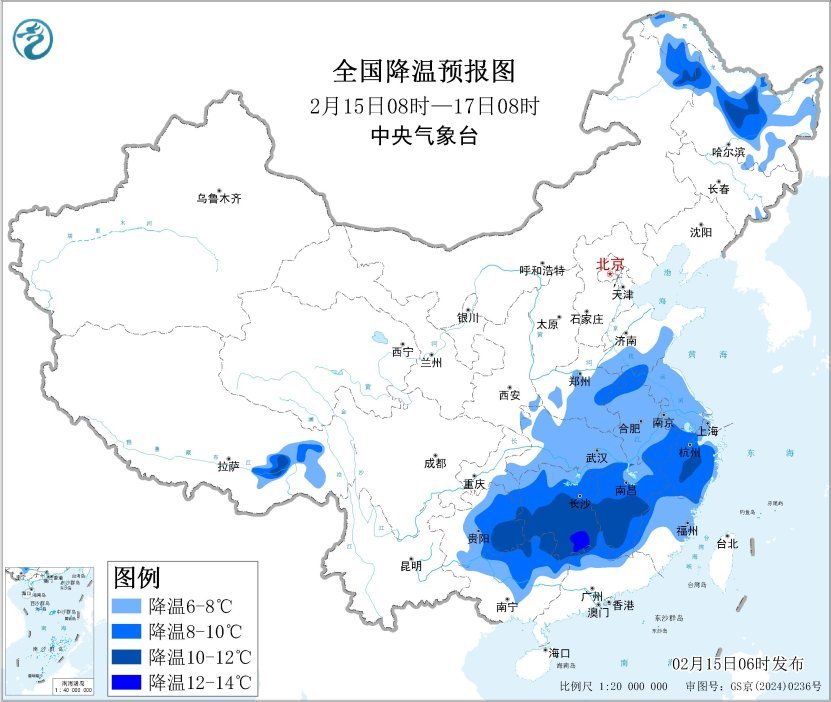
Group 1 - A cold wave is affecting several regions in China, with temperature drops of 6 to 10 degrees Celsius, and some areas experiencing drops exceeding 12 degrees Celsius [1] - The cold wave is expected to continue impacting the central and eastern regions of China, bringing strong winds and rain or snow [1] - A blue alert for cold wave and strong winds has been issued, with specific regions like Inner Mongolia and parts of Northeast China forecasted to experience average winds of around 5 levels and gusts of 6 to 8 levels [1] Group 2 - Rain and snow are expected in various regions, including moderate to heavy rain in eastern Chongqing, southern Hubei, and northern Hunan, with localized thunderstorms and potential hail [3] - Some areas in the eastern Tibetan Plateau and parts of Xinjiang are forecasted to experience light to moderate snow or sleet, with localized heavy snow [3] - Public is advised to monitor weather conditions and plan travel accordingly, especially in areas with rain or snow [3] Group 3 - Dense fog has been reported in southeastern Jiangsu, Shanghai, and parts of Zhejiang, with visibility dropping below 200 meters in some areas [5] - A yellow alert for fog has been issued, with expectations of visibility below 1 kilometer in several regions, including southern Jiangsu and northern Guangxi [5] - Travelers are advised to exercise caution due to low visibility and to stay updated on transportation information [5]

湖南多地将迎降雨,局地有雨夹雪或雪
Xin Lang Cai Jing· 2026-02-08 06:09
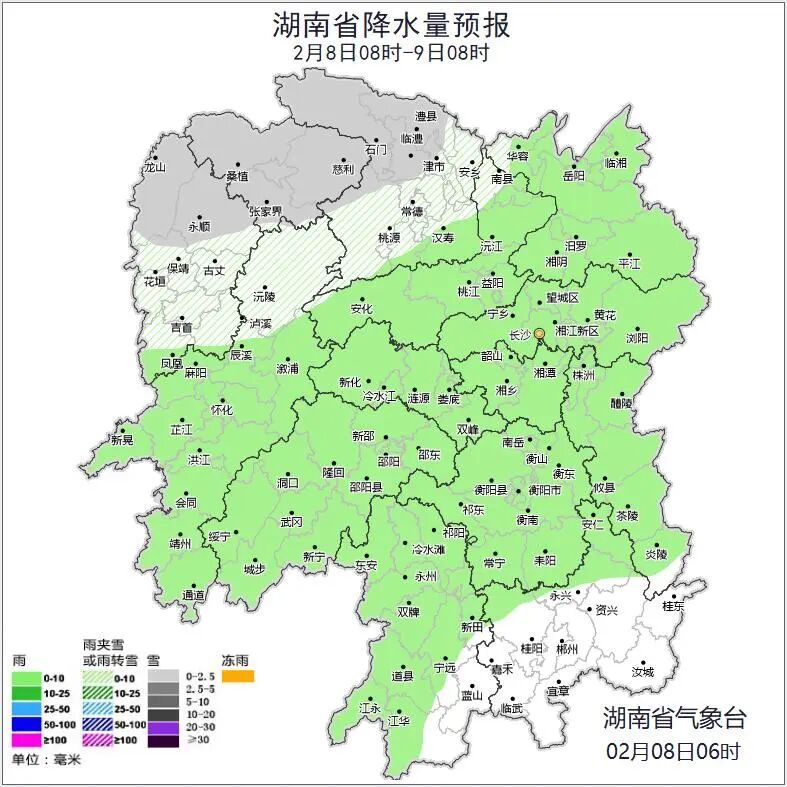
Core Viewpoint - The weather forecast for Hunan Province indicates a transition to rainy and snowy conditions from the evening of February 8 to February 9, with potential impacts on transportation safety due to wet and icy roads [1][9][20] Weather Forecast - From February 8 evening to February 9 daytime, most areas in Hunan will experience cloudy weather with light rain, while parts of northwestern Hunan may see rain mixed with snow or sleet [1][4] - On February 10, the rain and snow events are expected to taper off [1] - Specific temperature ranges forecasted include minimums of 0-4°C and maximums of 9-12°C for most areas [1][4] Precipitation Forecast - Precipitation is expected from February 9 at 08:00 to February 10 at 08:00, with varying amounts across different regions [5][8] - The forecast highlights areas that may receive significant precipitation, which could lead to hazardous conditions [5][8] Traffic Impact - The forecast warns of slippery roads and low visibility due to rain and potential ice on roads, particularly affecting northwestern Hunan, Zhangjiajie, and northern Changde [9][20] - Specific highways and routes are identified as having increased risk due to weather conditions, including G5513 and S91 [15][16] Aviation Impact - Airports in Hunan are advised to monitor runway conditions due to expected rain and potential ice, which could affect flight safety [17][18] - The forecast emphasizes the need for caution at various airports, including Zhuzhou and Changsha, due to wet runway conditions [18] Water Transport Impact - The forecast indicates that low visibility due to precipitation may adversely affect water transport safety from February 8 to February 10 [20]
华北黄淮江汉等地有霾 中东部地区将有寒潮雨雪天气
Zhong Guo Xin Wen Wang· 2026-02-04 08:03
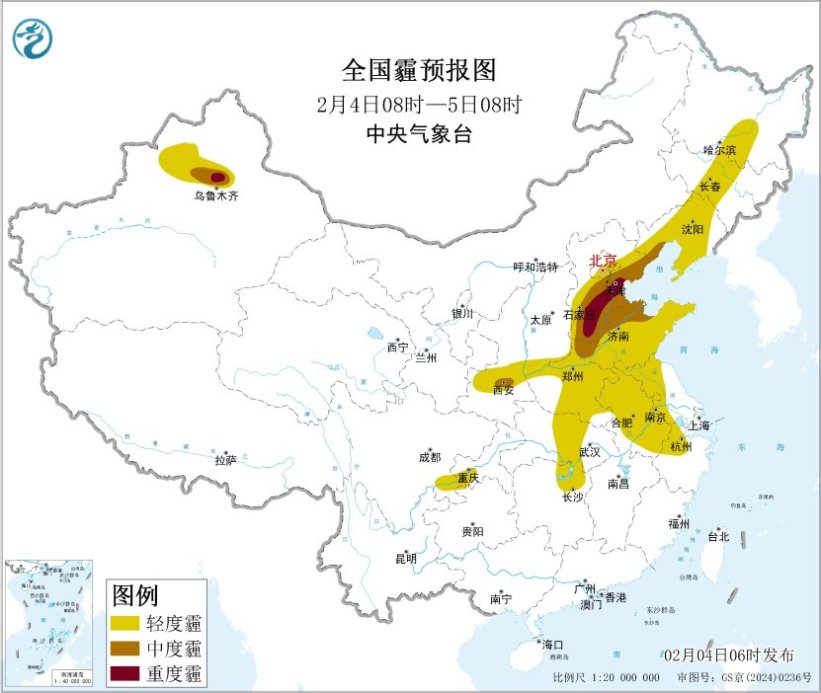
Group 1 - The central meteorological station reports that most regions of the country experienced weak rain and snow, with light to moderate haze in areas such as North China and the Huanghuai region [1][2] - From February 5 to 7, a cold wave with rain and snow is expected in the central and eastern regions, with heavy to blizzard conditions in parts of the lower and middle Yangtze River [1][4] - The temperature in the central and eastern regions is forecasted to drop by 6 to 10 degrees Celsius, with some areas experiencing a drop of 12 to 16 degrees Celsius [4][9] Group 2 - Specific weather forecasts indicate light to moderate haze in North China, Huanghuai, and other regions, with heavy haze in some areas [2][3] - Rain and snow are expected in various regions, including small to moderate rain in Jianghan, Jiangnan, and parts of South China, with local heavy rain [4][6] - Wind conditions will include 4 to 5 level winds with gusts reaching 6 to 7 levels in several areas, and 5 to 7 level winds with gusts of 8 levels in the Bohai Sea and East China Sea [6][9]
《中国气候公报(2025年)》发布2025年我国暖湿气候特征明显
Ren Min Ri Bao· 2026-02-03 03:32
Core Viewpoint - The "China Climate Bulletin (2025)" released by the China Meteorological Administration indicates significant warm and humid climate characteristics in China for 2025, with record high average temperatures and increased precipitation levels compared to historical norms [1] Group 1: Temperature and Weather Patterns - The national average temperature is 10.9 degrees Celsius, tying with 2024 for the highest on record, with the number of high-temperature days also reaching a historical maximum [1] - A large-scale persistent high-temperature weather event occurred in central and eastern China from late June to early September, marking the fourth strongest since 1961 [1] Group 2: Precipitation and Flooding - The national average precipitation is 4.5% higher than the historical average, with an increase in summer rainstorms and severe flooding in northern regions during the "July to August" period [1] - The rainy season in North China saw both rainfall and duration reach historical highs, while the autumn rains in Southwest China were also at record levels [1] Group 3: Typhoons and Drought - The number of typhoons generated and making landfall was above average, with five consecutive typhoons impacting South China from September to October [1] - Meteorological droughts were generally mild, but regional and temporary droughts were significant, particularly in South China and the middle and lower reaches of the Yangtze River [1] Group 4: Energy Consumption and Vegetation - Winter heating energy consumption in most northern provinces decreased compared to the same period in previous years, while summer cooling energy consumption increased across most of the country [1] - The average vegetation index during the growing season was the highest since the beginning of this century, with favorable growth conditions noted in parts of Northeast China and central and eastern Inner Mongolia [1] Group 5: Agricultural Impact - Overall climatic conditions during the growing period for major food crops were suitable, but high temperatures, droughts, and heavy rainfall significantly affected certain regions [1] Group 6: Air Quality - The national average atmospheric self-purification capacity index was 2.3% higher than the average from 2001 to 2020, indicating a generally stronger self-purification ability of the atmosphere [1]
风暴“钱德拉”席卷英国 多地遭洪水侵袭交通中断
Zhong Guo Xin Wen Wang· 2026-01-27 12:25
Group 1 - The storm "Chandra" has caused severe weather conditions across the UK, leading to heavy rainfall, strong winds, and snowfall, resulting in widespread flooding and transportation disruptions [1][2] - The UK Met Office has issued multiple weather warnings nationwide, with the southwest of England being the most affected area, particularly Devon, Dorset, Somerset, and Cornwall, which are under amber rain warnings [1] - Roads in Dorset, Somerset, and East Devon have been partially closed due to flooding, and significant disruptions have occurred in the road network due to fallen trees and floodwaters [1] Group 2 - Northern regions of the UK are facing challenges from rain and snow, with yellow warnings issued for the Pennines and southwestern Scotland, predicting snowfall of up to 5 centimeters and higher elevations potentially receiving up to 20 centimeters [2] - The UK National Rail has warned that "severe weather" may continue to impact southwest rail services until January 28, and hundreds of schools across the country have been forced to close due to the storm [2]
高温、暴雪、局地强对流成关键词
Xin Lang Cai Jing· 2026-01-22 23:19
Core Insights - The climate report for Shenyang in 2025 indicates a year characterized by higher average temperatures, increased precipitation, and extreme weather events such as heatwaves, heavy snowfall, and localized severe convective storms [1][4]. Temperature Trends - The average annual temperature in Shenyang was 9.4°C, which is 0.9°C higher than the historical average of 8.5°C [2] - July's average temperature was 1.5°C above the historical average, marking the third highest since 1951, while September and November recorded increases of 2.2°C and 2.9°C respectively, the highest and second highest for those months in history [2] - The highest recorded temperature was 36.3°C on June 25, while the lowest was -31.3°C on February 4 [2] Precipitation Patterns - The total annual precipitation was 633.4 mm, which is 17.5 mm more than the historical average of 615.9 mm [2] - January experienced the highest precipitation for that month since 1951, while October recorded the second lowest precipitation in history, with less than 1 mm [2] Sunshine Hours - The total annual sunshine hours were 2501.7 hours, slightly higher than the historical average by 1.4 hours [3] Extreme Weather Events - Notable weather events included a severe snowstorm from January 26 to 28, with an average snowfall of 21.3 mm and a maximum depth of 27 cm, marking the strongest snowfall in January since 1951 [5] - The summer months saw frequent localized heavy rainfall, with 12 instances of localized rainstorms during the flood season, including 5 instances of heavy rain [6] - The summer heat was characterized by two significant heatwaves, with temperatures exceeding 35°C for extended periods, creating a sauna-like environment [7] Climate Impact Assessment - The climate report also included evaluations of the climate's impact on agriculture, forestry, and transportation sectors [8]
三预警同时发布!重大气象灾害应急响应升级调整
Xin Hua She· 2026-01-18 13:08
Core Viewpoint - A significant cold wave is impacting most regions of China, leading to the upgrade of the emergency response level for major meteorological disasters to level three, which includes cold wave, freezing, and snowstorm warnings [1] Weather Impact - From the night of January 18 to January 21, the central and eastern regions of China are expected to experience a temperature drop of 6°C to 12°C, with some areas in the southern Huanghuai, western Jianghuai, southern Jiangnan, central eastern Guizhou, and northern Guangxi seeing drops of 12°C to 14°C, and localized drops exceeding 16°C [1] - By the morning of January 21, the zero-degree Celsius line is projected to move south to areas including southern Guizhou, southern Hunan, central Jiangxi, and southern Zhejiang [1] Snow and Ice Forecast - The Central Meteorological Observatory forecasts heavy snow in parts of southern Shaanxi, central southern Henan, northern Anhui, and northwestern Hubei from 20:00 on January 18 to 20:00 on January 19, with some areas experiencing blizzards [1] - Freezing rain or ice pellets are expected in parts of southeastern Henan, western Anhui, northern and western Hubei, southeastern Shaanxi, and northern Chongqing during the same period [1]
华北中南部黄淮等地有雾霾 云贵川西南等地有雨雪
Zhong Guo Xin Wen Wang· 2026-01-05 00:34
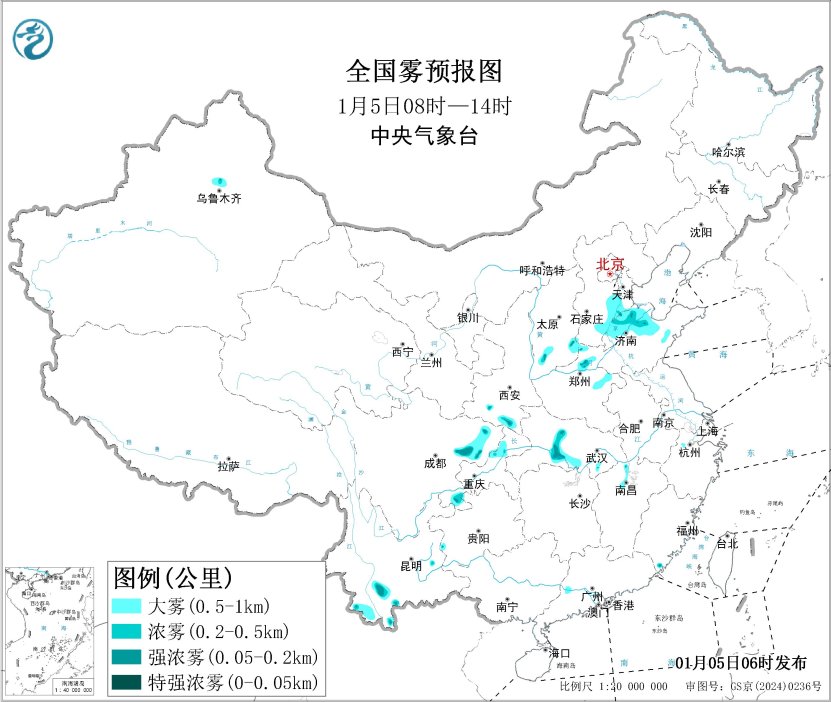
Group 1 - The central meteorological station has issued warnings for fog and haze in various regions, including North China and the Huanghuai area, with visibility dropping below 200 meters in some areas [2][4] - From January 5 to 6, light to moderate haze is expected in North China and Huanghuai, with localized heavy haze, which will gradually dissipate from January 7 due to cold air [2][4] - Rain and snow are forecasted for regions such as the eastern Tibetan Plateau, southwestern Sichuan Basin, and parts of Yunnan and Guizhou over the next three days [3][4] Group 2 - Specific weather forecasts indicate that from January 5 to 6, areas in Inner Mongolia, Heilongjiang, and parts of Xinjiang will experience light snow or sleet, while southern regions like Hunan and Jiangxi may see light rain [4][8] - From January 6 to 7, light snow or sleet is expected in northeastern Inner Mongolia, Heilongjiang, and parts of Qinghai and Tibet, with light rain in southwestern Sichuan and western Guangxi [8][9] - By January 7 to 8, light snow or sleet will continue in northeastern Inner Mongolia and parts of Xinjiang, with light rain in southern Sichuan and southwestern Yunnan [9]
去年是我国自1961年以来最暖的一年
Xin Lang Cai Jing· 2026-01-04 16:56
Core Insights - In 2025, China's average temperature is projected to reach 11.0°C, marking the warmest year since 1961, with Beijing experiencing the highest rainfall on record [1] - The average temperature in 2025 is expected to be 1.1°C higher than the normal average of 9.9°C, with 16 provinces recording their highest temperatures since 1961 [1] - The summer months (June to August) will see an average temperature of 22.3°C, also 1.1°C above the norm, tying with 2024 for the highest summer temperature since 1961 [1] - The number of high-temperature days in 2025 is forecasted to be 16.5 days, which is 7.4 days more than the average, representing the highest number since 1961 [1] - In terms of precipitation, 2025 will witness the most rainfall in Beijing since 1961, with 41 national meteorological stations recording historical rainfall levels [1] Weather Impact and Preparedness - Northern regions should be aware of the adverse effects of low temperatures and snow, while southern areas need to prepare for potential drought conditions [2] - The climate trend for January indicates that northeastern regions and parts of Inner Mongolia and western Xinjiang will experience lower temperatures and higher precipitation than usual, posing risks of cold weather, snow disasters, and ice [2] - Agricultural and livestock sectors in affected areas need to prepare for cold weather, while transportation, energy, and power sectors should have contingency plans for low-temperature snow disasters [2] - In contrast, central and southern regions of East and Central China are expected to have significantly less rainfall, with temperatures near or above normal, indicating a potential for drought development [2]