氢冶金技术

Search documents
2025年中国钢铁行业绿电消费的进程、挑战与建议报告
Sou Hu Cai Jing· 2025-12-08 08:19
Core Insights - The report discusses the acceleration of green electricity consumption in China's steel industry, highlighting its significance in the sector's low-carbon transition and the challenges it faces [1][11]. Group 1: Acceleration of Green Electricity Consumption - The steel industry, being a high energy-consuming and high carbon-emitting sector, is focusing on green electricity consumption as a core pathway for low-carbon transformation [1]. - The acceleration is driven by multiple factors, including policy shifts from energy consumption control to carbon emission control, clear compliance directions for green electricity consumption, and increasing demand for low-carbon steel from downstream industries like automotive and construction [1][12]. - Major steel companies are integrating green electricity consumption into their long-term strategies, responding to both regulatory requirements and market demands [1][12]. Group 2: Consumption Models - Three mainstream models of green electricity consumption have emerged: green electricity trading, green certificate trading, and self-built/invested renewable energy projects [2][14]. - Green electricity trading requires no initial investment and can lock in power supply and environmental value, with companies like Baowu Steel and Hebei Steel engaging in large-scale transactions [2]. - Self-built renewable energy projects, while having higher initial costs, can optimize long-term energy costs, as seen with companies like Ansteel and Jiugang [2][14]. Group 3: Long-term Value and Challenges - Green electricity consumption brings multiple long-term benefits, including enhanced green competitiveness, compliance with domestic and international regulations, and the development of the green certificate market [2][12]. - Challenges include mismatches between steel industry locations and renewable energy-rich areas, unclear cost-sharing mechanisms for green electricity premiums, and the need for clearer policy connections and compliance details [2][12]. Group 4: Policy and Corporate Recommendations - To promote sustainable development in green electricity consumption, the report suggests improving incentive mechanisms, fostering industry collaboration, and enhancing energy management levels within companies [3][15]. - Companies are encouraged to set green electricity consumption targets, develop diversified consumption strategies, and advance technology integration with core production processes [3][15]. Group 5: Market Dynamics and Downstream Demand - The demand for low-carbon steel from key downstream sectors, such as construction and automotive, is increasing, influencing steel companies' energy consumption decisions [2][41]. - Major automotive manufacturers are setting carbon reduction targets that directly impact their steel suppliers, creating a supply chain responsibility that drives steel companies to enhance their green electricity consumption [2][41]. Group 6: Future Outlook - The report anticipates that the synergy between renewable energy development and the steel industry will expand, with green electricity consumption facilitating deeper decarbonization and structural transformation in the steel sector [1][17]. - The ongoing evolution of policies and market mechanisms will provide robust support for the steel industry's transition to green electricity consumption [20][31].




四中全会精神在基层|百年鞍钢厚积“绿色家底”汇聚“绿色动能”
Xin Hua She· 2025-11-10 03:21
Core Viewpoint - The news highlights the green transformation efforts of Angang Steel Group, focusing on ecological restoration and sustainable practices in mining and steel production, aligning with national goals for carbon reduction and environmental protection [1][2][3][4] Group 1: Ecological Restoration - Angang Steel's Dagu Mountain Iron Mine, which has been operational since 1916, is undergoing ecological restoration after ceasing operations, with plans to fill the pit using 440 million tons of tailings over the next 13 years [1] - The restoration project aims to integrate the mine with surrounding scenic areas, potentially creating a geological park and agricultural land [1] - The initiative reflects Angang's commitment to green development and reducing ecological damage from mining activities [1][2] Group 2: Green Technology in Production - Angang Steel has upgraded its coking facilities by replacing older furnaces with advanced 7.6-meter top-charging coking ovens, significantly reducing emissions and enhancing energy recovery [3] - The company is collaborating with research institutions to develop a green hydrogen metallurgy production line, which aims for near-zero carbon emissions in ironmaking by using green hydrogen instead of traditional coke [3] - The silicon steel division has completed a major project to produce low-loss silicon steel for electric vehicles, powered entirely by green electricity, supporting the green transition in various industries [4]

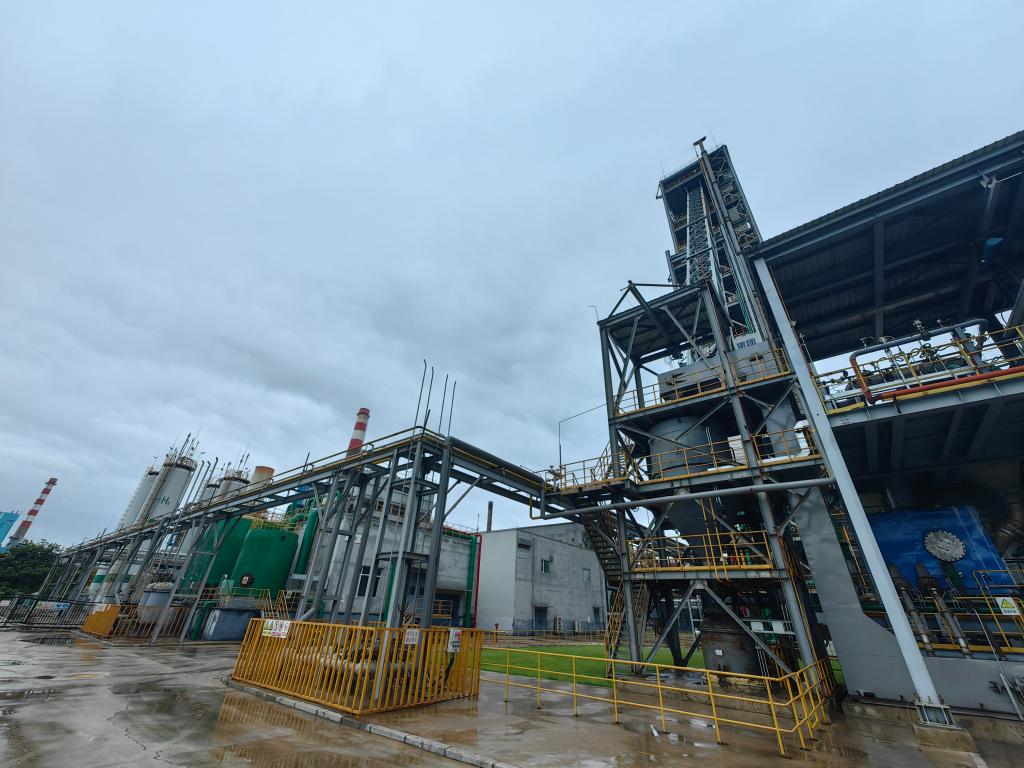
鞍钢氢冶金中试线进入投产阶段
Xin Hua Wang· 2025-08-28 16:50
Core Insights - The hydrogen metallurgy pilot line at Angang Steel's Bayuquan Steel Plant has achieved stable operation and entered the production phase, utilizing green hydrogen to replace coke in the iron-making process, aiming for near-zero carbon emissions [1][3] - The technology provides a low-carbon solution for the steel industry, addressing transformation challenges and positioning China to seize the high ground in hydrogen metallurgy technology [1] - The pilot line features a large scale with four systems: hydrogen production, granulation, reduction, and auxiliary systems, with a 100% localization rate for key equipment [1][3] Industry Characteristics - The fluidized bed hydrogen metallurgy technology is characterized by high adaptability to iron ore raw materials, overcoming particle agglomeration bottlenecks, high hydrogen reduction reaction efficiency, and complete autonomy in process equipment [3] - The direct reduced iron products from the pilot line have achieved a metallization rate of 95% [3] - Future plans include scaling up to a 500,000 tons per year industrial demonstration project for fluidized bed iron-making [3]