氢动力飞行

Search documents
空客修订下一代单通道飞机路线图 继续坚持氢动力路线
Hua Xia Shi Bao· 2025-03-31 03:02
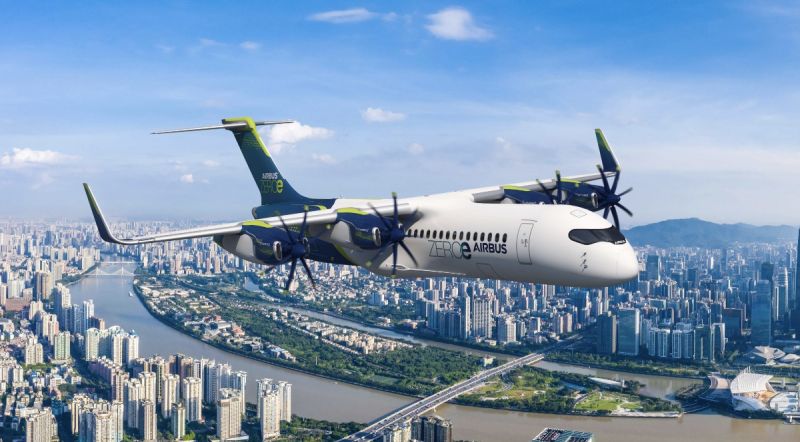
Core Viewpoint - Airbus is accelerating the development of next-generation commercial aircraft powered by clean energy, particularly focusing on hydrogen propulsion, despite existing order backlogs and market dominance in single-aisle aircraft [1][2]. Group 1: Hydrogen Propulsion Development - Airbus outlined its plans for a next-generation single-aisle aircraft to be operational in the second half of the 2030s, emphasizing hydrogen as a core power source [2][6]. - The ZEROe hydrogen aircraft program, initially set to launch in 2028, has been delayed by 5-10 years due to slower-than-expected technological advancements [2][3]. - Airbus has successfully demonstrated a 1.2 MW hydrogen propulsion system in 2023 and plans to conduct comprehensive ground testing by 2027 [4][5]. Group 2: Technological Innovations - The new aircraft design aims for a 20-30% improvement in fuel efficiency compared to current models and the capability to operate on up to 100% sustainable aviation fuel (SAF) [6][7]. - Airbus is collaborating with CFM to develop a new open-rotor engine, which could enhance fuel efficiency by over 20% compared to existing technologies [8][9]. - The Wing of Tomorrow project aims to create longer, thinner wings with folding tips to improve aerodynamic efficiency while addressing compatibility with existing airport infrastructure [9]. Group 3: Strategic Partnerships and Future Goals - Airbus has established a three-year partnership with the Solar Impulse Foundation to promote scalable, nature-based solutions for global challenges [10]. - Bertrand Piccard's liquid hydrogen aircraft project aims for a non-stop, zero-emission global flight by 2028, supported by various industrial partners including Airbus [10].