氢能产业规模化发展

Search documents
头部企业前三季业绩承压 氢能产业规模化发展仍面临多重制约
Zhong Guo Chan Ye Jing Ji Xin Xi Wang· 2025-11-28 00:25
Core Viewpoint - The hydrogen fuel cell industry is facing significant challenges, with major companies like Yihuatong reporting substantial revenue declines and net losses, indicating a broader market demand slump and an immature industrial chain [1][2][4]. Revenue Performance - Yihuatong reported a revenue of approximately 104 million yuan for the first three quarters of 2025, a year-on-year decrease of 67.31%, with a net loss of about 311 million yuan, an increase of 20.66% year-on-year [2]. - In Q3 2025, Yihuatong's revenue was approximately 31.58 million yuan, down 80.6% year-on-year, with a net loss of about 148 million yuan [2]. - Other leading companies in the hydrogen sector also reported revenue declines, such as Guohong Hydrogen Energy with a 55.7% decrease in revenue and Reshaping Energy with a 9.9% decrease [3]. Industry Challenges - The hydrogen energy sector is still in its early commercial stage, facing high technical barriers and insufficient economic viability, which hampers large-scale development [1][4]. - The production and sales of hydrogen fuel cell vehicles have significantly lagged behind pure electric vehicles, with production in June 2025 dropping by 81.5% and sales by 76.4% year-on-year [4]. - The hydrogen refueling infrastructure remains underdeveloped and costly, indicating a need for continued policy support to facilitate growth [4][5]. Policy Support - The "subsidy-for-award" policy for fuel cell vehicles, initiated in 2021, is set to conclude this year, leading to expectations for new supportive policies from the government [5]. - Industry experts suggest that ongoing support is crucial for overcoming current bottlenecks, including the need for subsidies and incentives to enhance the economic viability of hydrogen fuel cell vehicles [5]. Collaborative Efforts - Despite the challenges, companies are actively pursuing technological innovation and market expansion. For instance, Yihuatong signed a strategic cooperation agreement with Pengfei Group to develop hydrogen fuel cell technology [6]. - Other companies are also exploring international markets, such as Guofu Hydrogen Energy's partnership in Chile to establish a local assembly line for electrolyzers [6]. Future Outlook - Analysts believe that with continued policy support, technological breakthroughs, and improved collaboration within the industry, the hydrogen sector could overcome its commercialization bottlenecks and achieve significant growth [6][7].

【新华财经调查】氢能产业规模化发展,河北如何破局?
Xin Hua Cai Jing· 2025-11-06 07:58
Core Viewpoint - The article emphasizes the importance of hydrogen energy as a new economic growth point in China's energy system, highlighting the challenges and opportunities in the hydrogen industry, particularly in Hebei province, which is a pilot area for hydrogen energy development [1][2]. Industry Challenges - The hydrogen industry faces significant challenges related to supply-demand misalignment and high costs, which hinder its scalability [2][3]. - The distribution of hydrogen resources is not aligned with demand areas, leading to high transportation costs and supply-demand imbalance, creating a "vicious cycle" [3]. - Key issues that need to be addressed include customer willingness to adopt hydrogen fuel cell vehicles, economic viability, and the need for supporting infrastructure [3]. Hebei's Hydrogen Industry Development - Hebei has established a relatively complete hydrogen industry chain, with a total industry output value exceeding 70 billion yuan [3][4]. - The province is leveraging its full industry chain advantages to promote technological and model innovations for large-scale application [4]. Cost Reduction Strategies - Low-cost green hydrogen production is essential for the sustainable development of the hydrogen industry, with off-grid hydrogen production models being a primary focus [4]. - A project in Zhangjiakou aims to reduce green hydrogen production costs to below 18 yuan/kg by utilizing wind energy for electrolysis [4]. Transportation and Infrastructure - Hydrogen storage and transportation account for approximately 40% of the total hydrogen cost, with efficient and low-cost transportation methods being crucial for industry development [4]. - A major hydrogen pipeline project in the Beijing-Tianjin-Hebei region is expected to enhance the coordination of hydrogen production and consumption, addressing geographical mismatches [4][5]. Fuel Cell Vehicle Adoption - Hebei has promoted 4,518 hydrogen fuel cell vehicles, including 2,800 hydrogen heavy trucks, leading the nation in adoption [5]. - The cost of hydrogen fuel cell engines has decreased to below 2,500 yuan/kW, with expectations to drop to 200 yuan/kW by 2030, making them more competitive with traditional internal combustion engines [5]. Future Directions - The hydrogen industry is transitioning from reliance on gray hydrogen to green hydrogen, with industrial applications expanding beyond transportation [6][7]. - The industrial sector is projected to dominate hydrogen demand, with significant growth anticipated as hydrogen prices become more favorable for large-scale applications [7].
专家解读丨央企领航氢能新赛道,打造能源革命新图景
国家能源局· 2025-05-31 08:38
Core Viewpoint - The article emphasizes the pivotal role of state-owned enterprises (SOEs) in leading the hydrogen energy sector, highlighting their contributions to the energy revolution and the strategic importance of hydrogen in China's energy landscape [2][8]. Group 1: National Strategy - The hydrogen industry is entering a critical phase of large-scale development, with over 60 countries announcing hydrogen strategies. China has included hydrogen in its Energy Law, with 22 provinces incorporating it into government work reports. The "Medium- and Long-term Planning for Hydrogen Industry Development (2021-2035)" sets a target of 100,000 to 200,000 tons of renewable hydrogen production by 2025 [3]. - SOEs are central to implementing national strategies, with projects like "wind-solar hydrogen + hydrogen-based fuel synthesis" by the National Energy Group in Inner Mongolia and Ningxia, and a million-kilowatt wind-solar hydrogen project by State Power Investment Corporation in Jilin [3]. Group 2: SOE Responsibilities - The report highlights the importance of technological breakthroughs across the entire hydrogen value chain, with SOEs demonstrating strong capabilities in equipment autonomy and technological integration. For instance, the Aerospace Science and Technology Corporation developed a 5 tons/day hydrogen expansion liquefaction system with 100% domestic components [4]. - The China Petroleum and Chemical Corporation initiated a hydrogen pipeline demonstration project, laying the groundwork for cross-regional hydrogen distribution. Additionally, various hydrogen-powered vehicles and systems have been developed, showcasing the innovation capabilities of SOEs [4]. Group 3: Scene Implementation - In 2024, hydrogen energy will see widespread pilot projects in industrial, transportation, and power sectors, with SOEs leading innovation. For example, Baowu Steel's hydrogen-based blast furnace project significantly reduces CO2 emissions in metallurgy [5]. - The National Energy Group's renewable hydrogen coupling with coal-based ammonia project aims to reduce CO2 emissions by 200,000 tons annually, providing a reference for carbon transition in the coal chemical industry [5]. Group 4: Global Perspective - China's hydrogen industry is shifting from technology importation to equipment exportation, with successful international projects such as the world's longest liquid hydrogen maritime transport demonstration by China National Offshore Oil Corporation [6]. - The State Grid is leading the development of international standards for fuel cell systems, enhancing China's influence in the global hydrogen sector [7]. Group 5: Future Challenges - The "China Hydrogen Development Report (2025)" serves as both a report card on industry progress and a task list for SOEs. The focus will be on expanding renewable hydrogen production capacity and overcoming technological challenges in electrolysis and fuel cells [8]. - By 2025, with ongoing policy support and technological advancements, SOEs are expected to play a crucial role in achieving large-scale hydrogen development, contributing to national energy security and global climate governance [8].





展示核心新品,氢能行业盛会即将举行,扶持政策也在持续发力
Xuan Gu Bao· 2025-05-23 05:43
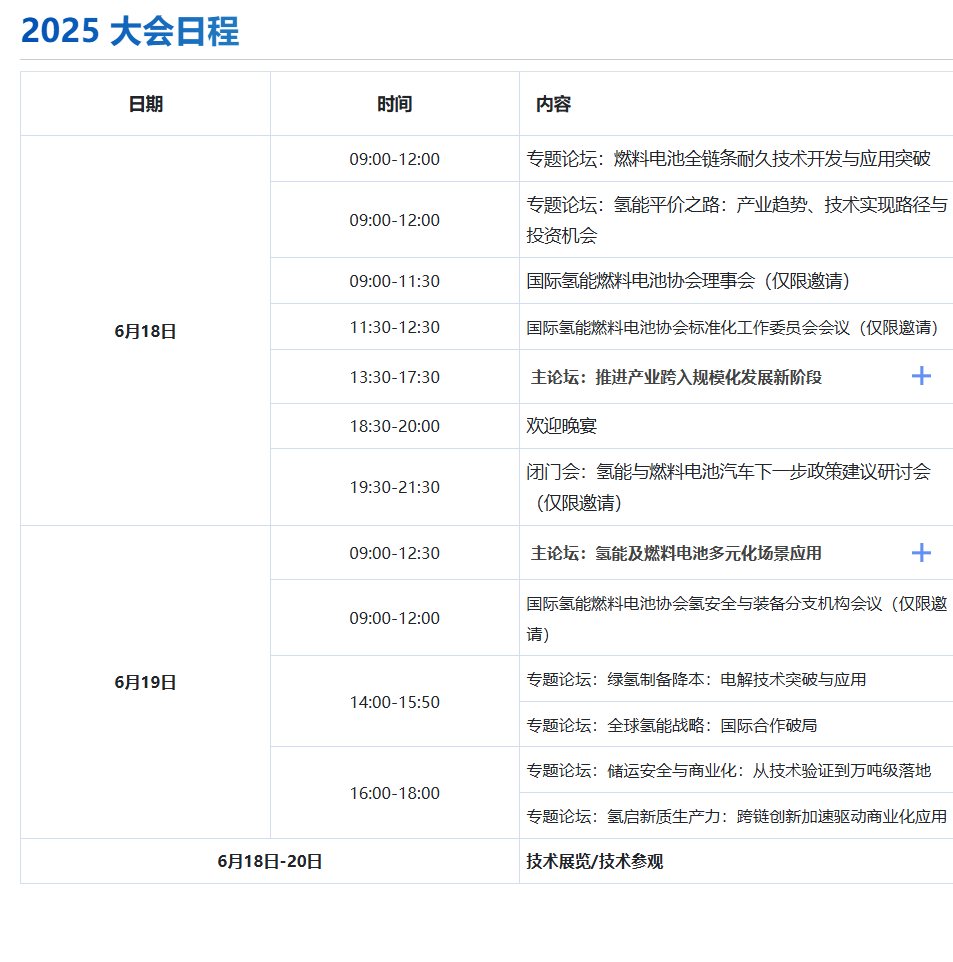
Event Overview - The 9th International Hydrogen Energy and Fuel Cell Vehicle Conference (FCVC2025) will be held in Shanghai from June 18 to June 20, 2025, focusing on the theme "Building Consensus, Overcoming Challenges, and Promoting Industrial Scale Development" [1] - The event will feature a comprehensive agenda including opening ceremonies, main forums, specialized forums, and industry exchange meetings, along with a three-day technical exhibition [1] Industry Insights - Long-term policies supporting hydrogen energy in China are driving the continuous development of the hydrogen industry, with an increase in electrolyzer bidding projects and advancements in hydrogen production technology [2] - The Ministry of Industry and Information Technology has outlined tasks for hydrogen-powered two-wheelers, which will facilitate early application promotion and future large-scale deployment [2] Historical Performance - The Beijing State-owned Assets Supervision and Administration Commission has identified the hydrogen industry as a key focus for the 14th Five-Year Plan, leading to significant stock movements in companies like Jingcheng股份 and others [3] Related Companies - Notable exhibitors at the conference include companies such as 安达智能, 中材科技, 科威尔, 中联重科, 威孚高科, 中自科技, and 西部材料 [5] - Companies like 更到集团, 亿华通, 国鸿和能, 致远新能, 未努能源, 捷氢科技, and 潍柴动力 are making significant advancements in hydrogen fuel cell technology and production capacity [6]