
氢燃料电池系统

Search documents
从车间到工地全线发力 马力十足拼经济
Xin Lang Cai Jing· 2026-02-25 18:57
Core Viewpoint - The article highlights the vigorous economic recovery and production resumption in Chengdu, with various industries ramping up operations and focusing on project development to achieve high-quality growth in the new year [3][5][7]. Group 1: Production and Orders - Sichuan Zhiyu Auto Parts Co., Ltd. has resumed full production, with daily output of high-pressure wire harnesses reaching approximately 700 units and low-pressure vehicle harnesses at about 80 sets [9]. - Chengdu Hope Food Co., Ltd. reported a significant increase in orders, achieving a production volume of 6,400 tons in January and expecting to exceed 15,000 tons in the first quarter, a growth of over 5% compared to the same period last year [3]. - Sichuan Zhou Hei Ya Food Co., Ltd. has restored full production capacity, producing over 50,000 boxes of products daily during the Spring Festival [4]. - Light Green Technology Company has successfully launched its 10,000th "Hydrogen Horse" and is expanding into both national and overseas markets, with significant orders from Central Asia and the Middle East [4]. Group 2: Project Development - The Allen Electronics Supercapacitor and Intelligent Robot R&D Manufacturing Headquarters project in Jin Niu District is nearing completion, with expected revenue of 100 million yuan upon production start in the second half of the year [6]. - Chengdu Haoyi Qiang Aviation Equipment Manufacturing Co., Ltd. is ramping up production with a total investment of 300 million yuan, aiming for an annual output of 2.4 million aviation components and projected annual output value of 300 million yuan [6]. - The Tianma Large Bearing Intelligent Manufacturing Base project, with an investment of 1.5 billion yuan, is set to be completed by August, enhancing competitiveness in the wind power bearing sector [6]. Group 3: Investment Promotion Activities - Chengdu has initiated multiple investment promotion activities, including the "Rong Inertia Plan" event, which aims to attract alumni and entrepreneurs back to invest in the city [7]. - A meeting for Sichuan entrepreneurs is scheduled for February 27, inviting them to return and invest in their hometown [7]. - A major project signing event focusing on strategic emerging industries such as artificial intelligence and aerospace is planned for mid-March [7]. Group 4: Service and Support - The Tianfu New Valley service team is actively engaging with enterprises to address their needs and ensure smooth operations post-holiday [10]. - Various parks, including Tianfu Software Park and AI Innovation Center, are conducting safety inspections and providing tailored services to support business recovery [10].

重塑能源股价大涨13.53%,氢燃料电池业务增长显著
Jing Ji Guan Cha Wang· 2026-02-20 04:49
Group 1 - The stock price of ReShape Energy (02570.HK) experienced a significant increase of 13.53%, reaching HKD 58.75 on February 20, 2026 [1] - The overall performance of the new energy materials sector, to which ReShape Energy belongs, rose by 0.94%, indicating a market rotation from high-valuation growth stocks to cyclical and emerging industries with improved fundamentals [2] - The company's core business, hydrogen fuel cell systems, saw a remarkable sales revenue growth of 141.8%, despite a year-on-year decline in total revenue, and the loss margin narrowed by 28.7% [2] Group 2 - The overseas revenue of ReShape Energy increased by 360.3% year-on-year, reflecting positive developments in business structure optimization [2] - Technical indicators showed that the stock price broke through short-term moving averages with a significant increase in trading volume, indicating heightened market participation [2]
从“短途物流”向“跨区域冷链”延伸 濮阳造“氢车”加速上路
He Nan Ri Bao· 2026-02-07 23:27
Group 1: Core Insights - Hydrogen vehicles in Puyang can travel over 600 kilometers on a single refueling, meeting inter-provincial same-day delivery needs, with refueling taking only a few minutes, comparable to diesel vehicles [1] - Puyang has successfully delivered 150 hydrogen fuel cell refrigerated trucks, marking a significant step towards the commercial application of hydrogen cold chain logistics [1] - The development in Puyang is attributed to a combination of technological advantages, policy support, and a complete industrial chain from hydrogen production to application [1] Group 2: Industry Development - Puyang has achieved 100% completion of fuel cell vehicle promotion and hydrogen station construction goals set for 2025, ranking second among eight demonstration cities in the province [2] - The city has established a robust hydrogen production base with 22 hydrogen production enterprises and an annual hydrogen production capacity of 236,000 tons [5] - Puyang has built four hydrogen refueling stations, creating an initial energy supply network [5] Group 3: Manufacturing and Innovation - The company Feng Hydrogen Energy Technology (Puyang) Co., Ltd. has developed a high-performance hydrogen fuel cell system that powers the hydrogen refrigerated trucks [4] - Zhongyuan General Machine has deepened its focus on hydrogen equipment, with six models of hydrogen vehicles included in the Ministry of Industry and Information Technology's product announcement [4] - Puyang has promoted a total of 195 hydrogen fuel cell vehicles, including buses and sanitation vehicles, expanding the application scenarios for hydrogen energy [6]
氢链主来了:“富源模式”的梦想能否照进产业现实
2 1 Shi Ji Jing Ji Bao Dao· 2026-01-23 10:57
Core Viewpoint - The article highlights the emergence of hydrogen energy as a viable alternative in the coal-rich region of Qujing, Yunnan, where Shanghai Hydrogen Energy Group is pioneering the commercialization of hydrogen fuel cell heavy trucks amidst the challenges faced by the coal logistics industry [1][2]. Industry Overview - Hydrogen is transitioning from being classified as a hazardous chemical to an energy source with the implementation of the Energy Law in 2025, which is expected to facilitate the development of the hydrogen industry [2]. - The current ownership of hydrogen fuel cell vehicles in China is approximately 30,000, falling short of the target of 50,000 by 2025 as outlined in the Hydrogen Industry Development Plan [2]. Company Strategy - Shanghai Hydrogen Energy Group is introducing hydrogen fuel cell heavy trucks into coal transportation, aiming to create a benchmark project that integrates green energy development, fuel production, and transportation [5]. - The company plans to deploy 300 hydrogen fuel cell trucks initially, with an annual coal transport capacity exceeding 4.8 million tons, and aims to increase this to over 8 million tons with future expansions [5]. Economic Impact - The project is expected to reduce diesel consumption by approximately 9,000 tons annually and cut carbon dioxide emissions by around 440,000 tons, contributing over 5.7 billion yuan to the industry chain [5]. - The operational cost of hydrogen fuel cell trucks is projected to be 78% to 87% of that of pure electric trucks in high-intensity mining environments [5]. Market Positioning - The company is focusing on a "scene-driven" approach rather than a purely technology-driven one, recognizing the need for practical applications of hydrogen technology in the market [8]. - The introduction of hydrogen trucks is not intended to replace traditional fuel vehicles but to provide an additional option for logistics, particularly in challenging environments where electric vehicles may not perform effectively [10]. Future Outlook - The company aims to deliver 3,000 hydrogen vehicles by 2026, expanding its operations beyond coal transport to include municipal sanitation, intercity passenger transport, and cold chain logistics [8]. - The company is also exploring capital market opportunities, with plans for an IPO by 2028, indicating strong investor interest and potential for growth in the hydrogen sector [15].
人工智能、工业元宇宙……四川明确25个产业新赛道重点领域方向
Zhong Guo Xin Wen Wang· 2026-01-21 03:29
Core Insights - Sichuan Province has announced 25 key industrial sectors to focus on, aiming to seize opportunities from the new technological revolution and industrial transformation [1] Group 1: Key Industrial Sectors - Artificial Intelligence: Focus areas include large models, AI algorithms and software, AI hardware, AI products, and data labeling, primarily in Chengdu, Mianyang, and Zigong [2][3][4][6] - Green Hydrogen: Key components include hydrogen equipment, critical materials, fuel cell systems, and hydrogen-powered vehicles, with major activities centered in Chengdu and Deyang [7][8][9][10][11][12] - Biotechnology: Emphasis on intravenous solutions, blood products, vaccines, and biopharmaceuticals, mainly in Chengdu and Luzhou [13][14] Group 2: Advanced Technologies - Commercial Aerospace: Focus on satellite manufacturing, launch services, and rocket development, primarily in Chengdu and Mianyang [15][16] - Smart Connected Vehicles: Key areas include vehicle networking and autonomous driving technologies, mainly in Chengdu and Yibin [19][20][21] - Low-altitude Economy and Drones: Development of fixed-wing and vertical take-off drones, primarily in Chengdu and Zigong [24] Group 3: Emerging Energy Solutions - Next-Generation Energy Storage: Focus on vanadium and sodium batteries, with significant activities in Leshan and Dazhou [41][42] - Solid-State Batteries: Development of various types of solid-state batteries, primarily in Yibin and Suining [44] - High-Efficiency Solar Cells: Focus on advanced solar cell technologies, particularly in Yibin and Meishan [45][46] Group 4: Advanced Manufacturing - Robotics: Development of service, industrial, and bionic robots, primarily in Chengdu and Mianyang [34] - New Industrial Mother Machines: Focus on high-end CNC machine tools and additive manufacturing, mainly in Deyang and Luzhou [35][36] - Laser Equipment: Development of laser technologies and materials, primarily in Mianyang [38] Group 5: Health and Safety Technologies - Nuclear Medicine: Focus on the manufacturing of nuclear medical equipment and radioactive drug development, primarily in Chengdu and Mianyang [51][52]
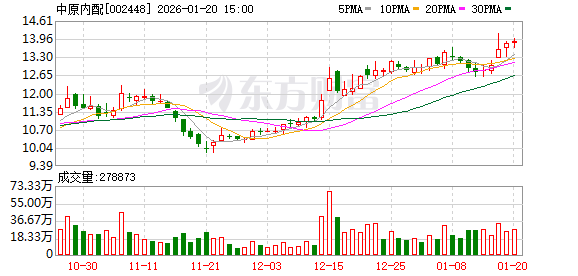
中原内配:公司与阳光新能源展开战略合作,共同推动公司源网荷储一体化及氢能产业发展
Zheng Quan Ri Bao· 2026-01-20 12:36
Core Viewpoint - The company has completed the industrialization layout of key core components for hydrogen fuel cell systems and has begun mass production and sales of these components [2] Group 1: Company Developments - The company has achieved mass production and sales of hydrogen fuel cell systems and air compressors [2] - The company has established a strategic partnership with Sunshine New Energy to promote integrated development in the hydrogen energy industry [2] - Hydrogen energy is identified as a strategic development direction for the company, which will advance its hydrogen energy industry layout steadily based on operational conditions and market developments [2]

蜀道装备(300540) - 投资者活动记录表(2026年01月19日)
2026-01-19 10:46
Group 1: Company Overview and Strategic Goals - The company aims for a strategic transformation from a "traditional equipment manufacturer" to a "comprehensive gas and new energy service provider" by focusing on four major business sectors: deep cooling technology equipment manufacturing, transportation service equipment manufacturing, gas investment operations, and clean energy investment operations [3]. - The company plans to invest in three key segments: industrial gases, LNG, and hydrogen, leveraging capital advantages to facilitate industrial transformation and upgrade [3][4]. Group 2: Industrial Fund and Investment Strategy - The industrial fund will focus on industrial gases, LNG, and hydrogen, with a total fund size of 2 billion yuan, of which at least 50% will be allocated to the industrial gas sector [4]. - Investment forms include equity acquisition and direct investment, with the fund serving as a "frontline" for mergers and acquisitions, aiming to reduce uncertainties and improve asset quality [5]. Group 3: Hydrogen Demand and Industry Trends - The chemical industry currently relies heavily on coal-based hydrogen (gray hydrogen) and is expected to transition towards green hydrogen (produced from renewable energy) due to stricter carbon emission policies [7]. - The demand for hydrogen in the chemical industry is projected to remain high, with a significant shift towards sustainable practices anticipated in the near future [7]. Group 4: Liquid Hydrogen Technology and Aerospace Applications - Liquid hydrogen technology is primarily applied in the aerospace sector, with increasing demand expected as China's space exploration efforts expand [8]. - The company has developed core capabilities in liquid hydrogen equipment design and manufacturing, positioning itself as a leader in the high-end hydrogen equipment market [8]. Group 5: Future Plans in Commercial Aerospace - The company has supplied industrial gas production equipment to two domestic aerospace bases and plans to extend its services from equipment supply to gas product services, actively participating in national aerospace infrastructure development [9].

从烧钱拓荒到算账淘汰赛 新能源重卡赛道融资换挡
Zhong Guo Qi Che Bao Wang· 2026-01-16 09:29
Core Insights - The financing heat in the new energy heavy truck sector is rising, with companies like Kaven New Energy and Supao Technology securing billions in funding, indicating ongoing capital interest in the electrification of commercial vehicles [1] - The investment logic has shifted from early-stage technology concepts to a focus on commercial viability, requiring companies to demonstrate cost control, scalable delivery, and ecosystem integration capabilities [1] Financing Trends - In 2025, the total financing in the new energy heavy truck sector reached approximately 8 billion, with the top five companies capturing over 70% of this amount [2] - Kaven New Energy completed over 1.2 billion in Pre-A financing in June 2025, while Supao Technology secured over 1 billion in strategic financing, focusing on core technology development and global expansion [2] - Other notable financing includes Berai Technology's record-breaking 1 billion in the autonomous driving sector and Jiushi Intelligent's 100 million in B4 financing, highlighting the capital's recognition of technology implementation [2][3] Market Dynamics - A stark contrast exists between the financing fortunes of leading and trailing companies, with the latter facing unprecedented survival pressures and financing costs exceeding 10%, compared to 3.5%-5% for leading firms [3] - Many trailing companies are experiencing issues such as unpaid wages and team departures, indicating a rapid industry reshuffle [3] Shift in Investment Focus - The era of financing based solely on technology concepts has ended, with capital now favoring companies that have validated their business models and can demonstrate delivery capabilities [4] - Successful companies have clear paths to market and verifiable delivery results, with DeepWay and Proton Automotive exemplifying this trend through significant sales and operational achievements [4][5] Ecosystem and Global Expansion - The future of competition in the new energy heavy truck sector will hinge on technology differentiation, ecosystem building, and global market strategies [6] - Companies are expected to develop dual technology routes, such as pure electric and hydrogen, while also exploring alternative fuels like methanol [6] - Building an operational ecosystem that integrates vehicles, energy, and services will be crucial for companies to differentiate themselves in a crowded market [7] International Market Opportunities - Expanding into international markets is becoming essential for leading companies to enhance market share and brand influence, with several firms already making strides in Europe and North America [8] - However, challenges such as regulatory compliance and geopolitical factors will require companies to possess robust technology and localized operational capabilities to succeed globally [8]
氢能周度观察(7):中央及地方扶持政策密集发布,关注产业十五五变局-20260111
Changjiang Securities· 2026-01-11 14:51
Investment Rating - The report suggests a positive outlook for the hydrogen energy industry, indicating that it is expected to outperform the relevant market indices in the next 12 months [14]. Core Insights - Since December 2025, there has been a surge in hydrogen energy policies, with the Ministry of Industry and Information Technology officially releasing a notification on key products and processes, including hydrogen fuel cell systems and key components [4][7]. - More than seven provinces and cities, including Henan, Xiamen, Wuhu, Shenzhen, Guangzhou, and Chongqing, have issued special support measures, creating a synergistic effect between central and local policies [4][7]. - The focus of these policies includes financial subsidies, demonstration projects, and streamlined processes aimed at overcoming technological bottlenecks and accelerating commercialization [10]. Summary by Sections Policy Support - Xiamen plans to introduce nine measures to subsidize hydrogen equipment projects up to 10% of investment, with a maximum of 30 million yuan per project [10]. - Wuhu Economic Development Zone offers up to 15% subsidies for hydrogen industry projects and 5 million yuan for hydrogen refueling station construction [10]. - Shenzhen Longgang District supports key materials and technologies in hydrogen energy, providing 10% subsidies for demonstration applications [10]. - Guangzhou Baiyun District encourages the use of hydrogen fuel cell vehicles in government and state-owned projects, aiming for over 50% usage [10]. - Chongqing has a development plan for hydrogen refueling stations, targeting the construction of 10 stations from 2025 to 2027 [10]. - Urumqi has set a three-year action plan for the hydrogen industry, aiming for an annual increase of at least 20,000 tons of green hydrogen capacity by 2027 [10]. - Hainan has initiated a second batch of fuel cell vehicle demonstration project applications, with a maximum reward of 20 million yuan per project [10]. - Henan continues to exempt hydrogen trucks from highway fees until 2027 [10]. Industry Outlook - The hydrogen industry is expected to evolve towards large-scale and commercial development during the 14th Five-Year Plan [10]. - By the end of 2025, green hydrogen production capacity is projected to exceed 220,000 tons, with significant cost reductions in electrolysis [10]. - Key breakthroughs in storage and transportation technologies are anticipated, with the implementation of national standards for high-pressure hydrogen storage [10]. - The construction of hydrogen refueling stations is expected to accelerate, with over 540 stations projected to be built by the end of 2025 [10]. - The number of fuel cell vehicles is expected to exceed 30,000 by the end of 2025, a significant increase from 7,000 at the end of 2020 [10]. - The application fields of hydrogen energy are expected to diversify beyond transportation to include energy storage, power generation, and industrial applications [10]. Investment Recommendations - The report recommends focusing on leading companies across various segments of the hydrogen industry, including Huaguang Huaneng (hydrogen production), Longjing Environmental Protection (hydrogen production), Bingshan Environment (storage and transportation), Goldwind Technology (green alcohol), and Yihua Tong (fuel cell vehicles) [10].
大外交|韩国各大财团掌门人倾巢出动随总统访华 ,专家:从经济上重新认识中国
Xin Lang Cai Jing· 2026-01-04 08:11
Core Viewpoint - The visit of South Korean President Lee Jae-myung to China marks a significant opportunity for economic dialogue and cooperation between South Korea and China, with a focus on recalibrating perceptions of the Chinese market and enhancing bilateral trade relations [1][3][5]. Group 1: Economic Delegation and Activities - A large economic delegation consisting of over 200 South Korean business leaders, including heads of major corporations like Samsung, SK Group, and Hyundai, will accompany President Lee during his visit to China [1][2]. - The delegation will participate in the Korea-China Business Forum and sign cooperation memorandums, as well as engage in one-on-one business meetings organized by the Korea Trade-Investment Promotion Agency (KOTRA) [1][2]. Group 2: Shifts in Economic Relations - The economic relationship between South Korea and China has evolved from a complementary vertical division of labor to a coexistence of cooperation and competition, necessitating a reassessment of South Korea's approach to the Chinese market [1][3]. - The past six years of limited high-level exchanges due to various factors, including the pandemic and political changes in South Korea, have impacted economic interactions, making this visit particularly significant [2][3]. Group 3: Future Cooperation Areas - Discussions during the visit are expected to cover practical cooperation in supply chain investment, digital economy, environmental issues, cultural exchanges, tourism, and combating transnational crime [2][8]. - Both countries are looking to enhance cooperation in emerging fields such as artificial intelligence, biopharmaceuticals, green industries, and the silver economy, with a focus on mutual benefits and shared growth strategies [5][7]. Group 4: Trade Statistics and Economic Context - China has been South Korea's largest trading partner for many years, with bilateral trade reaching $328.08 billion in 2024, reflecting a 5.6% increase [5][6]. - South Korea remains a key investment destination for China, and the two countries have established a complementary relationship in critical industries such as semiconductors and batteries [6][7]. Group 5: Geopolitical Considerations - The ongoing U.S.-China competition poses challenges for South Korea, which is navigating pressures to decouple from China while maintaining strong economic ties [8][9]. - Despite U.S. pressures, the economic relationship between South Korea and China remains robust, with both countries recognizing the need for closer cooperation to mitigate external uncertainties [9].