水利现代化

Search documents
提供更加有力的水安全保障
Xin Lang Cai Jing· 2026-02-25 22:05
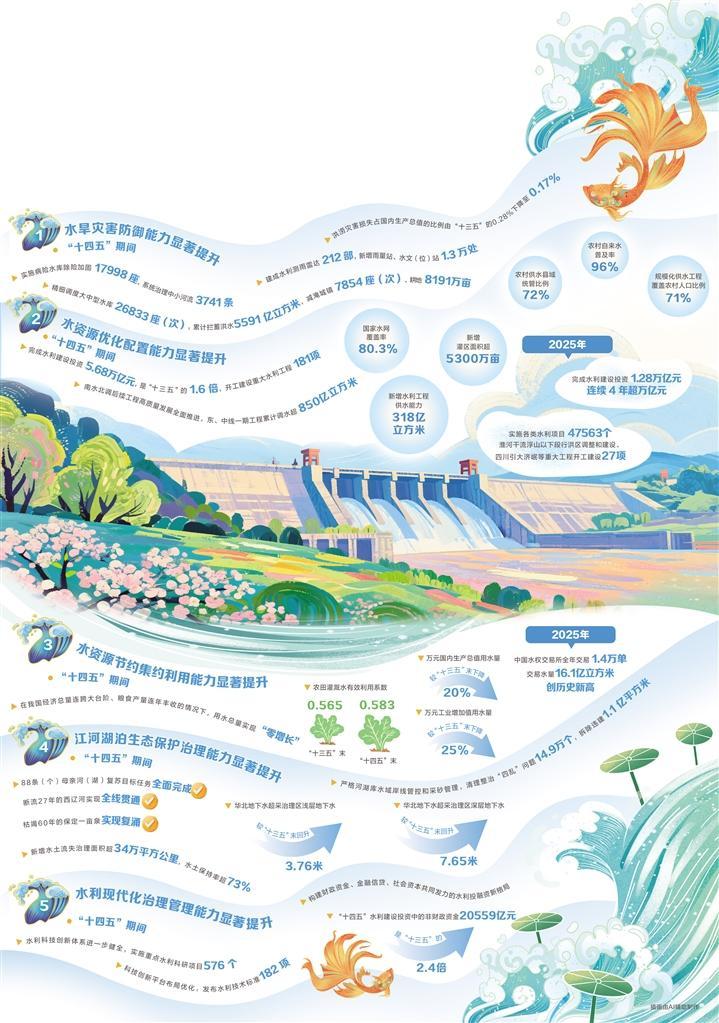
Core Viewpoint - The article highlights significant advancements in water resource management and infrastructure development in China, emphasizing the importance of water security for economic and social stability, particularly as the country approaches the "14th Five-Year Plan" completion and prepares for the "15th Five-Year Plan" [2]. Group 1: Water Resource Management - The proportion of water-related losses to GDP has decreased from 0.28% during the "13th Five-Year Plan" [1] - The capacity for optimized water resource allocation has significantly improved, with a target of 80.3% completion by 2025 [1] - The effective utilization coefficient for farmland irrigation has reached a historical high of 0.583 [1] Group 2: Infrastructure Investment - Water infrastructure investment exceeded 1 trillion yuan, marking a continuous high level of investment over four years [2] - A total of 47,563 water projects have been implemented, enhancing water supply capabilities [1] - Non-fiscal funding for water infrastructure construction reached 205.59 billion yuan during the "13th Five-Year Plan" [1] Group 3: Ecological Protection and Governance - The ecological protection and governance of rivers and lakes have improved, with 88 river and lake restoration tasks completed by the end of the "13th Five-Year Plan" [1] - A new round of comprehensive governance for groundwater over-extraction has been initiated, focusing on sustainable water management [3] - The article emphasizes the need for a modernized flood and drought disaster prevention system, including the construction of hydrological monitoring stations and flood forecasting models [3]

浙江水利工作会议召开 继续推进水利现代化省域先行
Xin Hua Wang· 2026-01-31 01:55
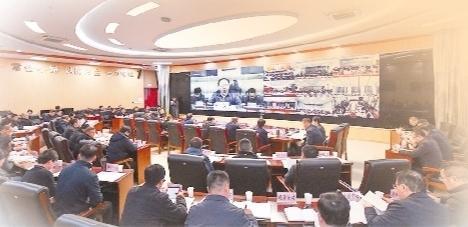
Group 1 - The core focus of the provincial water conservancy work meeting is to advance water conservancy modernization as a leading initiative by 2026, with an emphasis on six key areas including disaster prevention and modern water network construction, aiming for an annual investment of 80 billion yuan in water conservancy [1][2] - The meeting highlighted the importance of disaster prevention capabilities for the safety of people's lives and property, advocating for proactive measures in flood control and the establishment of a unified provincial flood prevention and typhoon response system [1] - The construction of a modern water network is identified as a crucial strategy for expanding domestic demand and effective investment, with plans to accelerate the construction of 151 major projects including the Jingling Reservoir and to enhance collaboration with financial institutions for project funding [1] Group 2 - To support high-quality urban-rural integration development, the province will focus on the construction of "happy rivers and lakes" by 2026, implementing a river and lake chief system and conducting evaluations of the effectiveness of these initiatives [2] - The overall requirements for the province's 14th Five-Year Plan in water conservancy include ensuring water security, optimizing water resources, improving water ecology, and promoting water culture, with a strong emphasis on modern water networks and happy rivers and lakes to bridge urban-rural disparities [2]
水利部举办离退休干部水利工作情况通报会暨迎新春团拜会
Shui Li Bu Wang Zhan· 2026-01-28 12:25
Core Viewpoint - The Ministry of Water Resources held a meeting to report on the work of retired cadres and to celebrate the upcoming Spring Festival, highlighting significant achievements in water management and outlining future strategic tasks for the "15th Five-Year Plan" period [1][2]. Group 1: Achievements and Future Plans - The water management system has made remarkable progress in high-quality development and ensuring water security under the leadership of the central government, adhering to the principles set forth by General Secretary Xi Jinping [1]. - The overall requirements and strategic tasks for the "15th Five-Year Plan" period were introduced, along with key work priorities for 2026 [1]. Group 2: Contributions of Retired Cadres - Retired cadres are recognized as pioneers and foundational figures in the water resources sector, having made significant contributions to its reform and development [2]. - The Ministry is committed to implementing the important directives regarding the work of retired cadres, ensuring they share in the benefits of development and enjoy a happy retirement [2].
凝心聚力担使命 砥砺奋进开新局
Xin Lang Cai Jing· 2026-01-22 22:13
Core Viewpoint - The 2026 Provincial Water Conservancy Work Conference emphasizes the importance of the "14th Five-Year Plan" completion and the initiation of the "15th Five-Year Plan," aiming to provide robust water conservancy support for the modernization of Guizhou [6][8]. Summary by Relevant Sections Achievements in the "14th Five-Year Plan" - The water conservancy system in Guizhou has made significant progress, addressing long-standing issues and enhancing water security capabilities [7]. - Key accomplishments include: - Initiation of three large and 45 medium and small-scale water source projects [7]. - Approval of two large reservoirs annually for two consecutive years [7]. - Construction of 432 key water source projects and completion of 40 tobacco aid projects [7]. - Development of 2806 kilometers of water supply networks, increasing design supply capacity by 2.9 billion cubic meters [7]. - Establishment of 13 flood control reservoirs and management of over 4200 kilometers of river channels [7]. - Successful flood management, with a reduction in disaster loss rates from 0.4% to 0.16% [7]. - Significant reductions in water usage per unit of GDP and industrial output value by 26% and 54%, respectively, compared to the end of the "13th Five-Year Plan" [7]. - Coverage of rural water supply projects increased from 20% to over 50% [7]. Goals for the "15th Five-Year Plan" - The "15th Five-Year Plan" is positioned as a critical period for achieving water conservancy modernization [8]. - The conference outlines seven strategic tasks: 1. Establishing a flood disaster prevention system [9]. 2. Promoting coordinated construction of water networks at provincial, municipal, and county levels [10]. 3. Enhancing civil water conservancy projects to address rural water supply deficiencies [11]. 4. Implementing strict water resource management and conservation measures [12]. 5. Integrating ecological protection and governance of rivers and lakes [13]. 6. Improving the legal and regulatory framework for water conservancy [14]. 7. Reforming management systems to stimulate internal development [15]. Focus for 2026 - The year 2026 is designated as the "Preliminary Work Year" for the water conservancy system, focusing on investment and planning for major projects [16]. - Key initiatives include: - Strengthening flood and drought disaster prevention capabilities [17]. - Accelerating the construction of modern water network projects [17]. - Enhancing the management of water resources and ecological protection [17]. - Promoting innovation in water conservancy reforms and financing mechanisms [17].
2025年湖北落实水利投资约612.5亿元
Zhong Guo Xin Wen Wang· 2026-01-17 13:14
Core Viewpoint - In 2025, Hubei province plans to invest approximately 61.25 billion yuan in water conservancy, accelerating the construction of the "Jingchu Anlan" water network and achieving significant progress in major strategic and foundational projects [1] Investment and Development - Hubei's water conservancy investment during the 14th Five-Year Plan period reached 310 billion yuan, which is 1.7 times that of the 13th Five-Year Plan period [1] - The province aims to significantly improve the ecological environment of rivers and lakes, enhance rural water supply conditions, and strengthen food security through irrigation construction by 2025 [1] Reforms and Innovations - Key reforms in water conservancy are beginning to show results, with Hubei leading the nation in exploring water rights trading and realizing the value of ecological products [1] - The province is focused on building a modern water network system at a higher level, enhancing disaster prevention capabilities, and promoting the governance and protection of river and lake systems [1] Future Goals - Hubei aims to develop a green water economy to stimulate new momentum in the water conservancy industry and accelerate the construction of a digital twin water conservancy system to empower modernization through technology [1]
水利建设投资连续4年超万亿,水利部明确“十五五”战略任务
Di Yi Cai Jing· 2026-01-07 02:53
Group 1 - The core viewpoint of the article emphasizes the significant investment in water conservancy projects in China, with a total investment of 1.2848 trillion yuan in 2025, marking the fourth consecutive year of exceeding 1 trillion yuan in water conservancy investment [2] - In 2025, a total of 47,563 water conservancy projects will be implemented, creating 3.15 million jobs, highlighting the importance of major water conservancy projects for economic growth and employment [2] - The National Water Work Conference held in early January 2026 outlined the goals for the 14th Five-Year Plan and planned the key tasks for the 15th Five-Year Plan, aiming for high-quality completion of tasks and significant improvements in various water management capabilities [2][3] Group 2 - The 15th Five-Year Plan period is identified as a critical time for achieving basic modernization in water conservancy, with a focus on high-quality development and water security [3] - The Minister of Water Resources stated that six strategic tasks will be implemented to ensure significant progress in modernizing disaster prevention systems, constructing modern water networks, and enhancing water resource management [3] - The State Council's meeting in December 2025 highlighted the gradual improvement of the national water network, which is crucial for optimizing water resource allocation and enhancing flood prevention capabilities [3][4] Group 3 - The construction of the national water network is progressing, with key infrastructure being developed to address water-related challenges and enhance ecological protection [4] - The government is encouraged to innovate financing mechanisms to attract investments from state-owned enterprises and private capital for water conservancy projects [4] - Emphasis is placed on quality control throughout the project lifecycle to ensure the successful execution of water conservancy initiatives [4]
2026年全国水利工作会议:“十五五”实施6项战略任务
Zhong Guo Xin Wen Wang· 2026-01-06 14:06
Core Insights - The national water conservancy work conference held in Beijing outlined the strategic tasks for the "15th Five-Year Plan" focusing on water resource management and disaster prevention [1][2]. Group 1: Strategic Tasks - Six strategic tasks were identified to achieve decisive progress in water management and disaster prevention capabilities [2]. - The first task emphasizes modernizing the flood disaster prevention system, including improving flood control engineering and monitoring systems [2]. - The second task focuses on constructing a modern water network that is safe, efficient, and environmentally friendly [2]. - The third task aims to establish a comprehensive protection and governance system for rivers, ensuring ecological balance and human well-being [2]. - The fourth task involves developing a digital twin water management system to enhance monitoring and simulation capabilities [2]. - The fifth task is to strengthen the water resource conservation and utilization system, implementing strict water-saving measures across various sectors [2]. - The sixth task highlights the need to enhance the legal and institutional framework for water management, ensuring compliance with national reform tasks [2]. Group 2: 2026 Work Focus - The year 2026 marks the beginning of the "15th Five-Year Plan," with a focus on aligning future water development goals with immediate work priorities [3]. - Key areas of focus include building a modern disaster prevention system, advancing the modern water network, and enhancing agricultural water infrastructure [3]. - The conference emphasized the importance of promoting water-saving policies, driving technological innovation in water management, and reinforcing legal frameworks [3].
2026年全国水利工作会议在京召开
Shui Li Bu Wang Zhan· 2026-01-06 11:07
Core Insights - The national water conservancy work conference held in Beijing from January 5 to 6 emphasized the implementation of Xi Jinping's water management philosophy and the planning of water development goals for the 15th Five-Year Plan [1][2][3] Group 1: Achievements and Goals - The conference highlighted significant improvements in water disaster prevention, resource conservation, ecological protection, and the overall quality of water management systems during the 14th Five-Year Plan [2][3] - The upcoming 15th Five-Year Plan aims to achieve a modernized water management system, focusing on high-quality development and ensuring water security [3][4] Group 2: Strategic Tasks - Six strategic tasks were outlined for the 15th Five-Year Plan, including modernizing disaster prevention systems, constructing a modern water network, and establishing a digital twin water management system [4][5] - Emphasis was placed on the need for a comprehensive approach to water resource management, integrating government and market mechanisms [4] Group 3: Future Directions - The year 2026 marks the beginning of the 15th Five-Year Plan, with a focus on aligning future water development goals and enhancing various aspects of water management [5] - The conference also recognized outstanding provincial water administrative departments for their significant contributions to water management in 2025 [5]
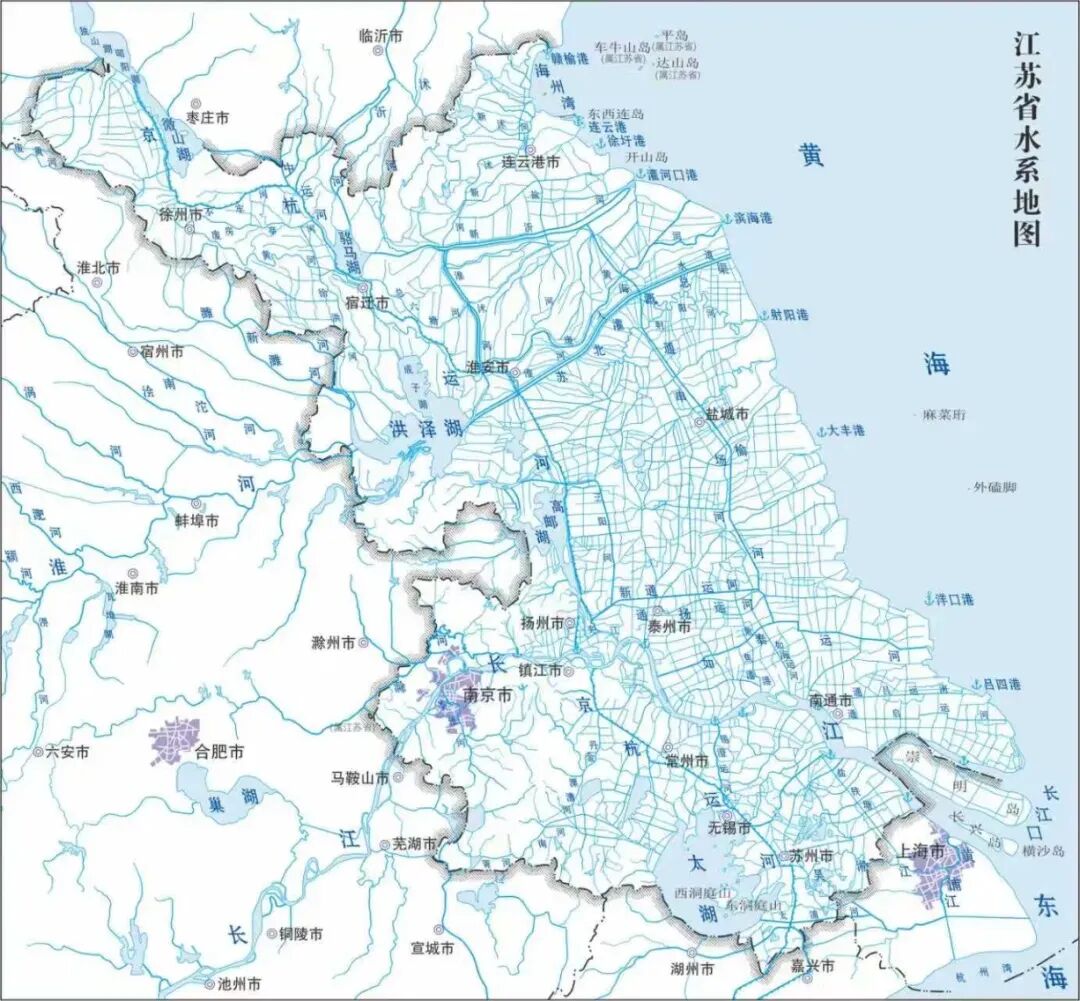
一个“缺水”省份,是如何逆袭成为水利大省的?
3 6 Ke· 2025-10-11 07:29
Core Insights - Jiangsu is transforming from a "water-scarce" province to a modern water management powerhouse, despite its limited local water resources, which are only one-fifth of the national average per capita [1][4][23] - The province's success is attributed to stringent water management policies initiated in 2012, which set a rigorous standard for water resource modernization [4][8][20] Group 1: Water Resource Management - Jiangsu's water resource management is characterized by a strict regulatory framework established in 2012, which includes 22 quantifiable and enforceable indicators for water management [4][8] - The province has implemented significant reforms, resulting in the closure or rectification of over 20,000 polluting enterprises in the Taihu Lake basin alone [8][12] - The shift towards high-tech industries has replaced polluting sectors, with cities like Changzhou seeing industrial output surpassing 1.7 trillion yuan in 2024, driven largely by the renewable energy sector [10][12] Group 2: Technological Advancements - The South-to-North Water Diversion Project has catalyzed technological advancements in Jiangsu, particularly in pump station efficiency, which improved from 65% to over 80%, saving billions in energy costs annually [16][19] - Jiangsu's research institutions, particularly Hohai University, played a crucial role in overcoming technical challenges, leading to a shift from reliance on imported technology to domestic innovation [17][19] Group 3: Sustainable Development Practices - The modernization of water management in Jiangsu is rooted in sustainable development principles, exemplified by the revitalization of polluted rivers like the Jiulong River, which now serves as a community resource [20][22] - The integration of economic and ecological considerations in water management reflects the state's commitment to a balanced approach, ensuring community involvement in environmental stewardship [22][24] - Jiangsu's experience serves as a model for other provinces, emphasizing the importance of policy enforcement, technological innovation, and community engagement in achieving water resource modernization [22][23]