
水资源保护与利用

Search documents
甘孜州持续探索水生态价值转化路径 好水润高原
Si Chuan Ri Bao· 2025-12-22 02:58
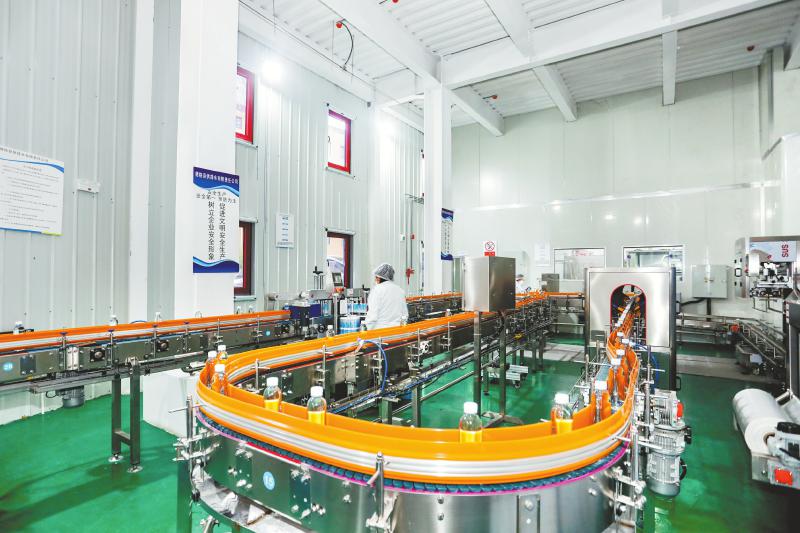
Group 1 - The core viewpoint of the article highlights the development and utilization of water resources in Ganzi Prefecture, emphasizing the establishment of a modern bottled water factory and the overall economic benefits derived from water resource management [3][10]. - The Sichuan Water Development Group has invested 25 million yuan in a bottled water factory in Dege County, which has produced over 2 million yuan in sales since its launch in June [3][10]. - Ganzi Prefecture has a total water resource volume of 64.142 billion cubic meters, ranking first in the province, and has implemented various management measures to enhance water resource utilization [3][4]. Group 2 - The use of drones for river and lake patrols has improved the monitoring of water bodies in Ganzi Prefecture, allowing for the identification and rectification of hidden issues [5][6]. - Ganzi has established a four-level river and lake management system and has mobilized local communities to participate in water management, resulting in the cleanup of over 6,000 tons of river and lake waste this year [5][6]. - The region has initiated immediate rectification measures for water-related issues and has implemented a reward system for reporting ecological problems, with cash rewards up to 50,000 yuan [6][7]. Group 3 - Ganzi Prefecture is expanding its hydropower capacity, with the recent approval of a new hydropower station, bringing the total installed capacity to over 38 million kilowatts, which supports local industrial development [8][9]. - The region has developed several tourist attractions around water resources, contributing to significant tourism revenue, with over 1.8 billion visitors and 200 billion yuan in tourism income during the 14th Five-Year Plan period [9][10]. - Ganzi has cultivated several representative bottled water brands and is working to enhance the overall image and recognition of its water products through a regional public brand initiative [10]. Group 4 - Ganzi Prefecture has engaged in regional water rights trading, successfully transferring 1.8 million cubic meters of water rights to Inner Mongolia, marking a significant step in optimizing resource allocation [11][12]. - The water rights trading includes various categories, such as regional water rights and irrigation water rights, with ongoing efforts to reform water pricing and establish measurement facilities [12]. - Future plans include advancing irrigation water rights trading and exploring various mechanisms for water rights management, including leasing and trust arrangements [12].

《北京市永定河保护条例》全文发布,2026年1月1日起施行
Bei Jing Ri Bao Ke Hu Duan· 2025-12-02 13:58
Core Points - The regulation aims to ensure flood safety, water resource security, and ecological safety in the Yongding River basin, promoting harmonious coexistence between humans and nature while preserving cultural heritage [1][2][3] Chapter Summaries Chapter 1: General Principles - The Yongding River basin includes the main river, tributaries, and lakes within specific districts of Beijing [1] - The protection of the Yongding River must adhere to the leadership of the Communist Party and align with national strategies for coordinated development [1] Chapter 2: Planning and Control - Local governments are responsible for integrating Yongding River protection into economic and social development plans, with necessary funding included in the budget [2][6] - A hierarchical responsibility system for river protection is established, with water management departments overseeing disaster prevention and ecological protection [3][4] Chapter 3: Flood Safety - Local governments must enhance flood prevention coordination and improve monitoring and early warning systems [9][10] - Construction activities in the river basin must comply with flood prevention standards to ensure safety [19][20] Chapter 4: Water Resource Protection and Utilization - The regulation emphasizes strict control over water resource usage and the establishment of water source protection zones [17][18] - Regular assessments of water quality in reservoirs are mandated to ensure safe drinking water [19][20] Chapter 5: Ecological Protection and Restoration - The regulation promotes integrated protection of the river basin's natural resources, focusing on pollution prevention and ecological restoration [37][38] - New construction projects that discharge pollutants into water bodies must implement pollution control measures [39][40] Chapter 6: Cultural Protection and Inheritance - Local governments are tasked with protecting and utilizing historical and cultural resources in the Yongding River basin [47][48] - Efforts to promote red culture and historical heritage are encouraged [50][51] Chapter 7: Regional Coordination and Basin Cooperation - The regulation calls for enhanced communication and collaboration with upstream and downstream regions for effective river protection [55][56] - A compensation mechanism for ecological protection is proposed to share costs and benefits among regions [61][62] Chapter 8: Legal Responsibilities - Violations of the regulation will be addressed by relevant authorities according to existing laws [64][65] Chapter 9: Supplementary Provisions - The regulation will take effect on January 1, 2026 [69]