
文化保护传承

Search documents
赵一德在宝鸡市调研时强调发挥特色优势 锚定主攻方向 推动内涵式发展高质量发展展现新气象
Shan Xi Ri Bao· 2026-02-13 00:51
Group 1 - The provincial secretary emphasized the importance of integrating and serving the regional development strategy of "dual-polar drive, multi-point support, and three-region coordination" to promote high-quality development in Shaanxi [1] - The Baoji Ideal Co-Creation Cultural Technology Industrial Park is a platform for cultural, commercial, and tourism integration, highlighting the need for revitalizing industrial heritage while enhancing cultural protection and urban quality [1] - The development of rural industries should leverage local resources, enhance brand recognition, and extend production chains to promote comprehensive rural revitalization [2] Group 2 - The provincial secretary highlighted the need for local townships to focus on integrating primary, secondary, and tertiary industries, revitalizing idle resources, and developing characteristic economies to better achieve economic growth and improve living conditions [3] - Emphasis was placed on the importance of creating a favorable environment for the high-quality development of the private economy through policy support and resource integration [4] - The secretary acknowledged the achievements in Baoji's economic and social development and called for a stronger implementation of central government decisions to enhance services for the public and enterprises [4]
省政协十三届四次会议 举行第二次全体会议
Xin Lang Cai Jing· 2026-01-28 19:57
Group 1 - The second plenary session of the 13th Provincial Political Consultative Conference was held, focusing on high-quality development and modernization [1] - Various committee members presented suggestions on cultural preservation, tourism integration, and economic development strategies [2][3] - Specific recommendations included enhancing cultural services, optimizing talent training systems, and improving the business environment in Guizhou [2][3] Group 2 - Suggestions were made to strengthen brand development and infrastructure for low-altitude economy, aiming to establish Guizhou as a new benchmark in this sector [2] - Emphasis was placed on the development of a multi-faceted childcare service system to support population growth and high-quality development [2] - Recommendations also included fostering cooperation between universities and enhancing management levels to create a positive economic ecosystem [3]
京津冀首次就流域保护开展协同立法
Xin Lang Cai Jing· 2025-12-22 18:17
Group 1 - The core viewpoint of the article is the collaborative legislative efforts by Hebei, Beijing, and Tianjin to protect the Yongding River, marking the first coordinated legislation for watershed protection in the Beijing-Tianjin-Hebei region, with the regulations set to take effect on January 1, 2026 [3] - The Yongding River is a significant tributary of the Haihe River, with a total watershed area of 47,000 square kilometers, of which 48.3% is in the Beijing-Tianjin-Hebei region [3] - The article highlights the ecological challenges faced by the Yongding River due to increased population and industrial water usage, leading to a historical period of drought, which was addressed by the river achieving full flow for the first time in 26 years in 2021 [3] Group 2 - The three local regulations focus on the goals of a "flowing river, green river, clean river, and safe river," emphasizing unified planning, governance, scheduling, and management across the entire watershed [3] - The regulations aim to ensure flood safety, water resource security, and ecological safety while promoting cultural heritage protection [3] - Specific provisions include enhanced collaboration in policy-making, flood control, ecological replenishment, pollution discharge, ecological protection compensation, joint monitoring, information sharing, and law enforcement cooperation [3] Group 3 - The regulations outline comprehensive flood safety requirements, including the establishment of a disaster monitoring and early warning mechanism and the prohibition of certain activities in the watershed [3] - The article emphasizes the importance of water resource protection and efficient utilization, including the implementation of a rigid water resource constraint system and the promotion of ecological replenishment [3] - A horizontal ecological protection compensation mechanism is to be established among the upstream and downstream regions of the Yongding River, with increased support for ecological protection areas [3] Group 4 - The regulations also include measures for cultural resource investigation and the protection of water cultural heritage, aiming to promote cultural tourism and integrate it with agriculture [3]

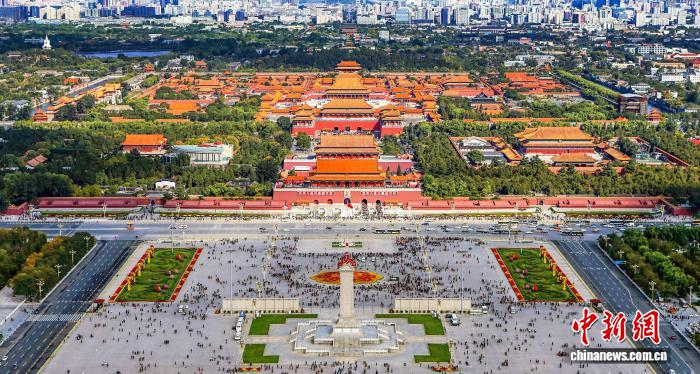
北京东城加强文化保护传承 做好中轴线申遗成功“后半篇文章”
Zhong Guo Xin Wen Wang· 2025-12-18 02:03
Core Viewpoint - Beijing's Dongcheng District is intensifying efforts in cultural preservation and transmission, particularly following the successful application for World Heritage status for the Central Axis, which has become the district's fourth World Cultural Heritage site, maintaining the highest number in the city and ranking among the top in the country [1]. Group 1: Cultural Heritage and Activities - Dongcheng District has renovated and restored 12 heritage sites and established a scenic corridor spanning 7.8 kilometers from the Bell and Drum Towers to Yongdingmen, enhancing the cultural landscape [1]. - The district has launched 15 cultural exploration routes and organized a series of events, including the Yongdingmen Light Show and the "Singing the Central Axis" activities, attracting 25 million participants both online and offline [1]. - The district has made significant progress in the restoration of central state-owned cultural relics, with projects like the Army and Navy Departments and Dazhi Temple advancing well, and the signing of contracts for the Fuwang Mansion project reaching 100% [2]. Group 2: Public Cultural Engagement - Dongcheng District has hosted nearly 30,000 public cultural events, enhancing community engagement through activities like the Temple of Earth and Longtan Spring Festival cultural fairs, and the "I and the Temple of Earth" Beijing Book Fair [3]. - The district boasts 40 performance venues, with seven selected as the first batch of city-level performing arts spaces, leading the city in quantity [3]. - The district has achieved a per capita public cultural service facility area of 2.9 square meters, with the number of physical bookstores per ten thousand people ranking first in the city [3]. Group 3: Cultural Industry Development - The cultural industry in Dongcheng District has generated over 150 billion yuan in revenue, with four enterprises recognized as national cultural industry demonstration bases, and 20 enterprises listed among the "Top 30 Cultural Enterprises in the Country," the highest in the city [6]. - The district is enhancing cooperation between culture and finance, with the establishment of cultural industry parks like Luming Warehouse and the development of "Cultural + Technology" scenarios, which have become popular destinations [6]. - The district's cultural soft power is increasingly transforming into hard support for development, with significant cultural projects signed worth 340 million yuan [6]. Group 4: Urban Renewal Initiatives - Dongcheng District is actively exploring urban renewal through various projects, including the restoration of areas around the Bell and Drum Towers and the Forbidden City, benefiting over 5,000 households [7]. - The district has completed the renovation of 293 old residential communities and implemented the removal of 33 dilapidated buildings, with the renovation of the Guangming Building No. 17 serving as a model for urban renewal [7]. - The district aims to create a modern industrial system with core area characteristics, focusing on high-quality development and enhancing the quality of life for residents [7].
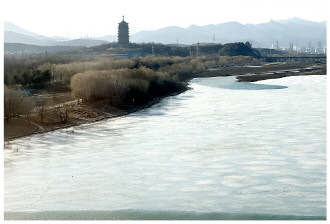
《北京市永定河保护条例》全文发布,2026年1月1日起施行
Bei Jing Ri Bao Ke Hu Duan· 2025-12-02 13:58
Core Points - The regulation aims to ensure flood safety, water resource security, and ecological safety in the Yongding River basin, promoting harmonious coexistence between humans and nature while preserving cultural heritage [1][2][3] Chapter Summaries Chapter 1: General Principles - The Yongding River basin includes the main river, tributaries, and lakes within specific districts of Beijing [1] - The protection of the Yongding River must adhere to the leadership of the Communist Party and align with national strategies for coordinated development [1] Chapter 2: Planning and Control - Local governments are responsible for integrating Yongding River protection into economic and social development plans, with necessary funding included in the budget [2][6] - A hierarchical responsibility system for river protection is established, with water management departments overseeing disaster prevention and ecological protection [3][4] Chapter 3: Flood Safety - Local governments must enhance flood prevention coordination and improve monitoring and early warning systems [9][10] - Construction activities in the river basin must comply with flood prevention standards to ensure safety [19][20] Chapter 4: Water Resource Protection and Utilization - The regulation emphasizes strict control over water resource usage and the establishment of water source protection zones [17][18] - Regular assessments of water quality in reservoirs are mandated to ensure safe drinking water [19][20] Chapter 5: Ecological Protection and Restoration - The regulation promotes integrated protection of the river basin's natural resources, focusing on pollution prevention and ecological restoration [37][38] - New construction projects that discharge pollutants into water bodies must implement pollution control measures [39][40] Chapter 6: Cultural Protection and Inheritance - Local governments are tasked with protecting and utilizing historical and cultural resources in the Yongding River basin [47][48] - Efforts to promote red culture and historical heritage are encouraged [50][51] Chapter 7: Regional Coordination and Basin Cooperation - The regulation calls for enhanced communication and collaboration with upstream and downstream regions for effective river protection [55][56] - A compensation mechanism for ecological protection is proposed to share costs and benefits among regions [61][62] Chapter 8: Legal Responsibilities - Violations of the regulation will be addressed by relevant authorities according to existing laws [64][65] Chapter 9: Supplementary Provisions - The regulation will take effect on January 1, 2026 [69]
“感知幸福中国行”参访团进宁夏,境内外网红大V解读幸福密码
Xin Jing Bao· 2025-08-04 07:48
Group 1 - Ningxia's unique industrial development is a solid foundation for the happiness of its people, with significant growth in six key agricultural sectors: wine, goji berries, milk, beef cattle, Tan sheep, and cool-season vegetables [2] - The area of wine grapes planted in the Helan Mountain region reaches 600,000 acres, accounting for approximately 40% of the national planting area, producing 140 million bottles of wine annually, making it one of the world's "golden wine regions" [2] - The comprehensive output value of Ningxia goji berries has surpassed 20.4 billion yuan, and the breeding volume of Tan sheep in Yanchi County has reached 3.3 million, with the brand value of "Yanchi Tan Sheep" exceeding 13 billion yuan [2] Group 2 - Ningxia's historical and cultural heritage, along with modern development, is a crucial part of the happiness narrative, highlighted by the inclusion of "Xixia Tombs" in the UNESCO World Heritage List, increasing China's total to 60 [3] - Ningxia is a national hub for new internet exchange centers and integrated computing networks, attracting renowned data centers like Amazon and Meiliyun, indicating a thriving digital information industry [3] - The region has established the world's largest single-set coal-to-oil project with a capacity of 4 million tons, and its differentiated spandex and para-aramid projects have achieved world-leading technology [3]