水运强省

Search documents
通行船舶吨位提至10倍,大宗物资直达上海国际航运中心……锡溧漕河无锡段航道工程通过竣工验收
Yang Zi Wan Bao Wang· 2025-11-29 06:59
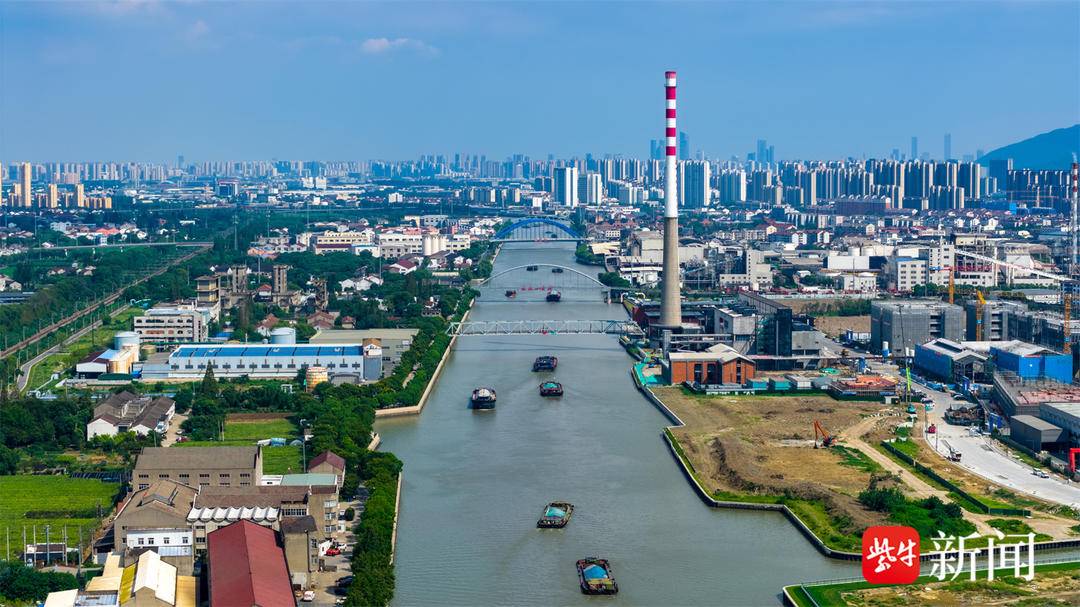
Core Insights - The upgrade of the Xili Caogang River in Wuxi has significantly enhanced the shipping capacity, allowing 1,000-ton vessels to navigate freely, which is a substantial improvement from the previous capacity of only 100-ton vessels [1][3][4] Group 1: Infrastructure Development - The Xili Caogang River's Wuxi section has undergone a comprehensive upgrade to a Class III waterway standard, covering a total length of approximately 27.446 kilometers [3][4] - The project is part of Jiangsu's broader initiative to establish a high-grade waterway network, contributing to the "Double Link, Double Improvement" strategy [1][4] Group 2: Economic Impact - In 2024, the Wuxi section is expected to handle 181,700 vessels with an average tonnage of 675 tons, resulting in a total cargo throughput of 123 million tons and 70 million tons of goods [6] - The upgrade is projected to save transportation costs by approximately 30% for companies like Jiangsu Guoxin Energy Co., which operates five 500-ton berths and has an annual cargo volume of around 1.5 million tons [8] Group 3: Regional Connectivity - The upgraded waterway enhances the efficiency of container transport within the Yangtze River Economic Belt and coastal ports, facilitating the direct transport of bulk materials to the Shanghai International Shipping Center [6][8] - The Xili Caogang River is a crucial segment of the "Wuxi Three Port Linkage" strategy, which connects Yixing Port, Jiangyin Port, and Xin'an Port, thereby improving regional logistics [4][6] Group 4: Future Prospects - The "14th Five-Year Plan" period will see the initiation of further upgrades to the second-class waterways, reinforcing the role of water transport as a strategic channel for Jiangsu's development [8] - The continuous improvement of the Xili Caogang River's conditions has led to a significant increase in container throughput, with 82,100 TEUs recorded in the first ten months of 2023, nearly ten times the total throughput of 2008 [9]

湖北边检总站护航荆州港盐卡港区直航日韩国际航线成功首航
Huan Qiu Wang· 2025-08-26 11:43
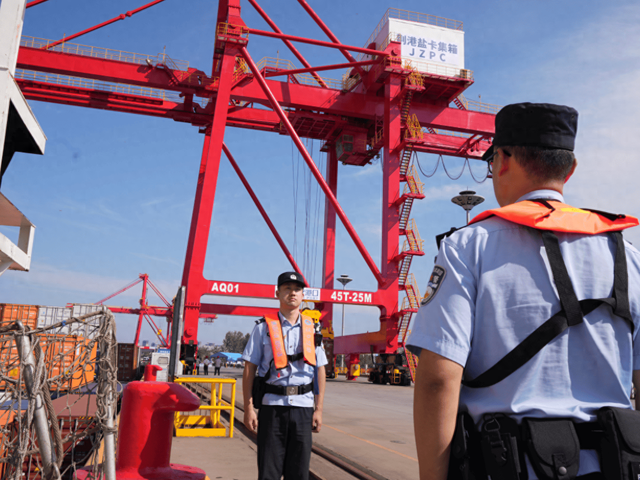
Core Points - The opening of the direct international shipping route from Jingzhou Port to Japan and South Korea marks a significant advancement in Hubei's "Strong Water Transport Province" strategy [1][3] - The new route is expected to reduce transportation time for foreign trade exports by 4 to 6 days and save logistics costs by 20% [3] - Jingzhou is now the third city in Hubei Province to have an open water transport port, enhancing its role as a core hub in the Yangtze River Economic Belt [5] Summary by Sections - **International Shipping Route**: The first international direct shipping line from Jingzhou Port to Busan, South Korea, officially launched on August 25 [3] - **Operational Enhancements**: The Hubei Border Inspection Station has established a dedicated team to ensure 24/7 support for the new route, implementing customized services for vessels and streamlining customs procedures [5] - **Strategic Importance**: The opening of the shipping route is a milestone for Hubei's water transport strategy and aims to inject new momentum into the high-quality development of the Yangtze River Economic Belt [5]
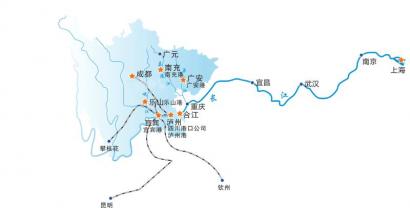
四川港口公司正式揭牌 五港变“一港” 推动川货通江达海
Si Chuan Ri Bao· 2025-05-23 10:45
Core Viewpoint - Sichuan Port Company has officially launched, aiming to transform the province into a strong water transport hub by integrating five ports into one cohesive entity, enhancing logistics efficiency and reducing transportation costs [1][3][4]. Group 1: Company Overview - Sichuan Port Company is formed by integrating five ports: Luzhou, Yibin, Leshan, Nanchong, and Guang'an, marking a shift from a "one city, one port" model to a "one province, one port" strategy [1][5]. - The company reported a revenue of 6.189 billion yuan in Q1, a year-on-year increase of 12.24%, with a total cargo throughput of 1.515 million tons, up 47.56% [3][5]. Group 2: Operational Developments - The company has established over 50 intermodal transport routes, creating a "dry and branch linkage, direct river-sea" transport network for door-to-door service [3][7]. - The integration of ports allows for a more coordinated approach to logistics, overcoming previous challenges of independent operations and enhancing overall efficiency [4][5]. Group 3: Strategic Initiatives - Sichuan is implementing the "Smooth a River" shipping revitalization action plan, aiming to enhance water transport capabilities and increase the share of waterway freight in the overall logistics system [8][9]. - The province plans to develop a modern port system with 18 ports, focusing on two core ports (Luzhou and Yibin) and four regional ports (Leshan, Guang'an, Nanchong, and Guangyuan) [8][9]. Group 4: Future Prospects - The company aims to further integrate Guangyuan Port into its operations, enhancing the interconnectedness of the port system and promoting a unified trade and logistics framework [9]. - The focus will be on expanding trade in bulk commodities such as grain, auto parts, and minerals, leveraging the advantages of the port logistics channels [9].