永久收入假说

Search documents
美股股市热闹飘红!老百姓消费信心却疲软,反常景象藏何“大雷”
Sou Hu Cai Jing· 2025-10-06 18:32
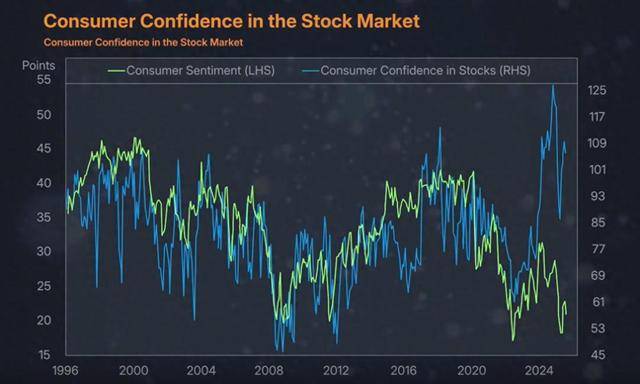
Group 1 - The stock market is performing well, creating a stark contrast with the declining consumer confidence among the general public [2][6] - The Shiller P/E ratio has surged, indicating a significant increase in U.S. stock market valuations, while the University of Michigan Consumer Sentiment Index has dropped to levels not seen since the 2008 financial crisis [6][9] - Economic experts have previously discussed the "permanent income hypothesis," suggesting that people's spending and saving behaviors are influenced more by future income expectations than current financial situations [7][8] Group 2 - Despite a slow growth in real income for ordinary Americans since the 2008 financial crisis, the stock market has seen substantial gains, leading to a disconnect between the stock market and the real economy [9][11] - The personal savings rate in the U.S. has significantly decreased from an average of 13% in the 1980s to around 4-5% in recent years, with a temporary spike during the pandemic [14] - Corporate profits have been rising, and shareholders tend to reinvest their earnings rather than spend them on everyday goods, contributing to rising asset prices in real estate, gold, and stocks [15][17] Group 3 - The disparity between housing prices and income has widened, with the median home price projected to reach $417,000 by 2025, making homeownership increasingly difficult for average Americans [20] - Housing costs account for a significant portion of living expenses, approximately 36% in inflation statistics, limiting the ability of ordinary people to invest in appreciating assets [21][22] - The widening wealth gap is evident, with only 25% of Americans believing they can improve their living standards, down from 75% in 2000 [24] Group 4 - The current economic situation bears resemblance to the pre-Great Depression era, where a booming stock market led to increased wealth concentration and eventual market collapse [26] - Historical tax policies, such as the corporate income tax rate increases in the 1910s, played a role in addressing wealth inequality, but recent tax cuts have contributed to wealth concentration among the top earners [27] - Middle-class consumers are increasingly feeling financial pressure, as evidenced by comments from CEOs in various sectors, indicating a shift in spending behavior among this demographic [28][29]