汽车减税目录

Search documents
崔东树:政策引导与市场驱动 预计2026年新能源乘用车将实现高质量发展
智通财经网· 2026-02-10 09:19
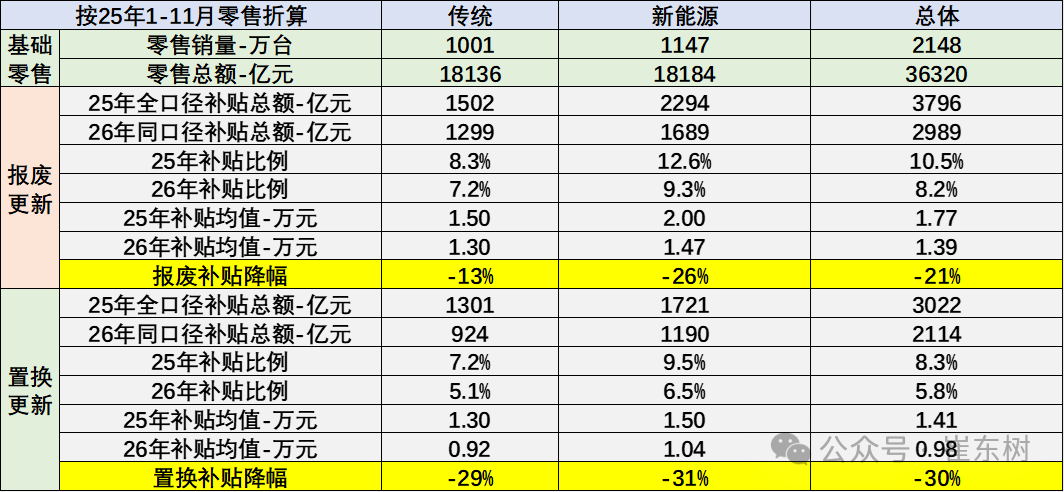
Core Insights - The 2026 vehicle replacement policy is a significant boost for the automotive market, promoting high-end development and enhancing fiscal efficiency through a shift from fixed subsidies to tiered subsidies based on vehicle value [1][3]. Group 1: Policy Impact - The new policy aims to stabilize large-scale consumption and release replacement potential, contributing to steady growth while promoting green and low-carbon initiatives [1][2]. - The average subsidy for passenger vehicle replacements is expected to decrease by approximately 30%, while the average subsidy for scrapping is projected to decline by about 20% [2][3]. - The transition to a tiered subsidy system is designed to improve fiscal efficiency, ensuring better allocation of funds and reducing waste from low-priced vehicles benefiting from subsidies [3][4]. Group 2: Market Trends - In 2025, over 11.5 million vehicles benefited from the replacement subsidy, with nearly 60% being new energy vehicles, indicating a strong market shift towards electrification [3]. - The commercial vehicle sector is expected to perform better in 2026 due to the continuity of favorable policies, while the passenger vehicle segment faces a decline in the number of new models [5][6]. - The number of new passenger vehicle models is decreasing from 92 in 2024 to 83 in 2026, reflecting a trend towards higher-end and larger vehicles [5][6]. Group 3: Product Development - New energy passenger vehicles are increasingly characterized by larger sizes and improved range, with a notable absence of small electric vehicles under 1090 kg in recent releases [8][10]. - The introduction of long-range electric vehicles, particularly those exceeding 700 km, is becoming more common, indicating a shift towards higher performance in the electric vehicle market [10][14]. - The energy density and efficiency of new energy vehicles are improving, with some models achieving a power consumption of around 10 kWh per 100 km [12][15]. Group 4: Tax and Subsidy Structure - The tax exemption directory for commercial vehicles shows growth in new models, particularly in trucks and buses, compared to the previous year [4][6]. - The structure of the subsidy system is evolving to favor higher-priced vehicles, ensuring that funds are allocated to more valuable replacements [3][4]. Group 5: Competitive Landscape - The competitive landscape is shifting as traditional fuel vehicles face increasing pressure from new energy vehicles, which are rapidly advancing in technology and market presence [1][3]. - The introduction of diverse new models in the narrow hybrid segment is establishing a solid foundation for future growth, with many new products featuring lower energy consumption [16].