新能源商用车

Search documents
净利超70亿元 重卡销30万辆全球第一!中国重汽2025年报来了| 头条
第一商用车网· 2026-03-28 06:04
Core Viewpoint - China National Heavy Duty Truck Group (CNHTC) achieved a historic milestone by becoming the global leader in heavy truck sales, reporting significant revenue and profit growth in 2025, reinforcing its position as an industry leader [1][4]. Financial Performance - In 2025, CNHTC reported revenue of 109.54 billion yuan, a year-on-year increase of 15.2%, and a net profit attributable to shareholders of 7.019 billion yuan, up 19.8%, both marking the highest records for the same period [1][3]. - The gross profit reached 16.52 billion yuan, with a gross profit margin improvement, while the operating efficiency was enhanced, reflected in a 0.5 percentage point decrease in operating expense ratio compared to the previous year [3]. - Cash and cash equivalents increased by 54% to 18.41 billion yuan, indicating strong self-financing capability [3]. Shareholder Returns - CNHTC plans to distribute a dividend of 0.78 yuan per share in 2025, with a payout ratio raised to 60%, supported by robust cash flow [4]. Market Position and Sales Performance - In 2025, CNHTC sold 304,900 heavy trucks, achieving a market share of 26.6%, maintaining its position as the top seller in China for four consecutive years and becoming the global leader in heavy truck sales for the first time [5][8]. - The company experienced significant growth in various market segments, including an 8.4 percentage point increase in market share for diesel express tractors, and maintained leadership in high-end specialty vehicles [7]. Export Growth - CNHTC's export volume reached 153,400 heavy trucks in 2025, continuing to dominate China's heavy truck export market for 20 consecutive years, with a record monthly export of over 15,000 units [10][12]. - The company is expanding its global footprint, exporting to over 150 countries and regions, and enhancing its marketing strategies to penetrate high-barrier markets [10]. New Energy Transition - In response to global trends and carbon neutrality goals, CNHTC is accelerating its transition to new energy vehicles, with R&D spending exceeding 2.9 billion yuan in 2025, a 6.1% increase [14]. - Sales of new energy heavy trucks surged by 229%, while light trucks saw a 321% increase, showcasing the company's commitment to developing a comprehensive product matrix in the new energy sector [14]. Intelligent Driving Development - CNHTC has positioned digital intelligence as a strategic priority, achieving over 40% market share in advanced intelligent driving solutions, and has successfully implemented various driving assistance technologies [16].


干事担当,打开事业发展新天地——聚焦全省干事创业担当尽责确保“十五五”开好局工作会议
Da Zhong Ri Bao· 2026-02-25 01:01
Group 1 - The article emphasizes the importance of a strong start for the "15th Five-Year Plan" and the need for all levels of government to act decisively to ensure a successful beginning [1][2][4] - It highlights the necessity of understanding the broader context and aligning local actions with national strategies to foster high-quality development [2][3][4] - The article discusses the critical role of leadership in driving initiatives and the need for a proactive approach to address historical issues and current challenges [7][8][10] Group 2 - The concept of "adaptability" is introduced as essential for navigating complex situations and effectively addressing problems, emphasizing the need for practical methods in governance [5][6][10] - The article outlines the importance of setting ambitious yet achievable goals to drive progress and competitiveness, particularly in the context of economic development in Shandong [9][11] - It stresses the significance of cultivating internal motivation among officials and establishing a correct view of performance to enhance accountability and effectiveness in governance [10][11]
全国商用车国内保险特征—2026年1月
Xin Lang Cai Jing· 2026-02-24 11:06
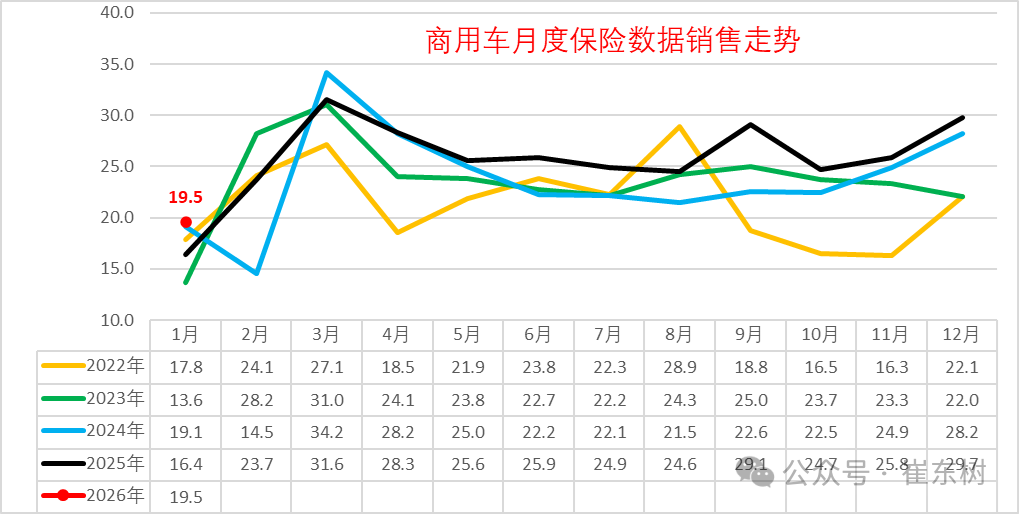
Core Insights - The domestic commercial vehicle market is expected to see strong growth in 2025, driven by the rise of new energy vehicles (NEVs) and vehicle scrapping policies [1][5] - January 2023 saw a significant increase in commercial vehicle sales, reaching 200,000 units, a 19% year-on-year increase, although down 34% month-on-month [1][5] - The penetration rate of NEVs in commercial vehicles is projected to reach 29% in 2025, up from 20% in 2024, indicating a robust growth trend [1][11] Commercial Vehicle Market Analysis - In January 2023, commercial vehicle sales reached 200,000 units, marking a 19% increase year-on-year and a new high for January in recent years [1][5] - The total commercial vehicle sales for 2025 are projected to be 3.1 million units, reflecting a 9% year-on-year growth [5][4] - The market has shown a recovery from previous years' declines, with 2023-2024 sales stabilizing around 2.85 million units [5] New Energy Commercial Vehicle Sales - The sales of new energy commercial vehicles reached 91,000 units in 2025, representing a 57% year-on-year increase [7][9] - In January 2026, new energy commercial vehicle sales are expected to hit 50,000 units, a 63% increase year-on-year [7][9] - The penetration rate of new energy vehicles in commercial vehicles is projected to be 26% in January 2026, up 7 percentage points from the previous year [11][9] New Energy Vehicle Penetration Rate - The penetration rate of new energy commercial vehicles was around 3% from 2019 to 2021, increasing to 9% in 2022 and 11% in 2023 [11] - By 2024, the penetration rate is expected to reach 20%, and 29% by 2025, indicating a strong upward trend [11][1] - In January 2026, the penetration rate for new energy vehicles in trucks is projected to be 21%, while for buses it is expected to be 54% [13][11] Market Structure and Competition - The commercial vehicle market is primarily supported by light and heavy truck manufacturers, with companies like Foton, Wuling, and Sinotruk leading in sales [14] - Heavy trucks have shown significant improvement in sales due to subsidy policies, with electric heavy trucks gaining traction [16][15] - The light truck market is also seeing strong performance, particularly in the Southwest and Northwest regions, with increasing penetration of new energy vehicles [17][18]
庆铃汽车签订新能源车回购协议,股价小幅上涨
Jing Ji Guan Cha Wang· 2026-02-21 02:41
Group 1 - The core point of the article is that Qingling Motors has signed a buyback agreement for five new energy vehicles with a financing leasing company and dealers, with a maximum buyback price not exceeding 1.0288 million yuan [1] - The company aims to expand the sales and market share of new energy commercial vehicles through this credit enhancement measure and intends to utilize vehicle networking technology to monitor risks [1] Group 2 - Recent stock performance shows a price increase of 2.02% over the past seven days, with the closing price on February 20 at 1.01 HKD, reflecting a daily increase of 1.00% and a price fluctuation of 5.05% [1] - The Hang Seng Index decreased by 2.83% during the same period, while the commercial vehicle sector rose by 1.28% [1] - As of February 20, the stock price is below the 5-day, 10-day, and 20-day moving averages, with a negative MACD histogram and the Bollinger Band lower limit at 0.896 HKD providing some support [1] - The liquidity on February 20 showed a trading volume of 1.14 million HKD, with a turnover rate of 0.09%, indicating a net outflow of 194,600 HKD from retail investors, while there was no significant activity from institutional investors [1]
1月商用车销36万辆 重卡10.5万劲增46% 新能源表现亮眼 | 头条
第一商用车网· 2026-02-11 09:46
Core Viewpoint - The automotive industry in January 2026 showed stable overall performance, with the commercial vehicle market continuing to improve, the new energy vehicle market operating steadily, and exports maintaining growth. Group 1: Production and Sales Data - In January 2026, automotive production and sales reached 2.45 million and 2.346 million units, respectively, with production increasing by 0.01% year-on-year and sales decreasing by 3.2% year-on-year, and month-on-month declines of 25.7% and 28.3% [1] - Commercial vehicle production and sales were 388,000 and 359,000 units, showing year-on-year growth of 29.9% and 23.5%, but month-on-month declines of 6.8% and 15.6% [1] - Heavy-duty truck sales reached 105,000 units, marking a year-on-year increase of 46% [2][3] Group 2: Commercial Vehicle Breakdown - In January 2026, domestic sales of commercial vehicles reached 266,000 units, a year-on-year increase of 23.4%, but a month-on-month decline of 15.1% [4][7] - Domestic sales of trucks were 244,000 units, up 29.7% year-on-year, while bus sales were 22,000 units, down 19.8% year-on-year [4] - Exports of commercial vehicles exceeded 90,000 units, increasing by over 23% year-on-year [5][8] Group 3: New Energy Vehicles - Domestic sales of new energy commercial vehicles reached 60,000 units, a year-on-year increase of 61.9%, but a month-on-month decline of 49.9%, accounting for 22.6% of total domestic commercial vehicle sales [10] - Exports of new energy commercial vehicles were 6,000 units, showing a year-on-year decrease of 1.4% but a month-on-month increase of 9.9% [11] Group 4: Policy Impact - The China Automotive Industry Association noted that in January 2026, a series of policies were introduced to support the economy and improve people's livelihoods, which are expected to stabilize market demand and promote steady industry operation [11]

王建清:工人有力量 创新有方向
Xin Lang Cai Jing· 2026-02-11 00:11
Core Viewpoint - The importance of skilled labor in both traditional and emerging manufacturing sectors is emphasized, highlighting their critical role in driving innovation and economic growth in the automotive industry [2][4]. Group 1: Innovation and Development in the Automotive Industry - The automotive industry in China is experiencing unprecedented development opportunities due to technological advancements and market maturity [4]. - Dongfeng Motor, as a key player in the automotive sector, aims to lead in technological innovation and promote the development of new energy vehicles [4]. - The DF5+ automotive manufacturing innovation studio alliance, led by Wang Jianqing, has collaborated with seven upstream and downstream enterprises to tackle 24 technical bottlenecks, generating nearly 80 million yuan in economic benefits [2]. Group 2: Workforce and Skills Development - Wang Jianqing proposed a new employment mechanism to attract high-skilled talent, which has gained significant attention [4]. - The central government has issued opinions on deepening the reform of the industrial workforce, focusing on improving the skill formation system for workers [4][6]. - Recommendations include enhancing the status of workers, fostering high-quality talent, and ensuring that skilled workers contribute to high-quality economic development [6]. Group 3: Engagement and Feedback from Workers - Wang Jianqing actively engages with workers to gather their opinions and suggestions, achieving a high response rate from factory employees [7]. - The feedback collected has led to actionable insights that contribute to the improvement of workplace conditions and employee satisfaction [7]. - The commitment to advocating for skilled labor and enhancing the sense of fulfillment among frontline workers is a priority for Wang Jianqing [7]. Group 4: Representation of Skilled Labor - Wang Jianqing represents the voice of industrial workers, emphasizing their role as the backbone of wealth creation and innovation in the manufacturing sector [6][8]. - The dedication and craftsmanship of workers like Wang Jianqing reflect the enduring spirit of craftsmanship and the importance of skilled labor in modern industrial development [8].


崔东树:政策引导与市场驱动 预计2026年新能源乘用车将实现高质量发展
智通财经网· 2026-02-10 09:19
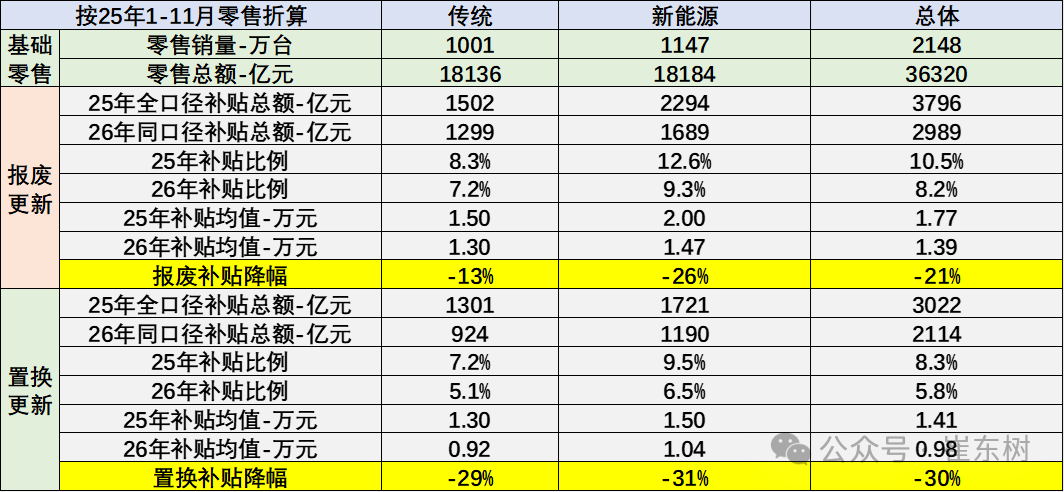
Core Insights - The 2026 vehicle replacement policy is a significant boost for the automotive market, promoting high-end development and enhancing fiscal efficiency through a shift from fixed subsidies to tiered subsidies based on vehicle value [1][3]. Group 1: Policy Impact - The new policy aims to stabilize large-scale consumption and release replacement potential, contributing to steady growth while promoting green and low-carbon initiatives [1][2]. - The average subsidy for passenger vehicle replacements is expected to decrease by approximately 30%, while the average subsidy for scrapping is projected to decline by about 20% [2][3]. - The transition to a tiered subsidy system is designed to improve fiscal efficiency, ensuring better allocation of funds and reducing waste from low-priced vehicles benefiting from subsidies [3][4]. Group 2: Market Trends - In 2025, over 11.5 million vehicles benefited from the replacement subsidy, with nearly 60% being new energy vehicles, indicating a strong market shift towards electrification [3]. - The commercial vehicle sector is expected to perform better in 2026 due to the continuity of favorable policies, while the passenger vehicle segment faces a decline in the number of new models [5][6]. - The number of new passenger vehicle models is decreasing from 92 in 2024 to 83 in 2026, reflecting a trend towards higher-end and larger vehicles [5][6]. Group 3: Product Development - New energy passenger vehicles are increasingly characterized by larger sizes and improved range, with a notable absence of small electric vehicles under 1090 kg in recent releases [8][10]. - The introduction of long-range electric vehicles, particularly those exceeding 700 km, is becoming more common, indicating a shift towards higher performance in the electric vehicle market [10][14]. - The energy density and efficiency of new energy vehicles are improving, with some models achieving a power consumption of around 10 kWh per 100 km [12][15]. Group 4: Tax and Subsidy Structure - The tax exemption directory for commercial vehicles shows growth in new models, particularly in trucks and buses, compared to the previous year [4][6]. - The structure of the subsidy system is evolving to favor higher-priced vehicles, ensuring that funds are allocated to more valuable replacements [3][4]. Group 5: Competitive Landscape - The competitive landscape is shifting as traditional fuel vehicles face increasing pressure from new energy vehicles, which are rapidly advancing in technology and market presence [1][3]. - The introduction of diverse new models in the narrow hybrid segment is establishing a solid foundation for future growth, with many new products featuring lower energy consumption [16].

布局新消费 促进有效投资 中部六省加快构建增长新引擎
Shang Hai Zheng Quan Bao· 2026-02-09 18:33
Core Insights - The central provinces of China are focusing on "stabilizing growth and expanding domestic demand" as key priorities in their 2026 government work reports, with a projected GDP nearing 30 trillion yuan for 2025 [1][2] - The concept of "emotional value" and "emotional economy" has emerged as a significant trend in consumer behavior, prompting these provinces to innovate in consumption and investment [1][2] Economic Growth and Investment - Henan leads the central provinces with a GDP growth rate of 5.6%, while Hubei, Anhui, and Jiangxi also report growth rates exceeding 5% [1] - The provinces are enhancing their investment in sectors like water conservancy and logistics to strengthen their roles as key hubs in the domestic and international economy [3][5] New Consumption Trends - Provinces are actively cultivating new consumption growth points such as the "first release economy," "exhibition economy," and "silver economy" to meet evolving consumer demands [2] - Specific initiatives include promoting local business innovations and developing diverse consumption scenarios to stimulate economic activity [2] Industrial Development - The central region aims to establish a modern industrial system with a focus on new energy, new materials, and high-tech industries [5][6] - Hubei is working on a world-class integrated storage and computing industry base, while other provinces are advancing projects in electric vehicles, lithium batteries, and aerospace [5][6] Infrastructure and Project Development - Significant infrastructure projects are being prioritized, with Hunan announcing 389 key projects totaling 2 trillion yuan in investment [3] - The provinces are also focusing on enhancing their logistics and transportation networks to facilitate economic growth and connectivity [3][5]
广汽与吉利“抱团”新能源商用车
Jing Ji Guan Cha Bao· 2026-02-07 05:23
Core Viewpoint - GAC Lingcheng and Geely Remote have signed a strategic cooperation agreement to collaborate on electric commercial vehicles, methanol electric power applications, and energy refueling infrastructure, marking a significant step for both companies in the competitive new energy commercial vehicle market [2][6]. Company Overview - GAC Lingcheng, formerly GAC Hino, has undergone a brand transformation to accelerate its shift towards new energy commercial vehicles, following a restructuring that increased GAC Group's stake to nearly 90% [2][3]. - Geely Remote, established in 2016, has achieved a compound annual growth rate of over 120% in sales over the past five years, with monthly sales reaching nearly 25,000 units as of 2025 [5]. Market Context - The collaboration between GAC Lingcheng and Geely Remote is seen as a strategic move to break regional market barriers and seek new growth opportunities in the competitive landscape dominated by players like BYD and Yutong in the Guangdong market [2][3][5]. - The commercial vehicle market in China is experiencing structural adjustments, with a shift towards low-speed growth and increasing competition in the new energy sector [8][9]. Strategic Implications - GAC Lingcheng's "light asset" strategy aims to minimize research and development costs by leveraging partnerships rather than solely relying on internal development, which is crucial given its limited R&D budget [4][6]. - The partnership is expected to enhance GAC Lingcheng's product offerings in the VAN and bus segments, where it currently lacks a strong foundation [3][4]. Technological Collaboration - The cooperation includes the development of methanol electric power applications, with Geely Remote being one of the few companies in China to focus on this technology, which has the potential to address energy infrastructure challenges in the region [6][8]. - The collaboration is positioned to utilize GAC's local resources to reduce market entry costs for Geely Remote in key cities like Guangzhou, enhancing their competitive edge [6][8]. Industry Trends - The trend of collaboration among commercial vehicle manufacturers to share the costs and risks associated with new energy transitions is becoming more common, as seen in recent partnerships across the industry [9].



东风商用车孙杰:2026年目标锚定17.6万辆以上 海外重点开拓18个市场
Guo Ji Jin Rong Bao· 2026-02-05 15:11
Group 1 - The core objective for Dongfeng Commercial Vehicle is to achieve an annual sales target of over 176,000 units by 2026, representing a year-on-year growth of 34% [1] - In 2025, Dongfeng Commercial Vehicle aims to reach an annual sales volume of 131,000 units, which is a 24% increase compared to the previous year [3] - The company plans to enhance its competitive advantage in new energy products and focus on expanding overseas sales in 18 key global markets [3] Group 2 - Dongfeng Commercial Vehicle is committed to integrating digitalization and intelligence into its operations to seize opportunities in the ongoing wave of smart technology [3]