油气新能源综合发展

Search documents
吉林油田建矿65年:迈向油气新能源综合发展之路
Sou Hu Cai Jing· 2026-01-19 06:47
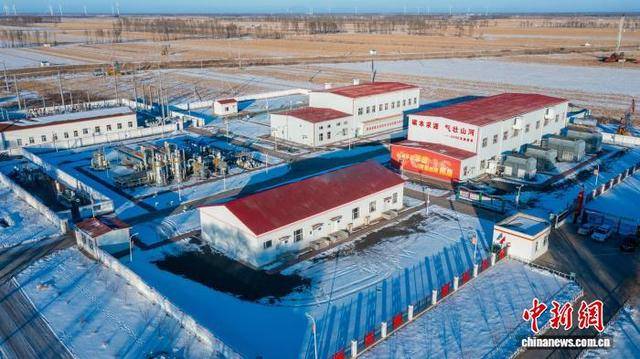
Core Viewpoint - Jilin Oilfield is transitioning from a single crude oil production base to a comprehensive energy system that includes crude oil, natural gas, and renewable energy sources, addressing challenges such as declining reserves and increasing costs [2][3][5]. Group 1: Production and Historical Context - Established in 1961, Jilin Oilfield is one of the earliest developed oil and gas fields in Northeast China, having produced approximately 198 million tons of crude oil and 28.1 billion cubic meters of natural gas over 65 years [1][3]. - The discovery of the Fuyu Oilfield in 1959 marked the end of Jilin Province's "no oil" history, leading to gradual capacity formation despite material shortages and construction constraints [3]. - The oilfield is currently facing challenges related to low permeability and low abundance reservoirs, making stable production a long-term challenge, with annual crude oil production maintained at around 3.8 million tons during the 14th Five-Year Plan period [3]. Group 2: Natural Gas Development - The discovery of the Changling Gas Field in 2005 allowed Jilin Oilfield to have large-scale natural gas resources for the first time, leading to ongoing investments in tight gas and shale gas [5]. - By 2025, natural gas production is expected to reach 1.91 billion cubic meters, contributing to market supply and regional peak shaving tasks, with the operation of the Shuangtuozi gas storage enhancing its role in winter gas supply in Northeast China [5]. Group 3: Renewable Energy Initiatives - Renewable energy is viewed as a long-term option to address resource depletion and emission reduction pressures, with Jilin Oilfield exploring the "oil and gas + renewable energy" path to lower production energy costs and reduce carbon emissions [5]. - The oilfield is leveraging wind, solar, and geothermal resources in western Jilin to develop wind power, photovoltaic, and geothermal projects, aiming for a wind-solar power generation of 1.46 billion kilowatt-hours by 2025, with green electricity accounting for over 35% of production energy [5]. - Jilin Oilfield is transitioning from a single energy consumer to a regional clean energy provider, with centralized wind power projects supplying electricity to the community [5]. Group 4: Carbon Capture and Low-Carbon Initiatives - Jilin Oilfield has established a CCUS demonstration project that captures, transports, and stores CO2 emissions from industrial sources, aiming to sequester over 4 million tons of CO2 by 2025, thereby enhancing oil recovery and reducing net emissions [7]. - The oilfield is exploring "zero-carbon" or low-carbon production models by integrating wind, solar, geothermal, and energy storage with oil and gas production systems, with some blocks achieving comprehensive clean energy substitution for production [7]. - The company aims to balance crude oil stabilization, natural gas supply, and renewable energy expansion during the 15th Five-Year Plan [7].