波动方程

Search documents
AAAI 2026 Oral | 告别注意力与热传导!北大清华提出WaveFormer,首创波动方程建模视觉
机器之心· 2026-01-21 00:32
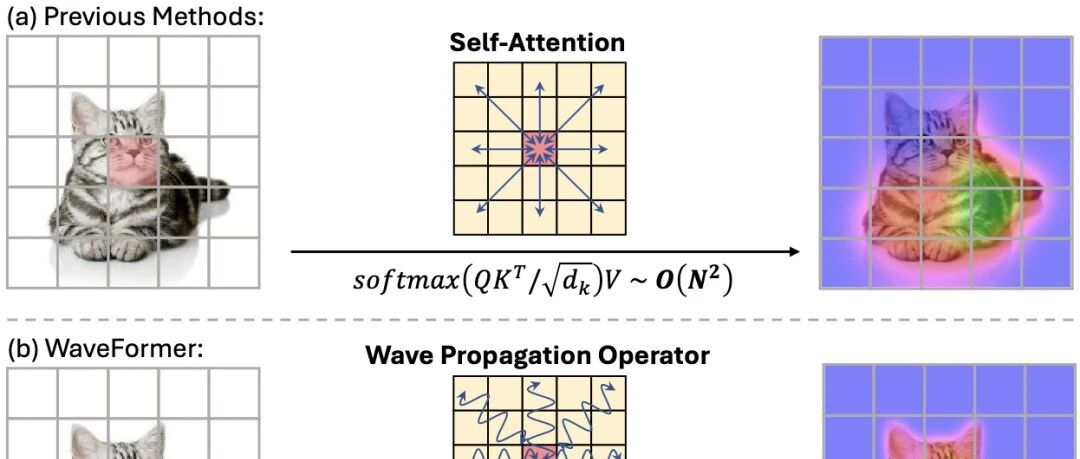
"全局交互" 几乎等同于 self-attention:每个 token 都能和所有 token 对话,效果强,但代价也直观 —— 复杂度随 token 数平方增长,分辨率一高就吃不消。现有方 法大多从 "相似度匹配" 出发(attention),或从 "扩散 / 传导" 出发(热方程类方法)。但热方程本质上是一个强低通滤波器:随着传播时间增加,高频细节(边 缘、纹理)会迅速消失,导致特征过平滑。 我们是否能找到一种既能实现全局交互,又能精准保留高频细节的物理建模方式? 来自 北京大学 和清华大学 的研究团队 给出了答案: 波动方程(Wave Equation) :把特征图当作空间信号,让语义在网络深度对应的 "传播时间" 里,遵循欠阻 尼波动方程演化。这样一来,低频的全局结构与高频的边缘纹理不再是 "此消彼长" 的牺牲关系,而可以在可控的波动传播中共同存在。在 AAAI 2026 Oral 论文 《WaveFormer: Frequency-Time Decoupled Vision Modeling with Wave Equation》中,研究者首次将视觉特征图视为在波动传播时间下演化的空间信号,受欠阻 ...

当闭上眼,世界还存在吗?量子力学百年终极答案:全靠你“脑补”
3 6 Ke· 2025-12-18 10:00
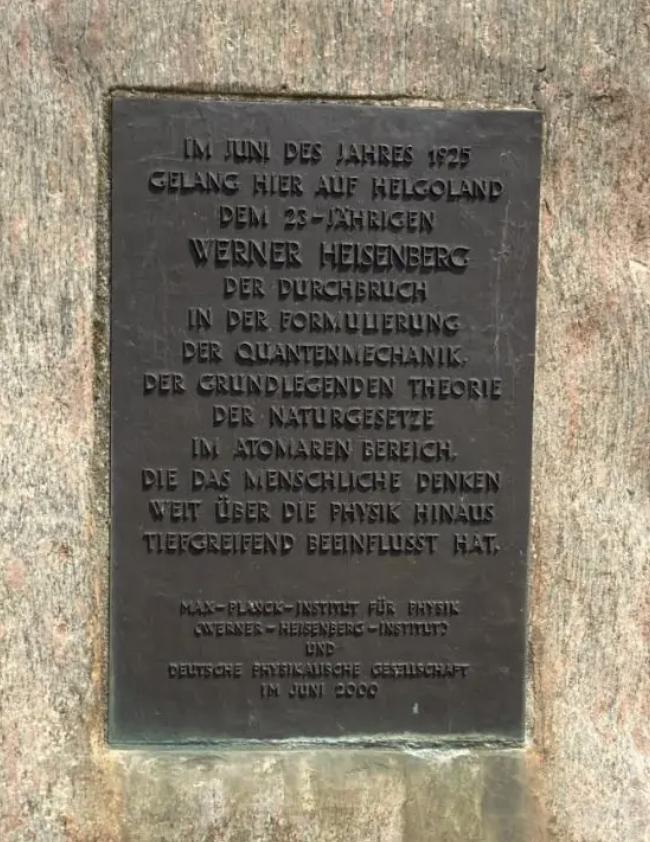
Core Viewpoint - The article discusses the ongoing debate in quantum mechanics regarding the interpretation of quantum phenomena, particularly focusing on the perspectives of relational quantum mechanics (RQM) and subjective Bayesianism (QBism) as they relate to the observer's role in defining reality [10][31]. Group 1: Historical Context and Developments - In 1925, physicist Werner Heisenberg made significant contributions to quantum mechanics on Heligoland Island, moving away from classical models to a mathematical framework known as matrix mechanics [2]. - The establishment of quantum mechanics was further advanced by Erwin Schrödinger's wave equation, which introduced the concept of probability in determining the position of electrons [4]. - A century later, in 2025, over 300 leading physicists gathered on the same island to celebrate the centenary of quantum mechanics and to revisit foundational questions about the nature of reality [6]. Group 2: Quantum Mechanics Interpretation Debate - The core of the debate centers on whether quantum equations describe the world itself or merely our understanding of it, with various interpretations such as the Copenhagen interpretation, many-worlds interpretation, and hidden variable theories [11][13]. - The thought experiment "Wigner's friend" illustrates the complexities of measurement and reality in quantum mechanics, questioning whose observation constitutes the "true" reality [15][19]. Group 3: Relational Quantum Mechanics (RQM) - Carlo Rovelli's RQM posits that reality is not an absolute entity but is constructed through relationships between observers and systems, suggesting that different observers can have valid but distinct accounts of the same phenomenon [20][23]. - RQM emphasizes that physical properties are not inherent to isolated entities but arise from interactions, challenging traditional notions of objective reality [25]. Group 4: Subjective Bayesianism (QBism) - Chris Fuchs' QBism redefines the wave function as a personal probability guide rather than an objective state of the world, asserting that it reflects an observer's beliefs about future measurements [28][30]. - This perspective places the observer at the center of quantum mechanics, suggesting that the wave function is a tool for individuals to navigate their interactions with the quantum world [31]. Group 5: Future Directions and Implications - The article highlights a growing acceptance of RQM and QBism among younger researchers, with a notable percentage supporting these interpretations in recent surveys [31]. - The potential for empirical testing of these theories through advanced quantum computing and AI is discussed, indicating a shift towards integrating observer-dependent frameworks into future physics [33]. - The concluding remarks suggest that reality is a collaborative narrative between observers and the world, marking a new beginning for quantum mechanics [34].