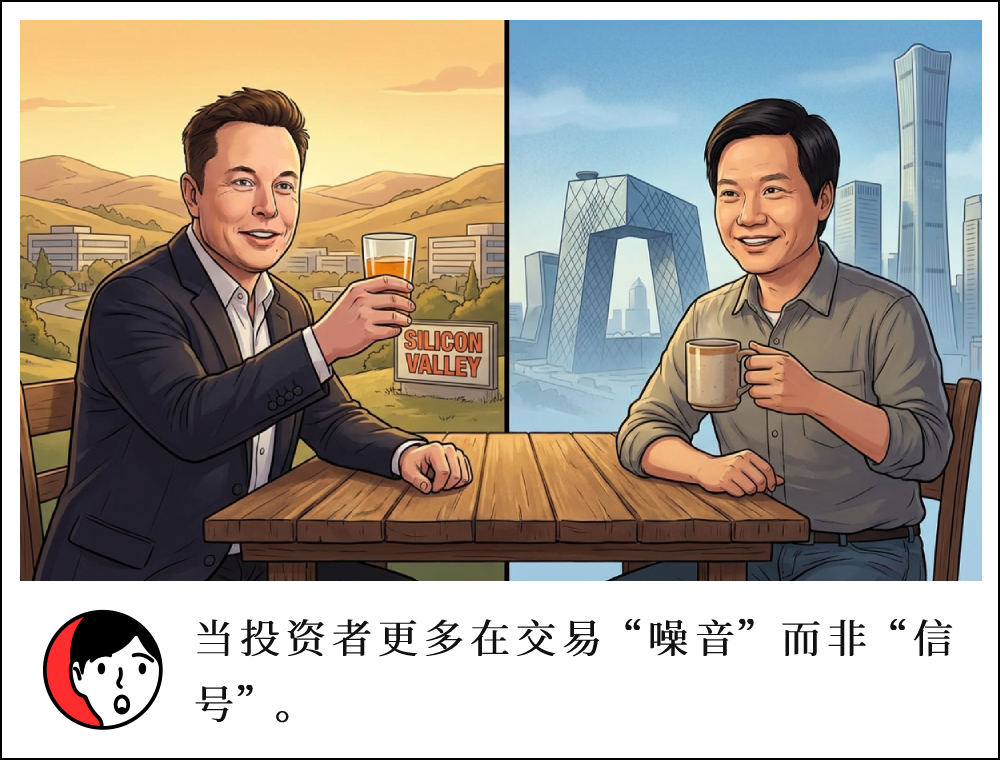
注意力货币化

Search documents
雷军的声量,小米的估值:注意力货币化如何影响交易行为
3 6 Ke· 2026-02-09 12:44
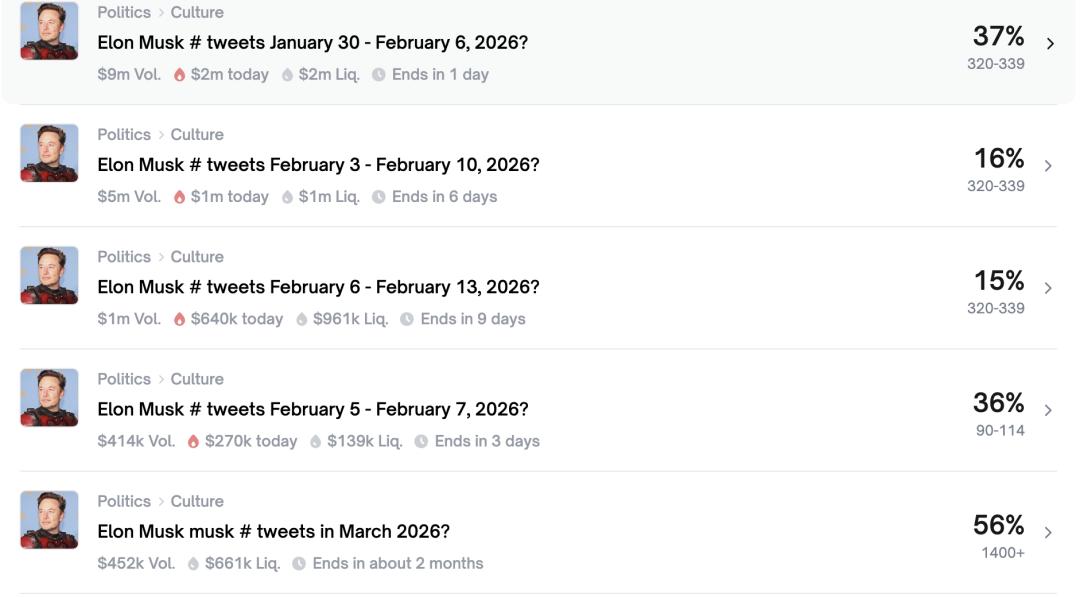
Core Insights - The article discusses how attention, driven by narratives, is reshaping the AI industry and capital markets, leading to a focus on "noise" rather than fundamental signals in investment decisions [1] Group 1: Narrative Characteristics - Successful business narratives are characterized by simplicity, making them more memorable than complex stories [1] - Credibility is essential for business stories, as it influences investor actions [2] - Inspiring narratives aim to motivate audiences, including employees, customers, and potential investors [3] - Effective narratives encourage audiences to take action once they resonate with the story [4] Group 2: Market Dynamics - Recent fluctuations in gold and precious metals prices are also seen as driven by narratives, reflecting a broader trend in market behavior [4] - The rise of retail investors, particularly in the U.S., has shifted market dynamics, with retail participation surpassing institutional involvement post-pandemic [5] - The A-share market in China is predominantly driven by retail investors, with approximately 75.58% of capital inflows attributed to them, indicating a narrative and emotion-driven high volatility characteristic [13] Group 3: Comparison of Narrative Monetization - There is a notable difference in the monetization paths of founder IPs between China and the U.S., influenced by the industrial foundation and investor structure [5] - Chinese companies often focus on macro narratives related to national missions and product sales, while U.S. companies leverage more diverse channels for narrative monetization [14] - The valuation trends of companies like Xiaomi show a correlation between founder visibility and company performance, with key products significantly impacting revenue and stock price [16][18] Group 4: Examples of Narrative Impact - The GameStop incident exemplifies how a compelling narrative can lead to significant market movements, driven by social media amplification [10] - Elon Musk's social media presence has created a predictive market for his tweet frequency, showcasing the financial implications of narrative-driven attention [5][9] - Michael Burry's successful monetization of his personal brand through a subscription model highlights the potential for narrative-driven income in the investment community [19]


雷军的声量,小米的估值:注意力货币化如何影响交易行为|估值叙事04
Xin Lang Cai Jing· 2026-02-09 10:10
Core Viewpoint - Attention is reshaping the capital markets, with narratives driving asset values more than fundamental changes, leading to a "Meme-ification" of investments [2][26]. Group 1: Characteristics of Narratives - Successful business narratives are characterized by simplicity, credibility, inspiration, and the ability to prompt action from the audience [4][27][28]. - The narratives created by founders often cannot be verified or falsified, making them susceptible to market fluctuations driven by collective emotions [3][26]. Group 2: Market Dynamics - The rise of retail investors, particularly in the U.S., has shifted market dynamics, with retail participation surpassing institutional involvement post-pandemic [7][13]. - In the A-share market, retail investors account for approximately 75.58% of capital inflows, indicating a market dominated by narrative-driven trading [39]. Group 3: Comparison of U.S. and Chinese Markets - There is a notable difference in the monetization paths of founder IP between the U.S. and China, influenced by the industrial base and investor structure [7][20]. - Chinese companies tend to focus on macro narratives related to national missions and product sales, while U.S. companies leverage social media and financial innovations for attention monetization [41][43]. Group 4: Case Studies - Elon Musk's social media presence has become a predictive asset, with platforms like Polymarket allowing users to bet on his tweet frequency, reflecting the financial implications of his narratives [29][33]. - The GameStop incident exemplifies how retail investor narratives can lead to significant market movements, showcasing the power of collective sentiment amplified by social media [33][34]. Group 5: Investment Tools and Trends - The emergence of zero-commission brokers like Robinhood has facilitated retail trading, contributing to increased market volatility as investors often trade on "noise" rather than "signals" [34]. - The growth of passive investment strategies, such as ETFs, has intensified the "herding" phenomenon in the market, with a significant increase in the number of ETFs and their total assets [40].