叙事驱动

Search documents
当马斯克有了第二个标的:特斯拉的估值要变天了
美股研究社· 2026-03-26 10:36
Core Viewpoint - The article discusses the implications of SpaceX's potential IPO on Tesla, highlighting the shift from a narrative-driven valuation to a more asset-based pricing model, which could lead to both short-term benefits and long-term structural changes for Tesla [1][3][16]. Short-term Implications - SpaceX's IPO is expected to create a significant market event, drawing attention and capital, similar to Tesla's inclusion in the S&P 500, which saw an influx of funds beyond expectations [5][7]. - The initial market reaction is likely to be positive, driven by emotional sentiment rather than fundamental support, leading to a potential spike in Tesla's stock price as it becomes the most liquid option for investors seeking exposure to Musk's ventures [8][17]. Mid-term Implications - As SpaceX becomes an independent trading entity, the valuation dynamics for Tesla may change, as investors will no longer need to rely on Tesla to express their confidence in Musk's vision, potentially leading to a re-evaluation of Tesla's valuation [9][10]. - The separation of SpaceX and Tesla could result in a capital shift, with investors reallocating funds from Tesla to SpaceX, which may lead to a decrease in Tesla's valuation as the market reassesses its core business without the added narrative of space exploration [11][10]. Long-term Implications - The IPO of SpaceX signifies a structural change in how Musk's ventures are valued, moving from a single narrative container (Tesla) to multiple independent assets, which could lead to a more transparent and grounded valuation for each business [12][13]. - Tesla will need to focus on its fundamentals, such as the commercialization of autonomous driving and profitability, as the indirect support from SpaceX's narrative diminishes, potentially leading to a decline in its price-to-earnings ratio [13][14]. - Investors will have the opportunity to create a diversified "Musk portfolio," allowing for more tailored investment strategies based on individual risk preferences, which represents a decentralization of investment in Musk's ventures [14]. Conclusion - The article concludes that the SpaceX IPO is not merely adding to Tesla's narrative but is instead extracting elements of that narrative for independent valuation, prompting a critical reassessment of Tesla's worth in the absence of its previous narrative support [16][17].



【十大券商一周策略】A股下行空间相对有限,决断看4月!聚焦景气确定性
券商中国· 2026-03-22 14:41
Group 1 - The core viewpoint is that the market is currently facing significant uncertainty due to geopolitical tensions and economic conditions, with a decisive direction expected to emerge around April [2] - The article discusses three key unresolved questions regarding the Iran conflict, U.S. Federal Reserve's focus, and China's economic situation, which are crucial for market predictions [2] - The market has seen some short-term reduction in positions, particularly in previously high-performing sectors, but overall returns have reverted to the starting line since the beginning of the year [2] Group 2 - The article identifies sectors that may maintain independent high prosperity despite geopolitical tensions and high oil prices, highlighting the importance of sectors like optical communication and energy storage [3] - It suggests that sectors with upward trends and less sensitivity to oil prices, such as energy storage and domestic AIDC chains, should be prioritized for investment [3] Group 3 - The current phase is described as potentially the most pressured stage due to the ongoing U.S.-Iran conflict, with a focus on the divergence between stable policy and absolute return strategies [4] - The article emphasizes that the mid-term variables are underestimated, particularly regarding inflation tolerance and the resilience of the U.S. and Chinese economies [4][5] Group 4 - A-shares are expected to have limited downside potential, with the market likely to experience oscillation and structural rotation as it absorbs external pressures [6] - Key sectors to watch include energy-related industries, defensive assets, and technology innovation sectors, with a focus on undervalued consumer segments [6] Group 5 - The market is anticipated to undergo a prolonged period of consolidation due to the impact of the U.S.-Iran conflict and changing expectations regarding interest rates [7] - The article highlights three investment directions: industries benefiting from high oil prices, stable cash flow defensive stocks, and certain growth sectors that may be undervalued [7] Group 6 - China's manufacturing sector is positioned for a value reassessment, with leading industries in coal chemical and power equipment showing resilience and potential for growth [8] - The article notes that China's energy system's completeness reduces vulnerability to external shocks and enhances its role in global energy supply [8] Group 7 - The narrative around the rise of physical assets remains intact, with a focus on energy security and the potential for China's manufacturing sector to serve as a stabilizing force in the global economy [9] - Investment recommendations include sectors related to energy, manufacturing, and consumer goods that are expected to benefit from structural changes in the market [9] Group 8 - The current market adjustment is attributed to concerns over economic stagnation and escalating conflict risks, with a potential for market recovery when sentiment is at its lowest [11] - Investment strategies should focus on sectors that benefit from rising oil prices and those with clear growth prospects, particularly in technology and renewable energy [11] Group 9 - The market is expected to remain under pressure from external factors, but there are positive indicators such as proactive monetary policy and strong early economic data [12] - The article suggests a dual focus on growth and cyclical sectors, with an emphasis on clean energy and resource-related investments [12] Group 10 - The outlook for the market suggests a gradual stabilization post-mid-March, with a focus on both growth and value sectors, particularly in energy and technology [13] - The article encourages investment in sectors that are likely to benefit from ongoing trends in AI and traditional industries undergoing value reassessment [13] Group 11 - The ongoing U.S.-Iran conflict and shifting interest rate expectations are impacting global markets, with a focus on stable domestic policies providing a clearer investment environment [14] - Recommended sectors include defensive strategies, energy independence, and high-growth areas such as AI and energy storage [14]

雷军的声量,小米的估值:注意力货币化如何影响交易行为
3 6 Ke· 2026-02-09 12:44
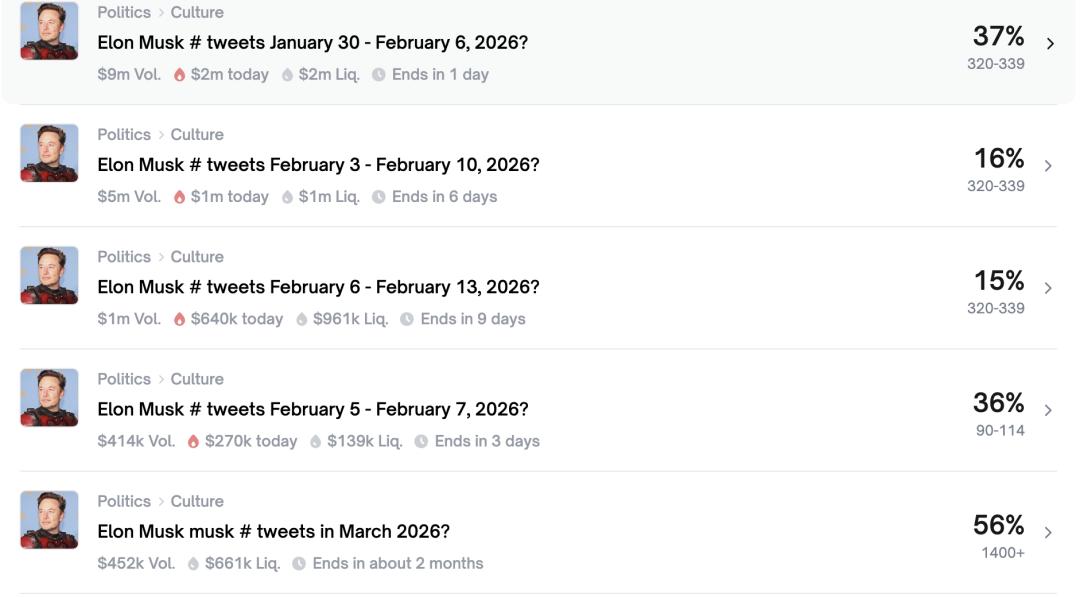
Core Insights - The article discusses how attention, driven by narratives, is reshaping the AI industry and capital markets, leading to a focus on "noise" rather than fundamental signals in investment decisions [1] Group 1: Narrative Characteristics - Successful business narratives are characterized by simplicity, making them more memorable than complex stories [1] - Credibility is essential for business stories, as it influences investor actions [2] - Inspiring narratives aim to motivate audiences, including employees, customers, and potential investors [3] - Effective narratives encourage audiences to take action once they resonate with the story [4] Group 2: Market Dynamics - Recent fluctuations in gold and precious metals prices are also seen as driven by narratives, reflecting a broader trend in market behavior [4] - The rise of retail investors, particularly in the U.S., has shifted market dynamics, with retail participation surpassing institutional involvement post-pandemic [5] - The A-share market in China is predominantly driven by retail investors, with approximately 75.58% of capital inflows attributed to them, indicating a narrative and emotion-driven high volatility characteristic [13] Group 3: Comparison of Narrative Monetization - There is a notable difference in the monetization paths of founder IPs between China and the U.S., influenced by the industrial foundation and investor structure [5] - Chinese companies often focus on macro narratives related to national missions and product sales, while U.S. companies leverage more diverse channels for narrative monetization [14] - The valuation trends of companies like Xiaomi show a correlation between founder visibility and company performance, with key products significantly impacting revenue and stock price [16][18] Group 4: Examples of Narrative Impact - The GameStop incident exemplifies how a compelling narrative can lead to significant market movements, driven by social media amplification [10] - Elon Musk's social media presence has created a predictive market for his tweet frequency, showcasing the financial implications of narrative-driven attention [5][9] - Michael Burry's successful monetization of his personal brand through a subscription model highlights the potential for narrative-driven income in the investment community [19]

深扒Rentahuman,AI 雇佣人类是假,币圈“割韭菜”才是真?
3 6 Ke· 2026-02-07 08:16
Core Insights - The emergence of rentahuman.ai highlights the growing economic ecosystem around AI agents, with rapid user registration and platform visits indicating significant interest in the concept of AI hiring humans [2][4][24] - The platform operates by allowing AI agents to issue commands for humans to complete real-world tasks, blurring the lines between digital and physical labor [5][6] - Despite the initial hype, the platform lacks genuine market demand, with most tasks being marketing gimmicks rather than legitimate job opportunities [6][7][9] Group 1: Platform Functionality - Rentahuman.ai is described as the "meatspace layer for AI," where agents can order humans to perform tasks based on their skills and location [4][5] - The platform has attracted over 80,000 registered users, but the actual demand from businesses is minimal, indicating a disconnect between supply and demand [6][9] - Tasks on the platform often serve more as promotional stunts rather than real job opportunities, raising questions about the platform's sustainability [7][12] Group 2: User Experience and Trust Issues - Many registered users are merely curious or seeking social media buzz, leading to a lack of genuine engagement with the platform [9][10] - The platform's design lacks essential protections for workers, such as dispute resolution mechanisms, which could lead to significant risks for those completing tasks [28][30] - The absence of a reliable verification system for task completion undermines trust, making it difficult for users to feel secure in their engagements [20][28] Group 3: Legal and Ethical Considerations - Rentahuman's model raises potential legal issues, as it classifies workers as independent contractors, potentially violating labor laws [30] - The ethical implications of AI hiring humans for tasks, especially those that may be illegal or unsafe, are significant and largely unaddressed by the platform [30][33] - The platform serves as a reflection of societal anxieties regarding the future of AI and its role in the workforce, prompting discussions about the ethical boundaries of such technologies [32][33]

当商品交易变成“故事会”:谁在主导价格?
对冲研投· 2026-02-07 02:07
Core Viewpoint - The commodity market is experiencing extreme volatility, indicating a potential structural shift in its driving logic and volatility paradigm [1][2]. Group 1: Market Dynamics - In January 2026, precious metals surged nearly 50%, with silver reaching historical highs, igniting market enthusiasm [1]. - However, a dramatic drop occurred at the end of January, with Comex silver prices plummeting over 30%, causing significant turmoil in domestic markets [1]. - Traditional price ratios like gold-silver, gold-copper, and gold-oil have shown erratic behavior, suggesting a breakdown in their historical signaling capabilities [1][3]. Group 2: Traditional Analysis Framework Failure - The gold-copper ratio, typically indicating economic health, has risen to historical highs without corresponding signs of economic recession, signaling potential underlying issues [3]. - The gold-silver ratio is converging to a near-decade low, which traditionally suggests increased risk appetite, but current conditions indicate a more complex narrative [3]. - The gold-oil ratio is at extreme levels, reflecting divergent supply-demand stories for these commodities, further complicating traditional analysis [4]. Group 3: Structural Changes in Market Drivers - The traditional pricing logic based on total demand and monetary cycles is being replaced by new structural forces [5]. - Gold is transitioning from a "rate indicator" to a "credit anchor," influenced by factors such as central bank gold purchases and concerns over dollar credit [6][7]. - Silver's demand is bolstered by the global expansion of the photovoltaic industry, while copper is driven by new energy and technology sectors [8][9]. Group 4: Silver as a Market Indicator - Silver has emerged as a key player in the commodity market, reflecting both industrial demand and speculative trading [10]. - The "virtual-to-physical ratio" for silver has reached historical lows, indicating extreme speculation and potential "short squeeze" risks [10]. - Silver's dual nature makes it a sensitive barometer for market liquidity and risk sentiment, amplifying both bullish and bearish trends [11][12]. Group 5: Market Narratives and Trading Mechanisms - The market is increasingly driven by compelling narratives that spread rapidly through modern communication channels, influencing investor behavior [13][14]. - Programmatic trading and leverage have become significant amplifiers of market movements, leading to rapid price changes in response to emerging stories [15][16]. - New capital from other sectors, such as cryptocurrencies, is entering the commodity market, further intensifying volatility [17]. Group 6: Future Outlook - High volatility is expected to persist in the commodity market, necessitating a shift in observation frameworks and expectations [18]. - Monitoring silver's performance will be crucial for gauging overall market sentiment and risk appetite [18]. - A potential signal for a healthy market rally could be a simultaneous decline in the gold-silver and gold-oil ratios, indicating a return to economic growth narratives [19].