流式细胞仪

Search documents
流式细胞仪的技术革新与自动化:analytica 2026全景见闻
仪器信息网· 2026-03-30 09:03
Core Insights - The 2026 Munich Biochemical Exhibition showcased the latest advancements in flow cytometry, highlighting trends towards high parameterization, automation, and customization in applications [2][14]. Group 1: Key Trends in Flow Cytometry - Flow cytometry is experiencing a paradigm shift with the integration of optical detection, microfluidic control, and artificial intelligence algorithms, reshaping industry standards and application boundaries [14]. - The detection capabilities are expanding from cellular analysis to the nanoscale, with new devices like Beckman Coulter's CytoFLEX nano achieving detection limits of 40-80 nm, addressing the need for detecting exosomes and viral particles [15]. - Automation in laboratories is increasing due to rising labor costs and the demand for large-scale screening, with new products featuring automated sampling systems and AI-driven data analysis [16]. Group 2: Product Highlights - Beckman Coulter's CytoFLEX mosaic 88 offers a dual-mode platform with 88 detection channels, enabling over 40 colors for complex immune profiling [3]. - Sartorius's iQue 5 is a benchmark in high-throughput screening, capable of analyzing 96-well plates in 5 minutes with a sample consumption of only 1μL [4]. - Bio-Techne's Pala system is designed for single-cell sorting with a high cell recovery rate, suitable for precious clinical samples [4]. Group 3: Market Dynamics - The industry is shifting from general-purpose platforms to specialized devices tailored for specific applications, such as high-throughput screening in antibody development and clinical diagnostics [17]. - The integration of automated workflows and validated testing kits is enhancing compliance and operational efficiency in clinical settings [17]. - The flow cytometry technology is penetrating new markets, including environmental monitoring and food safety, indicating a diversification of applications [17]. Group 4: Future Outlook - The innovations presented at the exhibition demonstrate the industry's vitality, with ongoing technological iterations and application expansions driving flow cytometry from research labs to broader clinical and industrial contexts [19].


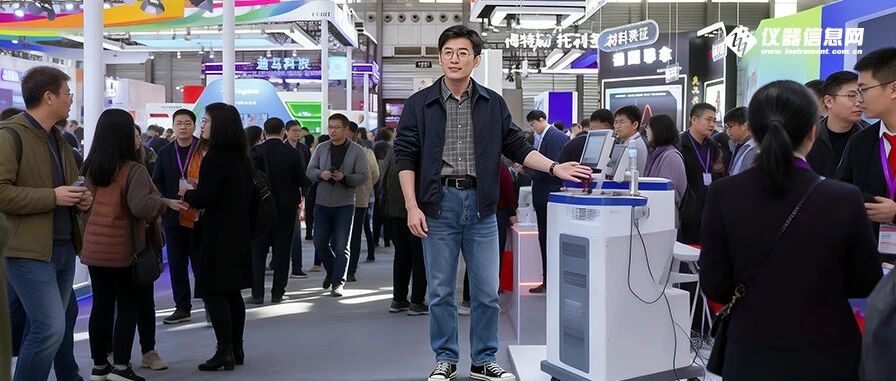
从参会观众真实声音,看 ACCSI 为何成为仪器行业年度必赴盛会!
仪器信息网· 2026-03-24 09:02
Core Viewpoint - The ACCSI (China Scientific Instrument Development Annual Conference) is recognized as a valuable platform for connecting key industry players and facilitating meaningful exchanges and collaborations in the scientific instrument sector [1][2][17]. Group 1: Feedback from Academia and Research Institutions - The ACCSI is seen as a platform that genuinely aids in the development of the industry, with academic institutions and research organizations acknowledging its academic depth and long-term value [3][4]. - Experts from various institutions highlighted the conference's focus on core industry issues, practical discussion value, and its role in connecting academia, industry, and research [6][8]. - The conference successfully gathers a diverse range of industry representatives, fostering a strong demand for innovation and high-quality development amidst complex economic conditions [5][6]. Group 2: Feedback from Corporate Executives and Management - For corporate executives, the value of the ACCSI lies in its ability to facilitate brand exposure, business expansion, and strategic decision-making [9][10]. - Several companies reported successful business outcomes from the conference, including sales and partnerships, indicating the event's effectiveness in promoting real-world collaborations [10][11][12]. - The ACCSI is increasingly viewed as a premier industry summit, with calls for more targeted collaboration opportunities among companies to enhance the event's industrial value [12][16]. Group 3: Overall Impact and Future Outlook - The ACCSI has evolved into a critical platform for companies to formulate annual market strategies and integrate industry resources, with its influence and value confirmed by participant feedback [16][17]. - The upcoming 19th ACCSI in 2026 aims to further advance the scientific instrument industry towards a new era of intelligence, emphasizing the importance of high-level exchanges among various stakeholders [21].

大洗牌!流式细胞仪2025年度中标盘点
仪器信息网· 2026-03-04 07:13
Core Insights - The year 2025 marks a "watershed" moment for China's flow cytometry market, driven by geopolitical uncertainties and a shift towards "deep localization" as a survival necessity for companies [1][2] Market Overview - The total bid amount for flow cytometers in 2025 reached 641,297,934 yuan, with a total of 486 units awarded [3] - BD retained the top position in bid amounts, while Beckman Coulter surpassed BD in bid quantity, indicating a significant market reshuffle influenced by geopolitical factors and localization strategies [2][5] Competitive Landscape - Beckman Coulter emerged as the top bidder in terms of quantity, while BD maintained the highest bid amount, with the gap in bid amounts between the two companies narrowing from nearly 20% in 2024 to less than 3% in 2025 [10] - The top three companies accounted for over 60% of the total bid amount, while the top ten accounted for over 90% [3][5] Product Performance - Beckman Coulter dominated the top ten bid models, securing the first, second, fifth, and sixth positions with models such as DxFLEX and CytoFLEX [7][9] - The highest bid price for a flow cytometer was 11,486,000 yuan for Standard BioTool's Hyperion XTi, while the lowest was under 50,000 yuan for a model from Rescale [11] User Demand and Market Trends - Hospitals accounted for approximately 48.83% of the bid amount and 48.03% of the bid quantity, with a notable increase in demand from disease control centers, particularly due to a large order from the Xinjiang CDC [15] - The market is witnessing a shift towards lower-tier cities, with significant growth expected in the southwest and central regions of China [20] Regional Insights - The top regions for flow cytometer bids in 2025 included Guangdong (11.9%), Beijing (10.8%), and Shanghai (9.9%), with increasing demand in the southwest and central regions [17][19]


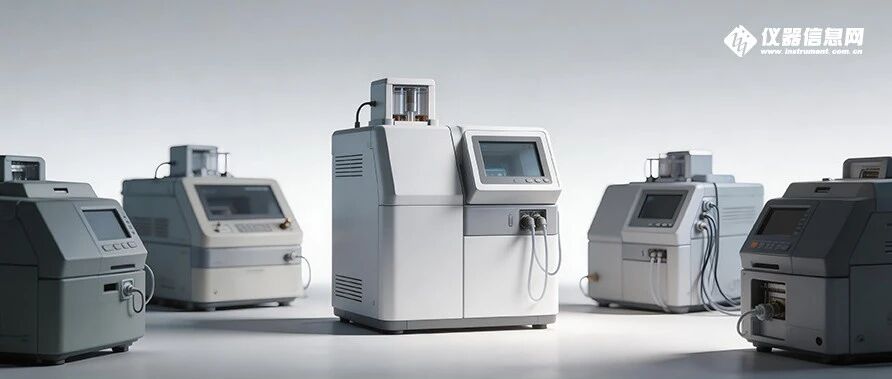
9家国产仪器突围,2025流式细胞仪NMPA获证盘点
仪器信息网· 2026-02-09 09:01
Core Insights - In 2025, a total of 10 flow cytometers received NMPA certification, with 9 being domestic brands, indicating a trend towards high-end, intelligent, and multi-parameter technology that supports clinical precision medicine [1][30]. Group 1: Industry Overview - Flow cytometry, developed in the 1970s, has evolved from basic research to clinical applications in disease diagnosis and treatment monitoring, with the first flow cytometer introduced in China in the early 1980s [2]. - Flow cytometers can measure cell size, internal particle characteristics, and detect surface and cytoplasmic antigens, as well as DNA and RNA content, allowing for rapid analysis of large cell populations [2]. Group 2: Certification and Product Highlights - In 2025, 10 flow cytometers were approved, including 9 domestic brands and 1 imported brand, with notable models such as Cl inStel lar AX from Chenglang Bio, which received certification in December [3][6]. - The Cl inStel lar AX is a high-end spectral flow cytometer that breaks the monopoly of imported brands in the high-end clinical field, providing cost-effective solutions for domestic medical institutions [6][30]. - The BioCy teX from Zhongsheng Medical is the first domestic 4-laser 21-color flow cytometer, marking a significant breakthrough in high-end flow cytometry capabilities [15][30]. Group 3: Technological Advancements - Prism Tech has achieved breakthroughs in PMT and APD detector technologies, creating a dual-platform system that enhances the technical breadth and application depth of domestic flow cytometers [7][30]. - Automation and intelligence upgrades are evident in devices like the Khroma series from Meiruite and EasyCell Plus from Weigong Technology, which feature high-throughput automatic sample loading systems [10][19][30]. Group 4: Market Trends and Future Outlook - The rapid increase in domestic brand certifications indicates a shift towards domestic alternatives and internationalization, with Zhongsheng Medical's BioCy te gaining registration in Indonesia, marking the beginning of overseas expansion for domestic manufacturers [31]. - The flow cytometry market is moving towards automation, intelligence, and multi-dimensional development, expanding applications from hematology to oncology, cell therapy, and infectious immunity [31].

豫见优品 链接全球·出海企业的财富密码丨细胞“小空间”藏着大未来
He Nan Ri Bao· 2026-01-30 23:11
Core Insights - The company, Henan Capray Biotechnology Co., Ltd., is a leading player in the field of flow cytometry diagnostics, focusing on the research, production, and technical services of hybridoma cell lines and flow cytometry antibody reagents [1][2][3] - Capray has developed over 320 hybridoma cell lines and launched more than 2,200 flow cytometry diagnostic products, covering over 95% of clinical diagnostic testing in areas such as hematology, oncology, immunology, infection, and cell therapy [1][2] - The company operates under a unique model of "U.S. R&D + Chinese manufacturing + global marketing," which supports its comprehensive industry chain layout in the flow cytometry diagnostics sector [1] Company Operations - The company has established a GMP purification workshop and a production and transformation center in Zhengzhou, along with an innovation and R&D center in Atlanta, USA, and an instrument manufacturing center in Changsha, Hunan [2] - The production process includes rigorous quality testing, and the compact storage facilities house high-concentration antibody reagents capable of meeting the testing needs of 100 individuals per bottle [3] - The strategic layout from Atlanta to Zhengzhou and Changsha reflects both technological depth and a commitment to local roots, showcasing the founder's dedication to returning to their hometown [3]
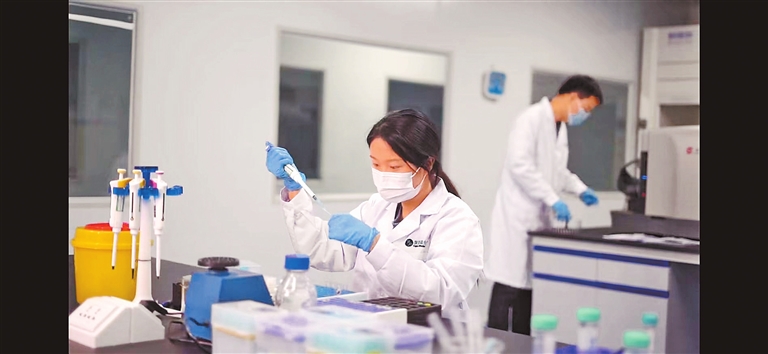
设备更新,武汉大学2.9亿元仪器采购大标
仪器信息网· 2026-01-24 09:03
Core Viewpoint - Wuhan University plans to procure instruments and equipment in the fields of life health, basic research, drug screening, and geospatial studies from March to May 2026, with a total budget of approximately 290.898 million yuan [1][2]. Procurement Summary - The total budget for the procurement is set at 290.898 million yuan, with the expected procurement period from March to May 2026 [2]. - The planned instruments include: - Stable isotope ratio mass spectrometer - Flow cytometer - PCR instrument - Cryo-confocal optical correlation microscope - Ultracentrifuge - High-throughput rapid protein liquid chromatography system - Central double-stage pure water system - Field emission scanning electron microscope - High-resolution inverted fluorescence microscope [2][3]. Detailed Procurement List - The procurement list includes various advanced instruments with specific budget allocations, such as: - High-content screening system: 83.784 million yuan, scheduled for May 2026 - Stable isotope ratio mass spectrometer (EA-IRMS): budget not specified - Digital interactive microscope systems: budget not specified - High-throughput quantitative PCR instrument: budget not specified - Ultracentrifuge: budget not specified - Laser confocal microscope: budget not specified - Multi-functional enzyme label instrument: budget not specified - High-resolution laser scanning confocal microscope: budget not specified [2][3][5]. Additional Equipment for Geospatial Studies - The procurement also includes equipment for geospatial studies, such as: - Quartz spring relative gravity meter: 2 sets, budget of 370.4 million yuan - Geomagnetic observation system: 1 set - High-density resistivity system: 1 set - Polarizing microscope: 6 sets [5][6].

仪器采购查重依据,三省发布预警目录
仪器信息网· 2026-01-15 08:59
Core Insights - The article discusses the 2025 provincial-level warning directory for newly purchased large scientific research facilities and instruments, highlighting the proactive measures taken by Shandong, Henan, and Guangxi provinces to avoid redundant purchases and enhance the efficiency of scientific instruments [1][2]. Summary by Sections Overview of the Warning Directory - The warning directory serves as an important basis for evaluating the purchase of large scientific research facilities and instruments valued at 500,000 yuan or more using provincial financial allocations [2][3]. Provincial Focus Areas - Each province has tailored its warning directory based on its specific scientific instrument layout and usage. For instance: - Henan Province lists seven types of instruments, including flow cytometers, PCR instruments, and laser confocal fluorescence microscopes [3]. - Shandong Province focuses on nine types, such as X-ray diffractometers and gas chromatographs [3]. - Guangxi Province emphasizes five types, including PCR instruments and DNA sequencers [7]. Detailed Instrument Distribution - The article provides detailed distribution data for various instruments across cities within the provinces: - In Henan, for example, there are 61 flow cytometers in Zhengzhou and 45 PCR instruments also in Zhengzhou [6]. - In Shandong, 56 X-ray diffractometers are located in Jinan, and 99 liquid chromatographs are also in Jinan [8][9]. Implications for Research Efficiency - The establishment of these directories signals a commitment to improving the utilization of scientific instruments and reducing financial waste associated with idle equipment [2][3].

流式、ICP-MS、GC、LC等9类仪器列入《2025年山东省省级新购大型科研仪器重点关注目录
仪器信息网· 2026-01-13 09:07
Core Viewpoint - The article discusses the release of the "2025 Shandong Province Key Focus Directory for Newly Purchased Large Scientific Research Instruments," which includes nine categories of instruments aimed at optimizing resource allocation and enhancing the efficiency of scientific research in the province [1][2]. Summary by Relevant Sections Overview of the Directory - The directory includes nine types of scientific research instruments such as X-ray diffractometers, mass spectrometers, and flow cytometers, which are essential for various research applications [2]. - The directory serves as a critical reference for provincial universities and research institutions when purchasing large scientific instruments valued at 500,000 yuan or more [2]. Instrument Categories and Regional Distribution - The nine categories of instruments listed in the directory are: 1. X-ray diffractometer 2. Inductively Coupled Plasma Emission Spectrometer 3. Inductively Coupled Plasma Mass Spectrometer 4. Gas Chromatograph 5. Liquid Chromatograph 6. Flow Cytometer 7. Laser Confocal Microscope 8. Ultracentrifuge 9. Fluorescent Quantitative PCR Instrument [2][3]. - The distribution of these instruments across different cities in Shandong Province is as follows: - X-ray diffractometer: Jinan (56), Qingdao (36), Yantai (7), Dongying (6) [3]. - Inductively Coupled Plasma Emission Spectrometer: Jinan (27), Qingdao (25), Linyi (13), Binzhou (13) [3]. - Inductively Coupled Plasma Mass Spectrometer: Qingdao (44), Jinan (43), Weifang (20), Yantai (13) [3]. - Gas Chromatograph: Qingdao (22), Jinan (17), Yantai (11), Binzhou (8) [3]. - Liquid Chromatograph: Jinan (99), Qingdao (65), Yantai (41), Weihai (23) [3]. - Flow Cytometer: Jinan (109), Qingdao (36), Yantai (21), Jining (8) [3]. - Laser Confocal Microscope: Jinan (71), Qingdao (30), Tai'an (13), Jining (9) [3]. - Ultracentrifuge: Jinan (44), Qingdao (12), Tai'an (10), Yantai (9) [3]. - Fluorescent Quantitative PCR Instrument: Jinan (35), Tai'an (25), Qingdao (8), Binzhou (5) [3]. Implementation and Guidelines - Relevant institutions are required to conduct evaluations before purchasing new large scientific instruments, ensuring adherence to the directory and preventing unreasonable growth in the number of instruments listed [2]. - The initiative aims to enhance the utilization efficiency and sharing level of large scientific research instruments in Shandong Province [2].

研判2025!中国流式细胞仪行业发展历程、产业链及市场现状分析:流式细胞仪驱动生命科学向临床转化,纳米级检测开拓外泌体新场景[图]
Chan Ye Xin Xi Wang· 2026-01-07 01:19
Core Insights - The flow cytometer industry in China is projected to reach a market size of approximately 3.599 billion yuan in 2024, reflecting a year-on-year growth of 19.21% [1][9] - The industry is achieving systematic breakthroughs along three main paths: expanding detection limits, enhancing analytical dimensions, and integrating functional platforms [1][9] Industry Overview - Flow cytometers utilize lasers to detect scattered light and fluorescence signals from cells or particles in a high-speed flow state, enabling rapid multi-parameter analysis, sorting, and quantitative characterization [2] - The core principle involves hydrodynamic focusing technology that allows cells to pass through the laser detection area in a single file, capturing forward scatter (indicating cell size), side scatter (indicating internal complexity), and fluorescence signals [2] Industry Development History - The flow cytometer industry in China has evolved over 40 years, starting with the introduction of the first FACS III in 1981, leading to significant milestones in domestic production and technology breakthroughs from 2013 onwards [4] - Key advancements include the introduction of the first clinical spectral flow cytometer and the first flow mass spectrometer with IVD registration, marking significant progress in high-end equipment [4] Market Size - The flow cytometer market is experiencing a shift from laboratory to clinical applications, with a notable increase in market size and technological advancements [9] - Noteworthy innovations include the development of nano-flow technology by Fuliu Biotechnology, which extends detection limits to 24nm, and the NL-CLC spectral flow cytometer by Xiatai Biotechnology, the first clinical-approved full-spectrum product in China [9] Key Companies - Major players in the flow cytometer market include Mindray Medical, which has integrated instruments, reagents, and software into a comprehensive platform, and Fuliu Biotechnology, a leader in nano-flow technology [10][11] - Mindray's revenue for the first three quarters of 2025 was 25.834 billion yuan, a decrease of 12.38% year-on-year, with a net profit of 7.570 billion yuan, down 28.83% [11] Industry Trends - The industry is witnessing accelerated technological iteration, with a focus on high-end and intelligent advancements, including the integration of AI for data analysis and high-throughput sorting [12] - Applications are expanding beyond clinical and research fields into broader industrial and public health areas, such as environmental monitoring and food safety [13] - The domestic production process is accelerating, driven by supply chain security and the need for local alternatives, reshaping the competitive landscape [14]

8261万元,安徽中医药大学大批仪器采购意向
仪器信息网· 2026-01-06 09:03
Core Viewpoint - Anhui University of Traditional Chinese Medicine has announced multiple government procurement intentions for laboratory equipment, with a total budget of 82.61 million yuan, covering 16 items of equipment expected to be procured between June 2025 and January 2026 [1][2]. Procurement Summary - The procurement includes various advanced instruments such as isothermal titration calorimeters, bioactivity analyzers, nanoparticle tracking analysis instruments, high-performance liquid chromatographs, nuclear magnetic resonance spectrometers, and X-ray diffractometers [2][4]. - The total budget for the procurement is 82.61 million yuan, indicating significant investment in laboratory capabilities [2][4]. - The procurement is aimed at enhancing the experimental teaching and research capabilities of the university, particularly in the fields of traditional Chinese medicine and related biomedical research [4][6]. Detailed Procurement Items - The procurement list includes: - Isothermal titration calorimeter - Bioactivity analyzer - Nanoparticle tracking analysis instrument - High-performance liquid chromatograph - Nuclear magnetic resonance spectrometer - X-ray diffractometer - Other essential laboratory equipment [2][4][5]. - Specific projects include: - A total of 89 sets of teaching instruments for the pharmacy college, focusing on high-frequency usage in experimental courses [4]. - A budget of 368,000 yuan for basic experimental equipment to support analysis and molecular biology platforms [6]. - A high-resolution mass spectrometer for drug impurity identification and analysis of traditional Chinese medicine components [6][7]. Service and Quality Requirements - The procurement requires that all equipment must meet national standards, be of qualified quality, and have a warranty period of no less than two years, with a supply and installation period of 90 days [6][7]. - After-sales service must include at least 2-3 visits per year to ensure normal operation and supply of spare parts [5][6].