流量突围

Search documents
高盛点评“中国AI大厂之战”:阿里 vs 腾讯 vs 字节
硬AI· 2025-11-29 15:20
Group 1: Core Strategies of Major Players - Alibaba is pursuing a "full-stack" approach with a significant capital expenditure increase of 80% year-on-year, reaching RMB 32 billion, aiming to build a comprehensive infrastructure similar to Google's [6][7] - ByteDance leverages its massive traffic advantage, with daily token usage reaching 30 trillion, nearly matching Google's 43 trillion, to dominate the application layer [10][14] - Tencent maintains a conservative strategy, reducing capital expenditure while focusing on seamlessly integrating AI capabilities into its extensive social and payment ecosystem [15][17] Group 2: Market Performance and Growth - Alibaba Cloud's external revenue grew by 29% year-on-year, with AI-related revenue achieving triple-digit growth for nine consecutive quarters, expected to accelerate to 38% in the upcoming quarter [7][8] - ByteDance's education application Gauth saw a 394% year-on-year increase in monthly revenue, highlighting its strong performance in the market [11] - Tencent's AI assistant "Yuanbao" has been integrated into WeChat Pay, enhancing operational efficiency for small and medium-sized businesses [17] Group 3: Competitive Landscape and Dynamics - The competition between China and the US in AI is characterized by a "dynamic alternation," where Chinese models rapidly iterate and catch up within 3-6 months following significant advancements in US models [4][20] - Chinese companies are utilizing open-source models extensively, with 80% of AI startups in China reportedly using these models, showcasing a unique competitive advantage [20] - The current valuation of Chinese AI companies, with expected P/E ratios of 21 for Tencent and 23 for Alibaba, suggests that the market is not in a bubble compared to their US counterparts [22][23]



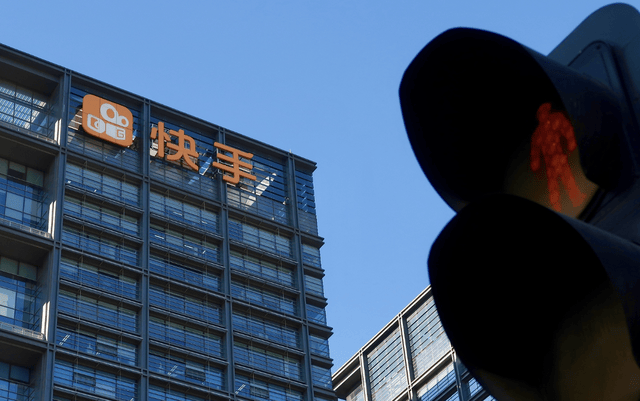
3200亿快手,“杀向”外卖、自营网贷
凤凰网财经· 2025-08-15 12:46
Core Viewpoint - The article discusses the challenges faced by leading short video platforms like Kuaishou and Douyin in the context of user growth limitations and competition, particularly in the food delivery and e-commerce sectors. It highlights Kuaishou's attempts to diversify its business through food delivery, financial services, and AI initiatives as a means to overcome these challenges [4][16][24]. Group 1: Industry Challenges - The food delivery sector has become a critical battleground for major e-commerce and short video platforms, with intense competition following JD's entry into the market [5][6]. - The competition in the food delivery market has intensified, leading to a resurgence of subsidy wars among Meituan, Ele.me, and Kuaishou [6][8]. - Both Kuaishou and Douyin are facing a user growth ceiling, making commercialization a top priority for both platforms [16][18]. Group 2: Kuaishou's Business Performance - Kuaishou's Q1 revenue growth slowed to 10.9% year-on-year, down from previous years, with a net profit of 39.78 billion yuan, a decrease from 41.19 billion yuan year-on-year [17][18]. - Kuaishou's e-commerce GMV growth has been declining, with figures from 2021 to 2024 showing a drop from 78% to 17% [22]. - In contrast, Douyin's 2024 GMV reached approximately 3.43 trillion yuan, growing by 35% year-on-year, indicating a stronger market position [23]. Group 3: Kuaishou's Strategic Moves - Kuaishou has entered the food delivery market, viewing it as a means to acquire new users and enhance GMV growth, rather than directly competing in the delivery sector [20][21]. - The company is also venturing into the financial services sector with its self-operated lending platform "Shengxin Jie," which is currently in the testing phase [24][25]. - Kuaishou has established an AI division focused on developing large model businesses, indicating a strategic pivot towards AI as a potential growth driver [30][31]. Group 4: Market Response and Future Outlook - Kuaishou's stock has risen over 81% this year, with its market capitalization surpassing 320 billion HKD, reflecting positive market sentiment towards its strategic initiatives [35][36]. - UBS has highlighted the potential of Kuaishou's AI model, estimating a global market size of 11 to 23 billion USD, suggesting a promising second growth curve for the company [36][37]. - The article concludes that while food delivery and lending may serve as supplementary avenues, the core future growth for Kuaishou lies in AI development [37].


快手入局外卖寻流量,AI加码突围增长瓶颈
Sou Hu Cai Jing· 2025-08-14 03:25
Core Viewpoint - The article discusses the challenges faced by major internet platforms, particularly in the e-commerce and short video sectors, as they seek to expand their market presence through food delivery services and other avenues [1][2]. Group 1: Industry Competition - The food delivery sector has become a critical battleground for leading e-commerce and short video platforms, with intense competition following the entry of JD.com into the market [2][5]. - The competition in the food delivery market has intensified, leading to a resurgence of subsidy wars among major players like Meituan and Ele.me [2][4]. - Despite the conclusion of the initial food delivery battle, underlying competition continues as platforms seek to capture significant traffic [4]. Group 2: Company Strategies - Kuaishou has entered the food delivery space, launching an independent delivery service similar to Meituan and Taobao, aiming to leverage existing partnerships with delivery platforms [6][7]. - Kuaishou's food delivery offerings primarily consist of group purchase vouchers from Meituan, indicating a reliance on established players for service fulfillment [9]. - Kuaishou's chairman emphasized that e-commerce is a vital growth engine for the company, although the growth rate of its e-commerce segment has been declining [12]. Group 3: Financial Performance - Kuaishou's stock has seen significant growth, with an increase of over 81% this year, leading to a market capitalization exceeding 320 billion HKD [10][17]. - The company's revenue growth has slowed, with a year-on-year increase of only 10.9% in Q1, compared to previous years [10]. - Kuaishou's e-commerce GMV growth has also decelerated, with figures from 2021 to 2024 showing a decline in growth rates from 78% to 17% [12]. Group 4: Future Directions - Kuaishou is exploring new avenues for growth, including the launch of a self-operated online lending service, indicating a strategic shift towards financial services [13][14]. - The company is also investing in AI, establishing a dedicated AI division to enhance its capabilities in video generation, which is seen as a potential second growth curve [16][17]. - Analysts have recognized the potential of Kuaishou's AI initiatives, with market estimates for the global video generation market reaching between 11 billion to 23 billion USD [17][18].