海南自贸港税收政策

Search documents
【自贸港税收政策“瓦来gǒng”】海南自贸港岛内居民日用消费品“零关税”政策要点来了~
蓝色柳林财税室· 2026-03-09 08:53
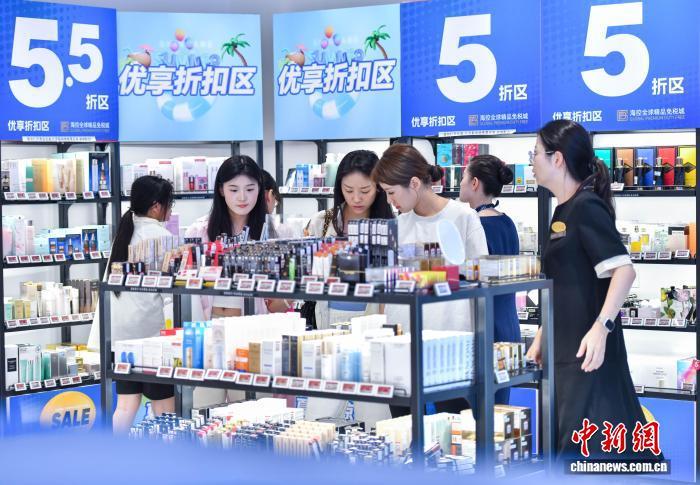
Group 1 - The article discusses the "zero tariff" policy for imported goods in Hainan Free Trade Port, allowing residents to purchase up to 10,000 RMB worth of goods annually without tax [3][5]. - A total of 202 items are included in the positive list of "zero tariff" goods, covering daily consumer products such as food, beverages, household goods, and baby products [3]. - The first five duty-free stores opened on February 11, located in Haikou and Sanya, are authorized to sell these "zero tariff" goods [3]. Group 2 - The article mentions that the list of "zero tariff" goods will be dynamically adjusted based on the actual needs and regulatory conditions of Hainan Province [3]. - It highlights that designated operating locations for these goods must comply with specific qualifications and pay the required duty-free operating fees [3].


货物经“二线”进内地有什么税收优惠政策?
Xin Lang Cai Jing· 2026-01-26 17:57
Core Points - The article discusses the tax policies related to the Hainan Free Trade Port, specifically focusing on the import tax exemption and the management of the import tax product catalog [1][2][3][4][5][6]. Group 1: Import Tax Product Catalog - The import tax product catalog for Hainan Free Trade Port includes goods specified in the notification issued by the Ministry of Finance, General Administration of Customs, and State Taxation Administration on July 18, 2025 [1]. - The number of tax-exempt items has expanded from 1,900 to over 6,600 following the closure of the port [2]. - The catalog will be adjusted based on comprehensive assessments, relevant tax reforms, and the actual needs of Hainan Province [2]. Group 2: Zero Tariff Beneficiaries - The main beneficiaries of the "zero tariff" policy include enterprises registered in Hainan Free Trade Port with independent legal status, public institutions within the port, and certain non-profit educational and technological entities approved by relevant authorities [3]. Group 3: Tax Policies for Goods Entering Mainland China - Goods entering the mainland through the "second line" are subject to specific tax policies, including the requirement to pay import duties, value-added tax, and consumption tax as per regulations [4]. - If import taxes have already been paid during the "first line" import or domestic circulation, no additional taxes will be levied to avoid double taxation [4][5]. - Goods that have completed all import tax payments will be managed according to domestic circulation regulations and will be subject to domestic value-added tax and consumption tax [5]. Group 4: Treatment of Goods Subject to Special Measures - Goods that fall under four specific measures (such as tariff quota management and trade remedy measures) must adhere to specific regulations when imported and when entering the mainland [6]. - "Zero tariff" goods that are subject to these measures will follow the relevant regulations and will not be subject to double taxation if they have already complied with the measures [6].
18项税收政策在海南自贸港落地生根
Zhong Guo Xin Wen Wang· 2025-11-22 10:20
Core Viewpoint - The establishment of 18 tax policies in Hainan Free Trade Port is crucial for the implementation of its special tax system, focusing on trade and investment liberalization and facilitation [1][2]. Group 1: Tax Policies Overview - 18 tax policies have been implemented in Hainan Free Trade Port since its establishment, with 14 being early harvest policies outlined in the "Overall Plan" [1]. - The early harvest policies include three "zero tariff" lists for raw materials, self-use production equipment, and yachts, along with a 15% personal and corporate income tax and duty-free shopping for outbound travelers [1]. - Four additional policies introduced in recent years include "zero tariff" for pharmaceutical and medical devices in Boao Lecheng, exemption from stamp duty for offshore trade, and tax exemptions for temporary imports and exports [1]. Group 2: Future Tax Policy Changes - After the full closure of the island on December 18, the "zero tariff" policy will transition from three lists to a negative list management system, changing the current "14+4" policies to "13+4" [2]. - The new policies will include 10 related to tariffs, increasing the "zero tariff" level to 74%, along with two VAT refund policies and one stamp duty exemption for offshore trade [2]. - The tax system in Hainan Free Trade Port will exhibit stability, uniqueness, systematic nature, and gradual implementation, providing predictable and continuous benefits [2].
海南自贸港税收政策有很大竞争力
Hai Nan Ri Bao· 2025-10-11 23:53
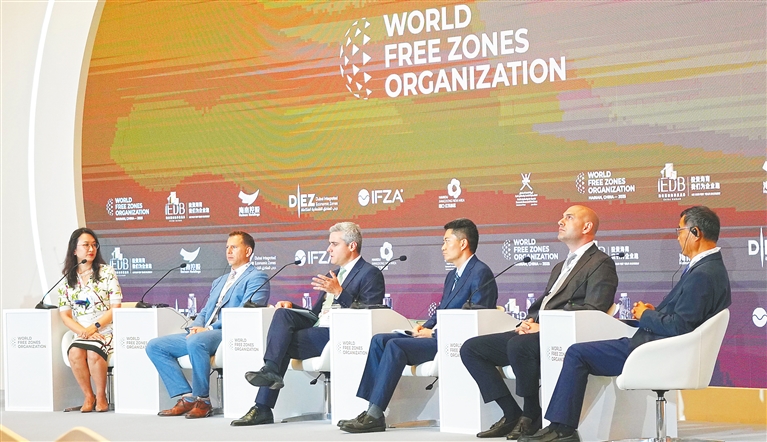
Core Insights - The forum on "Taxation and Free Zones: Challenges and Opportunities" highlighted the importance of tax policy in the development of free zones, with a focus on the competitive tax system of Hainan Free Trade Port [3]. Group 1: Tax Policy and Competitiveness - Hainan's tax system is characterized by zero tariffs, low tax rates, and a reduction system, aligning with international tax reform trends [3]. - The tax policy of Hainan Free Trade Port is designed to be flexible and systematic, catering to different categories of goods and industries [3]. - The tax system is a core component of Hainan's institutional framework, closely tracking international trade rules and continuously optimizing based on local economic conditions [3]. Group 2: Investment Attraction Strategies - The CEO of the Uruguay Americas Free Trade Zone emphasized the need for substantial tax adjustments to attract investors, ensuring that local companies maintain a competitive effective tax rate [3]. - The President of the China Service Trade Association noted that Hainan has significant opportunities for tax reform, particularly in service trade export tax rebates and zero tax rates in certain sectors [5]. - Hainan's geographical advantage allows for faster cross-border e-commerce delivery to Southeast Asia, enhancing its attractiveness for investment [5]. Group 3: Support for Enterprises - The CEO of the Georgia Poti Free Industrial Zone highlighted the importance of providing substantial support and diverse tax incentives to new enterprises, especially in smaller economies [4]. - Early-stage support for businesses is crucial to mitigate potential financial risks, which can include various forms of fiscal subsidies [4].
活力中国调研行|税收政策赋能海南自贸港高水平对外开放
Zhong Guo Xin Wen Wang· 2025-09-23 09:49
Core Viewpoint - The establishment of a tax policy system in Hainan Free Trade Port is aimed at promoting high-level openness and facilitating the flow of production factors, thereby enhancing Hainan's role as a significant platform for China's integration into economic globalization and regional trade cooperation [3][4]. Tax Policy System - The tax policy system in Hainan Free Trade Port has been preliminarily established, focusing on trade and investment liberalization, with principles of zero tariffs, low tax rates, simplified tax systems, strong legal frameworks, and phased implementation [4][6]. - As of now, 18 tax policies have been implemented, including three "zero tariff" lists for raw materials, self-use production equipment, and yachts, along with 14 early harvest tax policies [4][6]. Characteristics of Tax Policies - The tax policy system has four main characteristics: stability, special arrangements for Hainan, systematic coverage of various sectors, and a gradual approach to policy rollout and optimization [8]. - The policies are designed to support industrial structure optimization, talent introduction, and the development of international tourism consumption centers [8]. Implementation Measures - Hainan has introduced a management approach for recognizing beneficiaries of "zero tariff" imports and has optimized the process for high-end talent to enjoy personal income tax benefits [9][10]. - A closed-loop mechanism for the formulation, implementation, evaluation, and improvement of tax policies has been established to ensure effective policy execution [10]. Future Developments - The full closure operation of Hainan Free Trade Port is set to commence on December 18, 2023, with ongoing preparations to maximize the benefits of tax policies [10].
(活力中国调研行)税收政策赋能海南自贸港高水平对外开放
Zhong Guo Xin Wen Wang· 2025-09-23 06:56
Core Viewpoint - The tax policies implemented in Hainan Free Trade Port are driving high-level openness to the outside world, facilitating the flow of production factors and expanding both international and domestic markets [1][3]. Tax Policy System Establishment - The tax policy system for Hainan Free Trade Port has been initially established, focusing on trade and investment liberalization and facilitation, with principles of zero tariffs, low tax rates, simplified tax systems, strong legal frameworks, and phased implementation [4]. - As of now, 18 tax policies have been implemented, including three "zero tariff" lists and 14 early harvest tax policies, with additional incremental tax policies introduced [4][5]. Characteristics of Tax Policies - The tax policy system has four main characteristics: stability, special arrangements for Hainan, systematic coverage of various sectors, and a gradual approach to policy rollout and optimization [7]. Supportive Measures for Policy Implementation - Hainan is actively promoting the implementation of tax policies through institutional guarantees, system optimization, service enhancements, and training [8]. - A management approach for recognizing beneficiaries of "zero tariff" imports has been established, along with a mechanism for evaluating and improving tax policies [9]. Future Developments - Hainan Free Trade Port will officially start full island closure operations on December 18, 2023, with ongoing preparations to ensure the effective implementation of tax policies and the continuous release of policy dividends [9].
税惠“磁场”释放强劲吸引力
Hai Nan Ri Bao· 2025-06-03 01:13
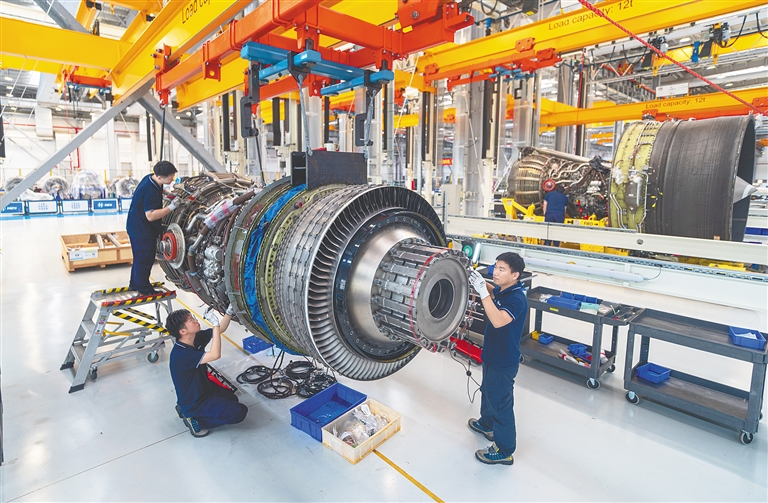
Core Points - Hainan has implemented 14 early tax policies to establish a tax system for the free trade port, focusing on "zero tariffs" and "low tax rates" to attract businesses and individuals [1][6] - The "zero tariff" policy has been expanded to include medical devices and pharmaceuticals, benefiting both enterprises and individuals [4][6] - The tax incentives have significantly reduced operational costs for companies, enhancing their competitiveness in the global market [5][7] Tax Policies - The "zero tariff" policy includes three lists covering raw materials, self-use production equipment, and transportation tools, which have collectively imported goods worth 226.9 billion yuan, resulting in tax reductions of 43.2 billion yuan [6][8] - The corporate income tax and personal income tax are set at a preferential rate of 15%, attracting nearly 4,300 enterprises to benefit from this policy [7][8] - The implementation of the "zero tariff" policy has led to substantial savings for companies, with one company saving approximately 44 million yuan in taxes from importing goods valued at 350 million yuan [5][6] Economic Impact - The tax incentives have attracted over 85,000 talents to Hainan, contributing to the development of the free trade port [8] - The policies have facilitated the transformation of companies, such as a pharmaceutical company that shifted from a commercial entity to a production enterprise, saving over 10 million yuan in taxes [7][8] - The continuous optimization of tax policies has enhanced Hainan's appeal as a business destination, fostering economic growth and development [6][7]