海洋生态治理

Search documents
浙江移动5G+创新赋能“蓝色循环”新模式
Ren Min Wang· 2026-01-12 08:01
Core Viewpoint - Zhejiang Province is innovating a multi-faceted marine plastic waste management system, focusing on comprehensive recycling and utilizing digital technology to enhance ecological protection efforts [1][3]. Group 1: Marine Plastic Waste Management - Zhejiang Province is expanding its marine plastic waste recovery efforts from just plastic bottles to include fishing nets and other marine plastic waste [1]. - The province has established a closed-loop system for collection, transportation, and disposal of marine plastic waste, leveraging local plastic recycling enterprises [1]. Group 2: Digital Infrastructure and Technology - The "Blue Sea Station" initiative employs smart technologies like facial recognition and coding traceability to track marine waste throughout its lifecycle [2][4]. - A robust 5G network has been developed to ensure stable data transmission for the "Blue Sea Station," enabling real-time data processing and future integration of AI and big data applications [2]. Group 3: Community Engagement and Economic Incentives - The "Blue Sea Station" serves as a link between environmental actions and community benefits, offering higher recycling prices (10% to 20% above market rates) to incentivize participation from fishermen and residents [3]. - The initiative has implemented a dual approach of recovery incentives and low-barrier participation to foster a community-driven marine environmental protection model [3]. Group 4: Traceability and Regulatory Compliance - The "Blue Sea Chain" digital platform utilizes 5G and IoT technologies to ensure effective monitoring and traceability of collected marine plastic waste [4][5]. - Each batch of marine plastic waste is assigned a unique QR code, allowing for real-time data tracking from collection to processing, ensuring transparency and accountability in waste management [4][5].
广西有效恢复海洋生态功能
Jing Ji Ri Bao· 2025-12-19 04:02
Core Insights - Guangxi has made significant progress in marine ecological protection and restoration, particularly in coral reefs, mangroves, and beaches, establishing a sustainable development path that integrates ecological restoration, income generation, and industrial development [1][2] Group 1: Marine Ecological Restoration Projects - The Xili Bay project in Qinzhou has implemented an "ecological restoration + cultural tourism" model, constructing a 200-meter rock revetment and rehabilitating 82.72 hectares of beach, creating a coastal space that integrates ecology, leisure, and disaster prevention, generating employment for over 2,000 people [1] - During the 14th Five-Year Plan period, Guangxi invested nearly 4 billion yuan in 10 marine ecological protection and restoration projects, completing 195 kilometers of coastline rehabilitation and restoring 3,280.9 hectares of coastal wetlands, effectively enhancing the quality and stability of marine ecosystems [1] Group 2: Mangrove and Coral Restoration Efforts - Since the beginning of the 14th Five-Year Plan, approximately 900 million yuan has been allocated for mangrove protection and restoration, resulting in the creation of 1,100 hectares of new mangroves and the restoration of 3,370 hectares of existing mangroves, along with the management of 1,400 hectares of invasive species [2] - The Beihai region has developed a comprehensive coral restoration system, achieving a coral survival rate of over 85% through innovative techniques, while Qinzhou has utilized 6,000 tons of discarded oyster shells to create ecological protective barriers, promoting resource recycling and shoreline stabilization [2] Group 3: Biodiversity and International Recognition - The restoration of marine ecosystems has led to significant advancements in biodiversity protection, with over 70 identified Bryde's whales around Weizhou Island, more than 360 Chinese white dolphins discovered in San Niang Bay, and over 110 Chinese white dolphins in the national nature reserve of Hupo [2] - Guangxi's marine ecological restoration achievements have gained international recognition, with the Xili Bay ecological restoration project and coastal ecological disaster reduction case being selected as international model cases [2]
探路“海上新基建”|南方海洋实验室助力珠海打造海洋生态治理新典范
Nan Fang Nong Cun Bao· 2025-12-08 09:32
Core Viewpoint - The Southern Marine Laboratory is playing a pivotal role in promoting "marine new infrastructure" in Zhuhai, focusing on collaborative governance of marine, island, and coastal areas to establish a new model for marine ecological management [2][3][4]. Group 1: Technological Innovations - The Southern Marine Laboratory has developed a comprehensive "sea-land-air-space" monitoring network with 38 observation stations, including 17 smart buoys, to create a digital mirror system of the marine environment [16][18][19]. - Advanced technologies such as drones equipped with sensors and six numerical forecasting systems are being utilized to enhance marine forecasting capabilities [20][21]. - The laboratory's early warning systems have proven effective, providing timely analysis and decision-making support during extreme weather events, such as accurately predicting the path of Typhoon "Sura" 36 hours in advance [25][26]. Group 2: Ecological Governance - The laboratory is focusing on ecological restoration and carbon sink research, utilizing typical mangrove areas in Zhuhai as natural laboratories to study microbial-driven element cycles and carbon sink formation mechanisms [38][41]. - Collaborative projects are underway to protect species like the Chinese white dolphin and restore coastal wetlands, contributing to a comprehensive ecological safety framework [45][46]. - The laboratory has developed a series of databases to support regional collaborative governance, ensuring that ecological decisions are data-driven and legally compliant [49][50]. Group 3: Systematic Innovation - The Southern Marine Laboratory is integrating micro-level research with macro-level governance practices, emphasizing a systems approach to reshape human-ocean relationships and drive sustainable marine development [54][55]. - Research teams are addressing the mechanisms of tropical ocean and monsoon interactions, enhancing predictive capabilities for extreme weather events [56][58]. - The laboratory's efforts in marine governance demonstrate the necessity of both technological innovation and systematic thinking to create a resilient and vibrant marine environment [74][75].


水老师的蓝色梦想
Ren Min Ri Bao· 2025-09-14 22:03
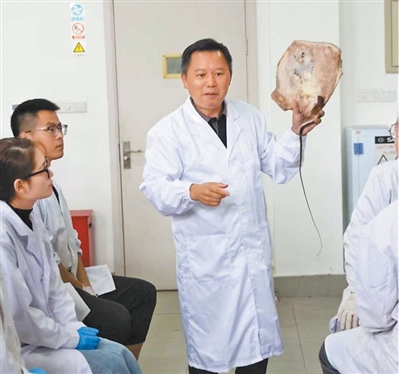
Core Viewpoint - The article highlights the dedication and innovative teaching methods of Professor Shui Bainian at Zhejiang Ocean University, emphasizing his commitment to student development and practical application of knowledge in marine ecology [2][3][4][5]. Group 1: Teaching Philosophy and Methods - Professor Shui Bainian emphasizes the importance of adapting to university life and guiding students in their academic journey, maintaining a record of student discussions for 17 years [2]. - He has developed an innovative teaching model that combines biological specimens, presentations, flipped classrooms, videos, and field practice, leading to high rates of student advancement and employment [3]. - Shui's teaching reflects a deep care for students, integrating practical ecological restoration projects into the curriculum, which enhances the learning experience [4]. Group 2: Impact on Students and Community - Under Shui's guidance, students have successfully improved their academic performance, with the 2011 class graduating and many choosing to pursue further studies [2]. - His projects have significantly contributed to local marine economies, such as increasing the average income of fishermen from less than 1,000 yuan to 13,000 yuan through ecological restoration efforts [4]. - The recognition of his project as one of the top ten typical cases for marine ecological protection and restoration by the Ministry of Natural Resources in 2023 showcases the real-world impact of his work [5]. Group 3: Legacy and Inspiration - Shui Bainian's teaching career spans 35 years, during which he has been inspired by his mentor, Wang Chenghai, and continues to instill values of care and support in his students [6]. - His approach to education is characterized by a commitment to nurturing students' dreams and applying knowledge to practical challenges, fostering a new generation of educators and researchers [6].
蔡晃:全方位提升海洋文化影响力
Jing Ji Ri Bao· 2025-08-13 23:51
Core Viewpoint - The report emphasizes the importance of developing marine culture as a vital component of building a marine power, which encompasses marine security, economy, and culture, providing essential spiritual motivation and resource endowment for this initiative [1][2]. Group 1: Role of Marine Culture - Marine culture serves as a crucial avenue for inheriting and promoting excellent traditional Chinese culture, enhancing cultural confidence, and facilitating the global dissemination of Chinese culture [1][2]. - The marine culture industry, characterized by high added value, low energy consumption, and low pollution, can optimize industrial structure, create numerous job opportunities, and promote coordinated regional economic development [1][2]. - Marine cultural exchanges and cooperation can support the construction of a marine community with a shared future, enhancing cultural exchange and mutual learning both domestically and internationally [2]. Group 2: Economic Integration - The integration of marine culture with emerging industries can drive high-quality development in the marine economy, fostering innovation and quality enhancement [3]. - The marine culture industry acts as a significant carrier for the integration of marine culture and economy, promoting the development of cultural tourism and related industries [3]. - Establishing marine cultural brands by leveraging unique cultural genes and contemporary values can create a series of culturally rich and quality-assured products [3]. Group 3: Social Development - Marine culture embodies the historical memories, values, and spiritual pursuits of local communities, necessitating the creative transformation and innovative development of traditional marine culture [4]. - Strengthening talent cultivation and interdisciplinary development in marine-related fields is essential for supporting the construction of a marine power [4]. - Engaging the public through cultural activities such as festivals and sports events can enhance the integration of marine culture into social life [4]. Group 4: Regional Cooperation - Leveraging regional advantages to deepen open cooperation can expand the "blue circle of friends," promoting multi-level collaboration and resource connectivity [5]. - Developing marine cultural tourism routes and establishing marine industry cooperation zones can facilitate industry alignment and talent mobility [5]. Group 5: Marine Governance - The construction of marine culture enhances awareness of marine protection and scientific literacy, significantly advancing effective marine ecological governance [5]. - Implementing the "碧海" (Clear Sea) project in regions like Fujian aims to create beautiful marine environments while exploring marine economic development and environmental protection [5].
守护南海“生态明珠”!三沙创新海洋协同保护模式
Xin Hua She· 2025-06-06 01:08
Core Insights - Hainan's Sansha City has developed an innovative collaborative protection model involving "protection agencies + fishermen + scientists" to enhance marine ecological governance through technology and public participation [1] Group 1: Sea Turtle Protection - The largest natural nesting site for green sea turtles in China is located on Xisha North Island, where fishermen have transitioned from hunting to protecting sea turtles, with 80% of patrols conducted by local fishermen [2] - The implementation of the "Sea Turtle Protection Action Plan" has led to the marking of over 1,500 sea turtle nests and a significant increase in the survival rate of hatchlings [2][6] - The establishment of temporary control zones for sea turtle protection demonstrates the commitment of Sansha City to marine ecological conservation [2] Group 2: Deep Sea Monitoring - The Yongle Blue Hole, the world's deepest marine blue hole, has been equipped with an integrated monitoring system for year-round observation of its unique geological features [3] - The monitoring network has successfully intercepted 23 illegal operations and conducted 15 advanced research projects, highlighting the importance of extreme environments for studying geochemical processes [3][4] Group 3: Coral Reef Restoration - The artificial coral nursery in the waters around Yongxing Island has successfully cultivated 143,000 coral seedlings, making it the largest coral restoration base in Xisha [5] - Innovative techniques have significantly increased the growth rate of coral fragments, with annual growth reaching 15 centimeters, allowing for the replenishment of over 100,000 seedlings to natural reefs each year [5][6] - The collaborative model of dynamic monitoring by research units and fishermen's tracking and removal of threats has proven effective in protecting coral reefs [5][6]
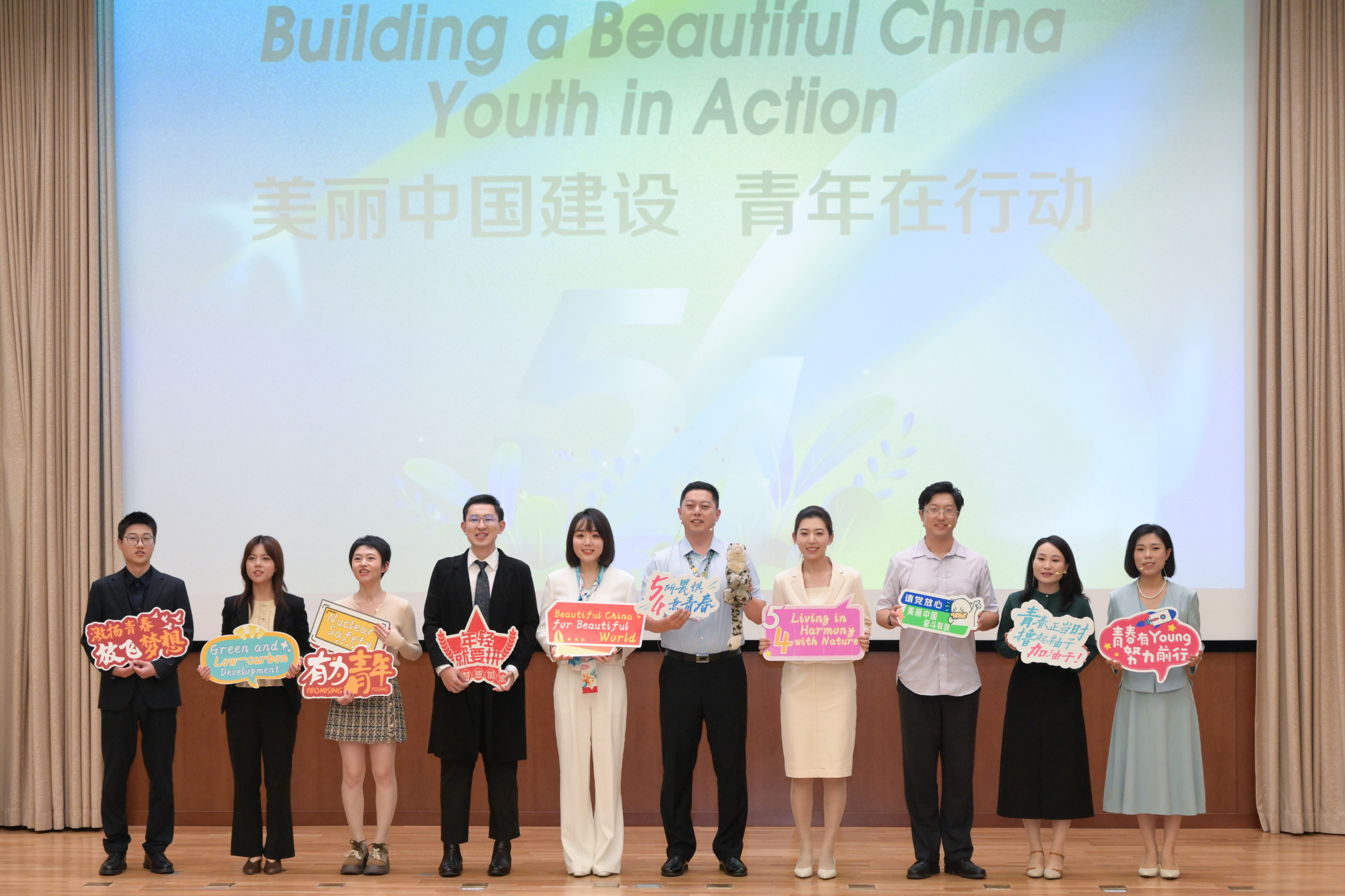
宏伟蓝图催人奋进 青春使命无上光荣——2025年生态环境部系统青年英文演讲决赛暨五四青年节纪念表彰活动侧记
Zhong Guo Huan Jing Bao· 2025-05-09 01:05
Core Viewpoint - The event highlighted the active participation of youth in promoting environmental protection and the construction of a "Beautiful China," showcasing their confidence and commitment to global environmental governance [1][6]. Group 1: Youth Engagement in Environmental Governance - Ten contestants presented compelling stories about "Beautiful China Construction," demonstrating their roles as green ambassadors [1]. - The event emphasized the importance of youth in international environmental negotiations, with participants sharing their experiences and challenges faced during global discussions [6][12]. - The speeches reflected a strong sense of responsibility among young representatives to ensure China's voice is heard in international climate discussions [12][15]. Group 2: Success Stories and Initiatives - Contestants shared personal stories that illustrated the practical aspects of environmental negotiations, emphasizing that skills are honed through real-world experiences rather than theoretical knowledge [15]. - The event showcased various initiatives, such as marine ecological governance and biodiversity protection, highlighting China's commitment to sustainable development [20][32]. - The narratives included successful projects like the "For Love Power Generation" initiative, which aims to provide solar energy to remote areas, demonstrating the intersection of environmental protection and social responsibility [32]. Group 3: Recognition of Youth Contributions - The event recognized outstanding youth representatives in various fields, including theoretical research, grassroots contributions, and teamwork, marking their evolution into a vital force in building a beautiful China [1][32]. - The speeches collectively illustrated the dedication of young professionals in tackling environmental challenges and their role in advancing ecological civilization [1][22].