海洋科考

Search documents
新春走基层丨-20℃的辽东湾海面上 他们追着浮冰跑
Yang Shi Xin Wen Ke Hu Duan· 2026-02-25 08:00
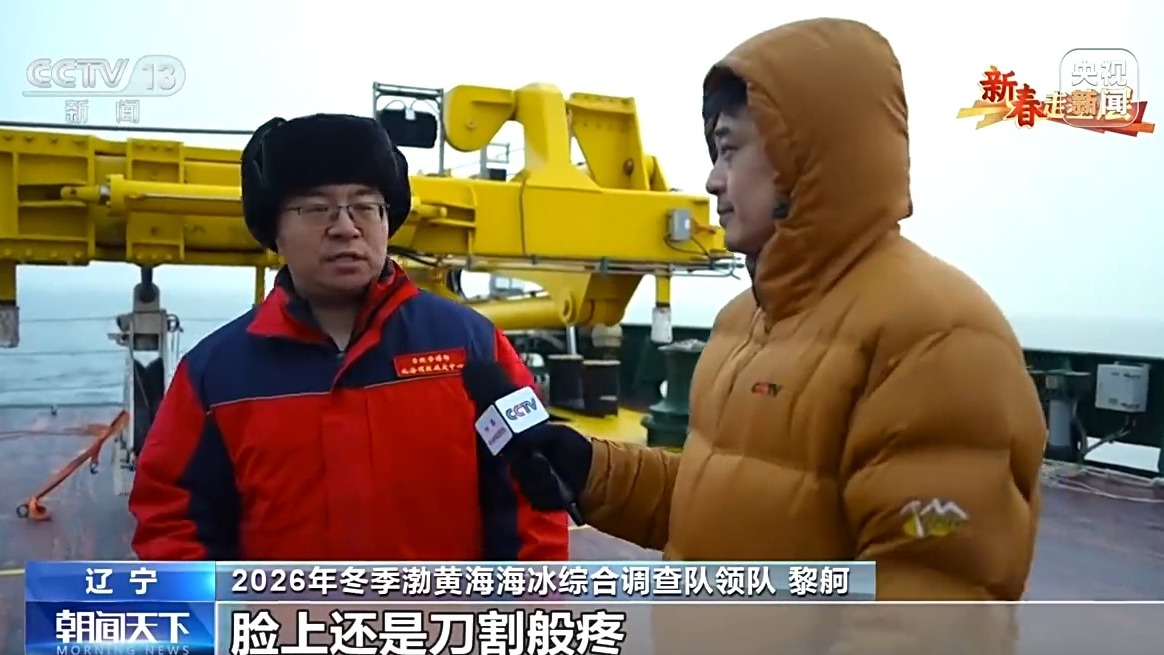
Core Insights - The article discusses the challenges and efforts of a research team conducting ice observation and sampling in the Bohai Sea during winter, highlighting the impact of sea ice on maritime activities and oil extraction [1][3][5]. Group 1: Research Activities - The Bohai Sea experiences significant sea ice coverage during winter, with over 10,000 square kilometers of ice, affecting nearly 40% of the sea surface [1]. - The research team, led by Li He, consists of 20 members who set up 26 representative observation stations within the core ice area to conduct daily work [3]. - The ice sampling group, led by Cao Xiaowei, faces extreme cold conditions, often resulting in frostbite and challenges in maintaining the integrity of ice samples [3]. Group 2: Operational Challenges - The "Polar" icebreaker faces difficulties in anchoring due to the movement of ice, which increases the risk of dragging the anchor and potentially colliding with other vessels or underwater pipelines [4]. - The team must adapt their operations to nighttime testing to avoid solar influence on their measurements, ensuring more accurate results [3]. Group 3: Technological Advancements - The "Polar" icebreaker has undergone significant upgrades since its inception in 1986, now featuring advanced capabilities for icebreaking and multi-disciplinary scientific research [7]. - The current generation of the "Polar" icebreaker can break through ice up to one meter thick and has capabilities in atmospheric, ice, and geophysical research, placing it at the forefront of international standards [7].

新春走基层| 新的一年,浙江37位渔民要送一艘科考船下海
Xin Hua She· 2026-02-17 12:51
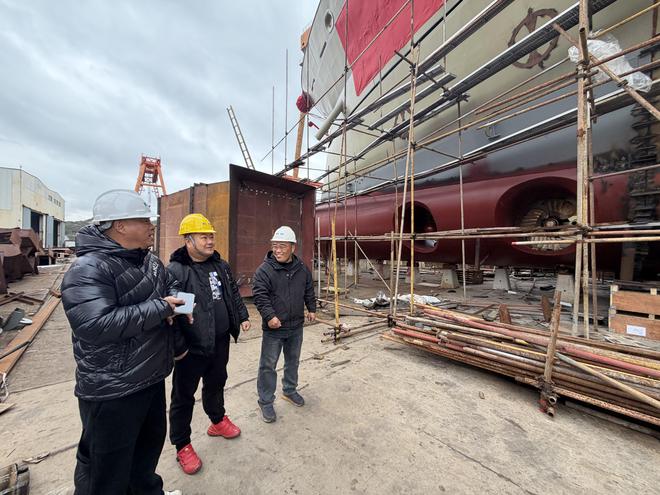
Core Viewpoint - The construction of a research vessel, funded by local fishermen, aims to enhance China's marine scientific exploration capabilities and address the shortage of research vessels in the country [1][11]. Group 1: Project Overview - The research vessel is 82 meters long, with a full load displacement of 3,500 tons and a range of 10,000 nautical miles, designed for global operations with a self-sustainability of over 60 days [6]. - The project was initiated by 37 fishermen who collectively raised 130 million yuan (approximately 19 million USD) to fund the construction [5][11]. - The vessel's construction incorporates advanced technology, including a DP-2 dynamic positioning system, and features a unique low-resistance bow design for improved performance [6][7]. Group 2: Community Involvement - The initiative reflects a strong community effort, with fishermen contributing their savings and even taking loans to support the project, demonstrating a commitment to future generations [5][11]. - Fishermen have actively participated in the construction process, learning technical knowledge and collaborating with engineers to overcome challenges [9][10]. Group 3: Market Context - The demand for research vessels is increasing in China, particularly as the marine economy surpasses 10 trillion yuan (approximately 1.4 trillion USD) and deep-sea technology gains governmental support [11]. - The project aligns with the broader trend of upgrading China's shipbuilding industry, which has evolved from wooden fishing boats to advanced research vessels [7].
处理伤口后放归大海,我国大洋科考队在印度洋救助受困海龟
Xin Lang Cai Jing· 2026-02-10 13:52
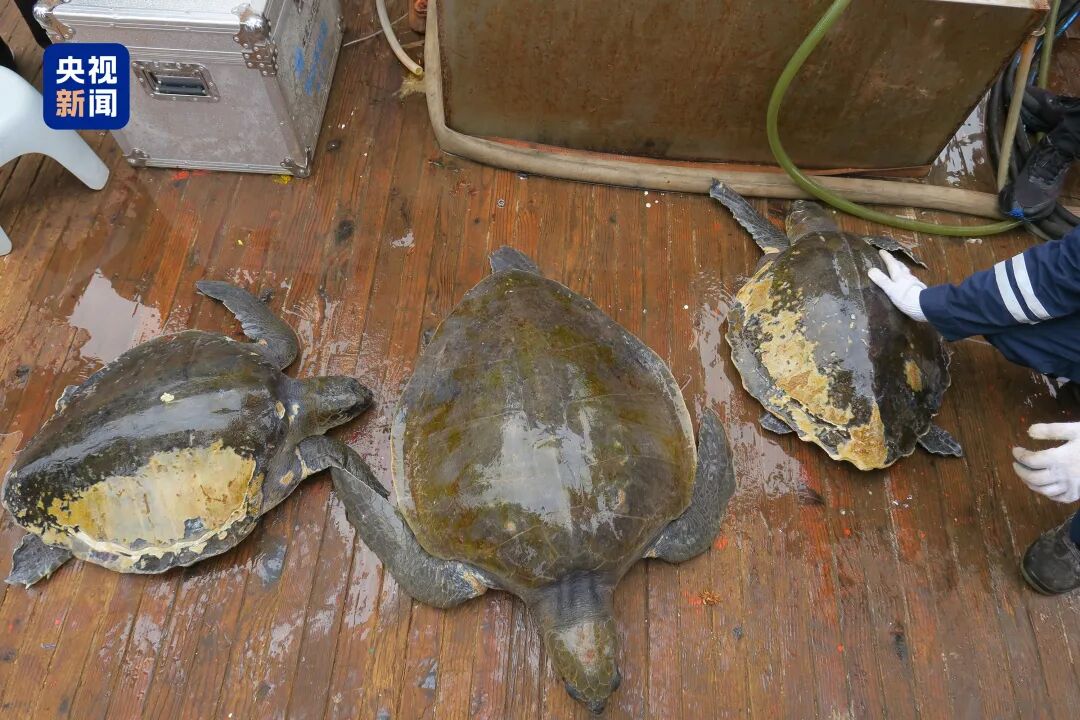
Group 1 - The Chinese ocean research vessel, while conducting scientific investigations in the Indian Ocean, rescued a stranded sea turtle [1][3] - The research team discovered a floating object entangled in fishing nets, initially suspected to be a group of trapped sea turtles [3] - A total of six sea turtles were found, with four being alive, identified as Pacific green turtles, which are classified as a national first-class protected species [3] Group 2 - The turtles showed signs of severe injuries due to prolonged entanglement in fishing nets, including marks and abrasions on their limbs and shells, but no obvious fractures were noted [5] - The research team disinfected the wounds of the turtles before releasing them back into the ocean [5]
深蓝梦想2035环球海洋科考起航
Xin Hua She· 2025-10-31 16:05
Core Viewpoint - The "Deep Blue Dream 2035 Global Ocean Scientific Expedition" has launched from Shenzhen, marking China's proactive response to the UN's "Decade of Ocean Science" initiative, emphasizing an open, public, and inclusive approach to marine scientific research [1] Group 1: Expedition Overview - The expedition is a ten-year scientific initiative that aims to integrate global wisdom and social forces, focusing on connecting science, industry, and the public [1] - The first leg of the expedition will take place from October 31 to November 3 in the outer waters of the Pearl River Estuary, involving activities such as seawater sampling, coastal sediment investigation, and seabed electromagnetic detection [1] - The expedition will also conduct the first sea trial of China's world-leading fully automatic in-situ water sampling device [1] Group 2: Educational and Community Engagement - The initiative includes a program called "Big Hands Pulling Small Hands, Let's Explore the Ocean Together," allowing youth from regions like Xinjiang, Tibet, Guizhou, and Zhejiang to experience marine scientific research alongside scientists [1] Group 3: Research Vessel Specifications - The "Xiangyanghong 10" research vessel, responsible for the first leg of the expedition, is a 4,500-ton ocean research ship designed and built in China, measuring 93.0 meters in length, 17.4 meters in width, and 8.8 meters in depth, with a draft of 7.5 meters [2] - This vessel serves as a mobile laboratory and testing platform for national marine scientific research and high-tech development [2] Group 4: Collaborative Efforts - The expedition is initiated by the China Ocean Mineral Resources Research and Development Association in collaboration with the Southern University of Science and Technology's Institute of Oceanography and other institutions [2]
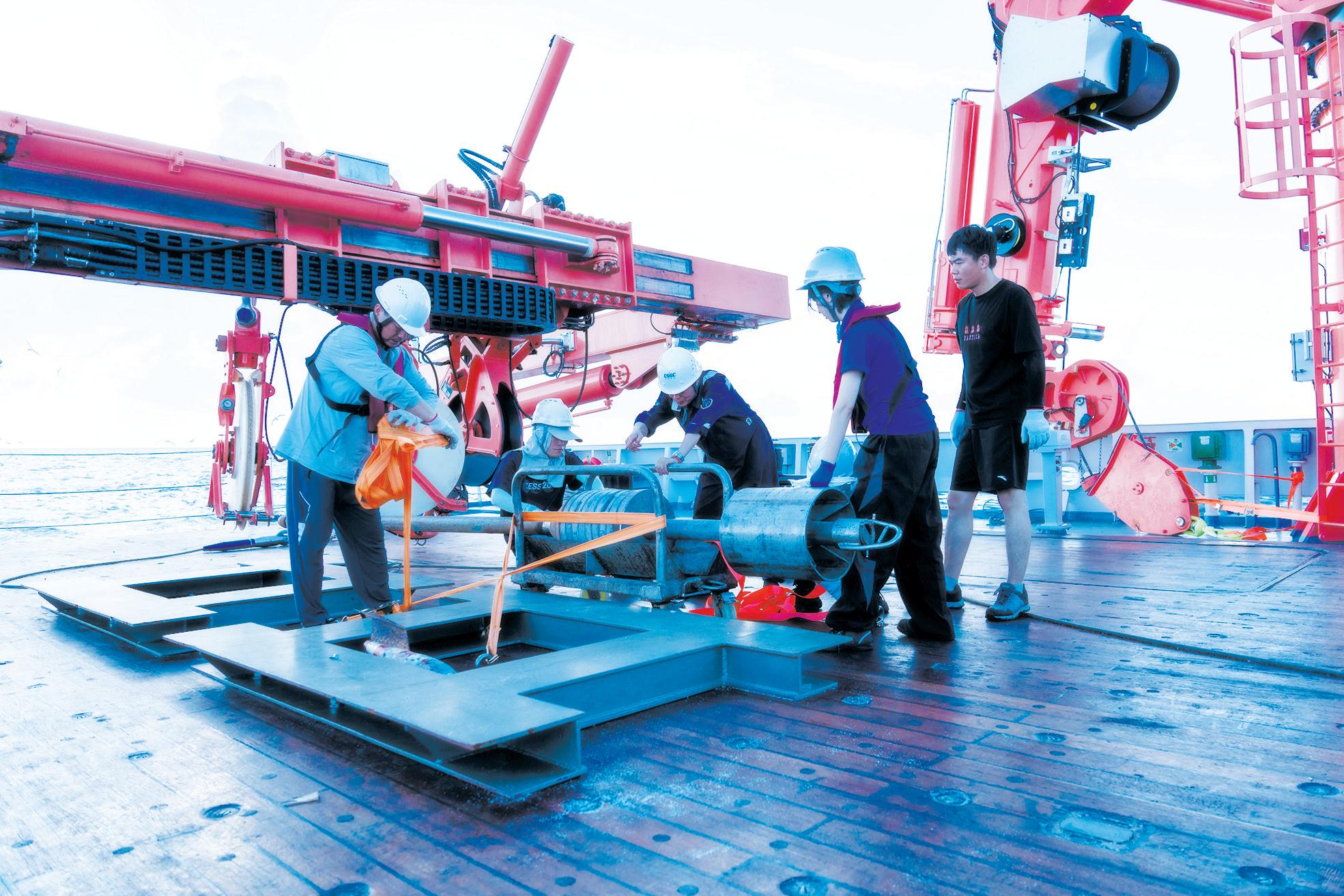
“海上大学”第一课
Zhong Guo Zi Ran Zi Yuan Bao· 2025-08-21 02:58
Core Viewpoint - The "Tongji" research vessel has officially commenced its first scientific expedition with students and faculty from Tongji University, emphasizing the institution's commitment to marine science education and research [2][4]. Group 1: Educational Initiatives - The first group of students participated in a practical training voyage, learning about marine investigation, sampling, and field analysis methods [4]. - The expedition aims to provide students with hands-on experience in various marine science disciplines, including marine geology, geophysics, physical oceanography, marine chemistry, and marine biology [4][6]. - A total of 41 undergraduate students are involved in the training, divided into three batches, with each group focusing on specific scientific directions [4]. Group 2: Operational Success - The "Tongji" vessel successfully navigated challenges posed by Typhoon "Van Gogh" and Typhoon "Bamboo Grass," maintaining a high success rate for operations [5]. - The vessel's stability and the expertise of the instructors contributed to a nearly 100% success rate in sampling and a 90% completion rate for survey targets [5]. Group 3: Team Building and Collaboration - A temporary party branch was established during the expedition to enhance teamwork and collaboration among the crew and students [5]. - Students expressed their experiences and insights during a discussion session, highlighting the importance of teamwork and shared goals in marine research [5][6]. Group 4: Practical Experience and Reflection - The third batch of students engaged in comprehensive practical tasks, focusing on teamwork, equipment operation, and data analysis [6]. - Students reflected on their experiences, noting the significance of the expedition in bridging theoretical knowledge with practical application in marine science [6].