消费代际更替

Search documents
有酒商6年生意少了一半
第一财经· 2026-02-04 10:22
2026.02. 04 本文字数:2880,阅读时长大约4分钟 作者 | 第一财经 栾立 近日,国内葡萄酒龙头企业张裕公布了2025年业绩预告,净利润同比大幅下滑75%到82%,这一数据令业内震动。 龙头企业尚且如此,也在一定程度上折射出国内葡萄酒行业的尴尬——在反复探底数年之后,行业仍未找到反弹的支点。 不过记者注意到,在经历深刻反思后,国内葡萄酒消费的新增长正在萌芽。 酒商哀叹6年生意少了一半 李亮的经历并非个例。一位葡萄酒从业者告诉记者,这两年葡萄酒生意难做,以往同行朋友见面还会聊聊近期生意,现在大家更愿意谈些葡萄酒之外的 话题。 新增长正在萌芽 葡萄酒行业已深度调整多年,却迟迟未能走出周期。过去几年中,行业内部虽然对以往在消费者认知、行业推广、品牌建设等方面存在的问题进行了反 复而深刻地反思,但大多数酒企依然沿着原有惯性前行。但在2025年,越来越多葡萄酒企业开始拿起望远镜,寻找新大陆。 接到记者电话时,北京酒商李亮正在赶往酒局的路上。他告诉记者,进入腊月初十(1月28日)之后,原本不温不火的酒水市场才突然有了一点春节旺 季的感觉。 趁着行业热度回升,近几天李亮每天都安排得满满当当,晚上尤其忙碌,各种 ...



从“5%”到“1351亿”,新酒饮正定义中国酒业下一个周期
Sou Hu Cai Jing· 2026-01-23 11:28
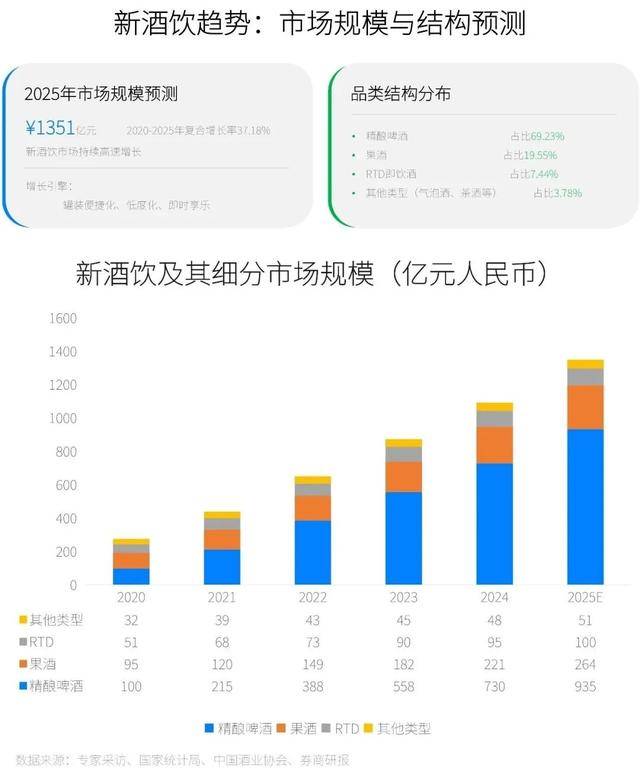
Core Insights - The Chinese alcoholic beverage industry is undergoing a profound structural transformation driven by generational consumption shifts, scene migration, and supply innovation [1][2] - Traditional segments like liquor, beer, and wine are experiencing stagnation, while the "new alcoholic beverages" category, characterized by low alcohol content and diverse flavors, is rapidly emerging as a new growth curve [1][2] - The new alcoholic beverage market is projected to reach 135.1 billion yuan by 2025, with a compound annual growth rate (CAGR) of 37.18% from 2020 to 2025, making it the fastest-growing segment in the industry [2][3] Consumption Trends - The report highlights a significant decline in traditional liquor consumption, with the share of public consumption of liquor dropping from 40% to 5% [2][3] - The new alcoholic beverage segment is gaining traction, with 42% of consumers indicating that "treating oneself" is a major consumption trend, and scenarios like "small gatherings" and "solo drinking" accounting for nearly 80% of new beverage purchases [7][9] Industry Dynamics - The rise of new alcoholic beverages is attributed to three key industry factors: product logic redefinition, consumer demographic evolution, and channel system revolution [9][10] - Traditional alcohol development focused on product-centric approaches, while new alcoholic beverages prioritize identifying target demographics and consumption scenarios before defining products [10][12] Consumer Demographics - The core users of new alcoholic beverages are predominantly women and younger consumers, with female users of fruit wine making up 64.72% and 76.7% of the 18-30 age group preferring low-alcohol beverages [12][13] - This demographic shift is leading to a more democratized consumption landscape, emphasizing individual experience over traditional male-dominated decision-making [12][13] Channel Innovations - The channel structure for new alcoholic beverages is undergoing a fundamental transformation, with instant retail (O2O) becoming a new growth engine, projected to increase from less than 6.8% in 2020 to over 15% by 2025 [13][14] - The shift from traditional distribution to instant retail reflects a change in channel functionality from storage and planned purchasing to immediate fulfillment within 30 minutes [13][14] Industry Restructuring - The emergence of new alcoholic beverages signifies a comprehensive restructuring of the industry, affecting every aspect of the value chain, including brands, distributors, and competitive dynamics [14][15] - Brands must transition from being product-centric to becoming scene-oriented operational companies, focusing on defining scenarios and providing comprehensive solutions for distribution [15][16] Future Trends - The future of the new alcoholic beverage market will focus on health and functionality, with products increasingly featuring low-sugar and low-calorie options, as well as functional ingredients [17][20] - There will be a parallel trend of value segmentation and premiumization, with high-end products emerging based on unique ingredients and cultural narratives, indicating a willingness among consumers to pay a premium for quality [17][20] - The market is shifting from a "broad product" era to a "precision cultivation" era, where brands will need to target specific consumer segments and high-value scenarios to build loyalty and brand barriers [20]