她经济

Search documents
2026年第13周:酒行业周度市场观察
艾瑞咨询· 2026-03-29 00:07
Industry Overview - The Chinese liquor industry is shifting from "volume and price increase" to "stock game," with a focus on "full-domain collaboration" and "scene innovation" [3][4] - Major platforms like Taobao, JD, Douyin, Meituan, and Xiaohongshu are adopting differentiated strategies to target various consumer segments, emphasizing youth narratives and emotional value [3][4] Trends in Liquor Categories - The category of "lu liquor" is entering a golden window, with expectations of 3-5 billion-level brands emerging in the next five years, driven by health demand and policy support [5] - The market for lu liquor is characterized by a "head concentration and regional dispersion" pattern, with a projected profit growth of nearly 200% from 2020 to 2024 [5] Health and Wellness in Alcohol - The trend of "alcohol + health" is becoming a highly certain direction, with a shift in drinking culture towards healthier options, particularly appealing to younger consumers and middle-aged health needs [6] - The rise of "health-conscious" drinking is leading to significant growth in products that combine taste and health attributes, with major liquor brands and pharmaceutical companies entering this space [6] Female Consumer Influence - Female consumers are becoming a significant driving force in the liquor market, with projections indicating that by 2025, women will account for 50% of online liquor consumption [7] - The focus is shifting towards low-alcohol, health-oriented products, with brands actively developing new offerings to cater to female preferences [7] New Beverage Trends - The new beverage market is expected to see explosive growth, with a projected scale of 135.1 billion yuan by 2025, driven by young consumers' preferences for low-alcohol and convenient products [8] - The industry anticipates 2026 to be a breakout year for low-alcohol beverages, with a shift in focus from storytelling to product quality and supply chain efficiency [8] Pricing Dynamics - The white liquor market is experiencing a "two ends heavy" consumption pattern, with high-end brands dominating while the 100-200 yuan price range becomes the mainstay for mass consumption [9][10] - Major liquor companies are adjusting factory prices to address inventory issues, marking a shift from "controlling volume to protecting price" to "lowering prices to maintain volume" [10] Consumer Sovereignty - The liquor industry is transitioning to a consumer sovereignty era, where the focus is on understanding and meeting consumer needs rather than supply-driven strategies [11][12] - Companies are increasingly emphasizing consumer-driven product development, with trends towards low-alcohol, small packaging, and scene-based innovations [12] Regional Market Strategies - Regional liquor companies are seeking breakthroughs in county markets, learning from successful models like Jinmailang's "four-in-one" partnership approach to enhance channel efficiency [13] - The focus is on leveraging local market characteristics and consumer preferences to drive growth and operational efficiency [13] Product Innovation - The liquor industry is witnessing a significant shift towards low-alcohol, lightweight, and health-oriented products, with brands launching new offerings to meet diverse consumer needs [14] - The rise of "meal liquor" and fruit liquor is becoming a new growth point for companies, aligning with the health and micro-drinking trends among younger consumers [14] Brand Dynamics - Major brands are increasingly focusing on cultural narratives and emotional connections with consumers, moving from product-centric to experience-centric marketing strategies [19][28] - The integration of cultural elements into product offerings is becoming a key strategy for brands to enhance market penetration and consumer loyalty [28]


酒行业周度市场观察:行业环境头部品牌动态投资运营产品技术营销活动-20260328
Ai Rui Zi Xun· 2026-03-28 15:20
Investment Rating - The report indicates a positive investment outlook for the liquor industry, highlighting emerging trends and growth opportunities in various segments [2][5]. Core Insights - The liquor industry is transitioning from a phase of "volume and price increase" to "stock game," focusing on "full-domain collaboration" and "scene innovation" as key competitive strategies [3]. - The category of "exposed liquor" is entering a golden window, with expectations of 3-5 billion-level brands emerging in the next five years due to increasing health demands and policy support [2][5]. - The integration of liquor with health trends is identified as a highly certain growth path, appealing to both younger consumers and older demographics seeking health benefits [5]. - Female consumers are becoming a significant driving force in the liquor market, with their preferences shifting towards lower-alcohol and health-oriented products [5]. - The new beverage market is expected to experience explosive growth, with a projected scale of 135.1 billion yuan by 2025, driven by younger consumers' preferences for low-alcohol and convenient products [5]. Industry Trends - The report outlines several key trends in the liquor industry: - The rise of "exposed liquor" as a new growth point, driven by health attributes and cultural heritage [2]. - The increasing importance of female consumers, who are expected to account for 50% of online liquor consumption by 2025 [5]. - The emergence of new beverage categories, including low-alcohol and fruit-flavored drinks, which cater to diverse consumer preferences [5]. - The shift towards consumer sovereignty, where companies are focusing on consumer needs rather than traditional supply-driven models [8]. - The competitive landscape is evolving, with head brands adjusting pricing strategies to maintain market share and address inventory issues [8]. Brand Dynamics - Major liquor brands are actively adjusting their strategies to adapt to market changes: - Brands like Moutai and Wuliangye are reducing factory prices to stimulate sales and address inventory pressures [8]. - New product launches are focusing on health-oriented and culturally resonant offerings, such as the introduction of low-alcohol and herbal liquors [5][8]. - Companies are leveraging cultural narratives and emotional connections in their marketing strategies to resonate with consumers [8]. - The report highlights the importance of innovation and differentiation in product offerings to capture market share in a competitive environment [8].





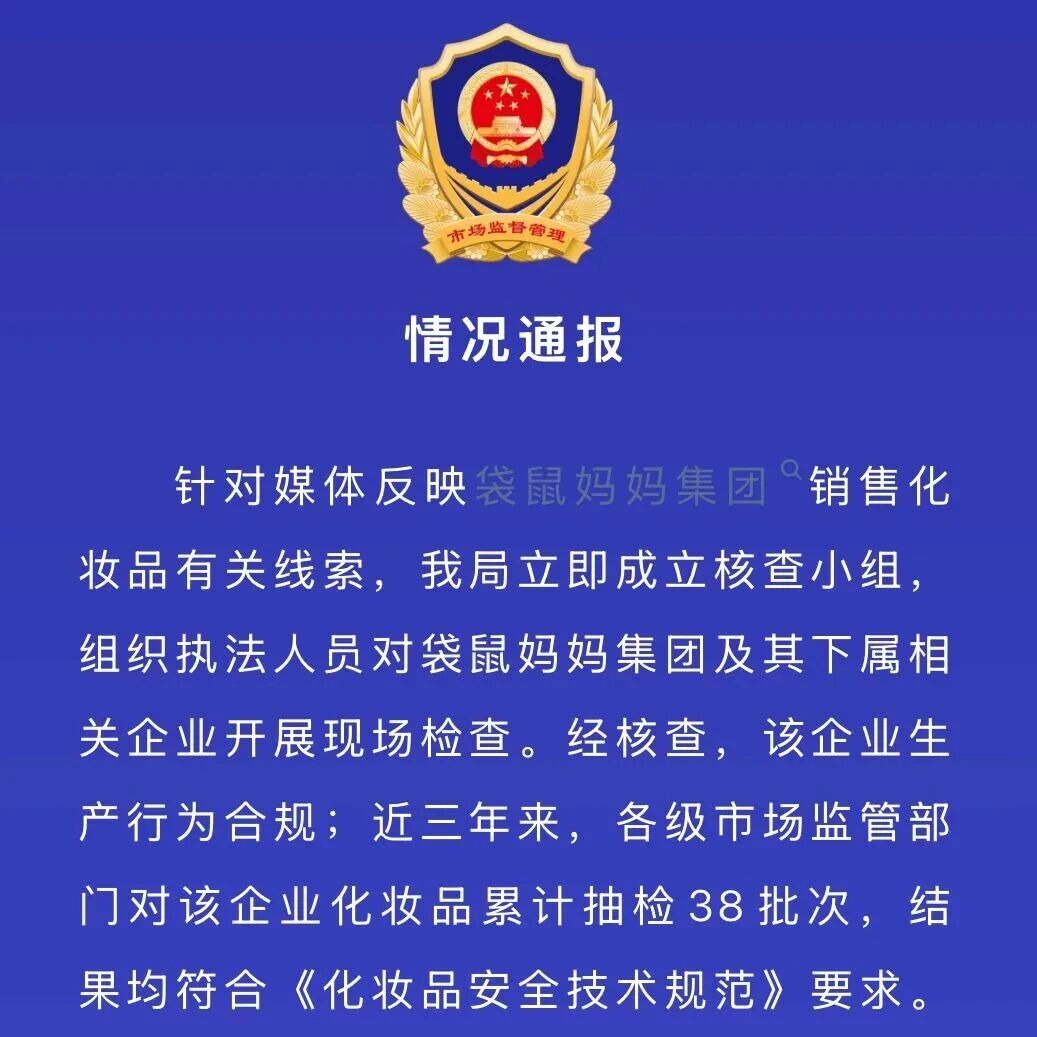
袋鼠妈妈,被约谈批评!
券商中国· 2026-03-18 15:04
Core Viewpoint - The article discusses the regulatory response to the Kangaroo Mom brand, which has faced scrutiny over its marketing practices related to cosmetics for pregnant consumers, highlighting the importance of compliance in the cosmetics industry [1][4]. Group 1: Regulatory Actions - The Guangzhou Market Supervision Administration established a verification team to investigate Kangaroo Mom Group following media reports about its cosmetic sales practices [1]. - The investigation found that the company's production practices were compliant, with 38 batches of cosmetics tested over the past three years meeting safety standards [1]. - The administration has criticized the company for improper marketing statements and has urged it to implement corrective measures [1]. Group 2: Industry Trends - The rise of the "she economy" has led to increased consumer interest in cosmetics among pregnant women, which has put brands like Kangaroo Mom under scrutiny for compliance with marketing regulations [4]. - Kangaroo Mom acknowledged the issue of vague statements made by some live-streaming hosts and has committed to internal rectification and training for its staff [4].
财政贴息“添柴”,交通银行信用卡多措并举“点燃”节日消费活力
凤凰网财经· 2026-03-16 13:05
Core Viewpoint - The article highlights the positive impact of the optimized personal consumption loan subsidy policy by the Ministry of Finance and other departments, which has invigorated the domestic consumption market, particularly through the initiatives of the Bank of Communications' credit card services [1]. Group 1: Consumption Data and Performance - During the 2026 Spring Festival, the Bank of Communications' credit card transactions reached 82.37 million, with a total transaction amount of 31.09 billion yuan, indicating a robust performance in the consumption market [1]. - The average daily transaction volume was 9.15 million transactions, with an average daily transaction amount of 3.46 billion yuan, reflecting an 11.62% increase in transaction volume and a 0.76% increase in transaction amount compared to the same period in 2025 [1]. Group 2: Consumer Incentives and Services - The Bank of Communications has launched various initiatives, including a partnership with the 12306 railway platform to offer discounts for ticket purchases, enhancing the consumer experience and stimulating spending [2]. - The "New Year Celebration" series of activities includes a prize pool for cardholders, encouraging spending through a combination of scratch-off rewards and prize sharing, significantly boosting consumer willingness to spend [2]. - The "Want to Split" installment service integrates the subsidy policy, allowing eligible cardholders to enjoy a 1% annualized interest rate subsidy on installment payments, with a maximum subsidy of 3,000 yuan per person [2]. Group 3: Targeting Specific Consumer Segments - The Bank of Communications is focusing on the "she economy" by extending its consumption incentives and credit support to female consumers, thereby tapping into this demographic's spending potential [3]. - Initiatives such as "Red Friday" and mobile payment discounts are designed to provide tangible support for daily quality consumption across various sectors, showcasing the bank's ability to cater to diverse consumer needs [3]. Group 4: Future Directions - The Bank of Communications aims to continue optimizing its products and service models, focusing on different festive occasions and consumer needs to stimulate domestic demand and enhance consumption vitality [4].


瞄准“她经济”,银行“真金白银”送福利!
券商中国· 2026-03-07 03:14
Core Viewpoint - Banks are launching various promotional activities to celebrate International Women's Day, aiming to enhance consumer spending and support the "her economy" by providing financial benefits to female customers [2][3]. Group 1: Promotional Activities - Multiple banks, including Bank of China, Industrial and Commercial Bank of China, and others, have introduced activities such as shopping discounts and preferential rates on precious metals to attract female clients [2]. - The "Payment Super Benefit" campaign by Bank of China allows users to earn discounts on online shopping and other transactions, with a maximum discount of 1888 yuan for spending over 10,000 yuan [2]. - UnionPay has partnered with major state-owned banks to offer exclusive benefits for Women's Day, including discounts for credit card holders on platforms like Taobao and JD.com [2]. Group 2: Investment Preferences - Some smaller banks are focusing on investment preferences by offering discounts on gold purchases and recommending various deposit and wealth management products [3]. - Anji Rural Commercial Bank is providing a 10 yuan per gram discount on investment gold bars for female customers, along with competitive interest rates on deposits [3]. Group 3: Market Insights - Analysts suggest that these promotional activities align with government policies to promote consumer spending and cater to the financial needs of women, who play a crucial role in household financial decisions [3][4]. - The initiatives not only aim to boost retail banking activities but also enhance customer loyalty and brand affinity by addressing the specific needs of female consumers [4]. Group 4: Future Strategies - Moving forward, banks should develop a comprehensive financial service model that addresses women's financial needs throughout their life cycles, rather than relying solely on short-term promotional events [6][7]. - There is a call for banks to integrate financial services into everyday consumer scenarios and enhance financial literacy among women to better meet their needs [6][7].

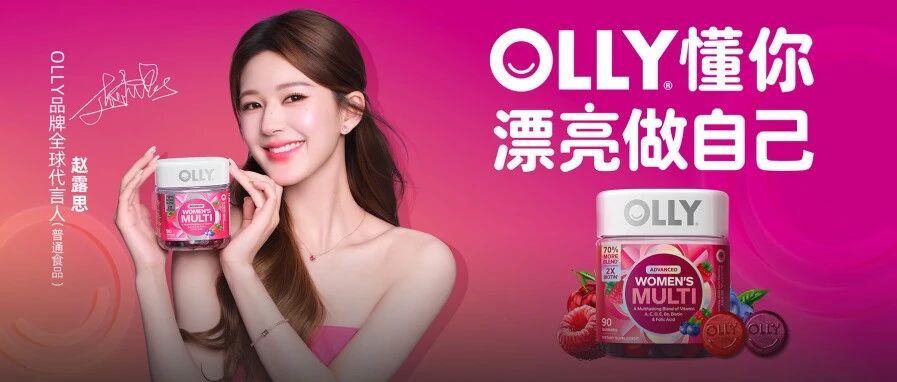
携手赵露思,OLLY这次真的戳中我了
FBeauty未来迹· 2026-03-03 13:25
Core Insights - The article discusses OLLY's marketing strategy for International Women's Day, focusing on a campaign featuring global ambassador Zhao Lusi, which emphasizes self-appreciation among women rather than anxiety about appearance [1][2][8] - OLLY aims to create a deeper emotional connection with women by promoting the idea of "being beautiful by being oneself," reflecting a shift in women's consciousness and self-perception [2][19] Brand Positioning - OLLY targets modern women by moving away from the serious image typical of traditional health brands, instead focusing on "scientific validation + enjoyable experience" as the core of its product and brand perception [4][5] - The brand's approach signals that nutritional supplements do not have to be a burdensome task but can be integrated into daily life as enjoyable experiences [5][10] Marketing Strategy - The choice of Zhao Lusi as a brand ambassador aligns with OLLY's values, as she embodies a relatable and authentic persona that resonates with the brand's message of "inner and outer health" [6][19] - The campaign's success is evident in the significant engagement metrics across social media platforms, indicating a strong connection with the target audience [6][19] Consumer Insights - OLLY's campaign captures a critical shift in women's attitudes towards self-image, where looking in the mirror is now about self-affirmation rather than self-criticism [8][9] - The brand recognizes that women desire acknowledgment of their beauty and the potential for improvement, focusing on holistic health rather than superficial fixes [9][10] Product Development - OLLY's product, the upgraded "Women's Multivitamin Gummies," contains 29 nutrients targeting various aspects of women's health, showcasing a clear scientific foundation [14][15] - The formulation includes ingredients like niacinamide and biotin, which are scientifically validated for their health benefits, reinforcing the brand's commitment to quality and efficacy [14][15] Communication Strategy - OLLY's communication strategy effectively translates complex scientific principles into relatable daily experiences, making health management feel accessible and enjoyable [17][19] - The brand emphasizes a respectful approach to women's choices, providing scientific tools and emotional support without imposing definitions of beauty [22][24] Brand Evolution - OLLY's collaboration with Zhao Lusi represents a shift towards a more personalized brand identity, moving beyond traditional celebrity endorsements to create a narrative that resonates with consumers [23][24] - The brand's strategy highlights the importance of understanding and responding to women's real needs, positioning OLLY as a sustainable partner in their health journey [24]

“她经济”消费促进周即将在广州海心沙举行
Nan Fang Du Shi Bao· 2026-02-27 14:36
Group 1 - The core theme of the event is "Her Festival, GO Shopping Enough," aimed at empowering women and showcasing their strength in Guangzhou's economic development during the 14th Five-Year Plan [1] - The consumption promotion week will feature 80 standard booths and 15 special booths, divided into five distinctive areas to meet diverse female needs, covering food, clothing, and travel [1] - The event will include a variety of offerings such as traditional cuisine, fashion apparel, designer brands, jewelry, beauty products, and interactive experiences to engage consumers [1] Group 2 - Online live sessions will invite female entrepreneurs to share their stories and experiences, fostering a sense of community and inspiration [1] - A special "Her Economy" route will connect key consumer landmarks in the city, allowing participants to enjoy urban culture [1] - The event will feature a public interaction segment called "Wishes for Blossoming," where participants can write blessings for Guangzhou, women, and the future, with selected messages shared through new media [1]
酒行业周度市场观察:行业环境头部品牌动态投资运营产品技术营销活动-20260212
Ai Rui Zi Xun· 2026-02-12 07:03
Investment Rating - The report does not explicitly provide an investment rating for the industry Core Insights - The Chinese liquor industry is undergoing a structural adjustment characterized by a decline in production and a shift towards value competition, with a focus on consumer-centric strategies [3][5][8] - The rise of female consumers is reshaping the liquor market, with brands increasingly targeting this demographic through product innovation and marketing strategies [6][11] - The industry is witnessing a transformation from traditional consumption patterns to more diverse and experiential consumption scenarios, particularly during key periods like the Spring Festival [3][9] Industry Trends - The white liquor sector is experiencing a superficial prosperity that masks underlying issues such as reduced volume, lower prices, and shrinking profits, indicating a need for companies to adapt to changing consumer demands [3][5] - The past decade has seen a significant decline in liquor production, with white liquor down 74% and beer stabilizing at 35 million kiloliters, leading to a focus on brand value and cultural expression [5][8] - The emergence of new consumer segments, including younger and female consumers, is driving demand for lower-alcohol and health-oriented products, prompting brands to innovate [8][11] Market Dynamics - The Spring Festival of 2026 is marked by a late start in sales, a restructuring of consumption scenarios, and a cautious approach from distributors regarding inventory management [3][5] - High-end liquor prices are fluctuating, with brands like Moutai experiencing price increases due to strong demand, while mid-range and regional brands face inventory pressures [3][6] - The competition is intensifying as companies shift from a focus on volume to enhancing product quality and optimizing distribution channels [8][9] Brand Developments - Major brands are leveraging celebrity endorsements and cultural narratives to connect with younger consumers and enhance brand positioning [11][15] - Companies like Guizhou Dukang are expanding their national presence through cultural initiatives and product diversification, aiming to capture market share in high-potential regions [22][24] - The report highlights the importance of emotional marketing and cultural resonance in driving consumer engagement and brand loyalty [18][26]
“江源巧姑”青海好物年货大集火热举办
Xin Lang Cai Jing· 2026-01-31 18:30
Group 1 - The "Jiangyuan Qiaogu" Qinghai Good Goods New Year Market is an important platform for showcasing women's talents, boosting market consumption, and promoting women's entrepreneurship and innovation [2] - The event features over 300 products from more than 80 vendors, including food, home services, handicrafts, and cultural items, attracting significant public participation [1] - The Qinghai Provincial Department of Commerce launched a total of 100,000 yuan in themed consumption vouchers to encourage consumer spending during the winter season [1] Group 2 - The event highlights the hard work and creativity of women, showcasing traditional handicrafts, trendy cultural products, organic agricultural products, and delicious local specialties [2] - The Qinghai Women's Federation plans to organize similar "Jiangyuan Qiaogu" events across various regions, creating a festive consumption atmosphere through a series of online and offline activities [2] - The initiative reflects the vibrant potential of the "she economy" and the limitless possibilities of women's power [2]
2026年,中国最舍得花钱的群体是谁?
Sou Hu Cai Jing· 2026-01-24 14:12
Core Insights - The article discusses the shift in China's economic landscape towards "high-quality development" post-pandemic, highlighting the target consumer groups for 2026, particularly focusing on middle-aged women and the elderly as the most willing spenders [1]. Group 1: Economic Context and Policy - 2026 marks the beginning of the "14th Five-Year Plan," with a strategic focus on significantly increasing the household consumption rate as a core task [1]. - The "Two New Policies" will continue and expand in 2026, promoting large-scale equipment updates and trade-in programs for consumer goods [2]. Group 2: Target Consumer Groups - The most willing spenders in 2026 are identified as middle-aged women aged 35-55 and seniors aged 60 and above, who possess substantial asset accumulation and are at the peak of their life experiences [3][5]. - Middle-aged women control 80.6% of household consumption decisions and have significant financial planning involvement, with 93.5% asserting they manage their personal income [9][10]. Group 3: Consumer Behavior and Market Trends - The anti-aging market in China is projected to grow at a compound annual growth rate of 10% from 2025 to 2026, with functional cosmetics making up over 45% of new skincare product applications [12]. - The elderly demographic, particularly those aged 60-75, is characterized by high asset ownership and increasing digital literacy, enabling them to engage in online shopping and social networking [16]. Group 4: Business Opportunities and Marketing Strategies - Brands are shifting from concept-driven marketing to evidence-based approaches, employing professionals to provide scientific backing for products, which resonates with the rational yet emotional purchasing behavior of middle-aged women [14]. - The silver economy is evolving into a significant market segment, with policies recognizing it as a pillar industry involving longevity technology and elder care finance, thus creating new business opportunities [22]. Group 5: Future Outlook - As younger generations exhibit cautious spending due to uncertainties, the wealthier and more experienced middle-aged women and elderly consumers are expected to drive a substantial portion of China's consumption in 2026 [26].