年轻化消费

Search documents
用年轻人的方式吸引年轻人
Hai Nan Ri Bao· 2026-02-23 02:13
Group 1 - The core trend in Hainan's Spring Festival tourism is the increasing involvement of young people, who are taking on the role of "Spring Festival hosts" and bringing new changes to consumption with a focus on self-expression and individuality [1][2] - Young people are creatively reinterpreting traditional customs, such as preparing fusion dishes for the New Year's Eve dinner and organizing unique photography sessions for the elderly, enhancing the cultural experience [1][2] - The emergence of creative shops and themed accommodations reflects a shift towards a more vibrant and diverse cultural tourism landscape in Hainan, driven by the innovative expressions of the youth [1][2] Group 2 - Hainan is actively capturing and catering to the preferences of young consumers through a series of engaging cultural and tourism activities, such as village sports events and interactive experiences with humanoid robots [2] - Upgrades in smart reservation systems and tailored offerings in accommodations and dining are creating a positive cycle of demand and supply, enhancing the overall visitor experience [2] - The demographic structure of visitors to Hainan during the Spring Festival is becoming more balanced and younger, with significant increases in participation from the "00s" and "95s" age groups, alongside the traditional "80s" family units [2][3] Group 3 - The interaction between young people and Hainan's cultural landscape represents a mutual engagement, where youth invigorate traditional customs while Hainan provides a platform for creative expression [3] - The vibrant and creative atmosphere in Hainan is attracting a continuous influx of young visitors, showcasing the region's openness and modern appeal [3]
从“5%”到“1351亿”,新酒饮正定义中国酒业下一个周期
Sou Hu Cai Jing· 2026-01-23 11:28
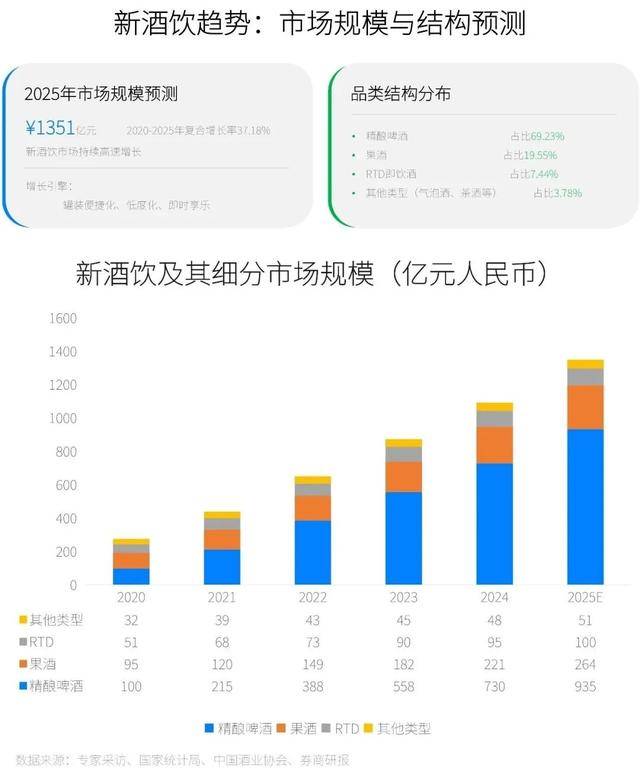
Core Insights - The Chinese alcoholic beverage industry is undergoing a profound structural transformation driven by generational consumption shifts, scene migration, and supply innovation [1][2] - Traditional segments like liquor, beer, and wine are experiencing stagnation, while the "new alcoholic beverages" category, characterized by low alcohol content and diverse flavors, is rapidly emerging as a new growth curve [1][2] - The new alcoholic beverage market is projected to reach 135.1 billion yuan by 2025, with a compound annual growth rate (CAGR) of 37.18% from 2020 to 2025, making it the fastest-growing segment in the industry [2][3] Consumption Trends - The report highlights a significant decline in traditional liquor consumption, with the share of public consumption of liquor dropping from 40% to 5% [2][3] - The new alcoholic beverage segment is gaining traction, with 42% of consumers indicating that "treating oneself" is a major consumption trend, and scenarios like "small gatherings" and "solo drinking" accounting for nearly 80% of new beverage purchases [7][9] Industry Dynamics - The rise of new alcoholic beverages is attributed to three key industry factors: product logic redefinition, consumer demographic evolution, and channel system revolution [9][10] - Traditional alcohol development focused on product-centric approaches, while new alcoholic beverages prioritize identifying target demographics and consumption scenarios before defining products [10][12] Consumer Demographics - The core users of new alcoholic beverages are predominantly women and younger consumers, with female users of fruit wine making up 64.72% and 76.7% of the 18-30 age group preferring low-alcohol beverages [12][13] - This demographic shift is leading to a more democratized consumption landscape, emphasizing individual experience over traditional male-dominated decision-making [12][13] Channel Innovations - The channel structure for new alcoholic beverages is undergoing a fundamental transformation, with instant retail (O2O) becoming a new growth engine, projected to increase from less than 6.8% in 2020 to over 15% by 2025 [13][14] - The shift from traditional distribution to instant retail reflects a change in channel functionality from storage and planned purchasing to immediate fulfillment within 30 minutes [13][14] Industry Restructuring - The emergence of new alcoholic beverages signifies a comprehensive restructuring of the industry, affecting every aspect of the value chain, including brands, distributors, and competitive dynamics [14][15] - Brands must transition from being product-centric to becoming scene-oriented operational companies, focusing on defining scenarios and providing comprehensive solutions for distribution [15][16] Future Trends - The future of the new alcoholic beverage market will focus on health and functionality, with products increasingly featuring low-sugar and low-calorie options, as well as functional ingredients [17][20] - There will be a parallel trend of value segmentation and premiumization, with high-end products emerging based on unique ingredients and cultural narratives, indicating a willingness among consumers to pay a premium for quality [17][20] - The market is shifting from a "broad product" era to a "precision cultivation" era, where brands will need to target specific consumer segments and high-value scenarios to build loyalty and brand barriers [20]

当古老南药遇见Z世代,看2025南药食养年度关键帧
Nan Fang Nong Cun Bao· 2025-12-31 09:34
Core Insights - The Southern medicine and food therapy industry has made significant strides in 2025, driven by a dual approach of "tradition + modernity" and aligning with the concepts of big food and big health [2][3][4]. Group 1: Industry Development - The industry has received strong support from national and local policies, including the National Food and Nutrition Development Outline and regional industrial plans [4][5]. - Innovations such as AI integration and digitalization have made health management more scientific and efficient [4][5]. - The younger demographic has become the main consumer group, leading to a shift in Southern medicine products from traditional slices to tea drinks and snacks [5][14]. Group 2: Key Events - The 2025 China Southern Medicine and Food Therapy Industry Conference was successfully held in Zhaoqing, marking the first national-level conference focused on Southern medicine and food therapy [10][11]. - This event has been pivotal in promoting the Southern medicine concept beyond industry circles, integrating it into the daily lives of younger consumers [14]. Group 3: Regional Highlights - Zhaoqing has emerged as a key city in the Southern medicine industry, with a planting area of 1.5662 million acres and a total output value exceeding 10.6 billion yuan, leading in Guangdong province [17][18]. - The city is home to 80% of the national market for Ba Jitian and is the largest processing and export hub for cinnamon in the country, with a comprehensive industry output value surpassing 10 billion yuan [18][19]. Group 4: Consumer Trends - "Youthful consumption" is identified as a new growth point for market expansion, with 97.2% of surveyed young people having tried "light health" methods, primarily food therapy [26][27]. - Young consumers are seeking products that are "delicious, visually appealing, fun, and effective," leading to the popularity of health teas, snacks, and other innovative products [28][29]. Group 5: Notable Products - The "Hua Ju Hong" (Citrus reticulata) has been highlighted as a key product in the Southern medicine food therapy sector, achieving significant growth in 2025 with an industry chain output value exceeding 11.5 billion yuan [44][48]. - The product range has expanded from traditional slices to over 150 innovative products, including beverages and essential oils, with exports to more than 30 countries [45][48]. Group 6: Policy Support - The release of the "China Food and Nutrition Development Outline (2025-2030)" has elevated the development of food and medicinal quality to a national strategy, providing robust policy support for the Southern medicine industry [49][51]. - The outline encourages the expansion of food-medicine integration and the production of authentic raw materials, clearly defining the development direction and policy boundaries for the Southern medicine food therapy industry [53][54].

中国戏曲学院师生探访隆福寺文创园,实地感受新消费浪潮
Xin Jing Bao· 2025-11-10 14:19
Core Insights - The event "2025 Park Tour" showcased the revitalization of the Longfu Temple area, emphasizing its transformation into a cultural and commercial hub for young consumers [1][2][5] Historical Context - Longfu Temple, established in 1452, has evolved from a religious site to a commercial center, becoming one of Beijing's earliest marketplaces [2][3] - The area faced significant changes due to fires in 1901 and 1993, leading to its eventual transformation into a vibrant commercial district [3] Urban Renewal and Development - The Longfu Temple area underwent a significant urban renewal project starting in 2012, with Phase I completed in August 2019 and Phase II set to open in September 2025 [3][5] - The redevelopment focuses on creating a "youthful" atmosphere, incorporating leisure spaces and diverse commercial offerings to enhance consumer experience [5][6] Cultural Integration - The Longfu Cultural Center offers panoramic views of Beijing, blending modern development with historical landmarks, showcasing the city's dynamic growth [4] - The area features a mix of traditional brands and modern establishments, catering to the evolving preferences of younger consumers [3][5] Consumer Experience - The design of the Longfu Temple area emphasizes "experience consumption," allowing visitors to enjoy both shopping and relaxation in thoughtfully planned spaces [5][6] - The introduction of innovative cultural products and events aims to attract younger audiences and foster a renewed interest in traditional arts [6]
解构2025全国文玩大会:看传统文化如何“拿捏”年轻消费
Sou Hu Wang· 2025-09-30 10:26
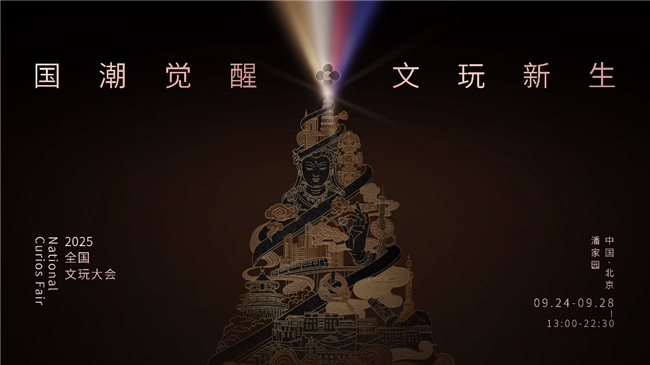
Core Insights - The 2025 National Cultural and Creative Conference showcased the integration of traditional culture with the digital age, marking a significant transformation in the cultural industry [1][17] - The event attracted over 106 leading brands and achieved a total online and offline transaction volume exceeding 50 million yuan, with over 220,000 attendees, highlighting the industry's digital evolution [3][17] Digital Empowerment - The conference successfully integrated traffic empowerment with traditional cultural industries, utilizing Douyin's massive traffic support to create a comprehensive digital marketing ecosystem [5] - The use of trending topics on social media platforms significantly reduced customer acquisition costs for participating brands, while creating an integrated online and offline consumption scenario [5][6] - The influencer economy played a crucial role, with over 30 top creators transforming professional knowledge into engaging content for younger audiences, addressing long-standing information asymmetries in the industry [6] Experience Reconstruction - The event featured innovative experiential design, creating a complete cultural experience value chain through interactive activities and themed events [9] - The design of "golden hours" for brand engagement catered to younger consumers' habits, breaking traditional exhibition time constraints [9] - The integration of trendy elements, such as sneaker culture, expanded the scope of cultural consumption from mere collection to lifestyle [11] Youthful Transformation - The demographic shift was evident, with over 53% of attendees under 35, indicating a fundamental change in consumer structure within the cultural industry [13] - The incorporation of national trend elements in product design attracted younger consumers, merging traditional cultural symbols with modern aesthetics [13] - The socialization of consumption scenarios transformed cultural items into social capital and identity markers, enhancing the social attributes of cultural consumption [15] Conclusion - The successful hosting of the 2025 National Cultural and Creative Conference signifies a profound digital transformation in the cultural industry, shifting from a product-centric to a user-centric model [17] - The future of the cultural economy lies in finding the intersection of traditional culture and modern consumption, utilizing digital technology to activate cultural resources and reconstruct consumption scenarios [19]
25万级新能源市场的大变量来了
36氪· 2025-08-26 14:23
Core Viewpoint - The article discusses the transformation in the automotive market, particularly in the 250,000 RMB segment, where consumer preferences have shifted from basic needs to a demand for brand value, comfort, and advanced technology [2][3]. Group 1: Market Dynamics - The 250,000 RMB market is highly competitive, with consumers now seeking products that offer both functionality and brand prestige [3]. - Traditional luxury brands struggle to meet consumer expectations in terms of functionality and comfort, while budget brands often fail to resonate due to brand perception and quality issues [4][5]. Group 2: New Product Launches - The launch of the new models, R7 and S7, by the Zhijie brand, priced at 229,800 RMB and 249,800 RMB respectively, demonstrates a strong commitment to the market [7]. - The new models received over 10,000 orders within 24 hours of their launch, indicating a significant shift in market value perception [8]. Group 3: Strategic Adjustments - Zhijie has undergone a strategic overhaul, becoming an independent entity led by Huawei, which allows for more agile decision-making and product development [10][14]. - The company has invested heavily in R&D, establishing new centers and increasing its workforce to over 5,000, with a projected investment of 10 billion RMB over three years [12]. Group 4: Targeting Young Consumers - The new models are designed to appeal to younger consumers, who prioritize emotional resonance, smart experiences, and lifestyle integration over traditional status symbols [18]. - Features such as unique color options and customizable interiors reflect a deep understanding of young consumer psychology [19][20]. Group 5: Technological Advancements - The R7 and S7 models come equipped with advanced HUAWEI ADS 4 driver assistance systems, showcasing a commitment to high-tech features typically found in more expensive vehicles [21][25]. - The focus on creating a "third living space" within the vehicle, with features like zero-gravity seats and immersive sound systems, aligns with the preferences of younger consumers [26][28]. Group 6: Competitive Positioning - Zhijie's approach contrasts with traditional luxury brands that rely on brand prestige, as it seeks to redefine value through a combination of technology, experience, and emotional connection [30]. - The success of the R7 and S7 models illustrates that understanding the target audience and delivering a cohesive product experience is crucial for achieving sales success in a competitive market [27][30].