消费分层化

Search documents
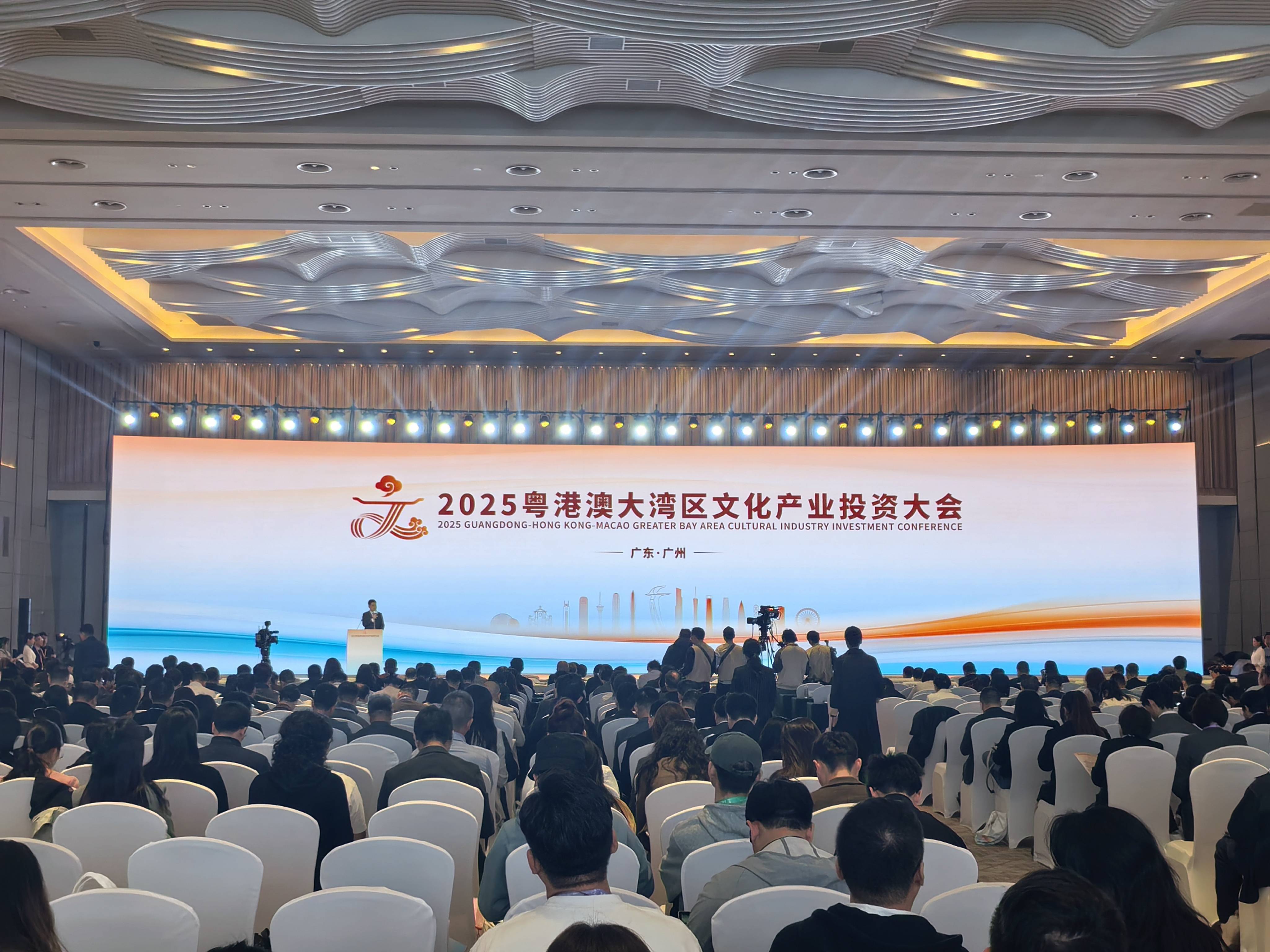
瞄准5大趋势4大赛道!广深成为文化产业投资热土
Sou Hu Cai Jing· 2025-11-26 10:12
Core Insights - The Guangdong-Hong Kong-Macao Greater Bay Area has a vibrant cultural industry ecosystem and an active financial investment atmosphere, with a focus on integrating culture, finance, and technology [1][4] - The 2025 Greater Bay Area Cultural Industry Investment Conference aims to create a one-stop service platform for cultural project financing, with over 300 cultural enterprises participating [1] - The conference highlighted significant investment trends, with previous events showing a fivefold increase in total financing and a nearly threefold increase in average project financing [1][4] Investment Trends - The 2025 report predicts that Guangdong's cultural industry revenue will exceed 30,252.10 billion yuan in 2024, maintaining its position as the top region in China for 22 consecutive years [4] - In the first three quarters of 2025, Guangdong's cultural enterprises generated over 20,000 billion yuan in revenue and over 2,000 billion yuan in profit [4] - The cultural manufacturing sector is a relative strength for Guangdong, supported by a complete industrial chain covering various cultural products [4] Investment Activity - Investment activities are increasingly concentrated in major regions, with Beijing, Shanghai, and Guangdong being the primary areas attracting investment [4] - Guangzhou and Shenzhen account for 85% of the 720 financing events in the cultural industry from 2020 to October 2025, with a total estimated financing amount of approximately 56.41 billion yuan [4][5] Financing Preferences - The majority of financing events are in the angel round, A round, and strategic investments, indicating strong support for early-stage and strategic development of cultural enterprises [5] - Cultural manufacturing has the highest number of financing events at 370, followed by offline derivatives, AIGC, VR/AR, and gaming, reflecting a preference for tech-driven cultural enterprises [5] Future Trends - The report identifies five key trends for cultural industry investment: consumption stratification, cultural industrialization, product digitization, emerging scenarios, and global market expansion [5] - Four major tracks for investment focus on the integration of culture and technology, digital creative production, intelligent cultural manufacturing, and new cultural consumption [5]

冷热交织下的西安珠宝市场,如何实现“嫽得很”
Sou Hu Cai Jing· 2025-07-02 08:58
Core Viewpoint - The gold and jewelry market is undergoing significant changes due to persistently high gold prices, leading to shifts in consumer behavior and market dynamics [4][6][12]. Group 1: Market Trends - The market is witnessing a trend towards lower-priced products, with a notable decline in the sales of heavier gold items, while lighter gold bars (10g to 30g) are gaining popularity among consumers [6][11]. - Retailers are adjusting their product offerings, emphasizing lighter and higher-value items, such as silver, pearls, jade, and platinum, which were previously considered secondary products [6][10]. - The introduction of innovative products, like the collaboration between brands and local cultural elements, reflects the industry's shift towards lightweight and high-value offerings [6][10]. Group 2: Channel Restructuring - The industry is experiencing a phenomenon of store closures, particularly in rural areas, as consumer spending power diminishes in smaller towns [7][10]. - The emergence of small-scale "goldsmith" shops caters to consumers seeking unique, handcrafted items, indicating a deeper market segmentation [10][11]. - The market is evolving with a demand for low-cost models, necessitating regulatory oversight to ensure compliance and product quality [10][11]. Group 3: Consumer Behavior and Trust - High gold prices have altered consumer perceptions, leading to a cautious approach towards purchasing, with a decline in demand for larger gold items [11][12]. - The introduction of gold-plated silver products has raised concerns about industry integrity, prompting discussions on ensuring accurate metal content and maintaining consumer trust [11][12]. - There is a generational divide in purchasing preferences, with younger consumers more open to paying for design and craftsmanship, while older consumers prioritize the intrinsic value of gold [11][12]. Group 4: Brand Strategies - The industry is undergoing structural adjustments, with some brands focusing on high-end offerings while others seek differentiation and refined operations [12][14]. - Brands are encouraged to adopt rational store opening strategies, emphasizing quality over quantity in their market presence [14]. - The market's evolution necessitates brands to embrace innovation, uphold integrity, and accurately position their value to thrive in a challenging environment [14].