消费金融政策

Search documents
消费金融行业政策演变及最新政策解读:消金监管趋严,行业加速出清
GUOTAI HAITONG SECURITIES· 2026-01-25 02:20
Investment Rating - The report assigns an "Overweight" rating to the consumer finance industry [4]. Core Insights - The consumer finance industry is entering a tightening cycle, with stricter regulations expected to accelerate industry consolidation. Leading consumer finance companies that rely on real scenarios are likely to benefit from this environment [2][4]. - The report outlines a historical perspective on consumer finance policies, indicating a cyclical nature of regulations over the past decade, with significant shifts in 2014, 2017, and 2025 [4][6][9]. Summary by Sections 1. Historical Development of Consumer Finance Policies - The evolution of consumer finance policies can be categorized into four phases: support period (2014-2015), risk rectification period (2017-2022), recovery encouragement period (2023-2024), and deepening regulation period (2025-present) [6][7][8][9]. 2. Impact of New Guidelines on the Small Loan Industry - The introduction of the "Guidelines for Managing Comprehensive Financing Costs of Small Loan Companies" aims to regulate financing costs and promote a return to the original purpose of inclusive finance. The guidelines set a target for small loan companies to reduce their comprehensive financing costs to within four times the one-year Loan Prime Rate (LPR) by the end of 2027 [13][14][15][16]. 3. Investment Recommendations - The report suggests that consumer finance companies with real transaction scenarios, such as those focused on automotive finance, will demonstrate stronger performance and stability compared to those relying solely on credit-based products. The head company recommended is Yixin Group, which is positioned to benefit from the ongoing industry consolidation and regulatory environment [4][18][19].
央行透露2026年货币政策风向
21世纪经济报道· 2026-01-15 10:48
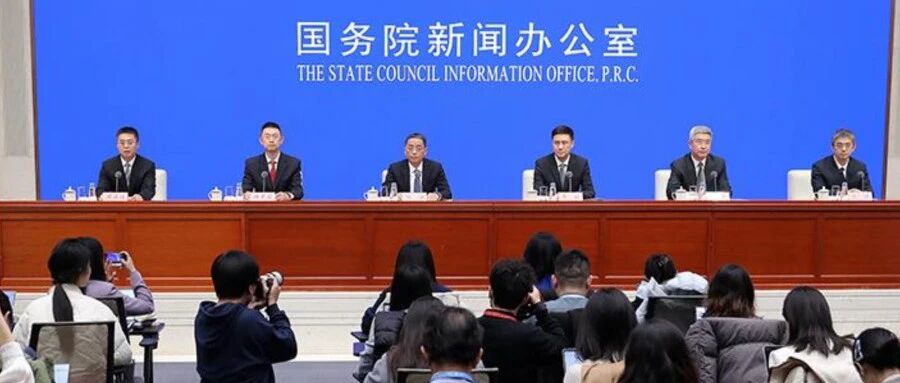
Core Viewpoint - The press conference highlighted the Chinese government's commitment to maintaining a loose monetary policy in 2026, focusing on stabilizing growth, prices, and the exchange rate, while promoting consumption and supporting the private economy [1][9]. Monetary Policy - The People's Bank of China (PBOC) will continue to implement a moderately loose monetary policy, with a focus on stabilizing economic growth and ensuring reasonable price recovery [1][3]. - There is still room for interest rate cuts, with the current average statutory deposit reserve ratio at 6.3%, indicating potential for further reductions [3][4]. - The PBOC aims to create a conducive monetary environment for price recovery through integrated policies [3][4]. Structural Measures - The PBOC announced eight key measures to optimize economic structure, including a 0.25 percentage point reduction in various structural monetary policy tool rates and an increase in the quota for agricultural and small business loans by 500 billion yuan [5]. - A dedicated quota of 1 trillion yuan will be set for loans to private enterprises, emphasizing support for small and medium-sized private businesses [5]. Exchange Rate Policy - The Chinese exchange rate policy remains clear and consistent, with a focus on maintaining stability at a reasonable level [6]. - Positive factors supporting the exchange rate include a large domestic market, complete industrial chains, and ongoing economic improvements [6]. - Approximately 60% of import and export trade is minimally affected by exchange rate fluctuations, with a growing trend towards using the yuan for cross-border trade settlements [6]. Foreign Exchange Market - In 2025, the foreign exchange market transaction volume reached 42.6 trillion USD, with the corporate foreign exchange hedging ratio rising to 30%, both historical highs [7]. - The foreign exchange market is expected to operate steadily in 2026, with cross-border capital flows remaining orderly [7]. Consumer Support Policies - The PBOC will enhance financial support for key service consumption sectors, including hospitality, tourism, and elderly care, through targeted loan policies [8]. - Measures will be taken to improve residents' consumption capacity and support small businesses, alongside efforts to lower financing costs in the consumption sector [8]. - The PBOC aims to optimize the consumer finance service environment by enhancing payment services and improving the overall consumer finance landscape [8].