
深海稀土开采

Search documents
日本挖到含稀土泥浆,高市早苗宣称“下一代、下下代都用不完”!专家:最终成本是中国的近20倍
财联社· 2026-02-19 13:03
Core Viewpoint - Japan's government has announced the successful trial extraction of rare earth mud near Minami-Torishima, but experts caution that the results may be overstated and the project faces significant economic and technical challenges [1][2]. Group 1: Trial Extraction Announcement - The trial extraction was publicized on February 2, coinciding with a critical election period, leading to high-profile promotion by government officials [1]. - The Minister of Education, Culture, Sports, Science and Technology, Yohei Matsumoto, announced the success on social media, prompting the project team to release results earlier than planned [1]. Group 2: Economic Viability and Cost Challenges - The team plans to assess the economic feasibility by March 2028, but the operational costs of the drilling ship are extremely high, reaching tens of millions of yen per day [2]. - The estimated cost of producing rare earths from Minami-Torishima is approximately $70,000 per ton, nearly 20 times higher than the average price of $3,600 per ton for Chinese rare earth concentrates [2]. Group 3: Technical and Environmental Concerns - The extraction and refining technologies required for the project are currently significant challenges, with high costs associated with the necessary equipment and vessels [3]. - Environmental concerns are also a major obstacle, as deep-sea mining poses risks to fragile marine ecosystems [3].


日本挖到的深海稀土泥 是否具有开采可行性
Xin Lang Cai Jing· 2026-02-05 17:12
Core Viewpoint - Japan is conducting deep-sea mining trials for rare earth mud near Minami-Torishima, with cautious optimism from experts regarding the industrial viability of these resources due to technical, cost, and environmental challenges [1][2][3] Group 1: Rare Earth Resource Development - The "Chikyū" deep-sea exploration vessel successfully extracted rare earth-containing seabed mud, marking a significant step in Japan's efforts to diversify its rare earth supply sources [1][2] - Japan's reliance on imported rare earth elements has prompted initiatives to develop domestic sources, with the government labeling the trial as a step towards "domestic rare earth industrialization" [2][3] - Estimates suggest that the seabed near Minami-Torishima may contain over 16 million tons of rare earth resources, potentially meeting global demand for hundreds of years [2] Group 2: Technical and Economic Challenges - The trial employs a closed-loop system for rare earth mud extraction, which faces significant technical challenges and economic feasibility issues, making large-scale commercial extraction unlikely in the near future [3][4] - The estimated extraction cost for deep-sea rare earth minerals could reach between $50 to $100 per kilogram, with some cases exceeding $150, alongside annual operational costs for the "Chikyū" vessel reaching 10 billion yen (approximately $64 million) [4] Group 3: Environmental Concerns - The environmental impact of seabed mining on deep-sea ecosystems remains uncertain, with potential irreversible disturbances to benthic communities and marine ecology [5] - Concerns have been raised by environmental organizations regarding the destruction of marine habitats and pollution of the food chain due to seabed mining activities [5] - The refining process of rare earth mud also poses environmental challenges, particularly in managing the waste generated during extraction [5]
新闻分析丨日本挖到的深海稀土泥是否具有开采可行性
Xin Hua Wang· 2026-02-04 07:36
Core Viewpoint - Japan's deep-sea rare earth mud mining trial near Minami-Torishima Island has successfully extracted rare earth-containing sediment, but experts express caution regarding the feasibility of industrial-scale mining due to technical, cost, and environmental challenges [1][2][4]. Group 1: Mining Trial Details - The "Chikyū" deep-sea exploration vessel began its trial on January 12, 2023, and successfully recovered the first batch of rare earth mud on February 1, 2023 [2][3]. - The Japanese government views this trial as an initial step towards domestic rare earth industrialization, with estimates suggesting over 16 million tons of rare earth resources in the area, potentially meeting global demand for hundreds of years [3][4]. Group 2: Technical and Economic Challenges - The trial employs a closed-loop system for rare earth mud extraction, which faces significant technical challenges, including the need for equipment to withstand extreme underwater conditions [4][5]. - Initial cost estimates indicate that extraction costs could reach $50 to $100 per kilogram, with some scenarios exceeding $150, compounded by annual operational costs of approximately 10 billion yen (about $64 million) for the "Chikyū" vessel [5]. Group 3: Environmental Concerns - The environmental impact of deep-sea mining on marine ecosystems remains uncertain, with potential irreversible effects on benthic communities and marine life [6]. - Concerns have been raised regarding the handling of waste generated during the refining process of rare earth mud, which has not yet been adequately addressed [6].
日本公开采集稀土泥全过程
中国能源报· 2026-02-04 03:52
Core Viewpoint - Japan's Cabinet Office announced successful extraction of rare earth mud from the Minami-Torishima sea area, with potential commercial mining starting in February 2027 if experiments succeed. However, Japanese media express doubts about the feasibility of deep-sea rare earth mining [1]. Group 1: Industry Insights - Rare earth elements are critical materials for manufacturing chips, electric vehicles, and weapons, with China controlling nearly 70% of global rare earth production [1]. - The primary challenges facing the industry include the technology required for extraction and refining, as well as the substantial costs associated with the necessary equipment and vessels [1]. Group 2: Environmental Concerns - Environmental issues pose a significant barrier, with organizations warning that deep-sea mining could damage fragile marine ecosystems [2].
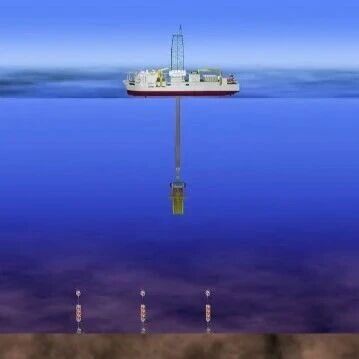
日本公开采集稀土泥全过程
财联社· 2026-02-04 02:38
Core Viewpoint - Japan's Cabinet Office announced the successful extraction of rare earth mud from the Minami-Torishima sea area, with plans to potentially start commercial mining by February 2027 if experiments are successful. However, there are doubts regarding the feasibility of deep-sea rare earth mining, as China currently holds nearly 70% of global rare earth production [1][2]. Group 1 - Japan aims to initiate commercial mining of rare earths by February 2027, contingent on successful experimental results [1]. - Rare earths are critical materials for manufacturing chips, electric vehicles, and weapons [1]. - The feasibility of deep-sea mining is questioned by Japanese media [1]. Group 2 - The primary challenges include the technology for extraction and refining, which require significant investment in equipment and vessels [2]. - Environmental concerns pose a major obstacle, with warnings from environmental organizations about the potential damage to fragile marine ecosystems due to deep-sea mining [2].
日本公开采集稀土泥全过程,内阁府:若成功,有望于明年启动商业采矿
Mei Ri Jing Ji Xin Wen· 2026-02-03 15:39
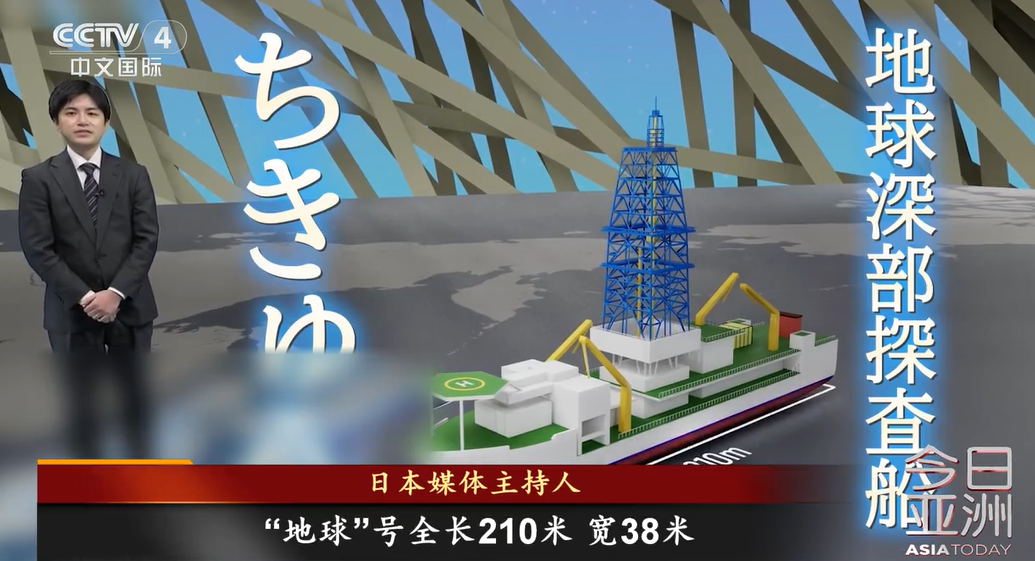
Core Viewpoint - Japan's Cabinet Office announced the successful extraction of rare earth mud from the waters near Minami-Torishima, with plans to potentially start commercial mining by February 2027 if experiments are successful. However, there are doubts regarding the feasibility of deep-sea rare earth mining due to technological and environmental challenges [1][10]. Group 1: Rare Earth Mining Developments - Japan has initiated the world's first deep-sea rare earth trial mining at a depth of 6,000 meters, executed by the research vessel "Chikyu" [8]. - The area around Minami-Torishima is estimated to contain over 16 million tons of rare earth elements, with the trial mining aiming for a daily extraction of 350 tons of rare earth mud [10]. - Currently, over 70% of Japan's rare earth supply is imported from China, with a near 100% dependency on China for heavy rare earths like dysprosium and terbium [10]. Group 2: Economic and Political Implications - The Chinese Ministry of Commerce announced a ban on the export of dual-use items to Japanese military users, which may impact Japan's rare earth supply chain [12][15]. - Economic losses for Japan could reach 660 billion yen if rare earth exports are fully controlled for three months, escalating to approximately 2.6 trillion yen if the situation persists for a year [15]. - The Chinese government stated that the export control aims to prevent Japan's militarization and nuclear ambitions, while ensuring that civilian uses remain unaffected [15].
日本力挺美国印太战略,没想到特朗普不领情,石破茂收到白宫通知
Sou Hu Cai Jing· 2025-07-20 08:41
Group 1 - Trump has announced a plan to impose tariffs of up to 25% on goods imported from Japan and South Korea, affecting 14 countries in total [1][3] - The U.S. has previously raised Japan's auto import tariffs from 2.5% to 27.5% and introduced a 14% "reciprocal tariff," with potential cumulative tariffs reaching as high as 49% if negotiations fail [3] - Japan's government is actively discussing countermeasures in response to the U.S. tariff threats, emphasizing their commitment to protect national interests during negotiations [3][5] Group 2 - Japan is planning to initiate experimental deep-sea drilling for rare earth elements near Minami-Torishima Island, aiming to reduce reliance on Chinese rare earth supplies [6] - The estimated reserves of rare earth elements in the area are around 16 million tons, making it the third-largest globally, but the high cost and technical challenges of deep-sea extraction remain significant hurdles [6] - Environmental concerns have been raised regarding the potential impact of deep-sea mining on marine ecosystems, although monitoring systems are being established to mitigate risks [6]

日媒:日本明年将开始开采深海稀土
news flash· 2025-06-30 22:45
Core Viewpoint - Japan will begin deep-sea rare earth mining in January next year, marking a significant step in resource extraction from ocean beds [1] Group 1: Project Details - The Japan Agency for Marine-Earth Science and Technology will deploy the deep-sea scientific drilling vessel "Chikyu" approximately 100 to 150 kilometers off the coast of Minami-Torishima [1] - A pipeline will be sunk to a depth of 5,500 meters below the sea surface to collect 35 tons of sediment [1] - The operation, including pipeline placement, is expected to take about three weeks, after which the sediment will be transported back to Japan [1] Group 2: Resource Potential - Each ton of sediment is estimated to contain about 2 kilograms of rare earth minerals [1] - The seabed around Japan is rich in rare earth elements, with the area near Minami-Torishima estimated to hold approximately 16 million tons of rare earth, making it the third-largest reserve globally [1]