源头管控

Search documents
查处2000余件违法违规案件 让市民出行更稳当
Xin Lang Cai Jing· 2026-01-26 18:59
Core Viewpoint - Chengdu has launched the "Clean Path · Safeguard" special action to enhance transportation safety and address industry irregularities, particularly during the peak travel and freight season [7][14]. Group 1: Action Overview - The special action involves collaboration among multiple departments, including transportation, public security, and emergency services, to combat illegal operations and ensure public safety [7]. - As of now, over 72,000 vehicles have been inspected, resulting in 2,444 cases of violations being addressed, demonstrating significant progress in curbing illegal operations [14]. Group 2: Technology and Enforcement - The use of big data analysis and intelligent tracking has transformed enforcement strategies, allowing for more precise identification and interception of suspected illegal operations [9]. - A specific case highlighted the effectiveness of technology, where a vehicle suspected of illegal operation was intercepted based on predictive analytics, leading to a fine of 12,000 yuan [9]. Group 3: Targeting Specific Issues - The enforcement team has focused on combating counterfeit taxis, with 148 such vehicles seized and a 47% reduction in related complaints compared to the previous year [10][14]. - A comprehensive approach to tackle over-limit transportation has been established, involving source management, road checks, and joint penalties for offenders [11]. Group 4: Dangerous Goods Transport - The action also targets illegal transportation of hazardous materials, with recent operations leading to the seizure of an illegally modified fuel truck containing approximately 400 liters of diesel [12]. - The enforcement team emphasizes the importance of community involvement and inter-departmental cooperation in maintaining transportation safety [13]. Group 5: Future Directions - The enforcement department plans to continue the special action, reinforcing the results achieved and enhancing collaboration among various departments to strengthen the transportation safety network during winter [15].


创新治理方式 守护“舌尖上的安全”
Xin Lang Cai Jing· 2026-01-18 21:31
Core Viewpoint - Food safety is a fundamental aspect of public welfare and a crucial foundation for high-quality economic and social development in China. Recent governance efforts have made significant progress in enhancing food safety regulations and practices across the entire supply chain [1][2]. Group 1: Regulatory Framework and Innovations - The implementation of the "Opinions on Further Strengthening Food Safety Full-Chain Supervision" has effectively addressed regulatory barriers across production, storage, transportation, and sales [1]. - The introduction of the food safety law amendment includes regulations on the transportation of bulk liquid foods and the registration management of infant formula liquid milk [1]. - The promotion of "Internet + Bright Kitchen Bright Stove" and the integration of market supervision big data into a multi-dimensional analysis system have shifted regulatory approaches from reactive to proactive [1]. Group 2: Challenges in Food Safety Governance - New challenges in food safety governance arise from the rapid development of online food delivery and live-streaming sales, which outpace regulatory updates [2]. - There is a gap between consumer demand for information on emerging food products and the willingness of companies to disclose such information [2]. - Continuous innovation in governance methods is required to address these challenges and deepen food safety governance [2]. Group 3: Source Control and Industry Responsibility - Strengthening source control is essential for food safety, emphasizing the importance of strict regulations on agricultural inputs and food processing standards [2]. - Companies are encouraged to prioritize food safety over short-term profits and invest in technological innovations for sustainable food production [2]. Group 4: Smart Regulatory Models - The transition to digital and intelligent regulatory models is crucial for enhancing food safety governance efficiency [3]. - Utilizing big data, artificial intelligence, and the Internet of Things can create a smart regulatory system that enables early detection and response to risks [3]. - The establishment of a national data hub for market regulation plays a vital role in integrating data resources for effective risk management [3]. Group 5: Social Co-Governance and Public Participation - Public participation and social supervision are critical for effective food safety governance, with an increasing consumer focus on food safety [4]. - There is a need for improved scientific literacy among consumers regarding food safety issues, which can be addressed through innovative educational initiatives [4]. - Creating a collaborative governance atmosphere involving self-regulation by enterprises, government oversight, and public engagement is essential for food safety [4]. Group 6: Industry Development and Standards - Promoting the standardized development of the food industry is a long-term strategy for achieving food safety and industry advancement [5]. - The establishment of standards for special dietary foods and new food materials is necessary to guide compliant innovation and fill existing gaps [5]. - Companies should implement comprehensive quality safety management and traceability systems to enhance food safety from the ground up [5].
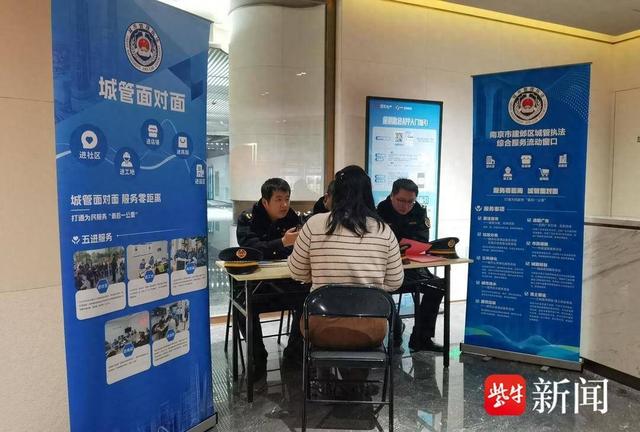
南京建邺城管面对面服务,护航新交付小区业主安居
Xin Lang Cai Jing· 2026-01-05 15:37
Core Viewpoint - The recent community service event in Nanjing's Jianye District aims to enhance urban management and provide support to homeowners during the key phase of property handover, focusing on issues such as waste disposal and property management [2][5]. Group 1: Event Overview - The event was organized by the Jianye District Urban Management Comprehensive Law Enforcement Team in collaboration with the Shuangzha Street, integrating multiple enforcement forces to address urban management issues [2]. - It provided a one-stop service to homeowners, addressing potential concerns related to renovation waste, illegal constructions, and community green space protection [2][5]. Group 2: Training and Support for Property Management - Targeted training was conducted for property staff, focusing on key points of waste classification and the logistics of renovation waste disposal [3]. - The event promoted a "clearing service card" to facilitate homeowners' access to compliant waste disposal services [3]. Group 3: Collaborative Governance Model - The event exemplified a governance model of "source control, proactive service, and collaborative supervision," establishing a communication mechanism between urban management, local streets, and property management [5]. - A commitment was made to respond quickly to issues raised by homeowners, ensuring effective urban management and environmental order [5]. Group 4: Impact and Future Plans - The event served over 80 homeowners and property staff, distributing over 100 informational materials, thereby enhancing compliance awareness [5]. - Future plans include regularizing proactive urban management services and expanding the "face-to-face urban management" initiative to address community needs effectively [5].